The Basics of Removing Coins Forever
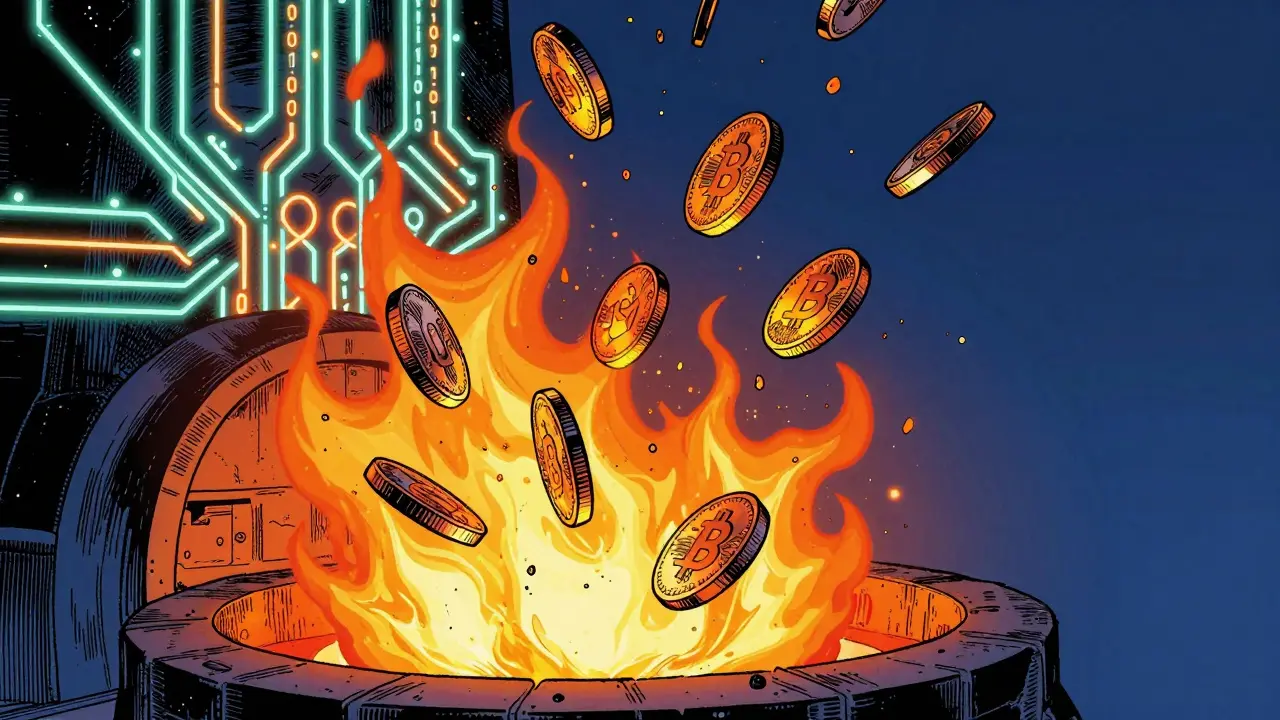
Imagine printing money, then immediately throwing half of it into a furnace. Sounds wasteful, right? That is exactly what happens when a project decides to implement Token Burning. Token Burning is the permanent removal of digital tokens from circulation. This process isn't just about wasting assets; it is a deliberate economic strategy used to alter the fundamental supply dynamics of a blockchain network. By locking tokens away or destroying them entirely, projects create artificial scarcity. In basic economics, when supply drops while demand stays the same or increases, value tends to rise.
You might wonder why anyone would voluntarily delete their own currency. The answer lies in the unique nature of crypto assets. Unlike traditional stock markets where shares can be reissued at any time by company boards, blockchains are often designed with fixed limits. Think of Bitcoin's 21 million cap. Token burning acts as a secondary mechanism for other cryptocurrencies that don't have a hard limit built-in from day one. When you burn a coin, it essentially ceases to exist for trading purposes. There is no secret key to unlock it later; it is gone forever.
How the Technical Process Actually Works
To understand this better, we need to look at the mechanics involved in execution. It doesn't require magical technology, just a very public ledger. Every time you send a transaction, it is recorded on the blockchain. However, there are special addresses known as Burn Addresses. These are essentially wallets without private keys. Since you cannot prove ownership of the wallet without the key, anything sent there is inaccessible.
- Decision Making: The project team or governance votes to initiate a burn event.
- Selection: They choose how many tokens to remove. This could be a fixed number or a percentage of the total circulating supply.
- Execution: The tokens are transferred to the burn address. This transaction is visible to everyone on the blockchain explorer.
- Verification: Because the blockchain is transparent, the community can verify that the coins are truly gone and not just moved to another hidden pocket.
This transparency is crucial. If a company claimed they burned money but secretly kept the keys, it would be fraud. In the world of decentralized finance (DeFi), trust is maintained through code and mathematical proof rather than corporate reputation alone. Most users check the block explorer themselves to see the transaction hash ending up in that unspendable wallet. It turns a marketing promise into verifiable math.
Manual Versus Automatic Burning Strategies
Not all burns happen the same way. You will typically encounter two main methods depending on how the project manages its economy. Let's break down the differences so you know which projects are serious about their long-term tokenomics.
| Feature | Manual Burning | Automatic Burning |
|---|---|---|
| Control | Project Team decides timing and amount | Smart Contract executes based on rules |
| Frequency | Irregular or quarterly (e.g., BNB) | Every transaction or on a schedule |
| Flexibility | High (can stop in bad markets) | Low (immutable once deployed) |
| Community Trust | Moderate (depends on team honesty) | High (code enforces execution) |
Manual burning offers flexibility. Take Binance Coin (BNB) for example. The exchange runs "burns" periodically, usually every quarter. They calculate how much profit to reinvest into buying back and destroying their token. This allows them to adjust the pace based on profitability. However, critics argue this relies on the trust of the centralized exchange leadership.
In contrast, automatic burning relies on Smart Contracts. These are self-executing contracts with terms directly written into code. The most famous recent example is Ethereum (ETH)'s EIP-1559 upgrade. Instead of fees going solely to miners, a portion of the base fee is destroyed with every transaction. As network activity spikes, more ETH gets burned. This creates a feedback loop: higher demand for space on the network automatically reduces the supply of ETH. This removes human discretion from the equation, making the system more predictable.
Why Economic Models Need Deflationary Pressure
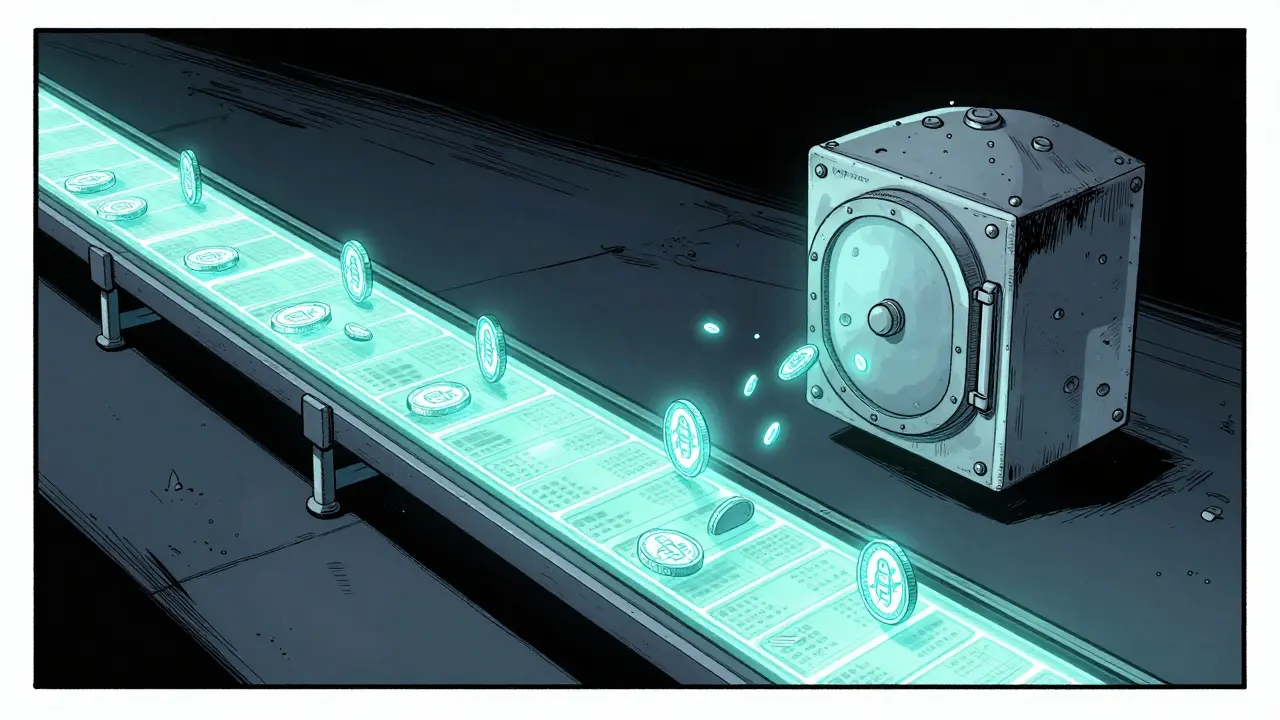
The core logic here comes down to supply and demand. If a coin has a massive supply sitting idle, it puts downward pressure on the price. Imagine a room filled with air but someone keeps pumping in more oxygen; eventually, the pressure becomes too high. By reducing the available oxygen (tokens), you raise the value per unit.
Many projects use Deflationary Tokenomics to fight inflation. In the fiat world, central banks print money, devaluing your savings over time. Crypto enthusiasts often view this as a failure of the traditional financial system. By burning tokens, projects create a counter-inflationary mechanism. While the utility of the token grows-people using it for gas, payments, or staking-the available number of units shrinks. Ideally, this leads to a situation where the asset appreciates simply because it becomes rarer.
However, it isn't magic. Reducing supply only works if there is actual demand for the underlying product. A burn event on a useless token won't magically make it valuable. You need users interacting with the blockchain, developers building apps, or institutions holding the asset. Without genuine utility, a burn is just moving numbers around to create a temporary hype cycle.
Real-World Case Studies and Market Reaction
History gives us plenty of data points to analyze how effective these strategies actually are. Looking back at the market movements from the 2021 to 2025 period, we can spot clear trends.
During the bull run of 2021, Shiba Inu saw a massive community-led burn event. Holders decided to donate billions of SHIB tokens to a burn address. Within weeks, the sentiment shifted wildly positive, driving the price up significantly. This proved that even symbolic burns can influence market psychology. The community felt like guardians of the supply, creating a powerful sense of collective ownership.
On the other hand, let's look at the TerraUSD collapse in May 2022. The algorithm tried to stabilize the peg by burning UST tokens to mint LUNA. When the market panic set in, the burning mechanism couldn't keep up with the selling pressure. This highlights a critical risk: relying solely on mechanics without fundamental backing. Burns work best when integrated into a healthy ecosystem, not as a bandage for broken financial models.
Then you have the steady growth seen with Ethereum after EIP-1559 was implemented in August 2021. Data shows that during periods of high usage, Ethereum became net deflationary. More coins were burned than issued. This structural change gave investors confidence that the network had a built-in hedge against inflation, contributing to long-term price stability despite volatility in the broader market.
Risks, Criticism, and Regulatory Gray Areas
It might sound perfect to simply reduce supply to increase price, but experts warn against viewing this as a standalone solution. Dr. Garrick Hileman, Head of Research at Blockchain.com, notes that while the theory holds true, real-world impact depends heavily on whether the burn represents a significant percentage of total supply. If a company burns 0.01% of its tokens, it likely won't move the needle.
Furthermore, regulators are watching closely. The U.S. SEC has indicated that structured token burns designed solely to manipulate price could potentially be viewed as securities violations. The distinction lies in whether the burn is part of a legitimate economic model to sustain the network or a pump-and-dump scheme disguised as scarcity. For instance, burning tokens before listing a new pair to artificially inflate volume metrics is frowned upon.
There are also technical risks. Errors in smart contracts can lead to unintended consequences. Imagine a coding bug that accidentally burns too much of a supply, causing a shortage for transactions. Conversely, if a project promises a burn and fails to execute it, they lose credibility. Trust is hard to regain in this sector. Transparency reports and third-party audits have become standard requirements for any major burn event to take place credibly.
Looking Ahead: The Evolution of Scarcity
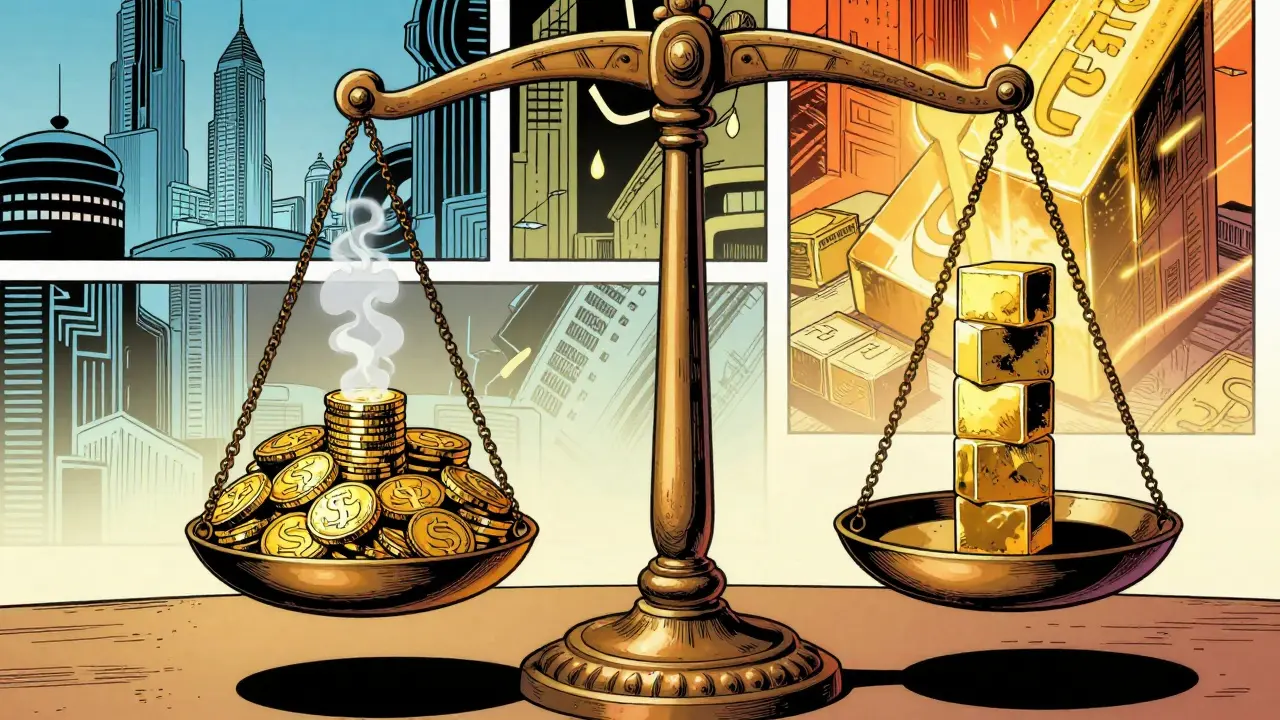
As we move further into 2026, the definition of value creation is changing. We are seeing moves toward hybrid models. Instead of just deleting coins, some chains are integrating burns with revenue generation. For example, stablecoin issuers like Paxos Gold burn tokens when the underlying physical asset is redeemed. This links the digital token directly to a tangible reality, ensuring the supply always matches the inventory.
Gartner analysts predict that by 2025, nearly all new blockchain projects will incorporate some form of token burning. With 2026 already underway, we are seeing dynamic rates emerging. These aren't static burns anymore. Protocols like Kadena allow for adjustments based on market conditions. This flexibility suggests the market is maturing beyond simple gimmicks into complex economic engineering.
The next frontier involves real-world asset (RWA) integration. As traditional finance enters the blockchain space, the concept of burning aligns with treasury management. Companies managing funds may buy back tokens and burn them as a way of returning profits to shareholders who hold the token, similar to dividends but executed through the chain itself.
Does token burning guarantee a price increase?
No, it does not guarantee a price increase. While reducing supply theoretically supports value, prices are ultimately determined by market demand. If there is no interest in using the blockchain, burning tokens will not create value. Additionally, the scale of the burn matters; small percentages often have negligible impact.
Can a burnt token ever be recovered?
Practically, no. Once tokens are sent to a burn address, they are permanently inaccessible unless the blockchain protocol undergoes a drastic fork or update to reverse transactions. Standard operation dictates these coins remain lost forever to maintain trust.
Who is responsible for burning tokens?
Responsibility varies by project type. In manual burns, the development team or governing body initiates the transfer. In automatic burns, the smart contract executes the removal based on predefined rules triggered by user transactions without human intervention.
Is token burning legal in the United States?
Generally, yes, but it depends on the structure. Legitimate burns for economic sustainability are acceptable. However, the SEC warns that manipulative burns designed solely to pump prices for unregistered securities could face regulatory scrutiny and potential enforcement actions.
How do I verify if a token burn happened?
You can verify burns using a blockchain explorer. Look for the specific transaction hash announced by the project and trace the receiving address. If the balance goes to a null address (like 0x000...dead or similar), the tokens are confirmed as removed from circulation.