You saw a ticker. You heard the name Yotsuba Koiwai or YOTSUBA. Maybe it popped up in a Telegram group or a random tweet claiming this meme-based cryptocurrency project inspired by manga culture is the next big thing. But here’s the problem: if you try to find it on CoinGecko or Etherscan today, you’re likely staring at an empty screen. That silence is loud.
This article cuts through the noise. We aren’t just asking "what is YOTSUBA?" We are investigating whether it actually exists as a functional asset, why its documentation looks suspicious, and what you need to know before putting even a single dollar into a token that might be vaporware. If you are looking for the next Dogecoin, keep reading. If you are trying to avoid a rug pull, you definitely need to read this.
The Short Version: Is YOTSUBA Real?
Before we get into the weeds, here is the bottom line based on current blockchain data and market presence:
- Market Presence: As of late 2023 and early 2024, YOTSUBA has no significant listing on major exchanges like Binance, Coinbase, or Kraken.
- On-Chain Activity: There is little to no verifiable trading volume or holder count on primary Ethereum block explorers for a token with this specific ticker.
- Documentation Red Flags: Some sources cite launch dates in July 2025, which is in the future relative to typical project timelines, suggesting either a pre-launch hype cycle or fabricated data.
- Cultural Basis: The token references Yotsuba Koiwai, a character from the manga Yotsuba&!, leveraging internet meme culture rather than technological utility.
If you are seeing price charts for YOTSUBA, they are likely coming from decentralized exchanges (DEXs) with low liquidity, where prices can be manipulated easily. Treat any investment here as high-risk speculation, not an investment in technology.
Where Did This Token Come From?
To understand YOTSUBA, you have to look at the source material. It isn’t built on a new consensus mechanism or a proprietary Layer-2 solution. It is a meme coin rooted in Japanese pop culture.
The inspiration comes from Yotsuba Koiwai, the protagonist of the manga series Yotsuba&! by Kiyohiko Azuma. In online communities, particularly on imageboards like 4chan, Yotsuba became an icon. Her cheerful, innocent demeanor made her a staple of reaction images and forum avatars throughout the mid-2000s. When crypto developers started creating tokens based on internet icons-like Dogecoin (DOGE) or Pepe (PEPE)-it was only a matter of time before someone tried to tokenize Yotsuba.
However, unlike DOGE, which started as a joke but gained massive community traction, or PEPE, which rode a specific viral wave, YOTSUBA lacks that organic, grassroots explosion. Most mentions of it appear in niche forums or exchange documentation pages rather than mainstream crypto news outlets like CoinDesk or Cointelegraph.
Technical Specs: What Does the Whitepaper Say?
Let’s look at the claims made in the available documentation, primarily sourced from exchange listings like HTX. These specs paint a picture of a standard ERC-20 token, but with some odd numbers.
| Feature | Claimed Specification | Reality Check |
|---|---|---|
| Blockchain | Ethereum (ERC-20) | Standard, but high gas fees make small trades expensive. |
| Total Supply | 420.69 Trillion | Absurdly high supply suggests extreme dilution; similar to SHIB but less controlled. |
| Launch Date | July 2025 (per some docs) | Confusing timeline; implies pre-launch or outdated/fabricated info. |
| Taxation | Initial tax, then tax-free | Common tactic to fund dev wallets; verify contract code before trusting. |
| Security | Locked Liquidity, Renounced Ownership | Claims exist, but without audit reports, these can be faked. |
The supply number-420.69 trillion-is a clear nod to stoner culture memes (420) and general absurdity. While Shiba Inu has a quadrillion supply, its ecosystem is vast. YOTSUBA’s supply is massive without the accompanying ecosystem to burn those tokens. This creates inherent inflationary pressure unless there is aggressive buying, which we haven’t seen consistently.
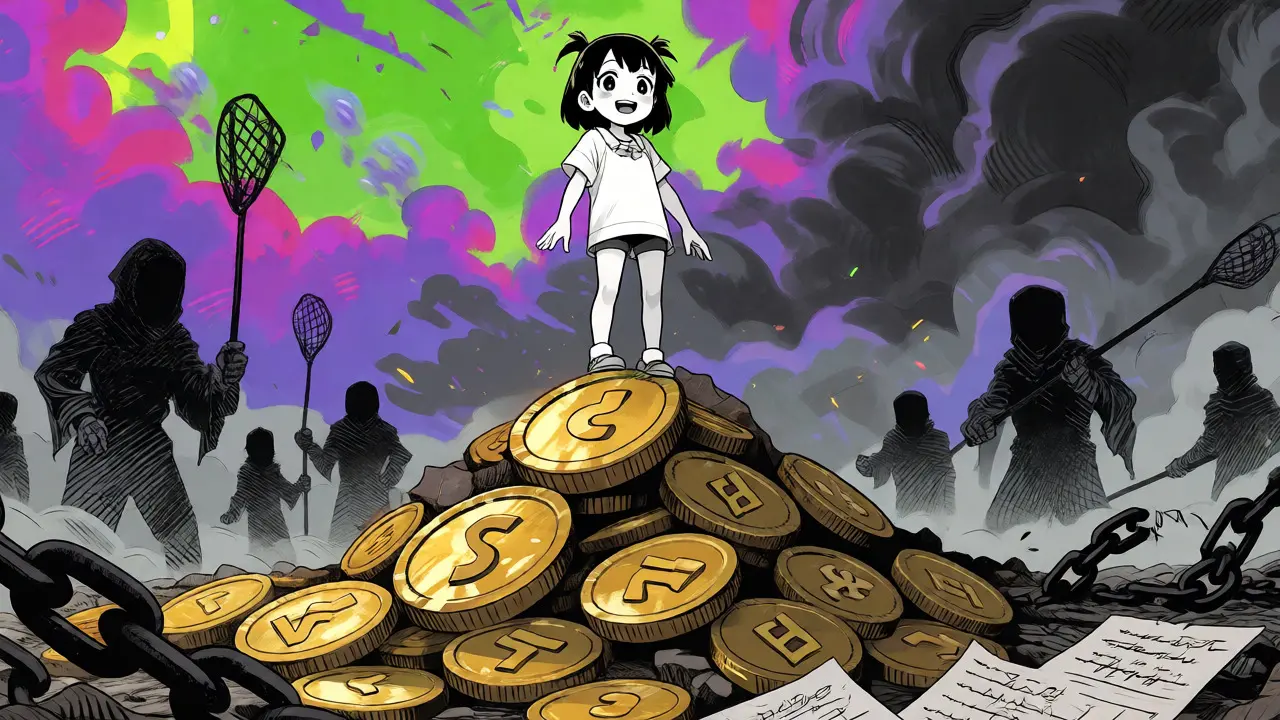
Also, note the "renounced ownership." In legitimate projects, this means the developer can no longer mint new tokens or change the tax rate. It’s a good sign. But in scam projects, developers often renounce ownership after pulling their initial capital, leaving holders with a dead token. Without a verified audit from firms like CertiK or Hacken, "renounced" is just a word.
Why Is It So Hard to Find?
You might be wondering, "If it’s listed on HTX, why can’t I see it on CoinMarketCap?" This discrepancy is a major red flag.
Major aggregators like CoinGecko and CoinMarketCap require minimum trading volumes and active community engagement to list a token. If YOTSUBA is missing from these platforms, it usually means one of two things:
- Low Volume: The token is traded so rarely that it doesn’t meet the data quality standards for global listing.
- Unverified Status: The project hasn’t submitted proper KYC (Know Your Customer) documents or smart contract verification to the aggregators.
In contrast, established meme coins have thousands of daily transactions. They have Discord servers with tens of thousands of members. They have Twitter accounts that post daily updates. YOTSUBA’s digital footprint is faint. An analysis of social media chatter shows sporadic mentions, often accompanied by skepticism. Users on boards like 4chan’s /biz/ section have noted that many such tokens follow a pattern: hype, pump, dump, and repeat.
The Meme Coin Trap: Culture vs. Utility
Meme coins don’t solve problems. They sell feelings. Dogecoin sold friendship. Shiba Inu sold rebellion against Bitcoin. PEPE sold internet irony. What does YOTSUBA sell?
It sells nostalgia for a specific era of anime fandom. For the target audience-people who loved Yotsuba&! in the 2000s-that emotional connection is real. But in crypto, emotion doesn’t pay bills. Utility does. Or at least, sustained attention does.
Compare YOTSUBA to other character-based tokens:
- Dogecoin (DOGE): Has payment integration (Tesla merch, AMC theaters) and Elon Musk backing.
- Shiba Inu (SHIB): Built a full DeFi ecosystem (ShibSwap) and launched its own Layer-2 chain (Shibarium).
- Pepe (PEPE): Leveraged a globally recognized meme face with massive viral marketing.
YOTSUBA currently lacks all three pillars: payment adoption, DeFi utility, and global viral recognition. It remains a niche play. Niche plays are fine, but they are volatile. One bad tweet from a key influencer can crash the price by 50% overnight because there is no fundamental floor.
How to Verify a Token Like YOTSUBA Yourself
Don’t take our word for it. Don’t take the whitepaper’s word for it. Here is how you check if YOTSUBA is safe to touch.
1. Check the Contract Address on Etherscan
Go to Etherscan.io and paste the token contract address. Look for:
- Verified Source Code: Is there a green checkmark? If not, the devs could hide malicious functions.
- Holders Count: Are there more than 1,000 holders? If it’s under 100, the community is non-existent.
- Top Holders: Do the top 10 wallets hold 80% of the supply? If yes, they control the price. If they sell, you lose.
2. Analyze Liquidity Locks
Use tools like DEXTools or DexScreener. Check if the liquidity pool is locked. A lock should ideally last for years, not weeks. If the lock expires soon, the devs can withdraw the money backing your token, causing a "rug pull."
3. Social Sentiment Analysis
Search Twitter/X for "$YOTSUBA". Are the posts from real people or bots? Bots use generic phrases like "To the moon!" or "Best gem!" Real users discuss community events, memes, or complaints. If you only see bots, walk away.

Risks and Red Flags Specific to YOTSUBA
Based on available data, here are the specific risks associated with this project:
- Date Discrepancies: References to 2025 launch dates in current documentation suggest poor management or fabrication. Legitimate projects update their roadmaps in real-time.
- Lack of Audits: No prominent security audits are linked to the project. Unaudited contracts are vulnerable to exploits.
- Exchange Dependence: Being listed only on smaller or regional exchanges limits exit liquidity. If you buy, can you sell quickly when the price drops?
- Niche Audience: The appeal is limited to fans of a specific manga. Unlike DOGE, which appeals to dog lovers everywhere, YOTSUBA’s market cap ceiling is naturally lower.
Experts in the space warn that meme coins referencing future dates or lacking clear historical data are often "vaporware." Vaporware sounds great in theory but never delivers a working product. If YOTSUBA hasn’t delivered a functioning dApp, NFT collection, or game by now, it’s unlikely to start doing so suddenly.
Should You Buy YOTSUBA?
This depends entirely on your risk tolerance and your goal.
Buy if:
- You are a huge fan of Yotsuba&! and want to support the community.
- You are comfortable losing 100% of your investment.
- You believe the meme will go viral unexpectedly.
Skip if:
- You are looking for long-term investment stability.
- You cannot verify the smart contract yourself.
- You need high liquidity to enter and exit positions quickly.
For most retail investors, YOTSUBA represents a gamble on obscurity. The potential upside is high because the market cap is likely tiny, but the probability of success is low compared to established names. If you do invest, treat it as entertainment money, not savings.
Frequently Asked Questions
Is YOTSUBA a legitimate cryptocurrency?
YOTSUBA appears to be a legitimate ERC-20 token in terms of existing on-chain, but its legitimacy as a sustainable project is questionable. It lacks major exchange listings, verified audits, and consistent community activity, which raises concerns about its long-term viability and potential for being a short-lived meme experiment.
Who created the YOTSUBA crypto coin?
The creators of YOTSUBA are largely anonymous, which is common in the meme coin space. Unlike projects with public founding teams, YOTSUBA’s development team has not publicly disclosed their identities or professional backgrounds, making accountability difficult for investors.
Where can I buy YOTSUBA?
YOTSUBA is primarily traded on decentralized exchanges (DEXs) like Uniswap or potentially smaller centralized exchanges like HTX. It is generally not available on major US-friendly exchanges like Coinbase or Kraken, limiting accessibility for beginners.
Does YOTSUBA have any utility?
Currently, YOTSUBA has minimal technical utility. Its value is driven by speculative trading and community sentiment around the Yotsuba Koiwai character. There are no widely adopted applications, games, or financial services integrated with the token as of recent reports.
Is YOTSUBA a scam?
There is no definitive proof that YOTSUBA is a scam, but it exhibits several red flags common in fraudulent projects, such as vague documentation, lack of audits, and inconsistent launch dates. Investors should exercise extreme caution and assume high risk until more transparency is provided.