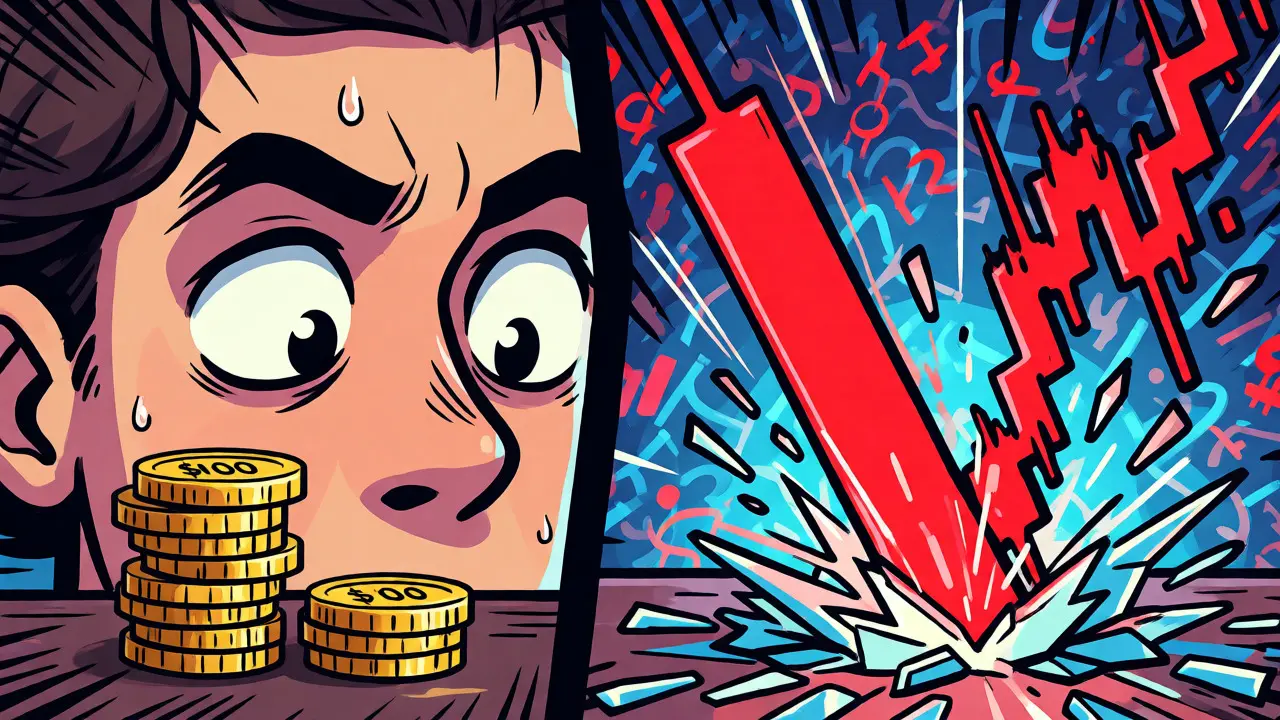
You put $100 into a trade. The market moves just 1% against you. In a normal spot trade, you lose a dollar. But if you are using 100x leverage, your entire position is wiped out instantly. You didn't just lose the profit; you lost your initial capital before you even had time to blink. This isn't a hypothetical nightmare-it happens every day on exchanges like Binance and Kraken.
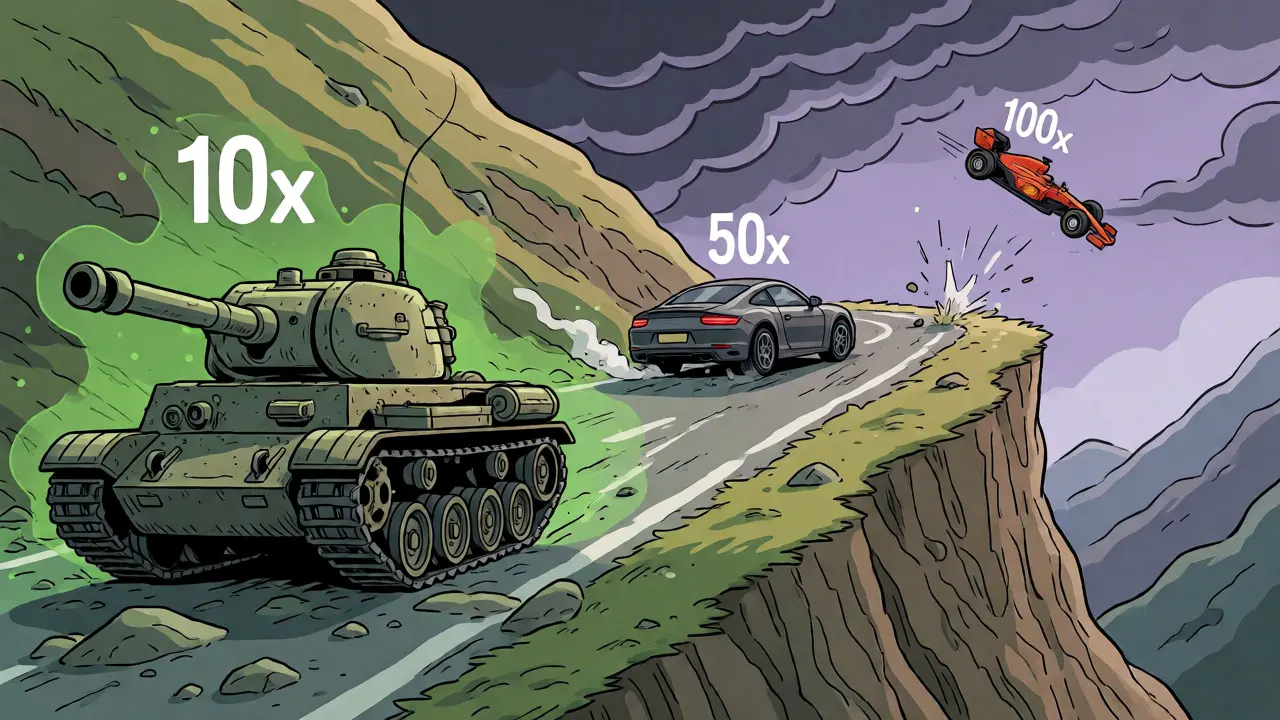
Leverage is the double-edged sword of cryptocurrency trading. It allows you to control large positions with small amounts of capital, amplifying both gains and losses. But understanding the math behind 10x, 50x, and 100x leverage is critical before you click that "Buy" button. Many beginners treat high leverage like a lottery ticket, not realizing it's more like driving a Formula 1 car without knowing how to brake. Let’s break down exactly what these numbers mean for your wallet.
What Is Leverage Really?
At its core, leverage is a borrowing mechanism. When you open a leveraged position, you aren't buying the asset outright with your own money. Instead, you deposit a portion of the total value-called margin-and the exchange lends you the rest. This borrowed capital lets you expose yourself to price movements far larger than your account balance would normally allow.
Think of it this way: If you have $1,000 and want to buy Bitcoin, you can only buy $1,000 worth of BTC. But with 10x leverage, that same $1,000 acts as collateral for a $10,000 position. If Bitcoin goes up by 10%, your $10,000 position gains $1,000 in value. That’s a 100% return on your original $1,000. Sounds great, right? Now flip the script. If Bitcoin drops by just 10%, you lose the entire $1,000. The exchange closes your position (liquidates it) to ensure they get their loan back. At higher leverage, that buffer shrinks dramatically.
The Math Behind 10x, 50x, and 100x
The difference between these leverage tiers isn't just about bigger wins; it’s about how much room your trade has to breathe before it dies. The higher the leverage, the tighter the stop-loss effectively becomes due to liquidation prices.
| Leverage Ratio | Total Position Size | Margin Required | Price Move for Liquidation | P&L on 1% Move |
|---|---|---|---|---|
| 10x | $10,000 | $1,000 | ~10% adverse move | ±$100 (10%) |
| 50x | $50,000 | $1,000 | ~2% adverse move | ±$500 (50%) |
| 100x | $100,000 | $1,000 | ~1% adverse move | ±$1,000 (100%) |
Look closely at the 100x row. A mere 1% drop in price wipes out your entire margin. Cryptocurrency markets routinely swing 1-3% in minutes. Using 100x leverage means you need to be almost perfectly timed. One wrong tick, one news headline, or one whale selling off, and you’re out. With 10x, you have ten times that breathing room. You can survive normal market noise. With 100x, you can’t.
Why High Leverage Feels Addictive (And Dangerous)
Human psychology plays a huge role here. When you use 100x leverage, small market movements feel massive because your P&L swings wildly. Seeing your account jump from +$50 to +$500 in seconds triggers a dopamine hit. It feels like free money. But the brain ignores the asymmetry of risk. While you might win small amounts frequently, a single loss at 100x leverage doesn't just erase profits-it erases the principal.
Experienced traders often warn that high-leverage trading resembles gambling more than investing. Why? Because predicting short-term price direction with certainty is nearly impossible. At 10x leverage, you can afford to be slightly wrong and still live to trade another day. At 100x, being slightly wrong kills you. The margin for error is razor-thin. If you don't understand concepts like funding rates and maintenance margins, you are essentially betting blindfolded.
Real-World Scenarios: Spot vs. Leverage
Let’s look at two traders, Alex and Jamie, who both believe Bitcoin will rise from $60,000 to $62,000 (a ~3.3% increase).
- Alex (Spot Trader): Buys $1,000 worth of BTC. Price rises 3.3%. Alex makes $33. If price drops 3.3%, Alex loses $33. Simple.
- Jamie (100x Leverage Trader): Opens a $100,000 position with $1,000 margin. Price rises 3.3%. Jamie makes $3,300-a 330% return! But wait. Before reaching $62,000, Bitcoin dips to $59,400 (a 1% drop). Jamie’s position is liquidated. He loses his entire $1,000. He never sees the upside.
This scenario highlights the biggest pitfall of high leverage: volatility. Markets rarely move in straight lines. They zigzag. High leverage requires you to catch the exact wave without getting knocked off during the chop. For most retail traders, the stress of managing a 100x position leads to emotional decision-making, causing them to exit too early or hold losers too long.
Choosing the Right Leverage Level
There is no "best" leverage for everyone. It depends on your strategy, experience, and risk tolerance. Here is a practical guide:
- Beginners (1x - 5x): Stick to spot trading or very low leverage. Focus on learning technical analysis and market structure. Your goal is survival, not maximum returns.
- Intermediate Traders (10x - 20x): Once you have consistent profitability in spot markets, try modest leverage. 10x offers significant amplification while keeping liquidation thresholds manageable (~10% adverse move). Use strict stop-losses.
- Advanced Scalpers (50x+): Only experienced traders with automated tools or deep liquidity knowledge should attempt 50x or 100x. These levels are for quick scalps where you enter and exit within minutes or hours. Holding overnight at 100x is extremely risky due to funding fees and overnight volatility.
Remember, increasing leverage doesn't change the probability of the market moving in your favor. It only changes the size of your bet. If you have a bad strategy, 100x leverage will just make you go broke faster.
Managing Risk: The Lifeline of Leveraged Trading
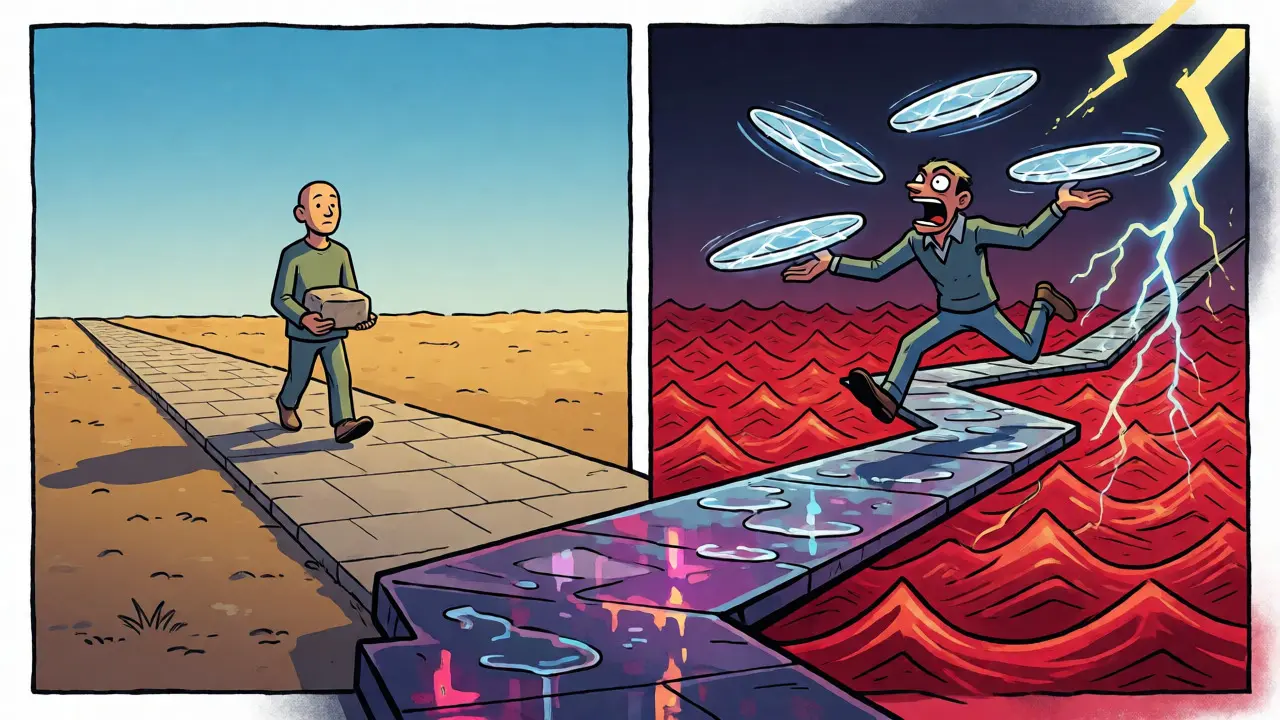
If you decide to use leverage, risk management isn't optional-it's mandatory. Here are three non-negotiable rules:
- Never risk more than 1-2% of your total account equity on a single trade. If you have $10,000 in your account, your maximum loss per trade should be $100-$200. This dictates your position size and leverage ratio.
- Always use Stop-Loss orders. Don't rely on manual exits. Market spikes happen in milliseconds. An automatic stop-loss protects you from flash crashes.
- Understand Funding Rates. Perpetual futures contracts (the most common leveraged products) have funding fees paid every 8 hours. If the market is bullish, longs pay shorts. These fees eat into your profits, especially if you hold positions for days.
Many traders ignore funding rates until they see their account draining slowly. On platforms like Bybit or Binance, high leverage combined with unfavorable funding rates can turn a winning trade into a net loser over time.
The Future of Leverage Regulations
It’s worth noting that regulatory landscapes are shifting. In the European Union, new MiFID II-inspired rules cap retail leverage for crypto assets, often limiting it to 2:1 or 5:1 depending on the asset class. This contrasts sharply with offshore exchanges offering 100x or even 500x. As regulators crack down on unregulated entities, access to extreme leverage may become harder for US and EU citizens. Always check local laws before opening an account on an international exchange.
Leverage is a tool, not a magic wand. Used correctly, it accelerates wealth building. Used incorrectly, it accelerates bankruptcy. Start small, respect the math, and never let greed override discipline.
Can I lose more than my initial investment with leverage?
In most standard isolated margin scenarios on major exchanges, your loss is capped at your initial margin (collateral). However, in rare cases of extreme market gaps or if you are using cross-margin mode with insufficient additional funds, you could face negative balances or auto-deleveraging events. Most modern exchanges implement insurance funds to cover these deficits, so typically, you cannot lose more than you deposited unless specific platform terms state otherwise.
Is 100x leverage suitable for beginners?
No. 100x leverage is highly unsuitable for beginners. It requires precise timing and strict risk management. A 1% adverse price movement results in total liquidation. Beginners lack the experience to handle such narrow margins for error and often suffer rapid account depletion. It is recommended to start with spot trading or 2x-5x leverage.
What is the difference between Cross and Isolated Margin?
In Isolated Margin, only the funds allocated to a specific position serve as collateral. If that position is liquidated, you only lose the margin assigned to it. In Cross Margin, your entire account balance serves as collateral for all open positions. This reduces the chance of liquidation for individual trades but puts your whole account at risk if one trade goes significantly wrong.
How do funding rates affect leveraged trades?
Funding rates are periodic payments exchanged between long and short traders in perpetual futures markets. If the rate is positive, longs pay shorts; if negative, shorts pay longs. High leverage amplifies the impact of these fees. Holding a 100x position for several days can result in significant costs that erode profits, making short-term scalping more viable than long-term holding at high leverage.
Does higher leverage guarantee higher profits?
No. Higher leverage increases potential profit *and* potential loss equally. It does not increase the probability of the market moving in your direction. If your entry point is poor, higher leverage simply ensures you get stopped out sooner. Profitability depends on market prediction accuracy and risk management, not just the leverage multiplier.