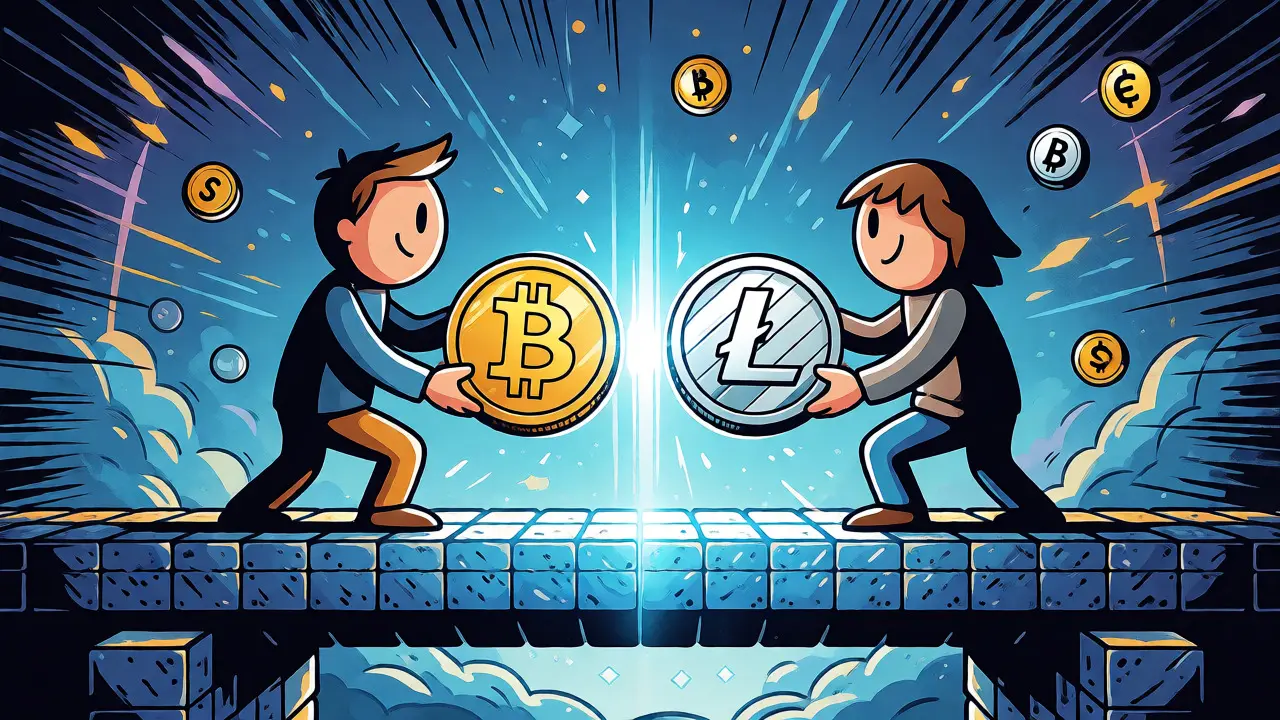
Imagine trading Bitcoin for Litecoin without ever handing your coins to a middleman. No KYC forms. No bank transfers. No risk of the exchange getting hacked and losing your funds. That was the promise of BarterDEX, a decentralized exchange that tried to solve crypto's biggest headache: trust.
Launched in 2016 as EasyDEX and rebranded in 2017, BarterDEX wasn't just another trading platform. It was an experiment in peer-to-peer freedom. Today, it’s mostly known by its successor name, AtomicDEX. But understanding BarterDEX is key to understanding where decentralized finance (DeFi) came from. If you’re digging through crypto history or considering atomic swap technology, here’s what actually happened.
The Core Idea: Trustless Trading via Atomic Swaps
Most people use centralized exchanges like Coinbase or Binance. You deposit money, they hold it, and you trade against their order book. Simple? Yes. Safe? Not always. Remember Mt. Gox? Or FTX? When you don’t control your private keys, you don’t own your crypto.
BarterDEX flipped this model on its head. It used atomic swap technology, a method allowing two parties to exchange different cryptocurrencies across different blockchains directly. Think of it like a digital escrow service built into the blockchain itself. User A sends BTC; User B sends LTC. The smart contract ensures both happen simultaneously or neither does. No intermediary needed.
This approach eliminated counterparty risk. If the other side didn’t have the funds, the swap simply didn’t complete. Your assets stayed in your wallet until the deal closed. For privacy advocates and security-conscious traders, this was a game-changer.
Fees and Financial Structure
How much did it cost to trade? Surprisingly little, especially compared to today’s gas fees on Ethereum-based DEXs.
| Role | Fee | Note |
|---|---|---|
| Taker | 0.15% | Competitive with CEXs |
| Maker | 0.00% | Incentivized liquidity |
| Network Fees | Standard | Depends on blockchain congestion |
The maker-taker model encouraged users to place limit orders (makers) rather than market orders (takers). Since makers provided liquidity, they paid nothing. Takers, who removed liquidity, paid a small fee. This kept spreads tight without requiring massive capital reserves from the platform itself.
Liquidity: The Biggest Hurdle
Decentralized exchanges often suffer from low liquidity. If no one is selling ETH when you want to buy, you can’t trade. BarterDEX tackled this with Liquidity Nodes.
These were essentially automated market makers before AMMs became trendy on Uniswap. Liquidity Nodes ran software that automatically bought and sold assets to stabilize prices in the order books. They acted as professional market makers, ensuring there was usually someone on the other side of your trade.
Did it work? Mostly. At its peak, BarterDEX supported trades for approximately 95% of all existing cryptocurrencies. That’s a huge number compared to most DEXs, which are limited to tokens on a single chain (like ERC-20 tokens on Ethereum).
User Experience: Not for Beginners
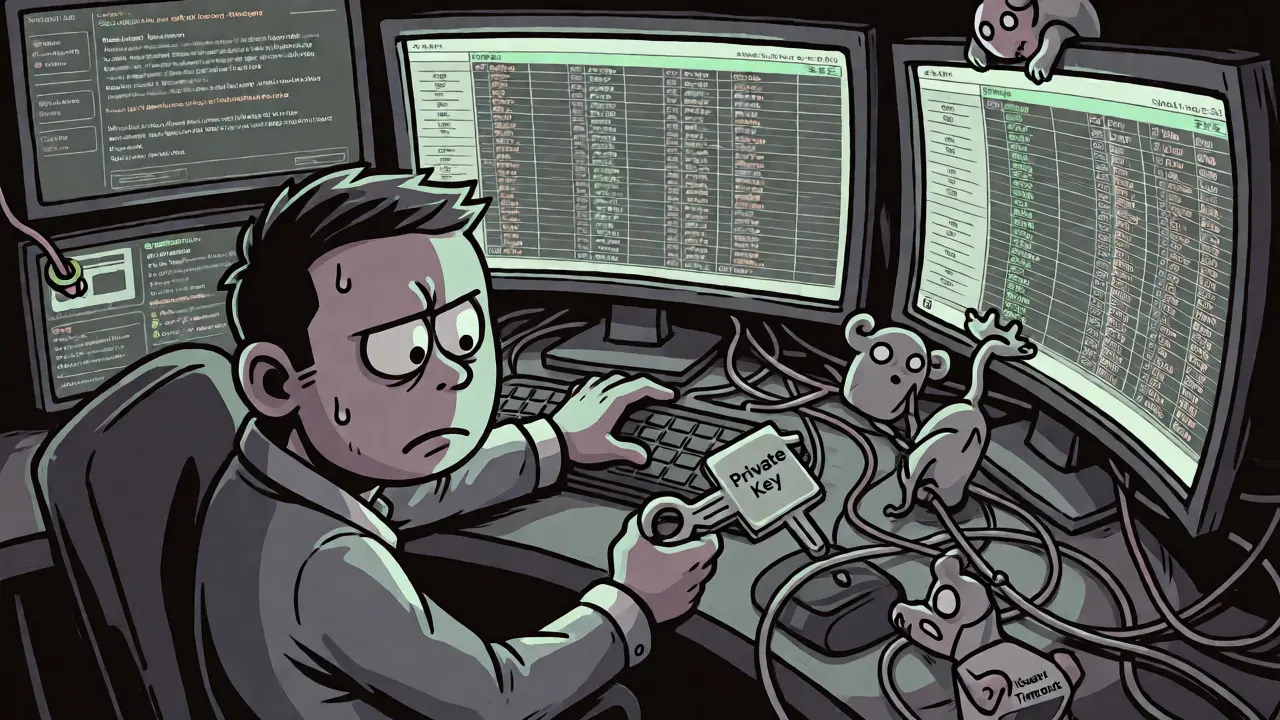
Here’s the catch. While the tech was brilliant, the user experience was… rough.
- No Fiat On-Ramps: You couldn’t deposit USD or EUR. You needed crypto already in your wallet to start trading.
- Technical Setup: Users had to download the Komodo Wallet app. Setting up an account took 15-20 minutes, but mastering atomic swaps took hours.
- Swap Failures: Early versions suffered from failed swaps due to network timeouts or node issues. About 23% of GitHub issues in 2018 related to swap failures.
If you were a developer or a hardcore crypto enthusiast, you probably loved it. If you were a casual investor wanting to buy some Bitcoin with your credit card, BarterDEX was frustrating. There was no "Buy Now" button. Just order books and complex protocols.
Comparison: BarterDEX vs. Centralized Exchanges
Why choose BarterDEX over Coinbase? Let’s break down the trade-offs.
| Feature | BarterDEX | Coinbase (CEX) |
|---|---|---|
| Custody | Non-custodial (You hold keys) | Custodial (Exchange holds keys) |
| KYC Required | No | Yes |
| Fiat Support | No | Yes (USD, EUR, etc.) |
| Asset Variety | ~95% of all coins | ~235 major coins |
| Speed | Slower (blockchain dependent) | Instant (internal ledger) |
BarterDEX won on privacy and asset variety. Centralized exchanges won on speed, ease of use, and fiat access. It wasn’t a fair fight-it was a choice between convenience and sovereignty.
The Evolution: From BarterDEX to AtomicDEX
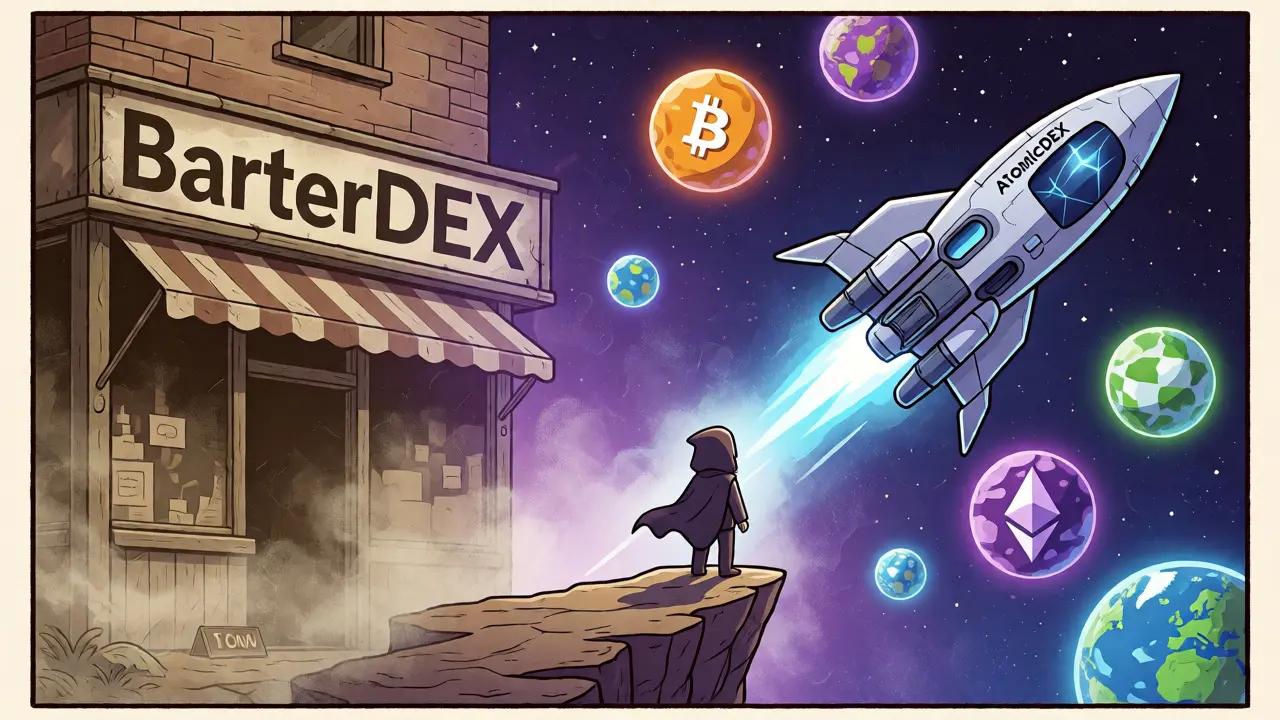
In July 2019, BarterDEX rebranded to AtomicDEX. This wasn’t a shutdown; it was a maturation. The team behind it, Komodo Platform, wanted to emphasize the core technology-atomic swaps-rather than the barter concept.
AtomicDEX inherited BarterDEX’s codebase but improved the interface and expanded mobile support. It also integrated more deeply with Komodo’s ecosystem, including the Jumblr anonymizer service, which allowed for private transactions using KMD tokens.
Today, AtomicDEX continues to evolve. It supports cross-chain swaps between Bitcoin, Ethereum, Litecoin, Zcash, and dozens of other chains. The roadmap includes better layer-2 integration and eventually, fiat on-ramps, though those have been slow to materialize.
Who Should Use AtomicDEX (Formerly BarterDEX)?
You might still find value in this platform if:
- You prioritize privacy: You don’t want to share your ID with an exchange.
- You hold altcoins: You own obscure tokens not listed on Binance or Coinbase.
- You understand blockchain mechanics: You know what a private key is and how confirmations work.
- You hate custodial risk: You sleep better knowing no exchange can freeze your funds.
It’s less ideal for beginners or those looking to quickly convert salary income into crypto. The learning curve is real.
Final Verdict: A Niche but Vital Player
BarterDEX didn’t take over the world. Centralized exchanges still dominate volume. But it proved that non-custodial trading at scale was possible. It paved the way for modern DeFi solutions and remains a go-to for cross-chain interoperability.
If you’re exploring decentralized trading, start with AtomicDEX. It’s the direct descendant of BarterDEX, with a cleaner UI and broader support. Just be prepared to spend some time learning the ropes. The freedom comes with responsibility.
Is BarterDEX still active?
No, BarterDEX was rebranded to AtomicDEX in July 2019. Development on the original BarterDEX codebase ceased around mid-2019. All current activity happens under the AtomicDEX brand.
Does BarterDEX require KYC verification?
No. As a decentralized, non-custodial exchange, BarterDEX (and now AtomicDEX) does not require Know Your Customer (KYC) verification. Users retain full control of their private keys and identity.
Can I buy crypto with fiat currency on BarterDEX?
No. BarterDEX did not support fiat deposits. You needed to already possess cryptocurrency to trade on the platform. This limitation has been partially addressed in newer iterations of AtomicDEX through third-party integrations, but native fiat support remains limited.
What are the fees on BarterDEX?
Takers paid a 0.15% fee, while makers paid 0%. Additionally, standard network transaction fees applied for moving assets on their respective blockchains. These fees were generally lower than many centralized exchanges.
Is AtomicDEX safe?
AtomicDEX is considered safe because it is non-custodial. Your private keys never leave your device. However, safety depends on your own security practices. If you lose your seed phrase, you lose your funds. Smart contract risks and swap failure bugs are also factors to consider.