International Money Transfer Cost Calculator
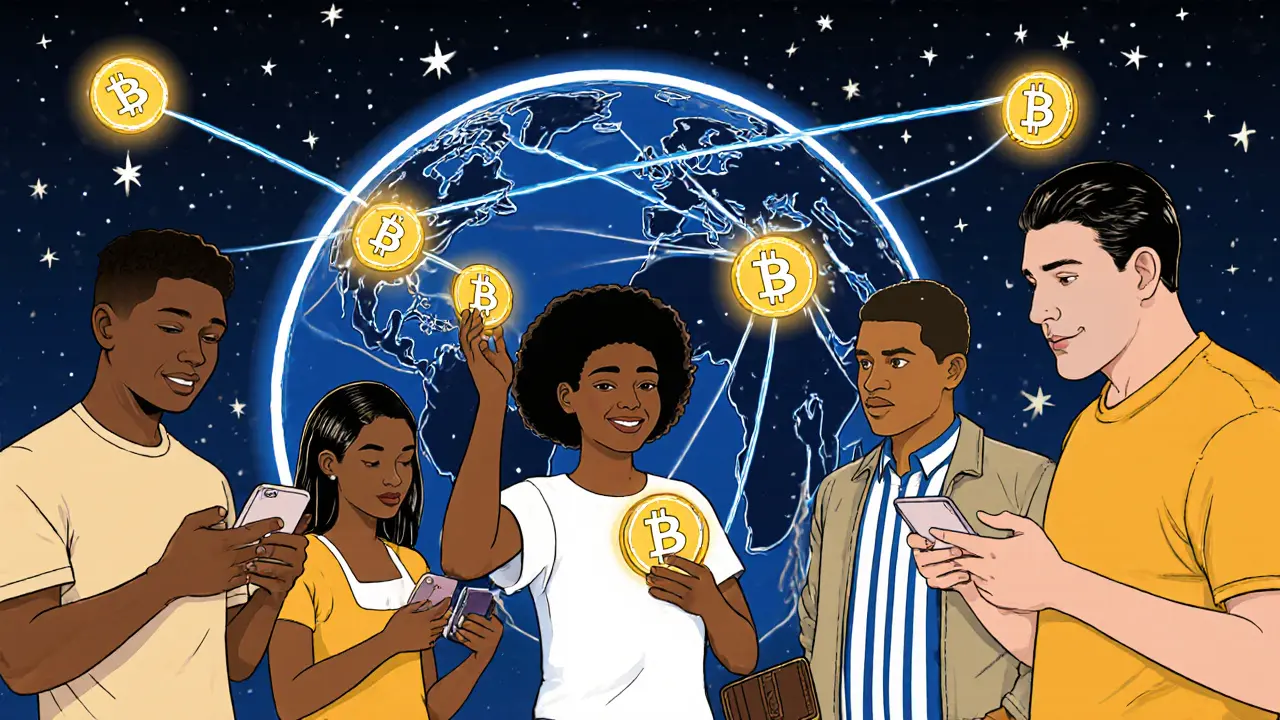
Imagine sending money to someone across the world without a bank, without waiting days, and without paying $30 in fees. That’s not science fiction - it’s what decentralized peer-to-peer (P2P) cryptocurrency networks do every day. No middlemen. No gatekeepers. Just direct, secure, and verifiable transfers between people, anywhere, anytime.
How Decentralized P2P Networks Work
At the core of Bitcoin and Ethereum is a simple but powerful idea: let everyone in the network keep a copy of the transaction ledger. Every time someone sends crypto, that transaction is broadcast to thousands of computers - called nodes - around the globe. These nodes check if the sender actually owns the coins, if the signature is valid, and if the rules of the network are followed. Once agreed upon, the transaction is grouped into a block and added to the chain. This process is called consensus, and it happens without any central authority deciding what’s allowed. Bitcoin uses Proof-of-Work, where miners solve complex math puzzles to add blocks. Ethereum switched to Proof-of-Stake in 2022, where validators lock up their own crypto as collateral to propose and confirm blocks. Both systems ensure no single entity controls the network. Even if half the nodes go offline, the rest keep running. That’s why these networks have over 99.98% uptime - far better than most banks or payment processors.No More Counterparty Risk
Traditional finance is built on trust. You trust your bank to hold your money. You trust PayPal to process your payment. You trust your broker to settle your trade. But what if they fail? What if they freeze your account? What if they get hacked? In a decentralized P2P network, you don’t need to trust anyone. Your coins are stored in your wallet, controlled only by your private key. When you send Bitcoin or Ethereum, the transaction is executed automatically by code - not by a person or company. There’s no one to reverse it, freeze it, or delay it. This is called trustless execution, and it’s revolutionary for people in countries where banks are unreliable or politically controlled. In Venezuela, where inflation hit 1,000,000% in 2023, families used P2P crypto to buy food and pay bills. In Nigeria, where bank transfers often take days and charge high fees, small businesses use crypto to receive payments from clients abroad. These aren’t edge cases - they’re the norm for millions.Lower Fees, Faster Cross-Border Payments
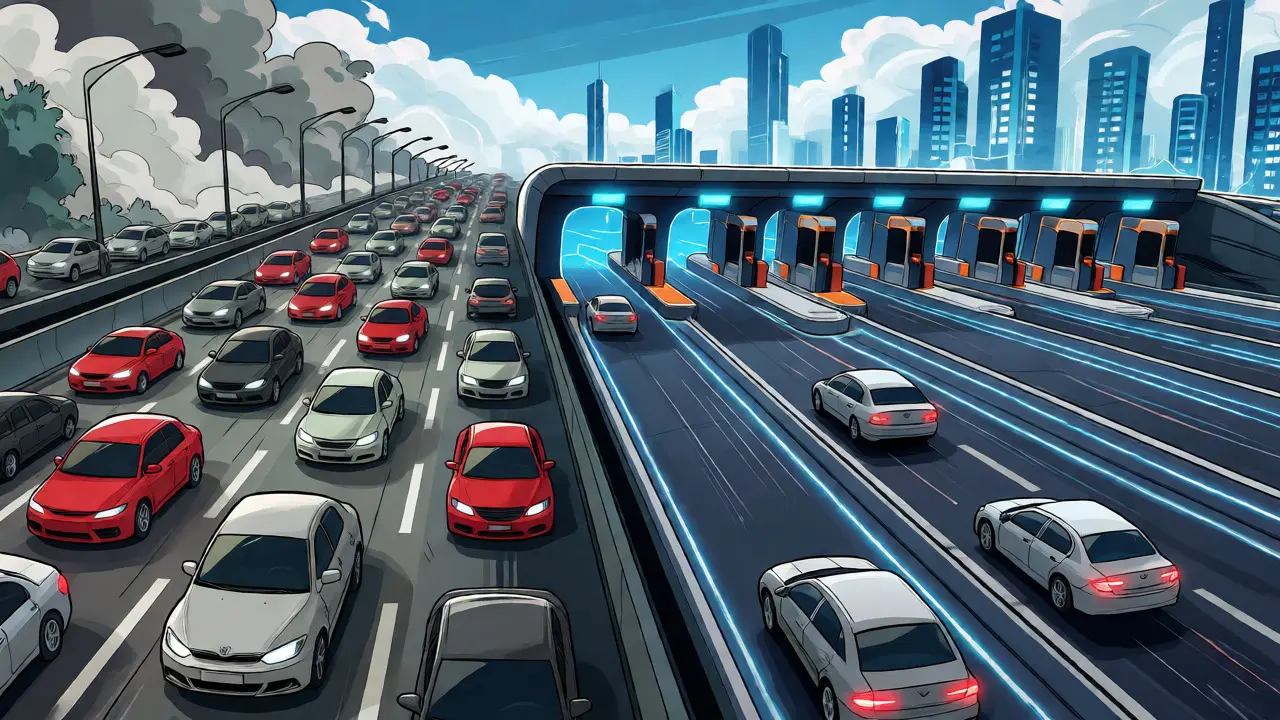
Sending money internationally through Western Union or SWIFT can cost $25-$45 and take 3-5 business days. With a decentralized network, you can send $1,200 from the Philippines to Mexico in under 10 minutes for less than $0.50. That’s not a promotion - it’s how the system works. Decentralized exchanges (DEXs) like Uniswap and PancakeSwap charge around 0.3% per trade. Centralized exchanges like Coinbase or Binance charge 0.5% to 1.5%. For someone trading $10,000 a month, that’s $120 in savings just on fees. Add in faster settlement - crypto trades settle in seconds, not days - and the advantage becomes obvious. Overstock.com started using crypto for international B2B payments in 2023. They cut settlement time from 14 days to under 5 hours and slashed transaction costs by 63%. That’s real money saved by a Fortune 500 company.
Privacy Without KYC
Most banks and centralized exchanges require you to hand over your ID, proof of address, and sometimes even a selfie. This is called KYC - Know Your Customer. It’s meant to stop crime, but it also means every transaction you make can be tracked, monitored, and reported. On decentralized networks, you can trade without ever revealing your identity. Monero uses ring signatures and stealth addresses to make transactions completely untraceable. Even on Bitcoin or Ethereum, you don’t need to link your real name to your wallet. You just need a seed phrase and a wallet app. This matters for activists in Iran, journalists in Russia, or small business owners in sanctioned regions. In 2023, Iranian citizens preserved over $2.3 billion in assets using P2P crypto networks after their government blocked access to foreign banks. That’s not speculation - it’s documented by researchers at Cornell University.Resilience Against Outages and Censorship
Centralized systems have one fatal flaw: a single point of failure. If Visa’s main server goes down, millions of transactions stop. If a bank’s database is corrupted, accounts get locked. In 2023, the Federal Reserve reported that 78% of major financial outages were caused by single-point failures. Decentralized networks have no such weakness. Even if 40% of nodes go offline - due to power outages, government crackdowns, or cyberattacks - the rest keep running. HiveNet’s stress test in 2023 confirmed this: P2P networks kept functioning under conditions that would shut down any traditional financial system. Censorship resistance is another key benefit. In China, the government banned crypto in 2021. P2P transaction volume dropped 98%. But it didn’t disappear. It went underground - using mesh networks, local exchanges, and cash-to-crypto kiosks. In El Salvador, Bitcoin is legal tender. Businesses accept it. The government built Bitcoin ATMs. The system works because it doesn’t rely on permission.Smart Contracts and Automated Finance
Ethereum didn’t just make crypto payments possible - it made programmable money possible. Smart contracts are self-executing agreements written in code. They trigger actions when conditions are met. Need to pay a freelancer when a project is delivered? Set up a smart contract. Want to lend crypto and earn interest without a bank? Use a DeFi protocol like Aave or Compound. Automated Market Makers (AMMs), like Uniswap, let you trade crypto without an order book. Instead, liquidity pools - funded by users like you - hold pairs of tokens. The price is set by math, not by a broker. Uniswap v3 improved capital efficiency by 4,000% compared to v2, meaning less money is needed to support the same volume of trades. This isn’t just for traders. Farmers in Kenya use smart contracts to get paid instantly when their crops are delivered. Freelancers in India use them to lock payments until milestones are completed. Automation removes human bias, delays, and corruption.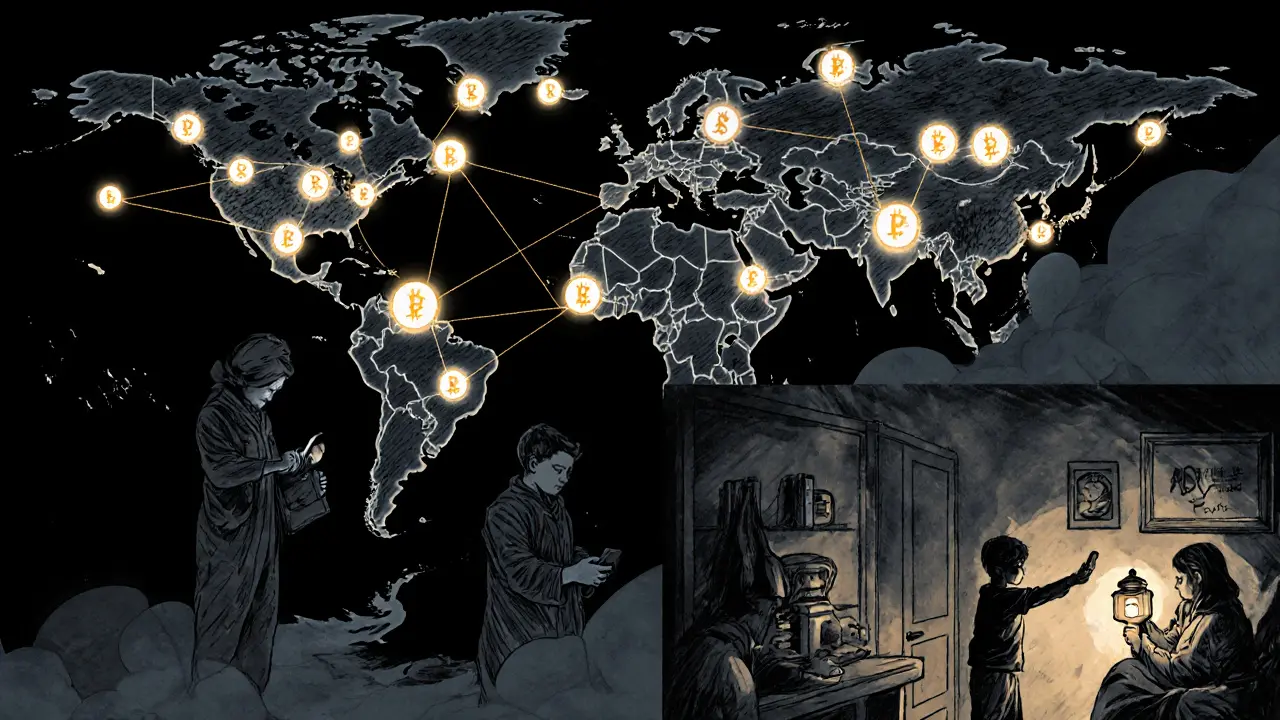
Challenges Are Real - But Not Dealbreakers
Yes, there are downsides. Bitcoin processes only 7 transactions per second. Visa handles 65,000. That’s a problem - but it’s being solved. Ethereum’s Dencun upgrade in March 2024 cut layer-2 transaction costs by 90%. Now, swapping tokens on Arbitrum or Optimism costs about $0.03. That’s cheaper than a coffee. Liquidity can be thin during market crashes. In May 2021, Uniswap saw 15% slippage on large trades. That’s painful for traders - but rare for small users. Most people aren’t moving millions. They’re sending $50 or $200. For them, slippage is negligible. The biggest risk isn’t the tech - it’s the user. Over 3.7 billion in crypto was lost in 2023 because people forgot their seed phrases or clicked on phishing links. Wallets aren’t like bank apps. If you lose your key, your money is gone forever. That’s why education matters. Platforms like Ethereum.org offer free, high-quality guides. Coursera’s Blockchain Basics course has a 78% completion rate among tech-savvy learners.Who’s Using This - And Why It’s Growing
The total value locked in decentralized finance (DeFi) hit $112.7 billion in March 2024. That’s up from $25.2 billion in early 2022. Southeast Asia leads adoption: 41% of global P2P crypto volume comes from Vietnam, Indonesia, and the Philippines. In Vietnam, 21% of adults use crypto regularly. Even big corporations are testing it. 73% of Fortune 500 companies are experimenting with P2P crypto networks, according to Gartner. Only 18% have gone live, but that’s changing fast. Why? Because the cost savings and speed are too good to ignore. User demographics are shifting too. 68% of DEX users are under 35. 82% have a background in tech or finance. But that’s changing. As wallets get simpler - like Phantom for Solana or MetaMask for Ethereum - non-tech users are jumping in. Trustpilot reviews for PancakeSwap show a 4.3/5 rating, with users praising no KYC and lower fees.What’s Next?
The World Economic Forum predicts P2P crypto networks will handle 15% of global cross-border payments by 2027 - up from 3.2% today. Central banks are testing digital currencies (CBDCs) that could connect to these networks. Project mBridge, led by seven central banks including China, Japan, and the UAE, is already testing real-time cross-border settlements using blockchain. Regulation is coming. The EU’s MiCA rules will require DEXs to collect KYC for on-ramps by 2025. That could reduce privacy. But the core network - the P2P layer - remains censorship-resistant. You can still send crypto peer-to-peer without touching a regulated exchange. The technology isn’t perfect. But it’s working. For millions, it’s the only way to access finance. For businesses, it’s cutting costs. For developers, it’s building the future of money.Decentralized P2P cryptocurrency networks aren’t just a better way to send money. They’re a new kind of financial system - one that doesn’t ask for permission, doesn’t need a middleman, and can’t be shut down.
Are decentralized P2P cryptocurrency networks safe?
The networks themselves are extremely secure, using advanced cryptography like SHA-256 and Keccak-256 with 256-bit encryption. Attacks on the blockchain are nearly impossible. But the biggest risk is user error - losing your private key, falling for phishing scams, or accidentally approving malicious smart contracts. Always double-check addresses and never share your seed phrase.
Can I use P2P crypto without a bank account?
Yes. You don’t need a bank to use P2P crypto. You only need a smartphone or computer and a wallet app like MetaMask, Trust Wallet, or Phantom. You can buy crypto with cash via P2P marketplaces like LocalBitcoins or Paxful, or receive it directly from someone else. This is how millions in developing countries access financial services for the first time.
How fast are transactions on decentralized networks?
Bitcoin confirms transactions every 10 minutes on average. Ethereum takes about 12-15 seconds. But most users now use layer-2 networks like Arbitrum or Optimism, which settle in under 2 seconds and cost pennies. For everyday use - sending $10 to a friend or buying a coffee - it’s faster than most bank transfers.
Is crypto really cheaper than traditional remittances?
Absolutely. Sending $500 from the U.S. to Mexico via Western Union costs $25-$45 and takes 1-3 days. Using a P2P crypto network like Stellar or Ethereum, it costs under $1 and takes 5-10 minutes. Telcoin’s 2024 case study showed an average fee of $0.47 and a 8.2-minute delivery time. That’s a 98% cost reduction.
Do I need to be tech-savvy to use P2P crypto?
Not anymore. Wallets like MetaMask and Trust Wallet are designed to be as simple as a banking app. You just need to understand a few basics: never share your seed phrase, always verify addresses, and don’t click random links. Coinbase’s 2024 study found that 68% of new users master basic transactions within two weeks. You don’t need to be a coder - just careful.
What’s the difference between a centralized and decentralized exchange?
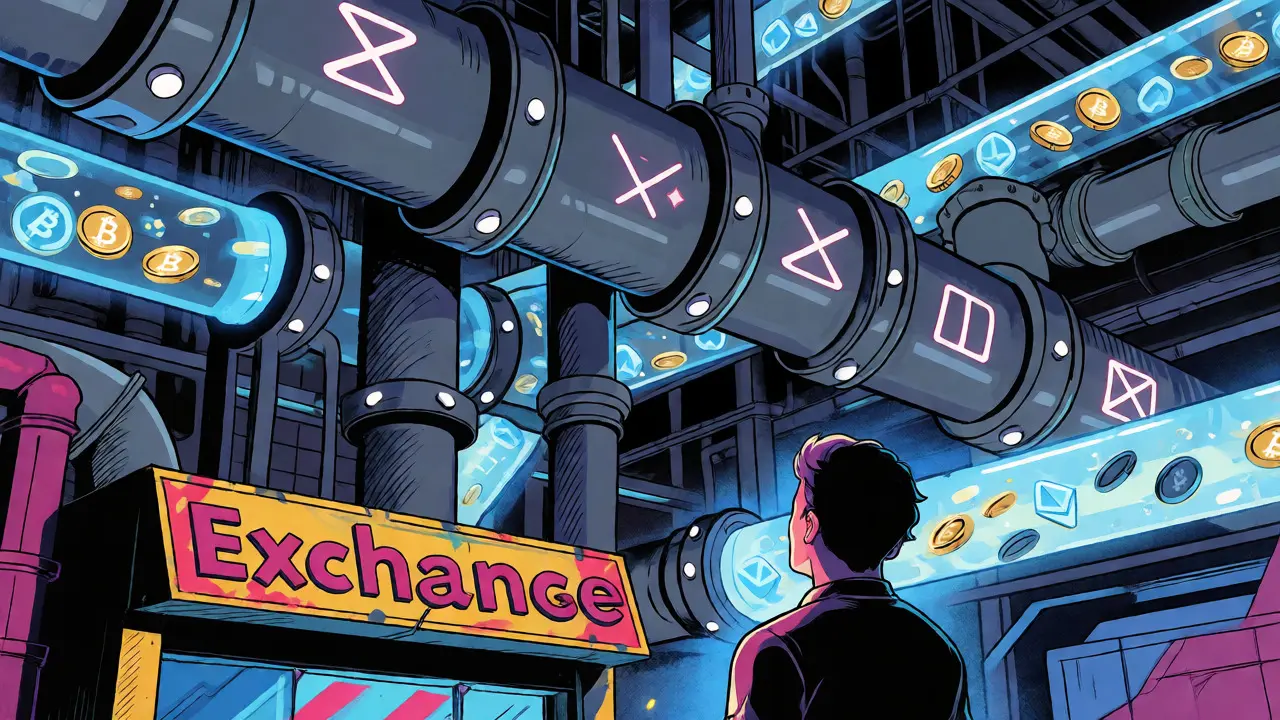
A centralized exchange (CEX) like Binance or Coinbase holds your crypto for you, like a bank. You need to verify your identity, and they can freeze your account. A decentralized exchange (DEX) like Uniswap lets you trade directly from your wallet. No KYC, no account freezes, no middleman. You control your keys. The trade-off? You’re responsible for your own security.

Eddy Lust
November 26, 2025 AT 02:27man i just sent $20 to my cousin in mexico using p2p crypto and it cleared in 7 minutes for 37 cents... i swear i thought my phone glitched. no bank, no forms, no 'we need to verify your identity again'... just boom, done. this is what freedom looks like.
fanny adam
November 26, 2025 AT 08:32Let us not be naive. The very architecture of decentralized networks enables illicit capital flight, tax evasion, and state subversion. The 99.98% uptime you cite is not a virtue-it is a vulnerability exploited by authoritarian regimes to bypass sanctions. This is not financial innovation; it is systemic erosion of the rule of law, masked as liberation.
SARE Homes
November 26, 2025 AT 13:02YOU THINK THIS IS SAFE???!?!?!?!!?!!??! People lose their life savings because they copy-paste the wrong wallet address!!! And you’re just like ‘ohhh it’s so fast’-WHAT ABOUT THE FACT THAT NO ONE CAN HELP YOU???!?!?!!?!?!!? Your ‘freedom’ is just a dumpster fire with a seed phrase!!!
Casey Meehan
November 27, 2025 AT 12:40bro i just used uniswap to swap my dogecoin for shiba and it was smoother than my morning coffee ☕️💸 the gas fee was less than my latte and i didn’t even have to talk to a human!! 🤖🚀
Martin Doyle
November 27, 2025 AT 13:12You’re all missing the point. This isn’t about ‘saving money’ or ‘being fast’-it’s about dismantling the entire parasitic financial elite. Banks don’t create value-they extract rent. Every fee, every delay, every frozen account is a tax on the working class. Crypto doesn’t just compete with them-it makes them obsolete. If you’re still using SWIFT in 2024, you’re literally paying to be exploited.
Grace Zelda
November 29, 2025 AT 09:00it’s wild how this tech turns ‘trust’ into a relic. i used to think ‘no middleman’ meant chaos-but now i see it’s just trust in math instead of men. and honestly? math doesn’t lie, doesn’t get bribed, and doesn’t panic when the news says ‘market crash.’ i’m not a coder, but i trust a 256-bit key more than a bank manager with a 3% bonus target.
Sam Daily
December 1, 2025 AT 06:49my aunt in rural india just got paid for her handmade quilts via solana wallet-no bank, no middleman, no ‘we need your documents.’ she didn’t even know what ‘blockchain’ meant-just tapped ‘receive’ and saw the money. that’s not tech. that’s dignity. 🙏💛
Sierra Myers
December 2, 2025 AT 21:22okay but like… what if your phone dies? 😅 you just lose everything? no customer service? no ‘forgot password’ button? i mean… cool i guess… but i’m still gonna keep my $500 in chase. at least they’ll call me if my card gets blocked.
Susan Dugan
December 3, 2025 AT 20:33listen-this isn’t magic. it’s mechanics. and mechanics can be taught. i taught my 72-year-old dad how to use metamask. he sent $100 to his grandkid in the Philippines in 90 seconds. he didn’t cry about ‘security’-he cried because he finally felt like he could help again. that’s the real win. not the tech. the human.