You want a place to trade obscure altcoins without jumping through ten hoops, but you also don’t want your money vanishing overnight. That’s the tightrope walk of using BigONE. It’s not the biggest name in the room-that crown belongs to Binance or Coinbase-but it has carved out a niche for traders who love variety and high leverage. But here is the elephant in the room: BigONE suffered a massive $27 million hack in July 2025. Does that kill the platform? Not necessarily. But it changes how you should approach it.
This isn’t just another copy-paste list of features. We are digging into whether BigONE is still worth your time after the breach, what the real costs look like when you factor in spreads, and if their "full compensation" promise actually holds water. If you’re looking for a quick summary before reading the deep dive, here is what you need to know right now.
| Feature | Details |
|---|---|
| Founded | 2017 (Headquartered in Singapore/Netherlands) |
| US Access | No (Restricted) |
| Cryptos Supported | 500+ |
| Max Leverage | 100x (Perpetual Futures) |
| Spot Fee (Maker/Taker) | 0.2% / 0.2% |
| Major Incident | $27M Hot Wallet Hack (July 2025) |
Who Is BigONE Actually For?
Let’s be real: if you only trade Bitcoin and Ethereum, you probably don’t need BigONE. You have better options with deeper liquidity on major exchanges. BigONE shines when you are hunting for the next gem-the small-cap altcoins that haven’t hit the big leagues yet. They list over 500 cryptocurrencies. That is a lot of noise, sure, but it also means access to projects that are too new or too small for Kraken or Coinbase.
The platform targets international users primarily in Asia-Pacific, Europe, and emerging markets like Brazil and Vietnam. If you live in the United States, stop reading this section because BigONE blocks US residents. This isn’t a suggestion; it’s a hard restriction due to regulatory hurdles. So, if you’re in Boulder or anywhere else in the States, you’ll need to look elsewhere unless you’re willing to navigate some gray-area compliance issues.
For everyone else, the appeal lies in the derivatives market. BigONE offers perpetual contracts with up to 100x leverage. That is aggressive. For context, many regulated European exchanges cap leverage at 30x or even lower for retail clients. High leverage means high risk, obviously, but for experienced traders who know how to manage liquidation prices, it offers significant capital efficiency. You can control a large position with a smaller amount of collateral.
The July 2025 Hack: What Went Wrong?
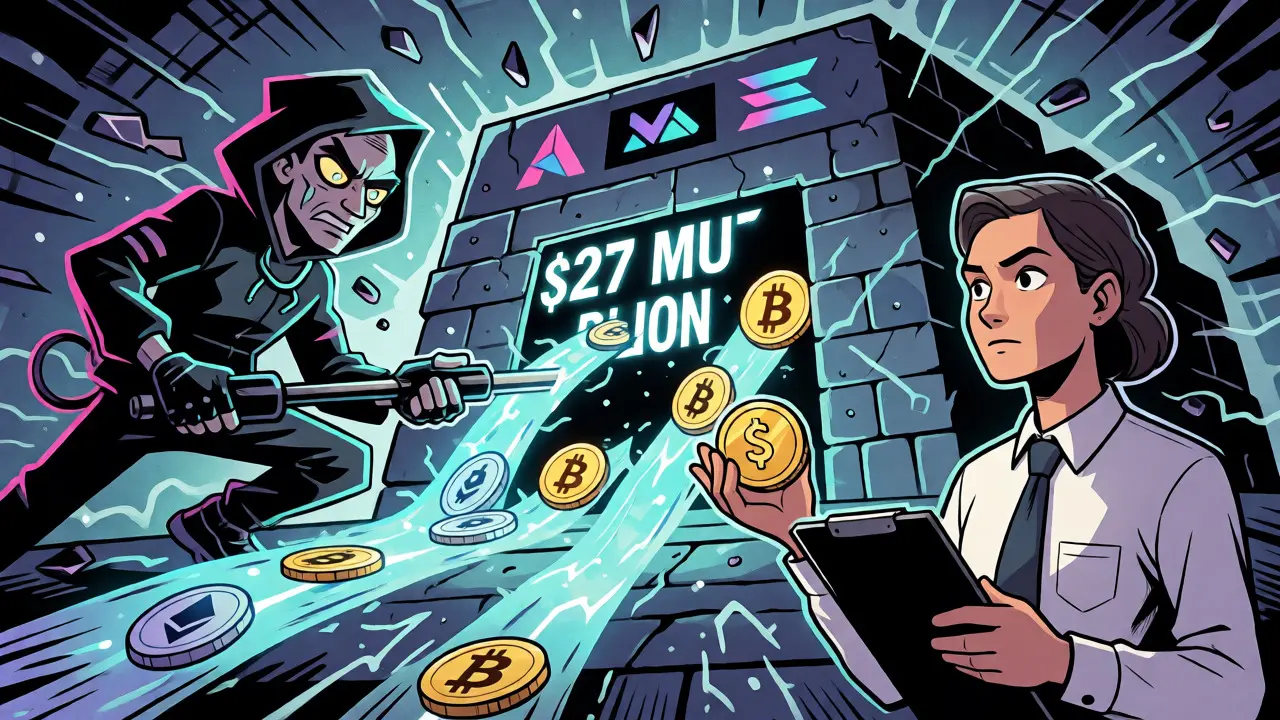
You cannot talk about BigONE without addressing the security breach. On July 16, 2025, hackers exploited vulnerabilities in BigONE’s hot wallets. They stole approximately $27 million worth of crypto assets. This wasn’t a cold storage failure-your private keys were safe-but it was a classic hot wallet attack. The stolen funds moved across multiple chains, including Bitcoin, Ethereum, Tron, Solana, and BNB Chain.
Here is the critical part: BigONE claimed full responsibility. They stated that all user balances would be covered by their own reserves. They didn’t freeze withdrawals indefinitely, which is a good sign. Instead, they paused withdrawals temporarily while working with blockchain security firm SlowMist to trace the stolen assets. Within weeks, services resumed. Did they actually pay everyone back? Most reports suggest yes, but trust takes time to rebuild. If you deposit now, you are betting that their security upgrades post-hack are robust enough to prevent a repeat performance.
Why does this matter to you? Because centralized exchanges are honeypots. When a mid-tier exchange gets hacked, it often signals weak internal controls. BigONE responded by implementing stricter penetration testing and bug bounty programs. But remember, no system is perfect. Keep an eye on their status page and community forums. If you see rumors of delayed withdrawals again, pull your funds immediately.
Fees and Trading Costs: Are They Cheap?
Fee structures are where exchanges try to hide their profit margins. BigONE’s published rates look decent on paper, but you need to look closer.
- Spot Trading: Standard maker/taker fees start at 0.2%. This is higher than Binance’s base rate (which can go as low as 0.1% or less with BNB discounts) but comparable to many mid-tier competitors.
- Futures Trading: Maker fees are 0.02%, and taker fees are 0.06%. These are competitive for high-frequency futures traders.
- Withdrawal Fees: This is the hidden killer. While trading fees are transparent, withdrawal fees vary wildly by coin. For popular coins like BTC or ETH, fees might be reasonable. For obscure altcoins, network congestion plus exchange markup can make withdrawing expensive. Always check the specific withdrawal fee for the asset you hold before you buy.
There are no minimum deposit requirements, which is great for beginners wanting to test the waters with $10 or $20. However, VIP levels exist. If you trade millions of dollars a month, you get fee discounts. For the average retail trader, those tiers are irrelevant. Don’t let the marketing fool you into thinking you’ll unlock elite status by trading a few thousand dollars a week.
One thing to watch out for is the spread. In less liquid pairs (those obscure altcoins), the difference between the buy and sell price can be wider than the actual trading fee. A 0.2% fee doesn’t help if the spread eats up another 1-2% of your value. Always use limit orders instead of market orders on low-volume pairs to avoid getting slipped.
Platform Experience and Tools
BigONE uses a proprietary version of TradingView for its charts. If you’ve used TradingView before, you’ll feel right at home. The interface is clean, responsive, and packed with technical indicators. You can draw trendlines, apply Fibonacci retracements, and set alerts directly on the chart. This is a huge plus compared to exchanges with clunky, outdated interfaces.
The mobile app is available for both iOS and Android. User reviews are mixed. Some praise the speed and ease of placing trades, while others complain about occasional lag during high-volatility events. During the hack, for instance, server load spiked, causing delays. Post-upgrade, performance seems stable, but always keep a browser tab open as a backup.
Deposit methods are extensive. You can use credit/debit cards, PayPal-like electronic wallets, Alipay, WeChat Pay, and direct crypto transfers. This flexibility is vital for global users who might not have access to traditional banking rails in their country. However, fiat deposits via card often come with higher processing fees from third-party providers like Simplex. Calculate the total cost before funding your account.
Passive Income Opportunities
If you aren’t actively trading, BigONE offers several ways to earn yield. This is a strong selling point for holders who believe in long-term growth but want some income in the meantime.
- Staking: Support for various proof-of-stake coins. Rates fluctuate based on network conditions.
- Dual Investment: A structured product where you lock up funds for a short term with the potential for higher returns if the price hits a target.
- Liquidity Mining: Provide liquidity to certain pools and earn rewards. Watch out for impermanent loss here.
- Copy Trading: Mirror the moves of successful traders. This is risky because past performance never guarantees future results, and you might end up copying bad decisions.
These features turn BigONE into more than just a trading venue. It becomes a financial hub. But remember, every yield opportunity carries risk. Staking involves lock-up periods; dual investment involves market risk. Read the fine print on each product before committing capital.
Customer Support and Reputation
Support quality is a common pain point for mid-tier exchanges. BigONE offers 24/7 support via email, ticket systems, and live chat. There is no phone number. If you have an urgent issue, like a stuck withdrawal, you rely on tickets or chat.
User sentiment on Trustpilot and Reddit is polarized. Before the hack, ratings were mediocre due to slow response times. After the hack, many users praised the transparency and quick resolution. However, complaints persist about verification delays. KYC (Know Your Customer) checks can take days, sometimes longer if documents are unclear. Prepare your ID and proof of address carefully to avoid unnecessary back-and-forth.
Is BigONE trustworthy? It’s complicated. It’s not a scam-they’ve been operating since 2017 and have proof of reserves audits. But it’s not bulletproof either. The 2025 hack proved that vulnerabilities exist. Treat it as a tool, not a bank vault. Use it for active trading and altcoin exposure, but consider moving long-term holdings to self-custody wallets.
Verdict: Should You Use BigONE?
BigONE is a solid choice for non-US traders who want access to a wide range of altcoins and high-leverage futures. The interface is professional, fees are reasonable, and passive income options add value. However, the security history requires caution. Do not keep your entire portfolio on the exchange. Use it to execute trades, then withdraw profits to a hardware wallet.
If you are a beginner, the learning curve is manageable, but the complexity of futures products can overwhelm you. Start with spot trading. If you are an advanced trader, the 100x leverage and deep altcoin selection offer unique opportunities that larger exchanges miss.
Is BigONE safe to use in 2026?
BigONE has implemented enhanced security measures following the July 2025 hack, including regular penetration testing and bug bounties. While no centralized exchange is 100% immune to attacks, BigONE’s response to the incident demonstrated resilience. However, users should still practice prudent risk management by not holding excessive funds on the platform.
Can US citizens use BigONE?
No, BigONE restricts access to residents and citizens of the United States due to regulatory compliance requirements. American investors must choose alternative exchanges that are licensed to operate in the US.
What happened during the BigONE hack?
In July 2025, hackers exploited hot wallet vulnerabilities to steal approximately $27 million in crypto assets. Private keys remained secure, and BigONE covered the losses from its own reserves, resuming normal operations shortly after.
Does BigONE have a native token?
Yes, BigONE has a native utility token called BIG. Holding BIG can provide fee discounts and other benefits within the ecosystem, though its impact on trading costs is less pronounced than tokens on larger exchanges like Binance (BNB).
How do I verify my account on BigONE?
Account verification requires submitting a government-issued ID and proof of address. The process typically takes 1-3 business days. Ensure your documents are clear and legible to avoid delays.