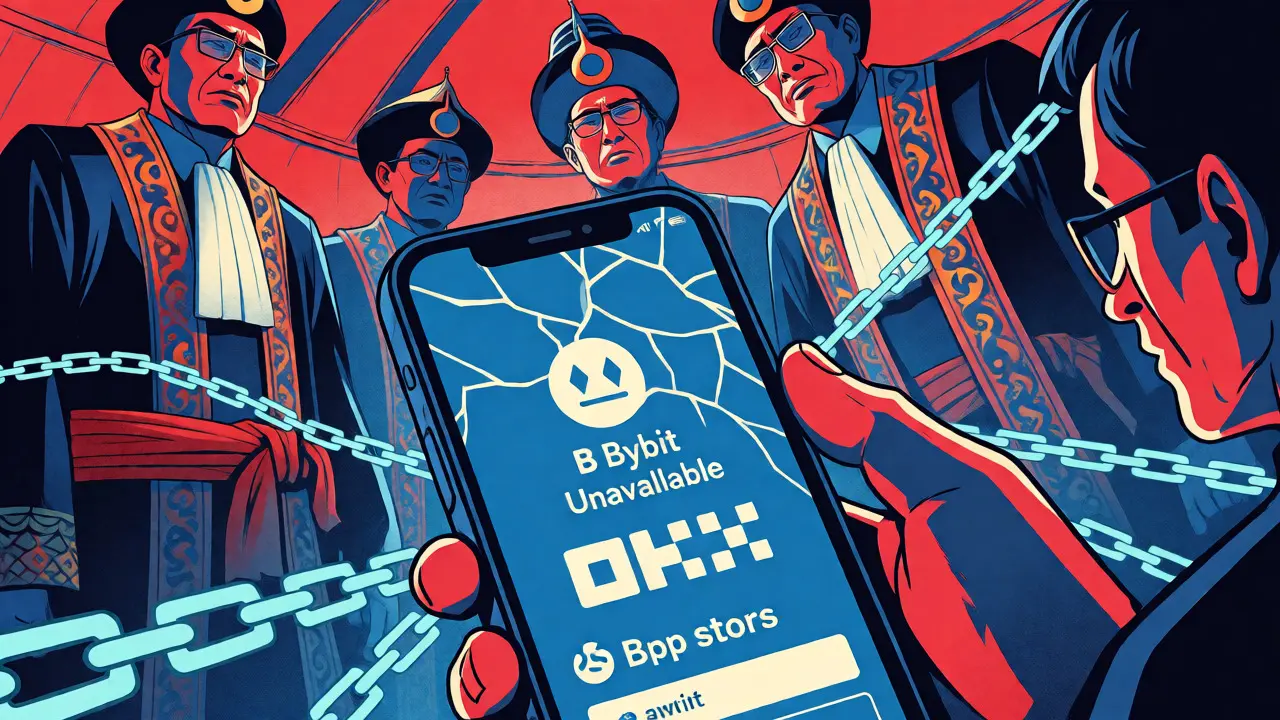
Imagine logging into your favorite crypto exchange only to find it blocked. That was the reality for thousands of Thai traders in April 2025 when Bybit and OKX suddenly vanished from local app stores. This wasn't a technical glitch; it was the Thai Securities and Exchange Commission (SEC) enforcing new rules that changed how foreign platforms operate in the Kingdom. If you run an exchange or trade crypto in Southeast Asia, understanding these shifts is no longer optional-it's survival.
The 2025 Regulatory Shake-Up
Thailand didn't just tweak its laws; it rewrote them. The original Digital Asset Business Act of 2018 laid the groundwork, but the Emergency Decree on Digital Asset Businesses (No. 2) B.E. 2568, effective April 13, 2025, tightened the screws significantly. Why the urgency? Fraud. Early 2025 saw a spike in online scams targeting Thai investors using unregulated offshore platforms. The SEC, led by Secretary-General Pornanong Budsaratragoon, decided enough was enough. They weren't trying to kill innovation; they wanted to stop scammers exploiting loopholes.
The result? A strict licensing regime. As of early 2025, only nine entities held valid licenses to operate as digital asset portals in Thailand. Foreign giants without this license faced immediate shutdowns. It’s a bold move, especially compared to neighbors like Singapore, which allows more flexibility for global players. Thailand chose protection over pure openness, betting that safety would attract serious institutional money in the long run.
The Seven-Point Test for Foreign Platforms
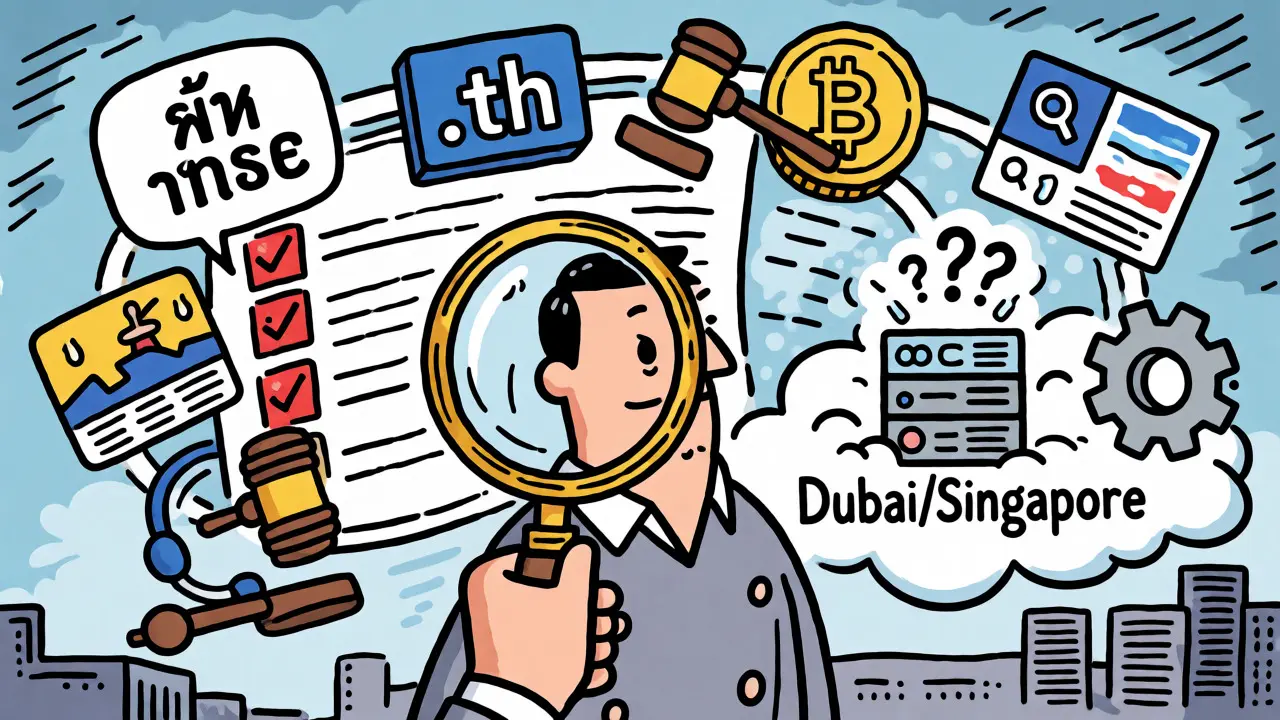
How does the SEC decide if a foreign website is "serving" Thai users? You might think it’s about where the server is located. Nope. It’s about user experience. The regulations define seven specific triggers. If your platform hits even one, you need a license.
- Language: Is your interface available in Thai?
- Domain: Do you use a .th domain or something Thailand-specific?
- Currency: Can users deposit or withdraw in Thai Baht?
- Legal Jurisdiction: Do your terms cite Thai law or courts?
- Marketing: Are you paying for search engine ads targeting Thai users?
- Support: Do you have offices or staff specifically helping Thai customers?
- Other Factors: Any other characteristics prescribed by SEC notifications.
This extraterritorial reach is aggressive. It means a platform based in Dubai or Singapore can’t simply ignore Thai users if it wants to tap into their market. The Ministry of Digital Economy and Society (MDES) can block these sites instantly without waiting for court orders. For many international exchanges, the cost of compliance outweighed the profit potential, leading to the mass exodus we saw in mid-2025.
What Licensed Exchanges Can and Cannot Do
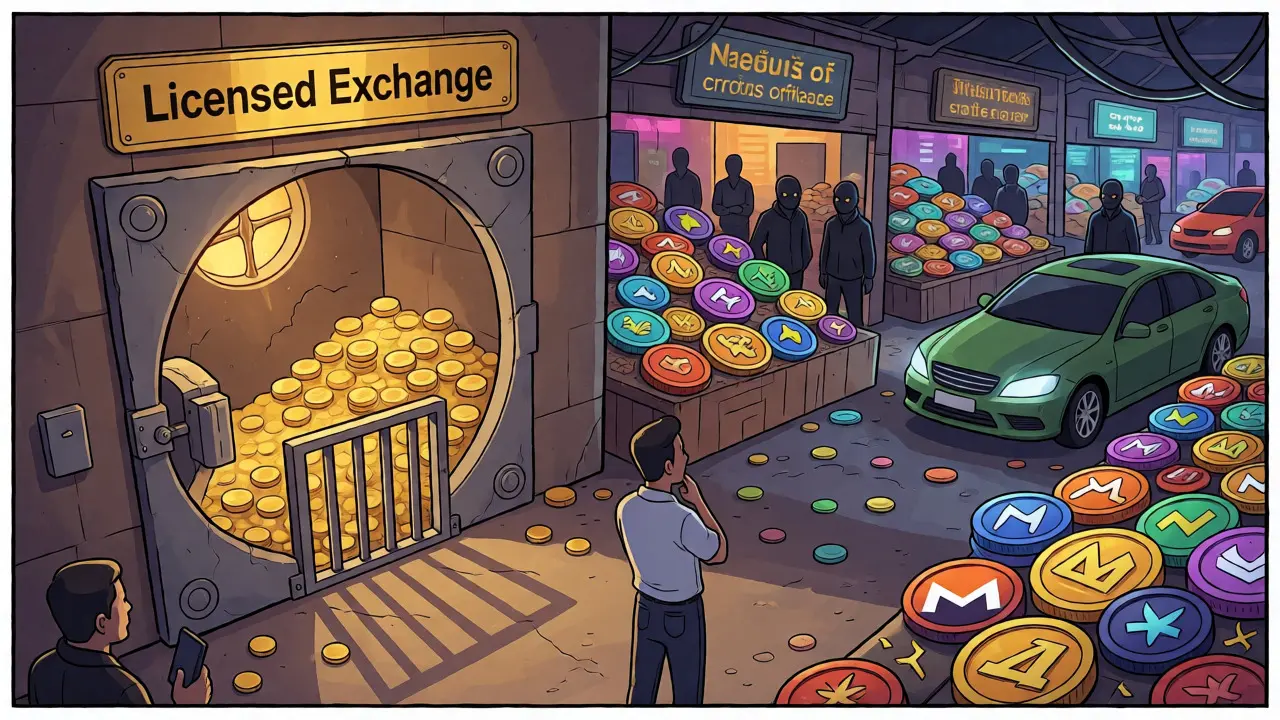
If you do get a license, don’t expect total freedom. The SEC imposes operational restrictions designed to keep things simple and safe. First off, privacy coins are out. If you’re looking to trade Monero or Zcash on a Thai licensed exchange, you’ll be disappointed. They aren’t allowed.
Another major restriction involves utility. You cannot promote digital assets as a direct payment method for goods and services through your platform. The SEC views crypto primarily as an investment asset here, not currency. Additionally, offering lending services with promised returns-essentially acting like a bank-is heavily restricted. You can’t just take deposits and pay interest unless you meet stringent capital requirements.
| Feature | Thailand (SEC) | Singapore (MAS) | China |
|---|---|---|---|
| Foreign Exchange Access | Restricted; requires local license | Open with registration | Banned |
| Privacy Coins | Prohibited | Allowed with checks | N/A |
| Stablecoin Clarity | Limited guidance | Clear framework | N/A |
| Fraud Protection Focus | High (blocking mechanism) | Moderate | Total ban |
The Cost of Compliance
Getting that license isn't cheap or fast. Foreign exchanges aiming to re-enter the Thai market face a steep barrier to entry. The application fee alone is ฿1,000,000 ($27,400). Once approved, you’re looking at annual license fees of ฿500,000 ($13,700). But the real hurdle is operational capital. You need to prove you have at least ฿50 million ($1.37 million) in minimum operational capital. This ensures you can handle withdrawals and survive market volatility without collapsing.
Then there’s the paperwork. You must submit proof of Anti-Money Laundering (AML) and Counter-Financing of Terrorism (CFT) systems that meet Financial Action Task Force (FATF) standards. Plus, you need source code audits from SEC-approved firms. The average approval timeline stretches between 90 and 120 days. For a startup, that’s an eternity. Even established players like Bitkub reported taking six months to fully adapt their systems to these new specs.
Market Impact and User Sentiment
So, did it work? The data suggests mixed results. On one hand, fraud dropped. Reports to the Royal Thai Police Cybercrime Investigation Division fell by 37% in Q2 2025 compared to the previous quarter. Users feel safer knowing their funds are on a regulated platform. Security concerns were the top praise point in forums like Pantip.com, with 87% of positive reviews citing reduced scam attempts.
On the flip side, liquidity took a hit. With fewer exchanges competing, spreads widened. Traders complained about higher transaction fees, averaging 0.25% on local platforms versus 0.1% on former international rivals. Coin selection also shrank dramatically. While Bybit offered over 350 tokens, licensed Thai exchanges approved only 35 tokens as of June 2025. Serious traders found themselves restricted, leading some to turn to VPNs to access offshore platforms despite the risks.
Future Outlook: DeFi and CBDCs
The regulatory landscape isn't static. The SEC has already signaled changes coming in late 2025. The next big focus is Decentralized Finance (DeFi). Current rules struggle to categorize DeFi protocols, creating gray areas. Amendments planned for Q4 2025 aim to clarify how decentralized exchanges fit into the legal framework.
Also on the horizon is the Central Bank Digital Currency (CBDC). A pilot project integrating the digital baht with licensed exchanges is expected in Q2 2026. This could streamline settlements and reduce reliance on stablecoins, which currently lack clear regulation in Thailand. Meanwhile, the ETF market is expanding. After approving Bitcoin and Ethereum ETFs, regulators are eyeing altcoin products for 2026, potentially unlocking billions in new institutional investment.
Key Takeaways for Operators and Investors
If you're navigating this space, here’s what matters right now:
- For Exchanges: If you target Thai users, assume you need a license. The seven-point test is broad. Budget for high compliance costs and long lead times.
- For Investors: Stick to licensed platforms for security. Be aware that withdrawal limits exist-some cap daily withdrawals at ฿500,000 ($13,700).
- For Developers: Watch the Q4 2025 updates on DeFi. Building infrastructure now positions you for the next wave of regulation.
Thailand’s approach proves that strict regulation doesn't necessarily kill a market-it reshapes it. The shift from 85% foreign dominance to 78% domestic control shows local players stepping up. While some traders miss the variety of the old days, the stability attracts long-term capital. It’s a trade-off between freedom and safety, and for now, Thailand has chosen safety.
Why were Bybit and OKX banned in Thailand?
They were shut down because they operated without a proper license from the Thai SEC after the April 2025 regulatory amendments. These amendments required any platform serving Thai users to obtain a license, and both exchanges failed to secure one within the compliance window.
Can I still use a VPN to access foreign crypto exchanges in Thailand?
Yes, technically you can, and estimates suggest 35% of Thai crypto activity migrated offshore via VPNs since April 2025. However, doing so carries risks. Your funds may not be protected by Thai consumer laws, and you could face issues with withdrawals or account freezes if the platform detects Thai IP usage patterns.
What is the minimum capital required for a crypto exchange license in Thailand?
Foreign and domestic exchanges seeking a license must demonstrate a minimum operational capital of ฿50 million, which is approximately $1.37 million USD. This requirement ensures the platform has sufficient reserves to manage client funds and withstand market volatility.
Are privacy coins like Monero allowed on Thai exchanges?
No, licensed digital asset business operators in Thailand are prohibited from providing services for privacy coins. This restriction helps maintain transparency for anti-money laundering efforts and simplifies tax reporting for users.
How long does it take to get a crypto exchange license in Thailand?
The average approval timeline is between 90 and 120 days. This period includes the review of AML/CFT compliance systems, source code audits, and verification of minimum capital requirements. Delays often occur due to incomplete documentation or insufficient evidence of operational readiness.