
Imagine trying to run a bank without a charter. That’s essentially what operating a cryptocurrency exchange in Canada looked like before the regulatory lines were drawn clearly. Today, if you want to serve Canadian clients, you can’t just set up shop and start trading. You need permission. Specifically, you need to navigate the Money Services Business (MSB) framework overseen by FINTRAC. This isn’t just paperwork; it’s a fundamental shift in how digital assets are treated in North America. Whether you’re a startup founder or an investor wondering why your favorite global platform suddenly blocked Canadian users, understanding these rules is critical.
The Core Framework: FINTRAC and MSB Registration
At the heart of Canadian crypto regulation sits the Financial Transactions and Reports Analysis Centre of Canada (FINTRAC). It acts as the country’s financial intelligence unit. If your business exchanges virtual currencies for fiat money, or vice versa, you are legally required to register with them. This falls under the Anti-Money Laundering and Counter-Terrorist Financing Act. You have two main paths here:
- MSB Registration: For companies physically established in Canada. This allows you to operate domestically.
- FMSB Registration: For Foreign Money Services Businesses. If you’re based abroad but serve Canadian customers, you must register as an FMSB. This requires maintaining a physical presence or significant operational ties in Canada.
Beyond FINTRAC: The Securities Angle (CSA)
Here’s where things get tricky. FINTRAC handles the "money movement" side. But if your token looks like a security-meaning people buy it expecting profits from the efforts of others-you fall under the jurisdiction of the Canadian Securities Administrators (CSA). The CSA isn’t a single agency but a council of provincial securities regulators. In 2023, the CSA tightened the screws significantly. They introduced enhanced Pre-Registration Undertakings (PRU), which forced platforms to agree to stricter custody rules before they could even apply for full registration. Key changes included:
- Prohibiting the lending or pledging of customer assets held in custody.
- Requiring segregation of client funds from company funds.
- Mandating that stablecoin trading often requires prior written consent from the CSA.

Key Compliance Pillars
Getting the license is one thing; keeping it is another. The requirements are rigorous and ongoing. Here is what you actually need to build:
| Requirement | Description | Who Needs It |
|---|---|---|
| Compliance Officer | A designated individual responsible for all AML/CFT reporting and regulatory adherence. | All MSBs and FMSBs |
| KYC Procedures | Know Your Customer checks to verify identity, including government ID and proof of address. | All registered entities |
| Transaction Monitoring | Automated systems to detect unusual patterns, such as structuring or rapid inflows/outflows. | All registered entities |
| Record Keeping | Maintaining detailed records of all transactions and customer interactions for at least 5 years. | All registered entities |
| Custody Segregation | Keeping client assets separate from proprietary assets, often requiring cold storage solutions. | Platforms holding client keys |
Costs and Timelines: What to Expect
Let’s talk numbers, because this isn’t cheap. Legal fees alone for preparing and submitting an MSB or FMSB application typically range from CAD 50,000 to CAD 200,000. This covers legal counsel who understands both money services and securities law-a rare combination.
Once you’re up and running, annual compliance costs average between CAD 100,000 and CAD 500,000. This includes software for KYC and monitoring, audits, staff salaries, and ongoing legal advice. The timeline? Expect 6 to 12 months from initial submission to approval. Regulators are thorough. They will ask for your business plan, ownership structure, background checks on directors, and detailed descriptions of your cybersecurity measures.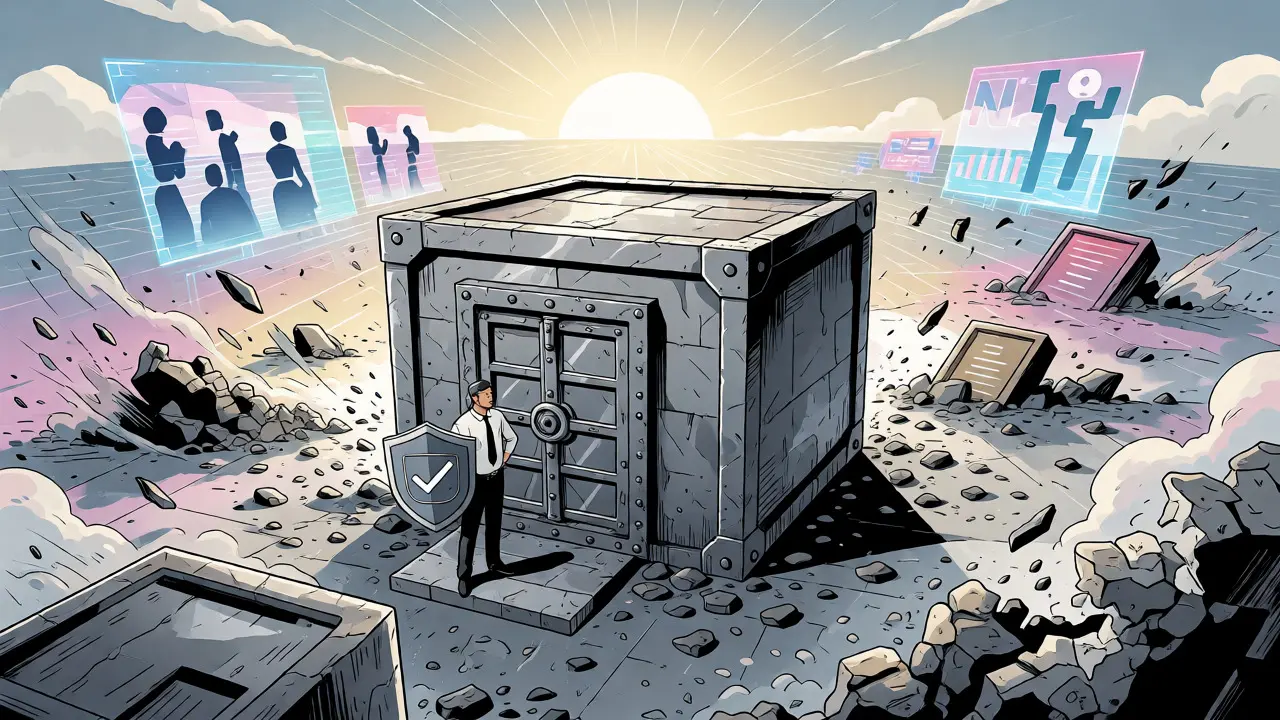
Market Impact: Consolidation and Clarity
The strict rules have had a chilling effect on smaller players. Before the 2023 enhancements, over 40 platforms served Canadians. Now, estimates suggest only 15-20 major exchanges maintain active registrations. Smaller platforms simply couldn’t afford the compliance overhead or failed to meet the PRU conditions. For investors, this means fewer choices but higher safety. Major Canadian pension funds and institutional investors have increased their crypto allocations precisely because this framework provides clarity. They know that if a platform is FINTRAC-registered and CSA-compliant, there’s a baseline level of consumer protection and auditability.
Future Outlook: DeFi and Stablecoins
The rules aren’t static. FINTRAC and the CSA are currently looking at decentralized finance (DeFi) protocols and NFT marketplaces. Will a DAO need a license? How do we regulate cross-border stablecoin flows? By 2025, expect additional guidance on stablecoin reserves and cross-border reporting, mirroring trends in the EU and US.
If you’re planning to enter the Canadian market, engage with regulators early. Don’t wait until you’re fully built to ask questions. Early dialogue can save you months of rework. And remember, the goal isn’t just to tick boxes; it’s to prove that your platform protects Canadian consumers while fostering innovation.Do I need a license if I only hold crypto for myself?
No. Individual investors buying and holding crypto for personal use do not need to register with FINTRAC. The requirements apply to businesses that facilitate transactions, exchange services, or transfer funds for others.
What is the difference between MSB and FMSB?
An MSB (Money Services Business) is a company incorporated and operating within Canada. An FMSB (Foreign Money Services Business) is a foreign entity that serves Canadian clients. Both require registration with FINTRAC and adherence to similar AML/CFT rules, but FMSBs must demonstrate a sufficient connection to Canada, such as a local office or agent.
Are stablecoins regulated differently?
Yes, potentially. The CSA has implemented interim frameworks for value-referenced cryptoassets (stablecoins). Platforms may need specific consent to offer stablecoin trading, and issuers face scrutiny regarding reserve backing and redemption rights.
How long does the FINTRAC registration process take?
Typically, the process takes 6 to 12 months. This depends on the completeness of your documentation, the complexity of your business model, and how quickly you respond to requests for information from FINTRAC.
Can a foreign exchange serve Canadian users without a license?
Generally, no. If a foreign exchange actively markets to and serves Canadian residents, it is expected to register as an FMSB. Operating without registration risks enforcement actions, including fines and being barred from serving Canadian clients.