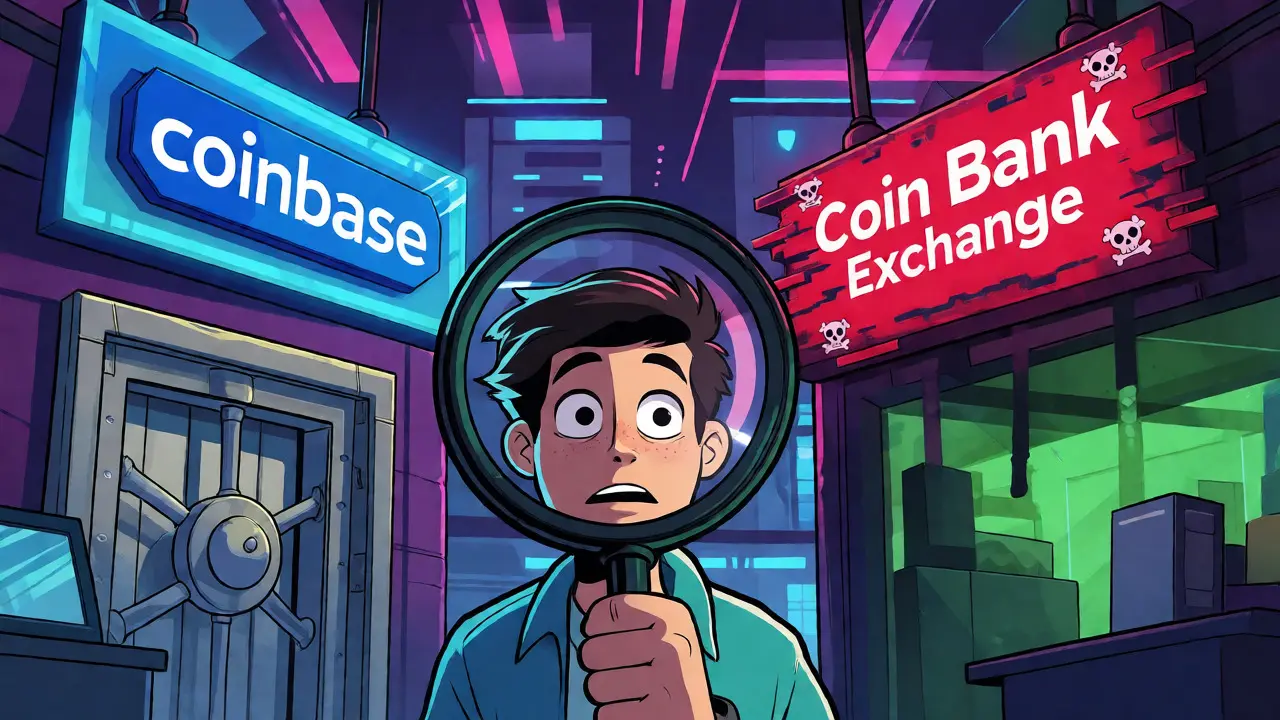
You might be searching for Coin Bank Exchange, expecting to find a new platform with a catchy name. Here is the hard truth: there is no major, regulated entity called "Coin Bank Exchange." You are likely encountering one of two things. Either you are looking at Coinbase, the giant U.S. crypto exchange that often gets confused with banking terms, or you have stumbled upon a generic-sounding site that could be a scam. If you are trying to deposit money and buy Bitcoin, you need to know exactly where your cash is going. This guide breaks down what "Coin Bank" actually refers to in the crypto world, reviews the real player (Coinbase), and helps you avoid losing your savings to lookalike sites.
The Confusion: What Is Coin Bank Exchange?
First, let’s clear up the name. In the cryptocurrency space, names matter. There is no widely recognized, top-tier exchange operating under the exact legal name "Coin Bank Exchange." Most users searching this term are actually referring to Coinbase, founded in 2012 by Brian Armstrong and Fred Ehrsam. The confusion stems from Coinbase’s role as a bridge between traditional banking and crypto. They offer fiat on-ramps, meaning you can link your bank account directly to buy digital assets. Because they handle both "coins" and "banking," people sometimes mix the words up.
However, if you found a website specifically titled "Coin Bank Exchange" with a logo that looks similar but isn’t quite right, be careful. Scammers love using generic financial terms like "Bank," "Exchange," and "Global" to sound legitimate. A quick check on the SEC’s EDGAR database or CoinGecko will show you that Coinbase is the only major U.S. publicly traded exchange (ticker: COIN) fitting this description. If your site isn’t Coinbase, it’s likely a smaller, unregulated broker or a fraudulent clone.
Reviewing the Real Giant: Coinbase Platform Analysis
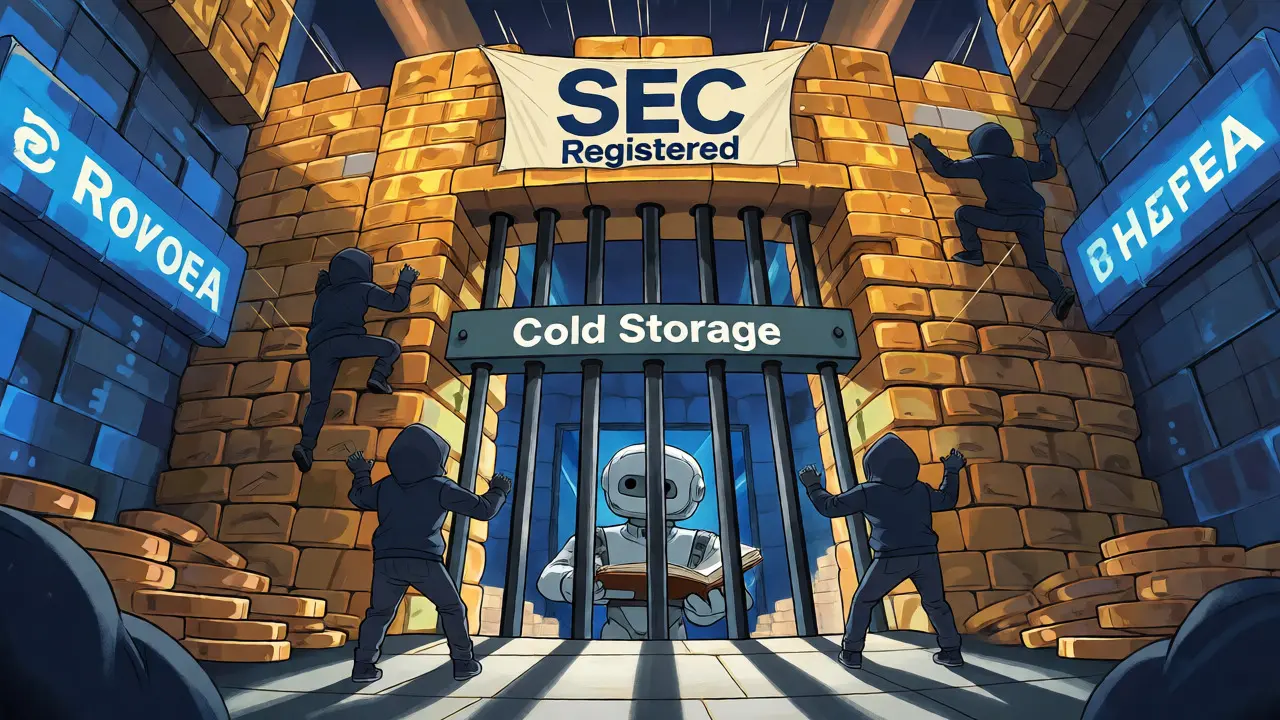
Assuming you meant Coinbase, let’s look at what makes it tick. As of late 2025, Coinbase supports over 235 cryptocurrencies. That’s fewer than some competitors like Crypto.com, which lists over 300 tokens, but Coinbase focuses on quality and regulatory compliance. Their infrastructure is robust. They keep 98% of customer assets in cold storage across 17 different locations. This means if a hacker breaches their online servers, they still can’t touch most of your money.
Security is their biggest selling point. They hold an SEC-registered broker-dealer status, which is rare for crypto exchanges. This allows them to operate legally in all 50 U.S. states, unlike Binance US, which has restrictions in places like New York and Texas. For beginners, this peace of mind is worth paying for. But don’t think it’s perfect. During high volatility events, such as the April 2024 Bitcoin halving swing, the platform experienced outages that locked out 1.2 million users. If you try to sell during a crash and the app freezes, that security doesn’t help you much.
Fees and Costs: The Hidden Price Tag
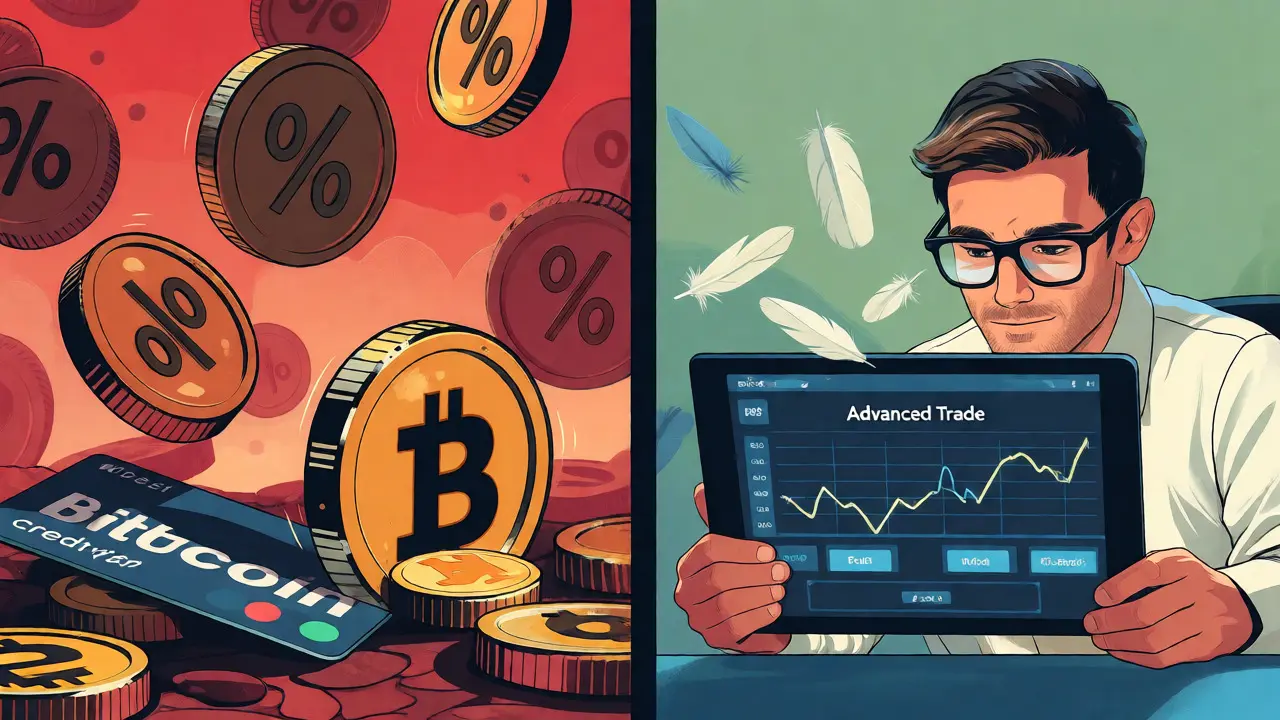
Here is where many new users get burned. Coinbase’s fee structure is not transparent at first glance. When you buy $100 of Bitcoin using a debit card, you might see a spread and a transaction fee combined into one number. In reality, instant card purchases under $200 cost about 1.49%, while amounts over $1,000 jump to 3.99%. That is significantly higher than Kraken, which charges around 0.90% to 1.50% for similar services.
If you want lower fees, you must use the "Advanced Trade" interface instead of the simple "Buy/Sell" button. Advanced Trade offers maker/taker fees starting at 0.50%. For high-volume traders, they recently introduced zero-maker fees for daily volumes over $100,000. But for the average person buying $500 of Ethereum once a month, the convenience fee adds up. A user survey indicated that hidden fees inflated costs by 22% on average for casual users who didn’t switch to the pro interface. Always check the "Fee Breakdown" toggle before confirming a trade.
| Feature | Coinbase | Kraken | Binance US |
|---|---|---|---|
| U.S. Regulatory Status | SEC Registered Broker-Dealer | MSB Licensed | State-by-State Licenses |
| Card Purchase Fee | 1.49% - 3.99% | 0.90% - 1.50% | ~0.50% Flat Rate |
| Asset Selection | 235+ Cryptos | 200+ Cryptos | 350+ Cryptos |
| Beginner Friendliness | High (4.5/5) | Medium (3.5/5) | Low (2.5/5) |
| Customer Support Speed | 92% tickets resolved in 24h | Variable | Often slow |
Who Should Use This Platform?
Coinbase is ideal for three types of people. First, absolute beginners. The interface is clean, and the educational rewards program pays you small amounts of crypto to watch videos about how blockchains work. Second, institutional investors. With over 14,300 business accounts, Coinbase handles large custody needs better than almost anyone else. Third, people who value legality over cheapness. If you live in the U.S., knowing your exchange won’t get shut down tomorrow by the SEC is valuable.
Conversely, you should avoid Coinbase if you are a day trader. The API rate limits are capped at 100 transactions per second, whereas Kraken allows 2,000. If you run automated bots, Coinbase will throttle you. Also, if you want obscure altcoins, you’ll be disappointed. Many newer tokens launch on decentralized exchanges or platforms like Gate.io long before they hit Coinbase. Waiting for Coinbase to list a token often means you missed the early gains.
Warning Signs of Fake "Coin Bank" Sites
If you are looking at a site literally named "Coin Bank Exchange," check these red flags immediately. Legitimate exchanges never ask you to send crypto to a personal wallet address for verification. They also don’t promise fixed returns like "10% weekly interest." Real staking yields fluctuate; for example, Ethereum staking on Coinbase currently offers about 3.8% APY, not a guaranteed monthly payout.
Check the domain age. Coinbase was registered in 2012. If your "Coin Bank" site was created last month, walk away. Look for SSL certificates and physical addresses. Coinbase has offices in San Francisco and New York. Scam sites usually list virtual office addresses in Panama or Dubai. Finally, search Reddit for the specific domain name. If you see complaints about withdrawal delays lasting weeks rather than minutes, it’s a trap.
Practical Steps to Start Trading Safely
Ready to buy? Follow this checklist to minimize risk. First, verify your identity. Coinbase uses AI-powered ID checks that typically approve accounts within 24 hours. Have your driver’s license and social security number ready. Second, fund your account via ACH transfer, not a credit card. ACH transfers are free and take 1-3 days, avoiding those steep 3.99% card fees.
Third, enable Two-Factor Authentication (2FA). Use an authenticator app like Authy or Google Authenticator, not SMS. SMS is vulnerable to SIM-swapping attacks. Fourth, start small. Test the withdrawal process with $20 before moving thousands. Withdrawals to external wallets can take time-Ethereum withdrawals might take 17 minutes compared to Kraken’s 4.2 minutes. Knowing the speed beforehand prevents panic during market moves.
Future Outlook and Alternatives
The crypto landscape is shifting. Gartner predicts spot trading revenue on centralized exchanges like Coinbase may drop 12% by 2027 as users move to decentralized finance (DeFi). However, Coinbase is adapting. They plan to integrate FedNow for instant USD settlements in early 2026 and have already launched cross-chain bridging features. This keeps them relevant as technology evolves.
If you decide Coinbase isn’t for you, consider alternatives. Kraken is great for security-focused traders who want lower fees and more technical tools. Gemini is excellent for strict regulatory compliance, ranking highest in trustworthiness surveys. For maximum asset selection, Binance US or Crypto.com offer more coins, though with varying levels of customer support quality. Always diversify your holdings across at least two platforms to reduce single-point-of-failure risk.
Is Coin Bank Exchange the same as Coinbase?
No, they are not the same. "Coin Bank Exchange" is often a misnomer used by users confusing Coinbase with banking services. Coinbase is the actual, regulated public company. If a website explicitly calls itself "Coin Bank Exchange" and is not Coinbase, it is likely a lesser-known broker or a potential scam.
What are the main fees on Coinbase?
Fees vary by payment method. ACH bank transfers are free. Instant card purchases range from 1.49% to 3.99%. Using the Advanced Trade interface reduces trading fees to a maker/taker model starting at 0.50%. Always check the fee breakdown before confirming a transaction.
Is Coinbase safe for storing large amounts of crypto?
Yes, Coinbase stores 98% of assets in cold storage and carries $255 million in crime insurance. However, for very large portfolios, it is still recommended to use hardware wallets for long-term storage to maintain full control over your private keys.
Why do my withdrawals take so long?
Withdrawal times depend on network congestion and the blockchain used. Ethereum withdrawals can take 10-20 minutes, while Bitcoin might take longer depending on mempool activity. Internal processing by Coinbase can add additional delay during high-volume periods.
Can I trade derivatives on Coinbase?
Availability varies by state due to SEC regulations. Some U.S. states restrict access to futures and options products. Check your local availability in the app settings. Institutional clients have broader access through FIX API connectivity.