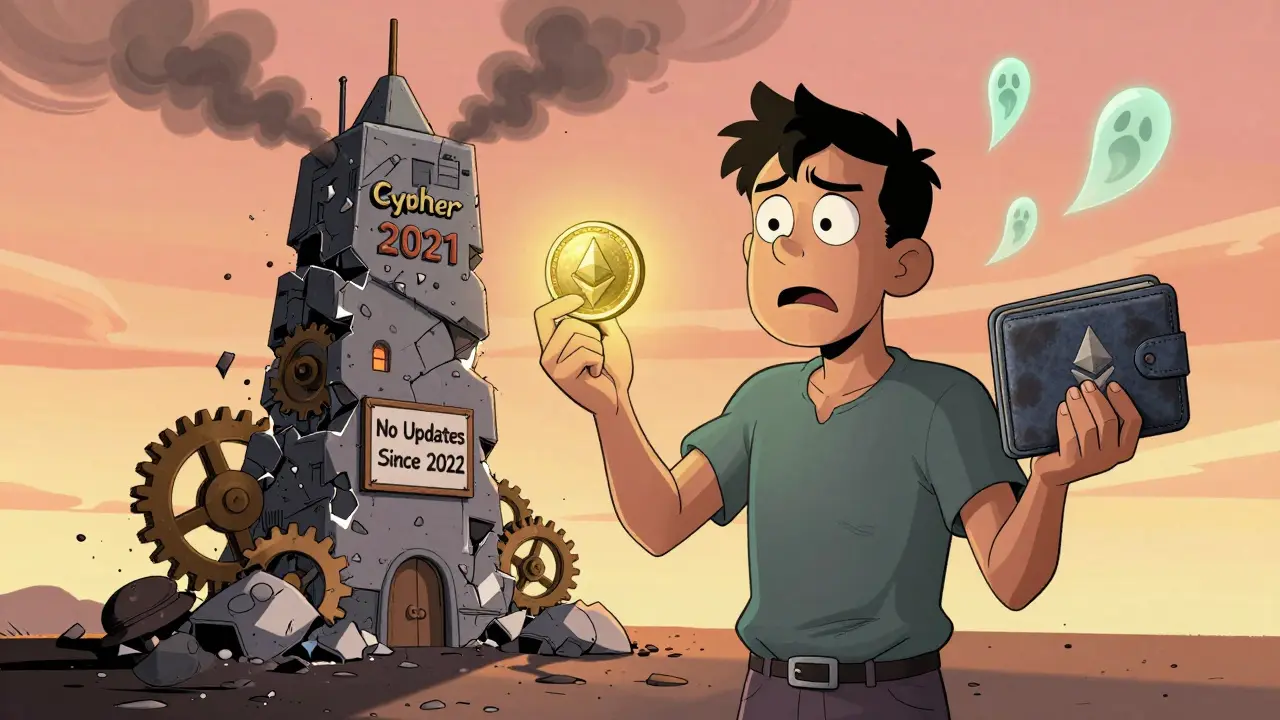
Back in 2021, if you were active in crypto communities, you probably saw posts about the CPR CIPHER 2021 airdrop. It was promoted as a way to get free tokens from Cipher, a project that claimed to be building transparent business tools on blockchain. But here’s the thing: most people who claimed to have "claimed" those tokens never saw any real value from them. And today, the project is labeled as "Cipher [Old]" on CoinMarketCap - a clear sign it’s no longer the focus of its team or the market.
So what actually happened during that airdrop? Who got tokens? Did it work? And why should you care about it now, in 2026? Let’s cut through the noise.
What Was the CPR CIPHER 2021 Airdrop?
The CPR CIPHER 2021 airdrop wasn’t a random giveaway. It was a structured token distribution run through CoinMarketCap (CMC), one of the most trusted crypto data platforms at the time. Cipher, the company behind CPR, used CMC’s platform to send tokens directly to users who had registered on their site or engaged with their ecosystem. This wasn’t an ICO or an IEO - they claimed they avoided traditional fundraising. Instead, they said they wanted users to earn tokens by using their tools, not just buying in.
The goal? Increase circulation, build a community, and make CPR feel like more than just another altcoin. The project said CPR represented partial ownership - kind of like shares in a company - but without the legal structure. That’s a big claim, and it’s one that never got fully explained.
How Did It Work?
Here’s what we know for sure:
- The airdrop was announced in early 2021 and distributed over several weeks.
- Users had to link their CoinMarketCap profile to a wallet address.
- Eligibility was based on activity - like completing profile verification or following Cipher’s social channels.
- Tokens were sent to Ethereum wallets first, then later migrated to Polygon PoS.
But here’s the gap: no official list was ever published. No one knows exactly how many people got tokens. No one knows how many tokens each person received. Cipher never released a public distribution report. That’s unusual. Most legitimate airdrops document this stuff. Even Bitcoin Cash did it after their 2018 split.
What we do know is that the total supply of CPR was 1.08 billion tokens. As of late 2021, around 186 million were in circulation. If the airdrop distributed even 5% of that - that’s over 9 million tokens. But without data, we’re guessing.
The Migration: Ethereum to Polygon
Right around the time of the airdrop, Cipher made a major technical shift. They moved CPR from Ethereum to Polygon (formerly Matic). Why? Fees. Ethereum gas prices were insane in 2021 - sometimes over $100 per transaction. Polygon promised near-zero fees and faster speeds.
The new contract address became: 0xaa404804ba583c025fa64c9a276a6127ceb355c6
But here’s where things got messy. Users who didn’t migrate their tokens lost access. Wallets holding old CPR tokens on Ethereum became useless. Cipher didn’t send out clear instructions. Many people just assumed their tokens would auto-transfer. They didn’t. And since there was no official migration tool, people had to manually bridge their tokens - a process that required technical knowledge most casual users didn’t have.
That’s why "Cipher [Old]" exists on CoinMarketCap. It’s not just a name. It’s a warning.
![An empty digital marketplace with abandoned stalls labeled 'CPR Airdrop' and 'Mobile App', a lone figure staring at a tablet showing 'Cipher [Old]'.](/uploads/2026/03/an-empty-digital-marketplace-with-abandoned-stalls-labeled-039-cpr-airdrop-039-and-039-mobile-app-039-a-lone-figure-staring-at-a-tablet-showing-039-cipher-old-039-.-cpr-cipher-2021-airdrop-details-wha.webp)
What Was the Value? And What Happened to It?
At its peak in February 2024, CPR hit $0.004065. That sounds tiny, but if you had 10,000 CPR tokens, that was $40.65. Not life-changing, but not nothing.
But here’s the reality check: by March 2026, CPR trades between $0.00004791 and $0.00006803. That’s a drop of over 98% from its high. The market cap? Less than $1 million. Compare that to its peak in 2022 when it briefly crossed $10 million.
Why the crash? Three reasons:
- No real product. Cipher promised mobile apps with "real-time access," "secured data," and "personalized content." But no app ever launched. No public GitHub. No beta testers. No screenshots.
- No team transparency. The founders claimed to be based in India, the UK, and New Zealand. But no LinkedIn profiles, no interviews, no public meetings. Just a website with vague promises.
- No community building. Unlike projects that held AMAs, hosted Discord servers, or rewarded contributors, Cipher stayed silent after the airdrop.
The airdrop didn’t build a community. It just scattered tokens to people who forgot about them.
Was It a Scam?
No, it wasn’t a scam in the classic sense - no one stole your money. But it was a classic case of vaporware wrapped in blockchain buzzwords.
They didn’t lie outright. They just didn’t deliver. And they didn’t communicate. That’s worse than lying. It’s ignoring your users.
Compare this to projects like Uniswap or Aave. They launched with clear roadmaps, public code, and active communities. Cipher? Zero public code. Zero updates. Zero transparency.
And now? The project’s website is still up. The token still trades. But the last update on their Twitter was in 2022. The last blog post? 2021. The last GitHub commit? Never happened.
What Can You Learn From This?
If you’re looking at future airdrops, here’s what to watch for:
- Check the project’s code. Is there a public GitHub? Are there commits in the last 6 months?
- Look for team transparency. Names, LinkedIn, Twitter. If they’re hiding, walk away.
- Ask: What’s the product? If they say "blockchain for business" without showing a single feature - red flag.
- Check CoinMarketCap. If it says "[Old]" next to the name, that’s not a coincidence. It’s a signal.
- Don’t chase free tokens. Airdrops are marketing tools. If the project has no traction, the tokens will die.
The CPR CIPHER 2021 airdrop wasn’t a failure because of bad luck. It failed because it was built on hype, not substance. And in crypto, that’s a death sentence.
Is CPR Still Tradeable?
Yes. You can still buy and sell CPR on exchanges like Cifinex and some smaller DEXs. But don’t expect it to bounce back. The liquidity is thin. The trading volume is under 100 ETH per day. The community is gone. The team is silent.
If you still hold CPR from the 2021 airdrop, you’re holding a ghost asset. It’s not worthless - you can sell it for a few cents. But it’s not going to make you rich. And it’s not going to change anything.
Final Thought: Airdrops Aren’t Free Money
They’re a way for projects to spread awareness. But if the project doesn’t have real utility, the tokens just become digital litter.
The CPR CIPHER 2021 airdrop was a snapshot of crypto’s wilder days - when people chased free tokens without asking why. Today, the market is smarter. And projects like Cipher [Old] are reminders of what happens when you promise more than you deliver.
Was the CPR CIPHER 2021 airdrop legitimate?
Yes, it was technically legitimate - it was distributed through CoinMarketCap, a trusted platform. But legitimacy doesn’t mean value. Cipher never delivered on its promises, and the project has since been labeled "[Old]" on major tracking sites. The airdrop itself happened, but the project behind it failed.
How many CPR tokens were distributed in the 2021 airdrop?
There is no official record. Cipher never published the total number of tokens distributed or how many users received them. Estimates suggest it could have been between 5 million and 15 million CPR, based on the circulating supply at the time. But without data from the team, this remains speculation.
Can I still claim CPR tokens from the 2021 airdrop?
No. The airdrop ended in late 2021. The CoinMarketCap campaign is closed, and the registration window has long expired. Even if you were eligible, the process is no longer active. Any website claiming to still offer CPR airdrops is likely a scam.
What happened to the Cipher team after the airdrop?
The team vanished. Their social media accounts stopped updating in 2022. Their website no longer links to any product, app, or roadmap. No press releases, no GitHub commits, no community engagement. The project has been abandoned, and the "Cipher [Old]" label on CoinMarketCap confirms it.
Is CPR worth buying today?
No. CPR trades at under $0.00007 as of early 2026. It has no active development, no community, and no clear use case. The token exists only because it’s still listed on a few exchanges. Buying it now is speculation with no upside - only risk.
Why did Cipher move from Ethereum to Polygon?
Ethereum gas fees were too high in 2021, making transactions expensive and slow for users. Polygon offered cheaper fees and faster speeds while remaining compatible with Ethereum tools. The move was smart technically, but poorly communicated. Many users lost access to their tokens because they didn’t migrate properly.
How can I tell if a crypto airdrop is worth participating in?
Look for three things: 1) A public, active GitHub with real code commits; 2) A clear, documented roadmap with milestones; 3) A team with verifiable identities and past work. If any of those are missing, treat the airdrop as marketing noise, not opportunity.
Don’t chase ghosts. In crypto, the projects that last aren’t the ones with the flashiest airdrops - they’re the ones with real code, real users, and real transparency.


Kira Dreamland
March 18, 2026 AT 13:07I still have a few CPR tokens sitting in my wallet from that airdrop. Honestly? I forgot about them until I saw this post. I didn’t even know they moved to Polygon - I thought my tokens just vanished. No one ever sent a reminder, no email, no tweet. It’s wild how projects just ghost you after the free tokens drop. I’m not mad, just... disappointed. Crypto’s charm used to be the community. Now it feels like a graveyard of abandoned airdrops.
shreya gupta
March 18, 2026 AT 17:07How utterly predictable. A project with no GitHub, no team, no product - and somehow, people still thought it was real? The fact that CoinMarketCap even listed it is embarrassing. You don’t need to be a blockchain expert to know that if your ‘business tools’ have no screenshots, no demos, and no commits - you’re not building. You’re just collecting wallet addresses. And now, the entire thing is labeled [Old]. Congratulations, Cipher. You’ve achieved peak vaporware.
Derek Lynch
March 20, 2026 AT 11:56Look, I get it - people got burned. But let’s not throw the baby out with the bathwater. The *idea* behind CPR wasn’t bad. Decentralized ownership, tokenized access, real utility - those are still valid goals. The problem wasn’t the airdrop. It was the execution. No roadmap. No transparency. No follow-through. But here’s the silver lining: this exact scenario is why we’re getting better now. Projects today have to show code, show team, show progress - or they get buried. CPR was a lesson. A painful, expensive one. But it’s one we needed. If you’re still holding CPR? Sell it. But don’t hate the lesson. Learn from it.
Shreya Baid
March 21, 2026 AT 04:39As someone who’s watched the crypto space evolve from 2017, I can say with certainty: the most dangerous projects aren’t the ones that steal your money. They’re the ones that make you believe something will happen - and then, silence. Cipher didn’t scam anyone. They just stopped caring. And that’s worse. Because when a team vanishes, it doesn’t just kill a token - it kills trust. For every person who lost tokens because they didn’t migrate, there’s someone else who stopped trusting the next airdrop because of this. That ripple effect? That’s the real cost. We need more accountability - not just in code, but in humanity.
Christopher Hoar
March 21, 2026 AT 15:52lol so cipher was just another "build it and they will come" scam? wow. i thought i was dumb for not migrating my tokens but now i feel validated. no one even cared enough to send a "hey ur tokens are now on polygon" tweet. zero effort. zero. and now the price is under 0.00007? bro. i coulda bought 100k dogecoin for that same amount. this is why i only trust projects with dev teams that post memes on twitter. at least they’re honest about being chaotic.
Robert Kunze
March 23, 2026 AT 06:00Just want to say - I still have like 500k CPR. I checked the wallet last week. Still there. No one’s ever asked me to move them. No one’s ever told me what to do. I don’t even know if they’re worth anything. I just keep them because… I don’t know. Hope? Nostalgia? Maybe I’m the weird one. But I’ve seen so many projects come and go. This one just… faded. Like a sunset. No fanfare. No goodbye. Just… gone. And honestly? That’s the saddest part.