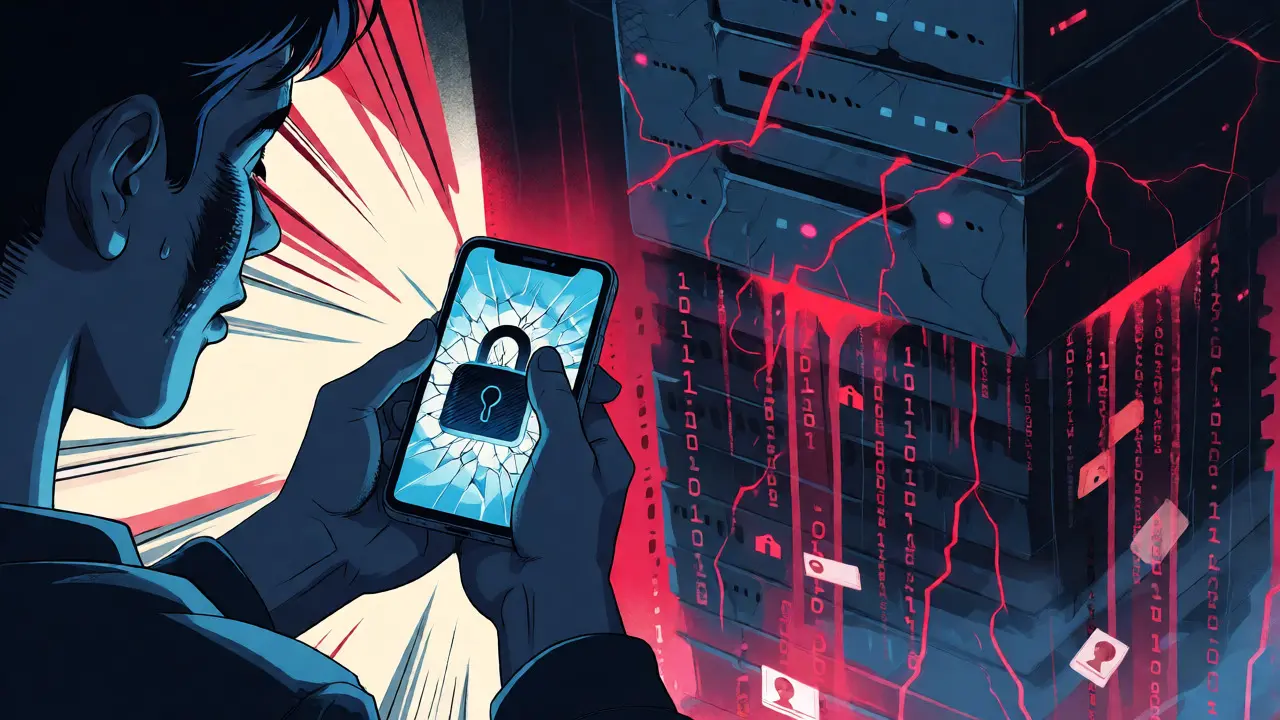
You’ve probably heard the horror stories. A company you trusted with your data gets hacked, and suddenly your name, address, and social security number are floating around on the dark web. It’s frustrating, right? We hand over our personal details to every app we download, hoping they’ll keep them safe, but most of the time, they’re just storing copies in a giant, vulnerable database. Blockchain-based digital identity is trying to fix this mess by flipping the script. Instead of companies owning your data, you own it. You decide who sees what, and you don’t have to trust a middleman to keep your secrets.
This isn’t just some futuristic dream for tech geeks. As of late 2025, major players like Microsoft and IBM are already building these systems, and governments are waking up too. The European Union has rolled out regulations that force companies to accept these new forms of ID. So, if you’re wondering whether this technology will actually change how we log in, sign contracts, or prove who we are online, the short answer is yes. But it’s not going to happen overnight. Let’s break down how it works, why it matters, and where things stand right now.
The Problem With Centralized IDs
Think about how you use your email today. You type in a password, and Google (or whoever hosts your email) checks a central server to see if you match. If that server gets breached, everyone’s passwords leak. It’s a single point of failure. According to Verizon’s 2022 Data Breach Investigations Report, 81% of data breaches involve weak or stolen credentials. That’s huge. Traditional identity management relies on these central authorities-banks, governments, big tech-to verify you. They hold the keys to your digital life.
Decentralized Identifiers (DIDs) solve this by removing the middleman. A DID is basically a unique string of characters that points to a document on the blockchain. This document contains public keys and other info needed to authenticate you. No central registry controls it. You control it. When you want to prove you’re you, you sign a challenge with your private key. The verifier checks the signature against the public key on the blockchain. Done. No password needed, no central database to hack.
How Self-Sovereign Identity Works
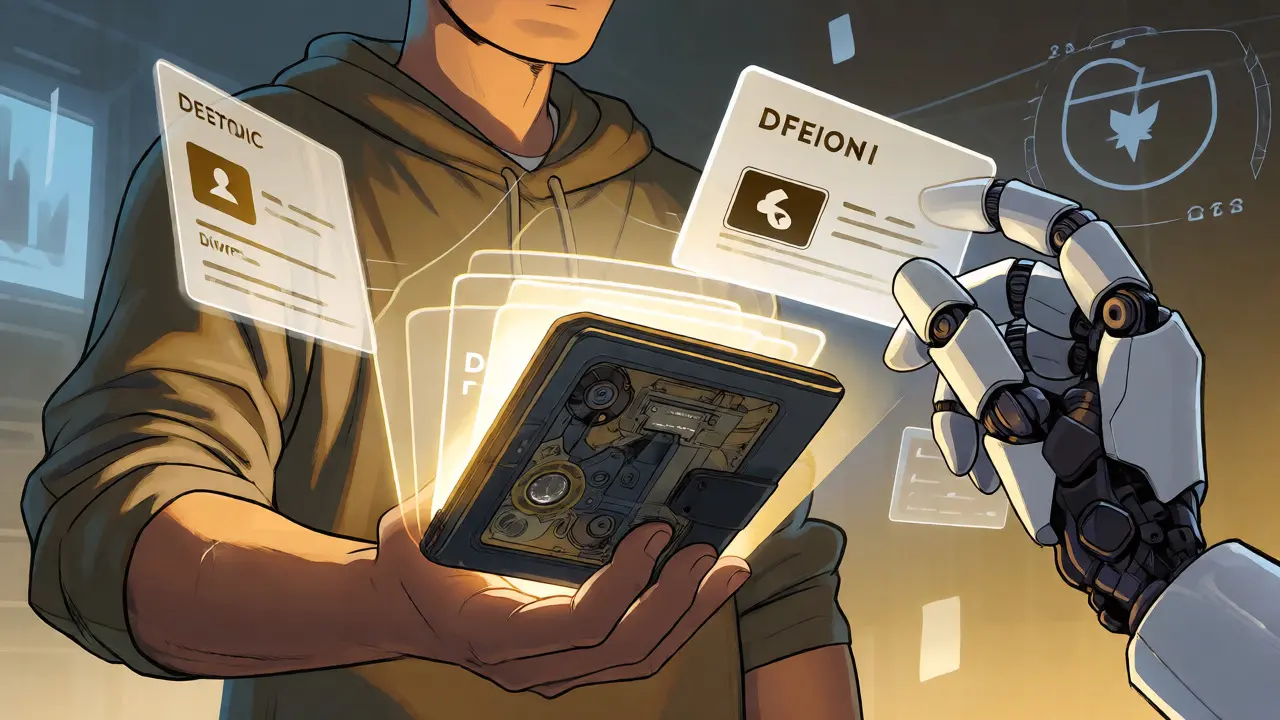
The core concept here is Self-Sovereign Identity (SSI). It means you have full ownership and control over your digital identity without needing permission from anyone else. In practice, this looks like a digital wallet on your phone. Inside this wallet, you store Verifiable Credentials. These are digital attestations issued by trusted parties-like your university issuing a degree or a government issuing a driver’s license. When you need to prove something, you present only the specific credential required. Want to buy alcohol? Show proof you’re over 21, not your entire birth date. This minimizes data exposure.
Technically, these systems rely on cryptographic proofs. For example, zero-knowledge proofs (ZKPs) allow you to prove a statement is true without revealing the underlying data. Polygon ID, a popular implementation, uses ZKPs to let users share attributes securely. Early pilots showed verification times dropping to 2-5 seconds, compared to 30-60 seconds for traditional KYC processes. That speed matters when you’re trying to onboard a customer in real-time.
Real-World Applications and Success Stories
It’s easy to get lost in the jargon, so let’s look at who is actually using this stuff. Estonia is often cited as the gold standard. Since integrating blockchain components into their e-residency program in 2023, they’ve processed over 2 million cross-border transactions. Their system reduced fraud by 92%, according to government reports. Why? Because the records are immutable. Once a transaction is on the chain, it can’t be tampered with retroactively.
In the corporate world, healthcare providers are seeing big wins. One hospital administrator reported cutting patient onboarding time from 45 minutes to just 8 minutes by using blockchain-based identity verification. Patients create a DID once, and then they can seamlessly access services across different hospitals without filling out the same paperwork again. Financial institutions are also jumping in. While some US banks struggled initially due to regulatory uncertainty-one pilot cost $12.7 million before being abandoned-others are finding value in reducing compliance costs. Enterprise users report 40-60% reductions in identity verification expenses after implementation.
| Feature | Traditional Centralized ID | Blockchain-Based Decentralized ID |
|---|---|---|
| Data Control | Held by service provider | Held by user (self-custody) |
| Vulnerability | Single point of failure (database hacks) | Distributed ledger (no single target) |
| Verification Time | 30-60 seconds (KYC checks) | 2-5 seconds (cryptographic proof) |
| User Experience | Passwords, OTPs, forms | Digital wallets, biometric unlock |
| Interoperability | Siloed per platform | Cross-platform via W3C standards |
Technical Challenges and Usability Hurdles
If this sounds perfect, why isn’t everyone using it yet? Two words: usability and regulation. Managing private keys is scary for regular people. If you lose your private key, you lose access to your identity. There’s no "forgot password" link on the blockchain. A 2024 usability study found that 62% of non-technical users struggled with managing keys. To combat this, developers are building social recovery mechanisms, where trusted friends or family members help restore access if you lose your device. Biometric integration is another fix, allowing you to use your fingerprint to unlock your wallet, which then manages the complex cryptography in the background.
Scalability is another issue. Most current blockchains handle 50-100 transactions per second, while traditional databases process thousands. However, Layer-2 solutions like those on Polygon are addressing this bottleneck. By moving computations off the main chain, they achieve near-instant finality without clogging the network. Still, enterprise IT teams face a steep learning curve. Implementing these systems requires specialized training-often 80-120 hours-and familiarity with standards like Solidity or Rust for smart contract development.

The Regulatory Landscape in 2026
Technology moves fast, but laws move slow. As of Q3 2025, only 37% of global jurisdictions had clear frameworks for blockchain-based identity verification. The EU is leading the charge with eIDAS 2.0, which establishes legal recognition for digital wallets starting June 2026. This forces member states to accept verified credentials across borders. In the US, the picture is fragmented. Only 17 states have specific digital identity legislation. This patchwork creates headaches for multinational companies trying to implement a unified strategy.
Privacy advocates also raise valid concerns. Dr. Jane Smith from MIT’s Digital Identity Lab warned that unregulated biometric collection could lead to unprecedented surveillance. If every interaction requires a biometric scan, who owns that data? SSI aims to prevent this by ensuring biometric data never leaves your device-it’s used locally to unlock your key, not sent to a server. But if implementations cut corners, privacy risks remain high.
What’s Next: AI and Interoperability
Looking ahead, the convergence of AI and blockchain identity seems inevitable. Imagine an AI agent that monitors your digital footprint, optimizing how your identity interacts across platforms. It could automatically adjust privacy settings based on context, ensuring you’re secure without micromanaging every login. Binariks’ 2025 trends report suggests blockchain will anchor trust by tracking data provenance and verifying agent behavior, creating a more robust ecosystem.
Interoperability is the final frontier. Right now, there are multiple DID methods and credential formats. The W3C Decentralized Identifier specification helps, but we need seamless movement between ecosystems. Microsoft’s Entra Verified ID connects to over 1,200 enterprise apps, showing that bridges are possible. As adoption grows, expect more standardized APIs that make switching providers as easy as porting a phone number.
Is blockchain digital identity completely anonymous?
No, it is pseudonymous by default. Your DID is a public identifier, but it doesn't reveal your name or address unless you choose to share Verifiable Credentials linked to it. You control the disclosure level, allowing for selective anonymity rather than total invisibility.
What happens if I lose my digital identity wallet?
If you lose your device or private key, you lose access to your credentials. Most modern wallets offer recovery options, such as social recovery (where trusted contacts approve restoration) or cloud backup of encrypted keys. Without a recovery mechanism, your identity assets are permanently inaccessible.
Can governments track all my blockchain identity transactions?
Governments can see that a DID was used, but they cannot see the content of the transactions or the specific attributes shared unless you explicitly reveal them. Zero-knowledge proofs further obscure the data, allowing verification of facts (like age > 18) without exposing the underlying data (date of birth).
How does this affect everyday users like me?
You'll stop creating separate accounts for every website. Instead, you'll use one digital wallet to log in everywhere. You'll fill out forms less because you can auto-fill verified data. It also reduces spam and phishing since you won't be handing out your email address to every retailer.
Which blockchain networks support decentralized identity?
Major networks include Ethereum, Polygon, Hyperledger Fabric, and Solana. Each offers different trade-offs between speed, cost, and decentralization. Many enterprises prefer Hyperledger for permissioned environments, while public chains like Polygon are favored for consumer applications due to low fees.





Samantha Dalton
September 22, 2026 AT 20:07honestly the part about losing your private key scares me more than any hack
i lost my password to a forum once and couldnt recover it for weeks. imagine doing that with your actual identity? no "forgot password" link is terrifying.
the social recovery thing sounds good in theory but who wants to ask their mom to verify their crypto wallet? feels like we just moved the single point of failure from a server to our friends list.
Theresa Flores
September 22, 2026 AT 20:57This shift towards self-sovereignty is exactly what our digital society needs to mature into! 😊
We have spent decades trading our privacy for convenience, creating a system where we are products rather than participants. Decentralized Identity isn't just tech; it's a philosophical reclaiming of agency. By allowing us to prove attributes without revealing underlying data, we restore dignity to interactions.
Imagine a world where you don't need to trust corporations to keep secrets because you hold the keys yourself. That empowerment changes how we relate to institutions entirely. It fosters a culture of respect where verification doesn't require surveillance.
The potential for reduced friction in daily life is immense too. No more repetitive forms means less mental load and more time for meaningful connections. We are moving from an era of extraction to one of exchange, where value flows back to the individual. This transition might be messy, but the destination is worth fighting for. Every step toward ownership is a step toward freedom. Let's embrace this change with open hearts and curious minds. 🌟
Steve McNeil
September 23, 2026 AT 16:50Listen up because I'm only going to say this once! The idea that you can just hand your identity over to a government or a corporation is DEAD.
You think they care about your data? They care about profit! Blockchain identity is the only way to stop them from selling you out every single day. If you aren't using DIDs now, you are voluntarily walking into a cage.
People complain about complexity? Good! Freedom isn't free. You want security? You take responsibility. Stop whining about user experience and start learning how your own damn keys work.
The EU gets it. The US is lagging behind because they love bureaucracy. But the tide is turning, and if you're not on board, you're getting left behind in the dust. Wake up!
Zach Evans
September 25, 2026 AT 15:43Actually, the post glosses over the real technical bottleneck which is interoperability between DID methods. Everyone talks about W3C standards but in practice, Ethereum-based DIDs and Hyperledger Fabric identities don't talk to each other seamlessly without heavy middleware.
Also, the claim about 2-5 second verification times ignores network congestion spikes during high-demand periods. Layer-2 solutions help, sure, but finality issues still exist on some chains.
And let's be real, the $12.7 million failed pilot mentioned wasn't due to regulatory uncertainty alone; it was poor smart contract architecture. Most enterprise IT teams lack the Rust/Solidity expertise claimed here. They rely on vendor lock-in, which defeats the purpose of decentralization.
Until we see true cross-chain composability, this remains a niche solution for early adopters, not a mass-market replacement for passwords. The hype cycle is running ahead of the engineering reality.
John Morgan
September 27, 2026 AT 10:02Great article but why do we always look to Europe for leadership? The EU regulations are nice but American innovation drives this tech. We need to ensure these systems align with US values, not just Brussels' privacy ideals.
Our banks and tech giants are building the infrastructure here. We shouldn't wait for foreign mandates to dictate our digital future. Keep it homegrown.