
Imagine you have a million dollars in Bitcoin. Now imagine that money is protected by a single password on a laptop that could be stolen, hacked, or simply forgotten. That’s the reality for most individual crypto holders using standard wallets. It’s a terrifying thought, isn’t it? This vulnerability is exactly why Multi-Signature Crypto Wallets, often called multisig wallets, exist. They are not just another tech buzzword; they are the institutional-grade security standard designed to eliminate the single point of failure that plagues traditional digital asset storage.
If you’ve ever wondered how large organizations or serious investors manage their crypto without losing sleep over one compromised key, this guide breaks down exactly what multi-sig wallets are, how they work, and whether you actually need one. We’ll skip the academic jargon and focus on practical mechanics, real-world risks, and the specific configurations that keep billions of dollars safe.
The Core Concept: Why One Key Isn't Enough
A standard cryptocurrency wallet operates on a simple premise: one private key controls all funds. If someone gets that key, they get your money. There is no undo button, no customer support hotline to reverse a transaction, and no bank to call. For small amounts, this risk might feel manageable. But as your holdings grow, relying on a single piece of data becomes a catastrophic liability.
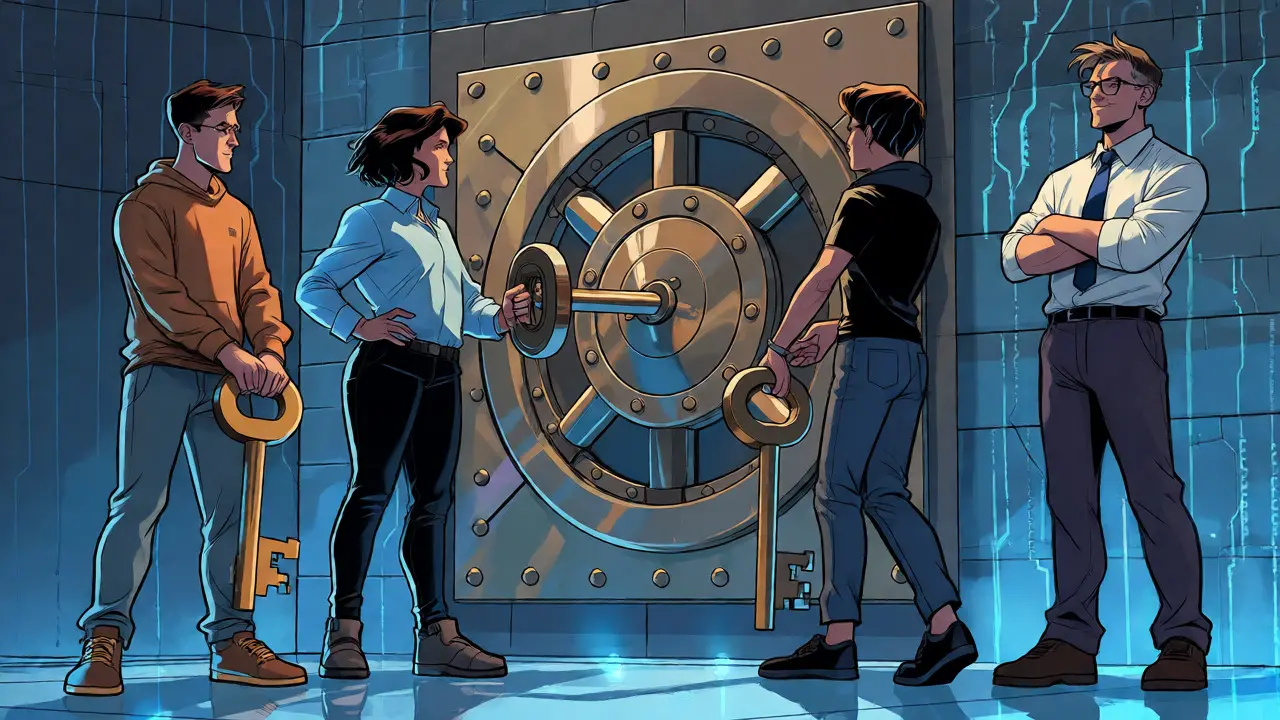
A multi-signature wallet requires multiple distinct private keys to authorize a transaction before it can be broadcast to the blockchain. Think of it like a bank vault that needs two different managers to turn their keys simultaneously to open. Neither manager can empty the vault alone. In the crypto world, this mechanism distributes control among multiple parties or devices, ensuring that theft or loss of a single key doesn’t result in total financial ruin.
This technology wasn’t invented yesterday. While early Bitcoin developers experimented with these concepts around 2012, the urgent need for robust security became glaringly obvious after high-profile exchange hacks and the shutdown of platforms like Silk Road. Today, multi-sig isn’t optional for institutions; it’s mandatory infrastructure. According to industry reports, over 78% of cryptocurrency businesses managing significant assets rely on this architecture to protect against both external hackers and internal fraud.
Decoding the M-of-N Configuration
You’ll hear terms like "2-of-3" or "3-of-5" when people talk about multisig. These aren’t random numbers; they define the security rules of your wallet. This is known as the M-of-N framework.
- N (Total Keys): The total number of private keys associated with the wallet.
- M (Threshold): The minimum number of signatures required to approve a transaction.
Let’s look at the most common setups:
| Configuration | Description | Best Use Case | Risk Profile |
|---|---|---|---|
| 2-of-3 | Requires 2 signatures out of 3 possible keys. | Individual users, small teams, joint accounts. | Balanced. Can survive loss of 1 key. |
| 3-of-5 | Requires 3 signatures out of 5 possible keys. | DAOs, corporate treasuries, family trusts. | High security. Can survive loss of 2 keys. |
| 4-of-7 | Requires 4 signatures out of 7 possible keys. | Large enterprises, government entities. | Maximum security. High operational friction. |
The 2-of-3 setup is widely considered the sweet spot for individuals who want extra security without excessive complexity. You might hold one key on a hardware wallet at home, another on a second device in a safety deposit box, and give the third to a trusted lawyer or family member. To move funds, you only need two of these three. If you lose your home device, you still have access via the other two. If a hacker steals one key, they still can’t move your funds because they lack the second signature.
How Transactions Actually Work
Using a multi-sig wallet feels slightly different from sending money with a standard app. Here’s the step-by-step flow of a typical transaction in a 2-of-3 setup:
- Initiation: User A creates a transaction request (e.g., send 1 BTC to Bob) using their private key. The transaction is now "pending." It hasn’t hit the blockchain yet.
- Co-Signing: User B receives the pending transaction request. They review the details-amount, destination address, fees-and sign it with their own private key.
- Broadcast: Once the threshold (M=2) is met, the fully signed transaction is broadcast to the network. Miners verify the signatures and process the payment.
This process adds time. A single-key transaction might take seconds to initiate. A multi-sig transaction involves coordination between humans or devices, which can add minutes or even hours depending on how quickly co-signers respond. For daily coffee purchases, this is annoying. For moving $50,000 into cold storage, this delay is a feature, not a bug. It gives you time to double-check addresses and catch errors before they become irreversible.
Who Needs Multi-Sig? (And Who Doesn’t)
Not everyone needs a multi-sig wallet. Adding layers of security also adds layers of complexity. If you’re holding $50 worth of Dogecoin for fun, the hassle of managing three separate keys probably outweighs the benefit. However, if you fit any of these profiles, you should seriously consider upgrading:
- HODLers with Significant Holdings: If losing your entire stack would change your lifestyle, you need redundancy. Hardware wallets are great, but if that device fails or is lost, you’re dependent on your seed phrase. Multi-sig removes the dependency on a single seed phrase.
- DAOs and Organizations: Decentralized Autonomous Organizations (DAOs) use smart contract-based multisig wallets (like Safe, formerly Gnosis Safe) to ensure no single founder can drain the treasury. This builds trust among community members.
- Families and Joint Accounts: Parents wanting to set up inheritance plans can use multi-sig to ensure children can’t access funds until they meet certain criteria, or that two parents must agree on major expenditures.
- Businesses Accepting Crypto: Companies receiving payments need to segregate duties. The person initiating the payment shouldn’t be the same person authorizing it. Multi-sig enforces this separation automatically.
Conversely, active traders who make dozens of trades a day usually stick to single-key hot wallets. The latency and coordination overhead of multi-sig would kill their trading strategies. Speed versus security is always a trade-off.
Hardware Integration and Self-Custody
Modern multi-sig implementations rarely rely solely on software. The gold standard combines multi-sig logic with Hardware Wallets like Ledger or Trezor. Each co-signer typically uses their own physical device to generate signatures. This means the private keys never touch an internet-connected computer during the signing process, drastically reducing the attack surface.
It’s crucial to understand that multi-sig is a form of self-custody. Unlike an exchange where you trust a third party to hold your keys, with multi-sig, you (and your chosen co-signers) hold the keys. This puts you in full control, but it also places the burden of responsibility squarely on your shoulders. If you lose all your keys and have no backup plan, there is no "forgot password" link. Recovery procedures must be planned meticulously before you fund the wallet.
Pitfalls to Avoid When Setting Up
Even with the best intentions, many users mess up their first multi-sig setup. Here are the most common mistakes:
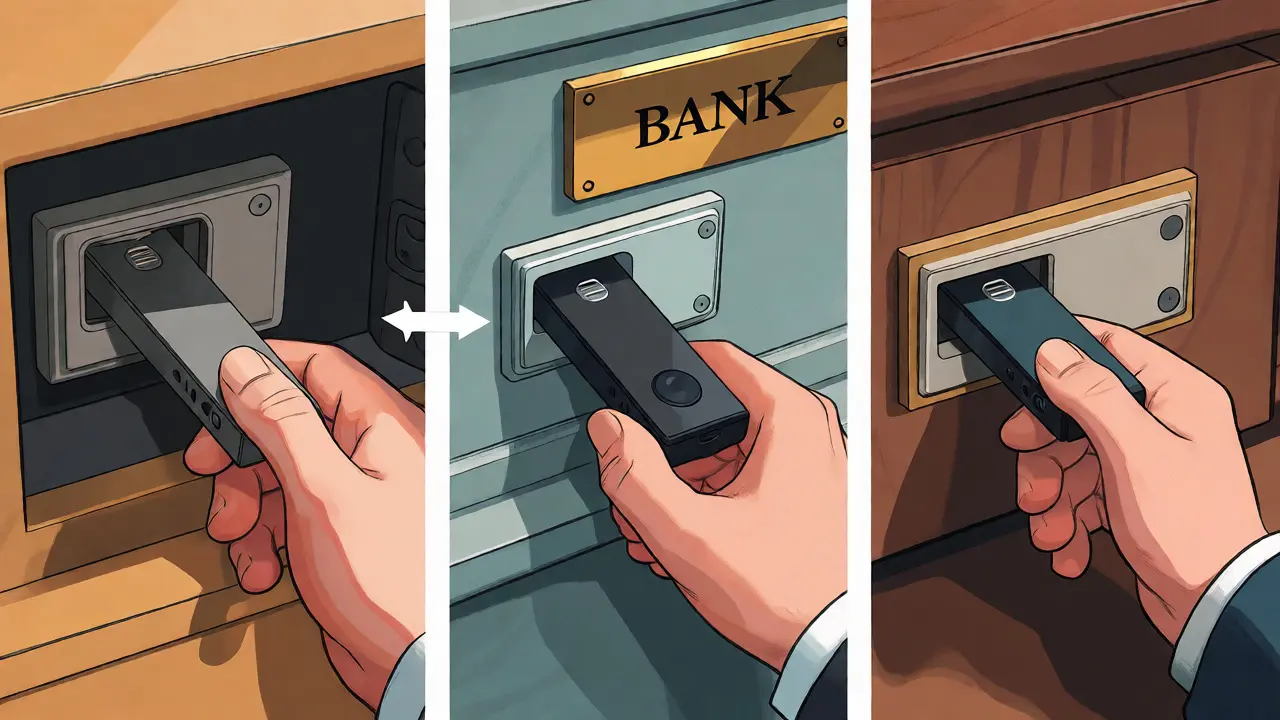
- Colocating Keys: If you store all three hardware wallets in the same house, a fire or burglary could wipe them all out. Distribute your keys geographically. Keep one at home, one in a bank safe, and one with a trusted relative in another city.
- Choosing Unreliable Co-Signers: Your security is only as strong as your weakest link. If your third signer loses their phone, forgets their PIN, or moves abroad without updating their contact info, you could face delays or temporary lockouts.
- Ignoring Backup Procedures: Test your recovery process. Can you reconstruct the wallet if you lose two keys? Do you know how to import your seeds into a new interface? Practice this while the wallet has zero balance.
- Underestimating Fees: Multi-sig transactions generally cost more in network fees because the transaction data size is larger (due to multiple signatures). Budget for higher gas fees on networks like Ethereum or Bitcoin.
The Future of Shared Control
The landscape is evolving. New protocols are introducing "social recovery" mechanisms, allowing trusted friends to help recover access if you lose your keys, without giving them spending power. Additionally, proposals like Ethereum’s EIP-3074 aim to make account abstraction easier, potentially simplifying how multi-sig interacts with decentralized applications (dApps). As regulatory clarity improves, we expect multi-sig to become the default for anyone holding meaningful value, moving from a niche tool for experts to a standard feature in user-friendly wallets.
Is a multi-sig wallet safer than a hardware wallet?
They serve different purposes. A hardware wallet protects your key from online malware. A multi-sig wallet protects against the compromise or loss of a single key. The safest setup combines both: using multiple hardware wallets across different locations to provide signatures for a multi-sig address.
What happens if I lose one key in a 2-of-3 setup?
You can still access your funds using the remaining two keys. However, you should immediately create a new multi-sig wallet configuration (migrate your funds) to restore your original level of redundancy. Losing a key reduces your fault tolerance, so replacement is critical.
Can I use different types of wallets for each signature?
Yes. On Bitcoin, you can mix legacy P2PKH, SegWit, and Taproot keys. On Ethereum, you can combine Externally Owned Accounts (EOAs) with smart contract wallets. Just ensure your signing software supports the specific script types or contract standards you choose.
Are multi-sig transactions slower?
The actual broadcast speed is similar to single-sig transactions once the signatures are collected. However, the time to *collect* those signatures depends on human response times or automated bot speeds. Manual coordination can take minutes to days, whereas automated systems can execute in seconds.
Do exchanges offer multi-sig for withdrawals?
Some enterprise-focused exchanges allow you to whitelist withdrawal addresses or require additional approvals, but true on-chain multi-sig custody usually happens in your own self-custody wallet. Exchanges often use internal multi-sig for their own reserves, but this doesn't directly protect your individual account balance unless you withdraw to your own multi-sig address.