
Trading with leverage on a centralized exchange often feels like a game of Russian roulette with your funds. Between sudden "scam wicks" that liquidate your position in a millisecond and the constant worry of an exchange suddenly freezing withdrawals, the stress is real. GMX is a non-custodial, decentralized perpetual futures exchange that lets you trade crypto assets with leverage directly against a liquidity pool. Unlike the platforms you're used to, it doesn't use a traditional order book, meaning you aren't hunting for a counterparty to fill your order. If you're tired of KYC forms and trusting a CEO with your private keys, GMX on the Avalanche network offers a way to trade without giving up control of your assets.
Key Takeaways for Traders
- No KYC: Fully permissionless access; just connect your wallet and trade.
- High Leverage: Access up to 50x leverage on select assets.
- Zero Price Impact: Trades are executed against a pool, eliminating order-book slippage.
- Passive Income: Earn yield by providing liquidity via the GLP pool.
- Oracle Protection: Built-in guards to prevent unfair liquidations from flash crashes.
How GMX Changes the Trading Game
Most exchanges work like a matchmaking service: they find a buyer and a seller and take a cut. GMX flips this. It uses an AMM (Automated Market Maker) based architecture. Instead of waiting for another trader to take the opposite side of your bet, you trade against a massive vault of assets known as the GLP (GMX Liquidity Provider) pool. This is a huge deal because it means there is zero price impact on your orders. You get the price the oracle gives you, period.
On Avalanche, this setup is particularly snappy. Because the network is so efficient, your transaction fees are a fraction of what you'd pay on Ethereum, making it viable to manage positions more frequently without your profits being eaten by gas fees. By early 2026, the Avalanche side of the house has already seen over $25 billion in trading volume, proving that retail traders love the combination of speed and self-custody.
The Trading Experience: Assets and Leverage
If you're looking for a thousand different obscure altcoins, GMX Avalanche isn't the place. It focuses on the heavy hitters. You can trade AVAX, BTC, ETH, SOL, XRP, LTC, and DOGE. While the Arbitrum version has a wider menu, the Avalanche selection covers 95% of what most serious traders actually need.
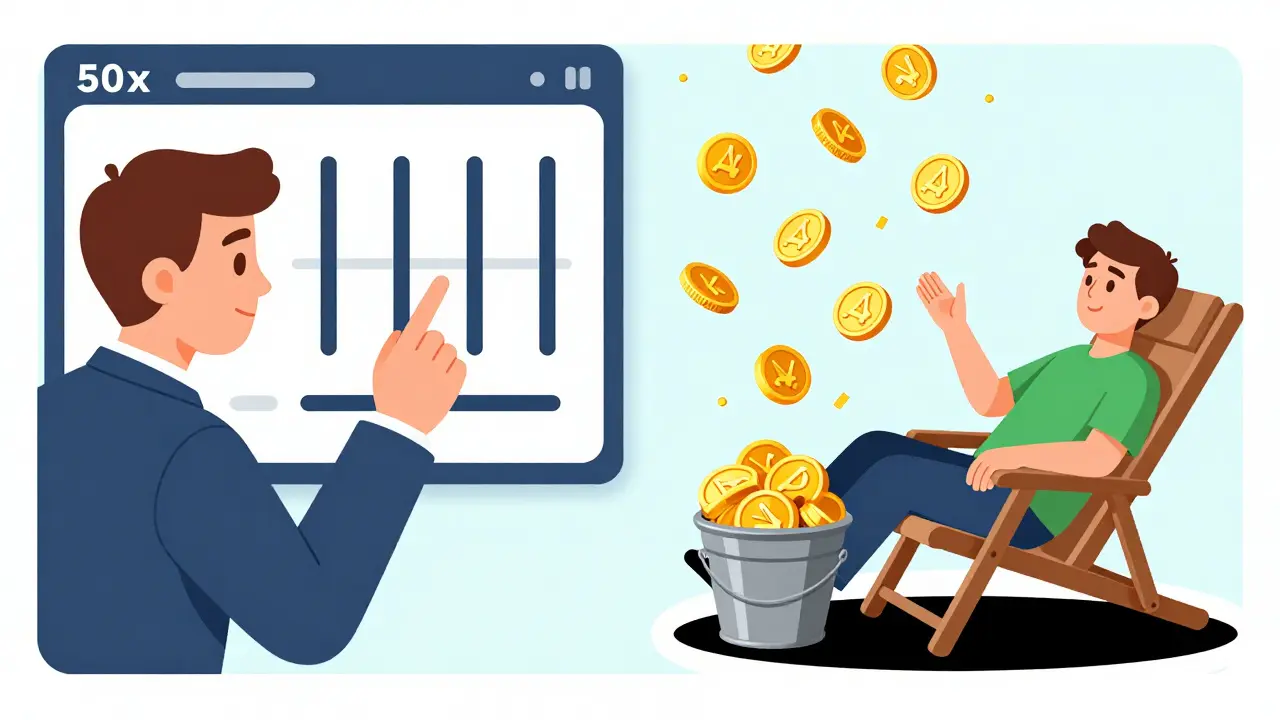
The GMX Avalanche review wouldn't be complete without mentioning the leverage. You can go up to 50x, but be warned: this is a double-edged sword. While it can amplify your gains, a small move in the wrong direction can wipe you out. The platform helps by using a sophisticated price oracle system to protect you from those "fake" price spikes often seen on centralized platforms, but the risk of liquidation is always present when you're playing with high leverage.
| Feature | GMX (Avalanche) | Typical CEX |
|---|---|---|
| Custody | Self-Custodial (Your Keys) | Exchange-Custodial |
| Account Setup | Wallet Connection (No KYC) | Email + ID Verification |
| Execution | AMM Liquidity Pool | Central Limit Order Book |
| Price Impact | Zero/Minimal | Depends on Order Book Depth |
| Fees | 0.05% to 0.1% | Tier-based / Maker-Taker |
Making Money Without Trading: The GLP Pool
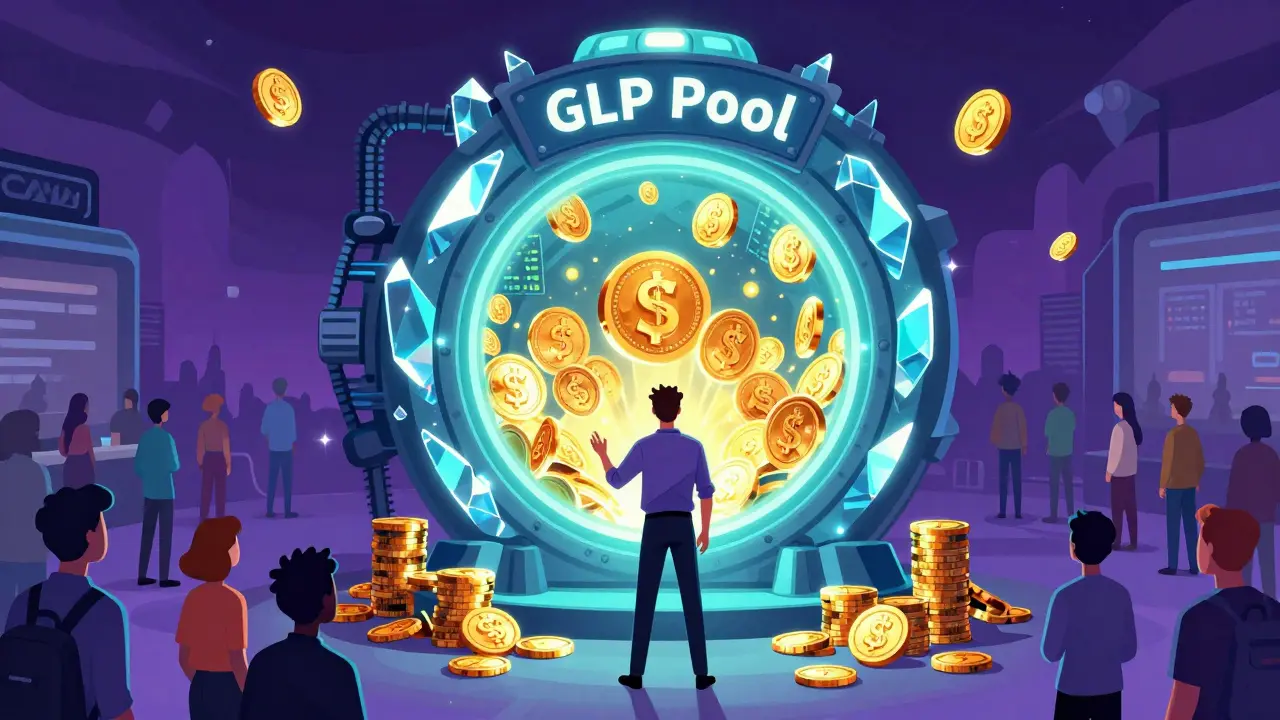
You don't actually have to be a trader to profit from GMX. You can act as the house. By providing assets to the GLP pool, you're essentially providing the liquidity that traders bet against. When traders lose money, the pool wins. When they win, the pool pays out.
The incentive here is juicy. GLP stakers on Avalanche are rewarded with AVAX, and historically, these yields have hovered around 20% APR. About 70% of all platform fees go straight to these liquidity providers. However, it's not "free money." If the majority of traders on the platform are making huge profits, the value of the GLP pool can drop. It's a trade-off between steady fee income and the risk of being the losing side of a winning trader's bet.
Is It Safe? Security and Audits
In DeFi, security is everything. GMX hasn't just crossed its fingers and hoped for the best; they've implemented a $5 million bug bounty program to encourage white-hat hackers to find holes before the bad guys do. The smart contracts have undergone multiple professional audits, which is critical when you're depositing collateral into a vault.
One of the best security features is the oracle integration. Many traders have a horror story about a "flash crash" on a centralized exchange that triggered their stop-loss and liquidated them, even though the price didn't actually drop on other platforms. GMX uses a decentralized price feed that smooths out these anomalies, giving you a much fairer fighting chance.
Getting Started: A Step-by-Step Guide
If you've never used a decentralized exchange, the first few minutes can feel a bit overwhelming. But GMX has stripped away the confusing jargon. You won't see words like "margin debt" or "collateralization ratios" staring you in the face. Here is the simplest way to get moving:
- Setup a Wallet: Download MetaMask or Trust Wallet and add the Avalanche network.
- Fund Your Wallet: Send some AVAX (for gas fees) and the asset you want to trade (like BTC or ETH) to your wallet.
- Connect to GMX: Visit the official site and link your wallet.
- Open a Position: Choose your asset, decide if you're going "Long" (betting the price goes up) or "Short" (betting it goes down), and select your leverage.
- Set Your Stop: Always use the liquidation price calculator to know exactly where your "danger zone" is.
The Trade-offs: What to Watch Out For
No platform is perfect. The biggest gripe users have with GMX on Avalanche is the asset list. If you're a degenerate trader looking for the latest micro-cap meme coin, you're out of luck here. You're limited to the major assets, which is great for stability but boring for some.
Then there's the liquidity cap. Because trades are executed against the GLP pool, there is a limit to how large a single position can be. If you're a whale moving hundreds of millions of dollars, you might find the capped liquidity restrictive. For the average retail trader, however, this isn't an issue. Just keep in mind that while the oracle protection is great, it's not a magic shield. In extreme market crashes, like the flash event of March 2025, liquidations can still happen if your leverage is too high.
Do I need to verify my identity (KYC) to use GMX?
No. GMX is a fully decentralized and permissionless platform. You do not need to provide an email, phone number, or government ID. All you need is a compatible Web3 wallet and an internet connection.
How does GLP differ from regular staking?
Regular staking usually involves locking a token to secure a network. Providing GLP means you are providing liquidity to the exchange. You earn a share of the trading fees, but you take on the risk that traders might win more than the pool can cover in the short term.
What is the maximum leverage I can use on GMX Avalanche?
The platform supports leverage up to 50x. However, the exact maximum depends on the asset you are trading and the current market volatility. It is highly recommended that beginners start with 2x to 5x leverage to avoid quick liquidations.
Which wallet is best for using GMX?
MetaMask is the most common choice due to its wide compatibility. However, any wallet that supports the Avalanche network and the WalletConnect standard, such as Trust Wallet or Core, will work perfectly.
Are there any hidden fees on the platform?
There are no hidden "maintenance" fees. You pay a trading fee (typically 0.05% to 0.1%) when opening and closing positions, and you pay the standard Avalanche network gas fees for every transaction you sign with your wallet.
Next Steps: Avoiding Common Pitfalls
If you're ready to jump in, don't go full-throttle on day one. The learning curve for DeFi derivatives is usually a few weeks. Start by trading with very low leverage (under 5x) just to get a feel for how the position management works. Use the built-in calculators to understand where your liquidation point is, and never deposit more than you can afford to lose.
If you're more interested in the passive side, consider splitting your portfolio. Instead of just trading, put a portion of your holdings into GLP to earn those AVAX rewards. This creates a hedge: you can profit from the price movements as a trader and from the platform's overall volume as a liquidity provider.



Saurav Bhattarai
April 16, 2026 AT 16:20Oh wow, a review of GMX. How absolutely groundbreaking. I'm sure the world was just dying to know that a DEX doesn't require KYC, as if that's not the entire point of the blockchain for the last decade. Maybe next you can explain that Bitcoin is decentralized? Truly an elite level of insight here.
Honestly, if you're still using CEXs in this day and age, you deserve to have your funds frozen by some random CEO's whim. Some of us actually understand the tech, while others are just playing house with their digital wallets. It's honestly embarrassing.
Michael Harms
April 16, 2026 AT 17:04This is a great breakdown for anyone looking to get into DeFi! I love how it simplifies the GLP pool concept. It's always awesome to see more people taking control of their own keys and moving away from centralized risks. Keep exploring everyone, the learning curve is worth it!
Jeff Barlett
April 18, 2026 AT 11:44Actually, the 'zero price impact' is a bit of a myth when you consider the underlying GLP skew. If everyone is long, the pool is just eating the loss, which means the liquidity providers are the ones bleeding. It's not a magic trick, it's just shifting the risk from the order book to the LP. I honestly think the traditional order book is more transparent for actual high-volume traders who don't want to be 'the house' only to realize the house is burning down.
Robert Preston
April 19, 2026 AT 21:54Just to add a point on the risk management side: always remember that while the oracle protection prevents 'scam wicks', it doesn't stop a genuine market crash from hitting your liquidation price. I've seen people lose everything on 50x leverage thinking the oracle would save them. Stick to 3x or 5x if you're not a pro. It's the only way to sleep at night when the market gets volatile.
Alex Long
April 20, 2026 AT 05:39Too long. Just use it or don't.
Adam Mann
April 21, 2026 AT 18:21I really appreciate the step-by-step guide at the end because it can be so intimidating for people who aren't tech-savvy to set up their first wallet and navigate the Avalanche network for the first time, and it's just so heartwarming to see a platform that lowers the barrier to entry for the everyday person who just wants to grow their savings without having to deal with the bureaucratic nightmare of traditional banking systems that usually just ignore the little guy anyway. I've always believed that financial freedom should be accessible to everyone regardless of where they come from or what their background is, and tools like this are exactly what we need to push the world toward a more inclusive and fair economic future for all of us together!
Trudy Morse
April 23, 2026 AT 01:16Control is an illusion, but self-custody is the closest we get to it in this digital age. The shift from trust-based systems to code-based systems is the ultimate evolutionary step for finance. GMX is just a practical application of this philosophy.
Kevin Lư
April 23, 2026 AT 13:53I've been using GLP for a while and the AVAX rewards are seriously nice. It's kind of funny how most people are terrified of the risk while I'm just chilling and collecting fees. You just gotta have a bit of faith in the system and the volume. Plus, who doesn't love watching traders panic while you earn a steady percentage? It's a win-win if you're lazy like me.
Mike Kempenich
April 24, 2026 AT 16:15I agree with the point about starting small. It's way better to lose a little bit while learning the ropes than to blow your whole account in one go. The interface is pretty intuitive, so just take your time and don't let the FOMO drive your leverage choices. You'll get the hang of it!