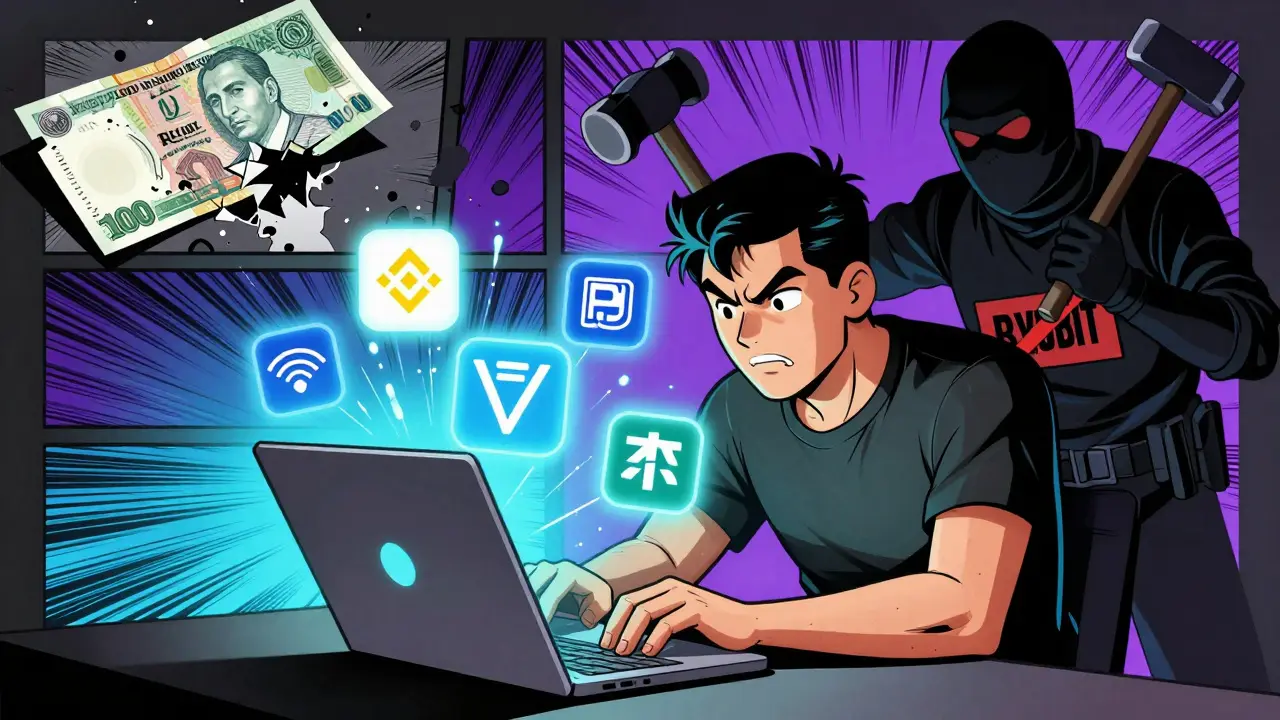
Iran’s government doesn’t want you to use cryptocurrency for payments. But millions of Iranians are doing it anyway-because the rial keeps losing value, inflation is over 40%, and saving money in local currency feels like watching cash burn. The Central Bank of Iran blocked crypto payment gateways, banned ads, and even raised energy prices to crush mining. Yet, crypto use has grown. In 2025, about 14.7 million Iranians-nearly one in six-used digital assets. They didn’t give up. They adapted. Here’s how they’re getting around the restrictions.
Use a Reliable VPN to Access Global Exchanges
The easiest way to bypass Iran’s crypto block is through a virtual private network. Most Iranians who trade on Binance, Bybit, or Kraken use a VPN. But not just any VPN works. Iranian internet providers actively block known exchange IPs and throttle speeds for traffic that looks like crypto activity. That’s why users prefer services with obfuscation technology-tools that hide your traffic so it looks like regular internet use. NordVPN, ExpressVPN, and Surfshark are the top three choices, used by 63% of Iranian crypto traders. These services offer features like obfuscated servers and kill switches that cut your connection if the VPN drops, preventing accidental exposure. A Reddit user in Tehran reported an 83% success rate after switching to Windscribe with obfuscation enabled. Without it, connections fail more than half the time. Don’t use free VPNs. They’re slow, unreliable, and often sell your data. Paid services cost about $7.80 a month on average. That’s less than a daily coffee in Tehran, but it’s the difference between being able to trade or losing access entirely.Switch from USDT to DAI on Polygon
In July 2025, Tether froze 42 Iranian wallets holding over $1.2 billion in USDT. That sent shockwaves through Iran’s crypto community. People lost access to their funds overnight. The response? A mass migration to DAI, a decentralized stablecoin built on the Polygon network. Why DAI? Because it’s not controlled by a single company. Tether can freeze USDT. DAI’s smart contract can’t be turned off by anyone-not even its creators. And Polygon? It’s fast and cheap. A DAI transaction on Polygon takes 4.3 seconds and costs $0.0002. Compare that to USDT on TRC-20, which averages 13.7 seconds and $0.10 in fees. Within 28 days of the Tether freeze, DAI jumped from 3% to 67% of all stablecoin transactions in Iran. To use DAI, you need a non-custodial wallet like MetaMask. Set it up on your phone or computer, connect it to the Polygon network, and start sending and receiving DAI. Many Iranians use Telegram bots like @IranCryptoBridge to convert USDT to DAI automatically-no KYC, no delays, under $0.50 in fees.Trade Peer-to-Peer Through Telegram
Iran’s biggest domestic exchange, Nobitex, now only operates from 10 AM to 8 PM. After that, trading shuts down. And after a $90 million hack in June 2025, trust in centralized platforms collapsed. So people moved to Telegram. Telegram groups are now the backbone of Iran’s crypto economy. There are over 2.1 million members across dozens of private channels. Users post buy and sell offers for DAI, USDT, or even Bitcoin. Payments happen through bank transfers, mobile wallets, or even cash drop-offs. The system works because it’s decentralized-no middleman, no platform to freeze your account. The key is finding trusted traders. New users start by joining small, verified groups. Look for channels with active moderation and user reviews. Many traders use multi-signature escrow bots to hold funds until both sides confirm the deal. It adds a layer of security without relying on a central authority.
Avoid Government-Controlled Exchanges
The Iranian government runs a few licensed exchanges like Nobitex and Saram. They require full ID verification, link to your national ID number, and report all transactions to the Central Bank. If you use them, you’re not avoiding restrictions-you’re complying with them. These platforms process only 19% of Iran’s total crypto volume. The rest flows through P2P networks and international exchanges accessed via VPN. Even if you need to buy crypto legally, don’t keep large balances on these platforms. Transfer it out quickly to your own wallet. The government also launched a digital rial pilot on Kish Island. It’s supposed to replace the dollar and reduce reliance on crypto. But as of September 2025, only 12,400 people are using it. Why? Because you can’t send it abroad, it’s tied to your ID, and it doesn’t protect against inflation. It’s a tool for control, not freedom.Use Tor for Extra Privacy
If you’re serious about staying under the radar, combine your VPN with Tor. Tor routes your traffic through multiple encrypted nodes, making it nearly impossible to trace your activity back to your device. It’s slower than a regular browser, but for sensitive transactions-like withdrawing from an exchange or accessing a new wallet-it’s worth the wait. Many Iranians use the Tor Browser to connect to decentralized exchanges (DEXs) like Uniswap or SushiSwap. They swap DAI for Bitcoin or Ethereum without leaving a paper trail. This method is more advanced, but tutorials on Iranian video platforms like Aparat show step-by-step how to do it safely.Learn How to Use Multi-Signature Wallets
A multi-sig wallet requires two or more keys to approve a transaction. That means even if someone hacks one device, they can’t steal your crypto. Iranian users started adopting this after the Nobitex hack and Tether freeze. Setting up a multi-sig wallet takes about 3 hours to learn. You can use tools like Gnosis Safe or BitGo. Store one key on your phone, another on a hardware wallet, and a third with a trusted friend. If your phone breaks or gets seized, you still have access. According to a September 2025 survey, 74% of experienced Iranian crypto users can set up a multi-sig wallet within 48 hours of hearing about a new threat. That’s not luck-it’s necessity.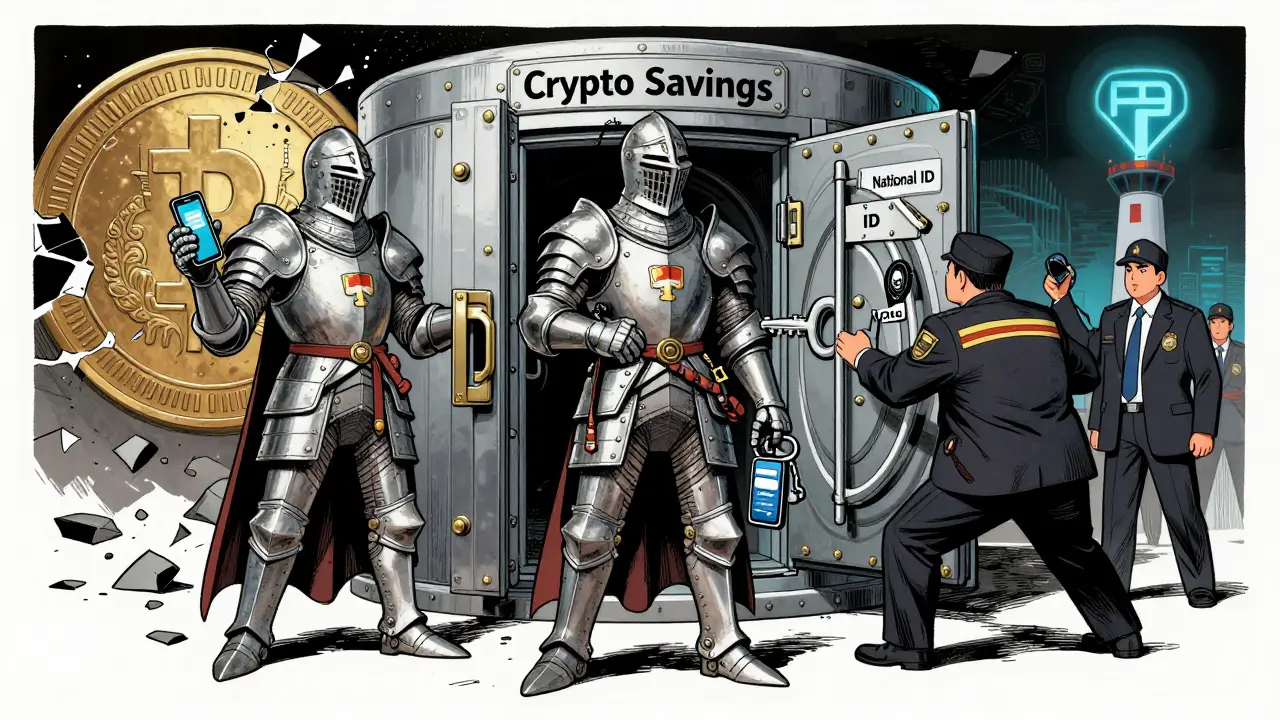
What Not to Do
Don’t trust centralized services that promise “no KYC” but ask for your ID. Many are scams. Don’t use Iranian bank accounts to move crypto funds directly-those transactions are monitored. Don’t keep large amounts on exchanges. Always move to your own wallet. Avoid using the same device for both crypto and personal use. If your phone is seized, authorities can access your wallet if it’s not encrypted. Use a separate device or a secure Android emulator. And never assume the rules won’t change. The government updates its restrictions every few weeks. What works today might be blocked tomorrow. That’s why community knowledge is so important. Join Telegram groups, follow trusted bloggers, and stay updated.Why This Works: The Real Story
Iranians aren’t using crypto because it’s trendy. They’re using it because they have no other choice. The rial lost over 60% of its value in two years. Salaries don’t keep up. Savings vanish. Crypto isn’t speculation-it’s survival. A user named RialProtector documented how he preserved 85% of his purchasing power over six months by holding DAI and Bitcoin. Someone who kept cash in dollars lost 42% because black market rates swung wildly. Crypto didn’t make him rich. It kept him from going broke. The government’s crackdown has failed. Instead of reducing crypto use, it forced people to get smarter. The tools are now faster, cheaper, and more private than ever. The Iranian crypto ecosystem is one of the most advanced in the world-not because of government policy, but despite it.What’s Next in 2026?
By early 2026, DAI on Polygon is expected to handle 85% of Iran’s stablecoin volume. More users will shift to decentralized wallets. Telegram bots will get better at bypassing IP blocks. The government might try to ban Tor or crack down on VPNs harder. But history shows they’re always one step behind. The real question isn’t whether Iranians will keep using crypto. It’s whether the government will ever accept that trying to control money in the digital age is like trying to hold water in your hands.Is it legal to use crypto in Iran?
No, using crypto for payments or trading on foreign exchanges is officially banned. But mining is legal if you pay government energy fees-which most people avoid because the fees are too high. So while the law says crypto is restricted, millions use it anyway. Enforcement is inconsistent, and most users operate in gray areas.
Can I use Bitcoin in Iran without a VPN?
Not easily. Most international Bitcoin exchanges are blocked without a VPN. Even if you buy Bitcoin through a local P2P trader, you’ll still need a wallet that connects to the blockchain. Without a VPN, your internet provider can detect and block access to Bitcoin nodes. A reliable VPN is essential for any serious crypto use.
Why is DAI better than USDT in Iran?
DAI is decentralized. Tether can freeze USDT wallets at any time, as they did in July 2025, cutting off access for over 1.2 million Iranians. DAI runs on a smart contract that no single entity can shut down. It’s also cheaper and faster on the Polygon network, making it ideal for frequent small transactions.
How much does it cost to use crypto in Iran?
The average monthly cost is around $7.80 for a VPN, plus $0.0002-$0.50 per transaction. Some users spend extra on hardware wallets or multi-sig setups, but basic access can be maintained for under $10 a month. That’s far less than the cost of losing savings to inflation.
Are there risks to using crypto in Iran?
Yes. The government can seize devices, fine users, or arrest people for large-scale operations. But for most individuals trading under $10,000 per transaction, enforcement is rare. The bigger risk is technical: losing your private keys, falling for scams, or using unreliable tools. Always use non-custodial wallets and never share your recovery phrase.
Can I send crypto out of Iran?
Yes, if you use a non-custodial wallet and a VPN. You can send DAI, Bitcoin, or Ethereum to any global address. The challenge isn’t technical-it’s finding someone abroad who will accept it and convert it to local currency. Many Iranians use trusted contacts in Turkey, UAE, or Armenia to cash out.
What’s the easiest way to start using crypto in Iran?
Start with Telegram. Join a verified P2P group, buy DAI from a trusted seller, and send it to a MetaMask wallet on the Polygon network. Then use a trusted VPN like NordVPN to access global exchanges. That’s the simplest, safest path for beginners.




Rob Duber
February 2, 2026 AT 09:15Iranians turning crypto into a survival skill is one of the most badass things I’ve ever seen. They’re not just dodging bans-they’re outsmarting a whole government with nothing but a VPN, a Telegram bot, and pure grit. Meanwhile, I’m complaining about my Coinbase fees. We’re all just crypto peasants, but some of us are peasants with a cause.
Gary Gately
February 2, 2026 AT 12:00DAI on polygon is the real MVP here. i tried using usdt after the freeze and lost like 3 weeks of my life trying to get it back. dais just… work. no drama. no freeze. no ‘oops we deleted your money’ vibes. also, the fee is so low i can send it to my cousin in turkey and still have enough left to buy him a kebab. 🤝
Joshua Clark
February 4, 2026 AT 10:20Let’s be real-this isn’t just about bypassing restrictions; it’s about the quiet, decentralized revolution happening under the radar of authoritarian control. The fact that Iranians have built an entire financial ecosystem using nothing but open-source tools, peer-to-peer trust networks, and non-custodial wallets speaks volumes about human ingenuity when systems fail. Multi-sig wallets? Tor + VPN combos? Telegram escrow bots? This isn’t crypto bro culture-it’s survival engineering. And honestly, if you think the West is ahead in financial innovation, you haven’t been paying attention to what’s happening in Tehran living rooms and basement apartments. The government thought they could crush it by raising energy prices and blocking IPs. Instead, they created a generation of crypto-savvy citizens who now understand blockchain better than most Wall Street analysts. That’s not resistance-that’s evolution.
Brandon Vaidyanathan
February 4, 2026 AT 11:15Oh wow, so now we’re romanticizing people risking arrest because they don’t want to watch their savings evaporate? Cool. Let’s not forget that these same people are also the ones getting scammed by fake Telegram bots promising ‘10x returns’ or ‘free DAI’. And don’t even get me started on the 14-year-olds running multi-sig wallets because their dad got arrested. This isn’t freedom-it’s chaos with a blockchain sticker on it. Also, Tor? Really? You think the IRGC isn’t watching Tor exit nodes? Please. You’re not a hacker. You’re just a guy with a NordVPN subscription and a death wish.
Gareth Fitzjohn
February 6, 2026 AT 01:12Interesting read. The practical advice is solid-especially the DAI-on-Polygon shift. I’m surprised how quickly the community adapted. Still, the risks remain significant. I’d be cautious about relying too heavily on Telegram for financial activity, even with escrow bots. The infrastructure is impressive, but it’s fragile. And while the government’s efforts have failed so far, their capacity to adapt shouldn’t be underestimated.