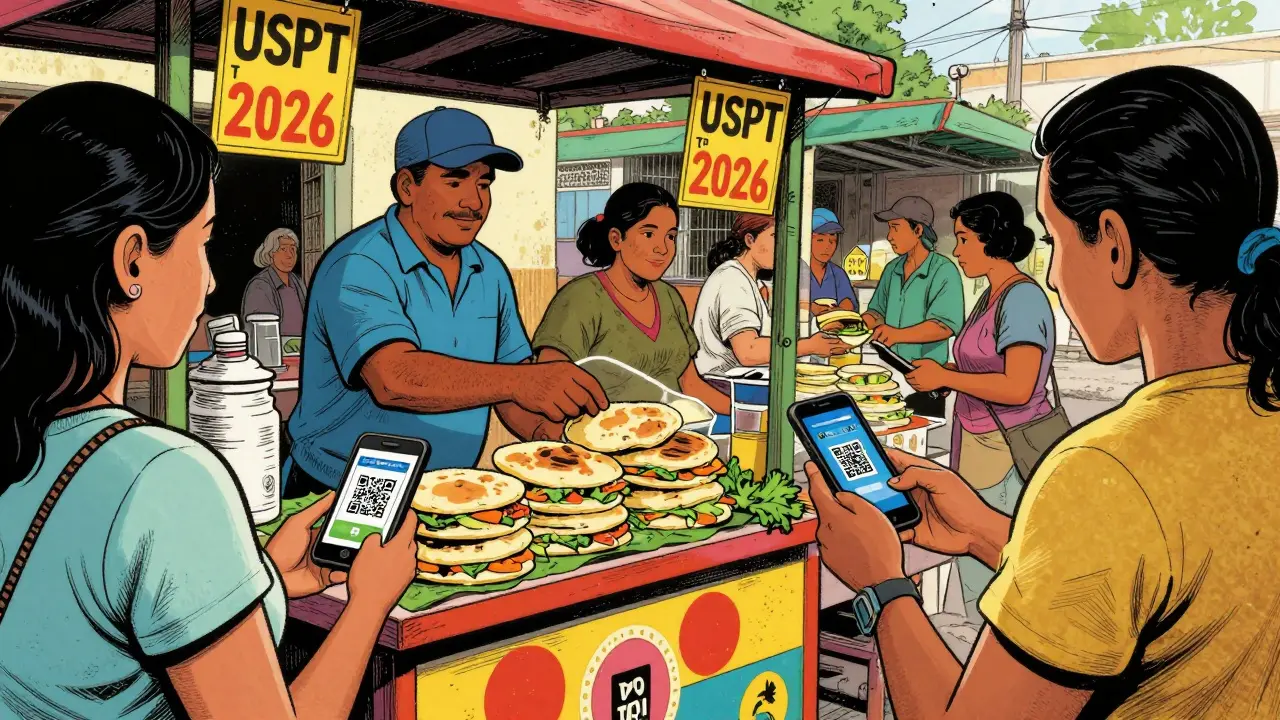
Imagine going to the market with $100 in your pocket. By the time you pick up your groceries, that same money buys half as much because prices doubled while you were standing in line. This is not a hypothetical scenario for many people; it is daily life in Venezuela, a country where hyperinflation has rendered the local currency nearly useless for saving or even holding value for a few hours. In June 2026, annual inflation sits at roughly 229%, and the Venezuelan bolívar continues its steep decline. When traditional banking fails to protect your livelihood, people look for alternatives. For millions of Venezuelans, that alternative is cryptocurrency.
This isn't about getting rich quick or betting on the next moonshot token. It is about survival. Cryptocurrency has evolved from a speculative asset class into essential infrastructure for daily commerce, wage protection, and family support across the nation. From street vendors selling arepas to university tuition payments, digital assets have woven themselves into the fabric of everyday economic activity. Here is how ordinary citizens are navigating one of the world's most severe economic crises using blockchain technology.
The Rise of "Binance Dollars" and Stablecoins
If you walk through Caracas today, you will rarely hear people talk about "Bitcoin" when discussing their grocery budget. Instead, they use the term Binance dollars. This slang refers specifically to USDT (Tether), a stablecoin pegged to the US dollar that dominates small-scale transactions in Venezuela due to its price stability and low fees.
Why USDT? Because volatility is the enemy when you are trying to buy medicine or pay rent. Bitcoin’s price swings might be exciting for traders, but they are disastrous for someone who needs to know exactly what a loaf of bread costs. USDT offers the reliability of the US dollar without the restrictions of the US banking system. Most of these transfers happen on the TRC-20 network, which utilizes the TRON blockchain to offer faster transaction speeds and significantly lower fees compared to Ethereum-based networks. This technical choice matters immensely. A high fee eats into the already meager profits of small businesses and workers.
Three exchange rates now operate simultaneously in the country:
- The Official Rate: Set by the Central Bank of Venezuela (BCV), this rate is largely theoretical for the average citizen.
- The Parallel Market Rate: Known locally as the "dólar negro," this black-market cash rate fluctuates wildly based on supply and demand.
- The USDT P2P Rate: The rate used on peer-to-peer platforms like Binance. This has become the de facto standard for pricing goods and services because it reflects real-time liquidity and trust.
Mercants increasingly price items directly in USDT. Receipts often show totals in "Binance dollars" rather than bolívares. This shift indicates a fundamental change: the economy is effectively dollarizing via blockchain, bypassing the need for physical US currency, which is scarce and risky to carry.
P2P Platforms as New Banking Infrastructure
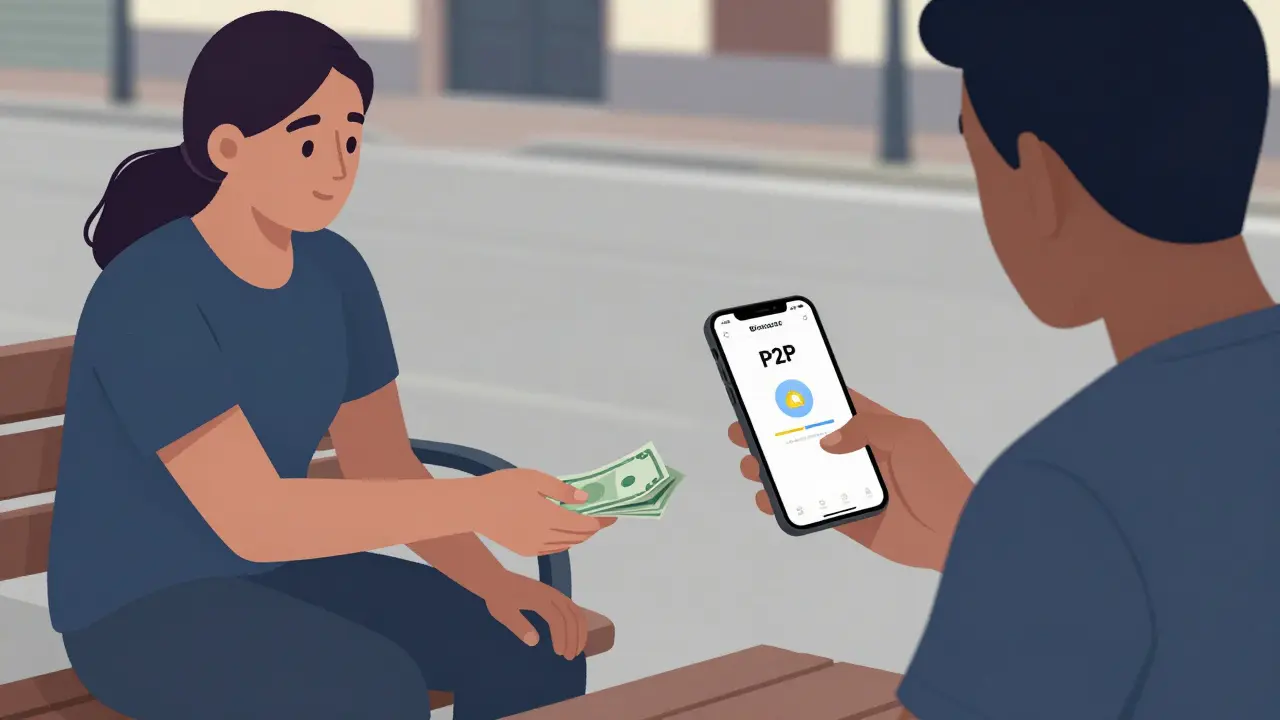
With traditional banks imposing strict limits, freezing accounts, or failing entirely, Peer-to-Peer (P2P) trading platforms have stepped in to fill the void. These platforms allow users to buy and sell cryptocurrencies directly with each other, using various payment methods including bank transfers, mobile wallets, and even cash meetups.
Binance is the dominant player here, functioning less like an exchange and more like a decentralized bank. Its P2P marketplace enables Venezuelans to convert bolívares earned from salaries into USDT instantly. LocalBitcoins also plays a role, though its user base has shrunk relative to Binance's massive scale. The process typically works like this:
- A seller posts an offer to buy USDT for bolívares via a specific bank transfer method.
- The buyer initiates the trade on the platform, which locks the USDT in escrow.
- The buyer sends the bolívares to the seller's bank account.
- Once the seller confirms receipt, the platform releases the USDT to the buyer.
This system creates a layer of trust where none exists in the formal financial sector. However, it requires vigilance. Scams do occur, so users rely heavily on reputation scores within these platforms. High-volume traders build trust over months, becoming reliable anchors in the local crypto ecosystem. For many, learning to navigate these interfaces took only two to three weeks, taught through community groups on WhatsApp and Telegram rather than formal education.
Crypto for Remittances: Sending Love Across Borders
Remittances are the lifeblood of the Venezuelan economy. In 2023, families abroad sent home approximately $5.4 billion. Traditionally, this money moved through Western Union, MoneyGram, or informal "valijas" (suitcases) carried by travelers crossing borders. These methods are slow, expensive, and increasingly restricted by international sanctions and banking compliance rules.
Cryptocurrency has revolutionized this flow. According to data from 2023, about 9% of all remittances were processed through cryptocurrency channels. While that percentage sounds small, it represents hundreds of millions of dollars moving efficiently and cheaply. Today, that number is likely higher as awareness grows. When a Venezuelan living in Spain or Colombia wants to send money to their parents in Maracaibo, they can buy USDT on a local exchange and send it directly to their family's Binance wallet. The transaction settles in minutes, costing a fraction of a percent in fees. The recipient then sells the USDT on the P2P market for bolívares to pay bills or keeps it in USDT to preserve value. This speed is critical during emergencies-medical bills, urgent repairs, or sudden food shortages cannot wait for a three-day bank clearance.
Daily Life: How Citizens Actually Use Crypto
Let’s look at a typical day for Carlos, a resident of Caracas. He wakes up, checks his phone, and sees the current USDT/bolívar exchange rate. His salary was paid in bolívares yesterday, but he immediately converted it to USDT to avoid losing value overnight. Now, he needs to buy lunch. He visits a local restaurant. The menu lists prices in both bolívares and USDT. He chooses to pay in USDT. He opens his mobile app, scans a QR code provided by the waiter, and authorizes the transfer. The restaurant owner receives the funds instantly. No credit card processing fees, no risk of chargebacks, no dependence on unstable internet connections required for traditional POS systems (though internet access remains a challenge).
This scenario is common. Street vendors accept Bitcoin or USDT via mobile apps. Technology startups pay freelancers in stablecoins. Universities accept tuition payments in crypto. The barrier to entry is surprisingly low. You don’t need to understand private keys or cold storage for basic usage. You just need a smartphone and a verified account on a major platform. Security awareness is growing, but for daily transactions, convenience outweighs the theoretical risks of self-custody for most users.

Challenges and Risks: It’s Not Perfect
While crypto provides a lifeline, it is not a magic bullet. Several significant challenges persist:
- Infrastructure Instability: Power outages and poor internet connectivity can interrupt transactions. If the server goes down mid-trade, anxiety spikes. Users develop workarounds, such as keeping offline notes of trades until connectivity returns.
- Regulatory Uncertainty: The Venezuelan government maintains a contradictory stance. It tolerates dollar-backed crypto exchanges because they help stabilize the economy, yet it periodically cracks down on mining operations and certain platforms. There is no clear legal framework protecting crypto users.
- Centralization Risks: Relying heavily on Tether (USDT) introduces counterparty risk. If Tether loses its peg or faces regulatory action from the US SEC, the entire Venezuelan crypto economy could face turmoil. This is why some experts advocate for diversification into other stablecoins or Bitcoin, despite the volatility.
- Sanctions Complexity: US sanctions on Venezuela complicate interactions with global financial institutions. While crypto operates outside traditional banking, the on-ramps and off-ramps (exchanges) are often based in jurisdictions sensitive to these sanctions. This creates friction and occasional account freezes.
Moreover, the government’s previous attempt to create its own cryptocurrency, the Petro, a state-backed digital currency launched in 2018 to bypass sanctions and stabilize the economy, which failed due to lack of trust and utility, serves as a cautionary tale. Launched in 2018, the Petro was discontinued in 2024 after failing to gain any meaningful adoption. People rejected it because it lacked transparency and independent backing. This failure reinforced public preference for decentralized, globally recognized assets like Bitcoin and USDT.
The Future: Irreversible Digital Dollarization?
As we move through 2026, the trend toward blockchain-based dollarization appears irreversible. Confidence in the bolívar is shattered. Even if political conditions improve, rebuilding trust in a national currency takes decades. Meanwhile, crypto infrastructure is deepening its roots. Businesses are integrating dual-pricing systems permanently. Educational programs are teaching crypto literacy alongside basic math. Regional trends are influencing local behavior; Brazil’s institutional adoption of Bitcoin contrasts with Venezuela’s grassroots survival model, but both point to a broader Latin American shift toward digital assets.
Experts warn that crypto solves symptoms, not causes. It does not fix political instability, corruption, or mismanagement. However, it provides tactical financial stability in the absence of systemic solutions. For the average Venezuelan, the question is no longer "Should I use crypto?" but "How can I use it more safely and efficiently?" As infrastructure improves and user education increases, expect stablecoin adoption to expand further, cementing cryptocurrency’s role as the backbone of Venezuela’s informal economy.
Is it legal to use cryptocurrency in Venezuela?
The legal status is ambiguous. The government has not officially banned personal use of cryptocurrencies like Bitcoin or USDT, nor has it fully regulated them. While the state previously promoted its own failed currency, the Petro, it currently tolerates the use of foreign stablecoins because they help mitigate hyperinflation effects. However, businesses operating exchanges may face regulatory scrutiny, and mining operations have been subject to crackdowns. Users operate in a gray area, relying on de facto acceptance rather than explicit legal protection.
Which cryptocurrency is best for daily expenses in Venezuela?
USDT (Tether) is overwhelmingly the preferred choice for daily expenses. Unlike Bitcoin, which experiences significant price volatility, USDT is pegged to the US dollar, providing price stability essential for buying food, paying rent, or settling wages. Most merchants quote prices in USDT, and the TRC-20 network allows for fast, low-cost transfers. Bitcoin is held more for long-term savings or investment, while USDT functions as the actual circulating medium of exchange.
How do Venezuelans buy crypto without a bank account?
Many Venezuelans use Peer-to-Peer (P2P) platforms like Binance. They can sell bolívares earned in cash or via mobile money apps to trusted sellers on the platform in exchange for USDT. Some transactions involve physical cash meetups in safe locations, while others use prepaid cards or gift card exchanges. Community networks on WhatsApp and Telegram facilitate finding reliable trading partners, reducing reliance on formal banking infrastructure.
What are the main risks of using crypto in Venezuela?
Key risks include infrastructure failures (power/internet outages disrupting transactions), regulatory uncertainty (potential government crackdowns), and counterparty risk (reliance on centralized entities like Tether). Additionally, scams on P2P platforms require users to be vigilant about verifying counterparties. There is also the risk of losing access to funds if private keys are lost or if exchange accounts are frozen due to sanctions-related compliance issues.
Can foreigners send money to Venezuela using crypto?
Yes, and it is one of the most efficient methods available. Foreigners can purchase USDT on global exchanges and send it directly to a Venezuelan's crypto wallet address. The recipient can then sell the USDT on a local P2P platform for bolívares. This bypasses traditional remittance services' high fees and delays, offering near-instant transfer times with minimal cost, making it highly popular among diaspora communities supporting family back home.


Nick Rice
June 11, 2026 AT 13:04You're missing the bigger picture here. This isn't just about survival; it's about resilience. People are adapting faster than any government can regulate them. If you think this is a bad thing, you clearly haven't looked at how fast these networks grow when people actually need them. Stop complaining about centralization and start appreciating the hustle.
Amit Thakur
June 12, 2026 AT 00:08The liquidity dynamics on TRC-20 are absolutely crucial here because the gas fees on Ethereum would literally eat up the entire profit margin for a street vendor selling arepas. We are seeing a massive shift in network effect where low-cost, high-throughput chains are winning simply because they don't penalize the poor for transacting. It is a brutal lesson in market efficiency.
Eric Scheinberg
June 12, 2026 AT 22:37The structural reliance on a single issuer for a national economy is precarious. One regulatory action against Tether and the system collapses.
pankaj chawla
June 13, 2026 AT 10:12Exactly. That is why diversification is key. But right now, trust in USDT is higher than trust in the Bolivar or even Bitcoin due to volatility. It is what it is.
Jessica Lane
June 14, 2026 AT 02:32This changes everything.