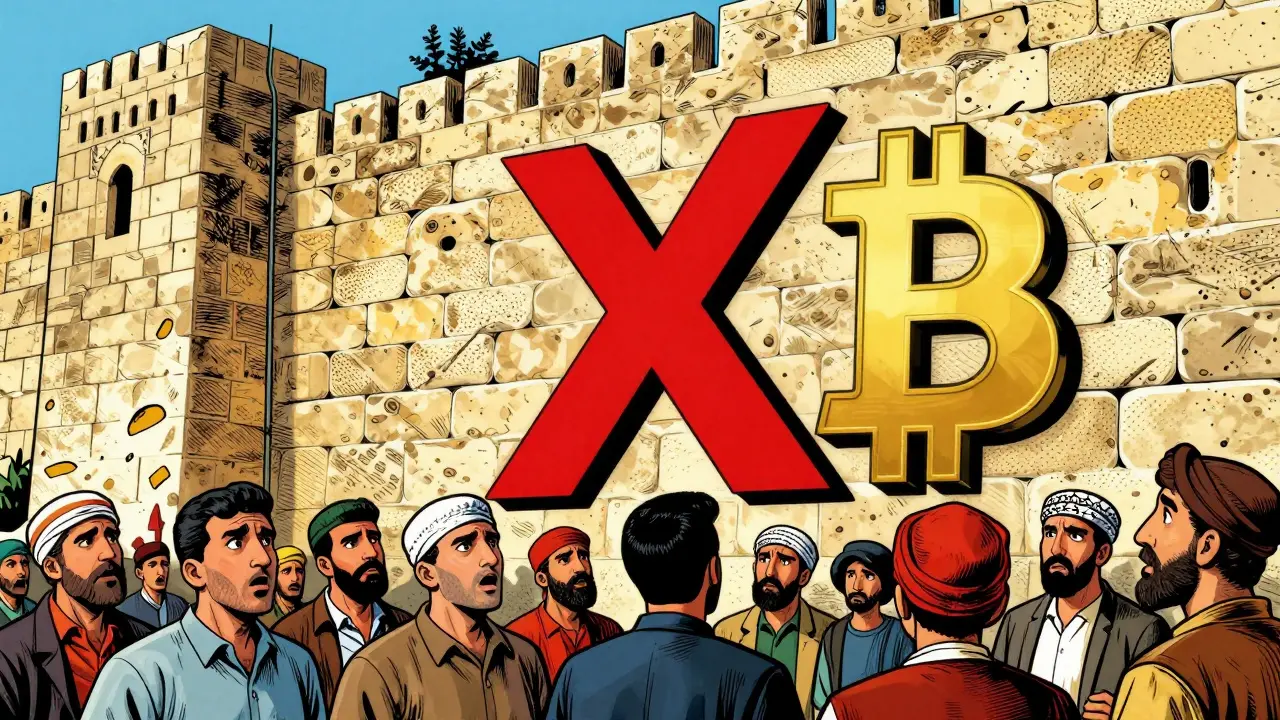
Imagine waking up to find that the digital gold rush sweeping the globe is a criminal offense in your home country. For people in Iraq, that has been the reality for nearly a decade. Since 2017, the country has maintained a hard line against the world of blockchain, making it one of the few nations where touching a digital wallet could land you in hot water. But why would a government go to such extremes, and does a ban actually stop people from mining Bitcoin?
The 2017 Crackdown: Why Iraq Said No
The official wall went up when the Central Bank of Iraq (CBI) issued a comprehensive prohibition on all cryptocurrency trading and mining. For the CBI, the risks far outweighed the rewards. The bank viewed Cryptocurrencies as unregulated financial instruments that pose systemic threats to the national economy.
The government's concerns aren't just about the tech; they're about control. Because digital assets can't be easily tracked or taxed, the Iraqi government sees them as a playground for money laundering and financial crimes. In a country already dealing with economic instability, the thought of a parallel, invisible financial system is a nightmare for regulators. They explicitly banned the use of digital cards and electronic wallets for market speculation, effectively cutting off the bridge between traditional Iraqi dinars and the crypto market.
The Religious and Regional Front
It wasn't just the bankers in Baghdad leading the charge. The opposition moved into the spiritual and regional realms too. In 2018, the Kurdistan Regional Government took a stand through its Supreme Fatwa Committee. They issued a ruling specifically targeting OneCoin, a notorious scheme, which signaled that the ban wasn't just a city-level policy but a unified front across different administrative regions of Iraq.
This mirrors a trend seen in other nations. For instance, in Egypt, Islamic scholars declared crypto assets contrary to Islamic law back in 2018. When a financial ban is backed by religious or regional decrees, it creates a much stronger social deterrent than a simple piece of legislation from a central bank.
The Underground Economy: Mining in the Shadows
Here is the irony: banning something doesn't make it disappear; it just makes it go underground. In cities like Baghdad, a secret society of "crypto-enthusiasts" has emerged. These aren't corporate offices with rows of cooling fans; they are whispered conversations in coffee shops and private Facebook groups.
Take the case of local traders who manage thousands of dollars in digital assets via social media. Some previously operated from legitimate offices but were forced into hiding after security warnings from the authorities. For these people, the Iraq crypto mining ban is viewed as a sign of "backward" thinking. They argue that instead of a total blackout, the government should implement a regulatory framework that allows for taxation and oversight, which would actually bring money into the state coffers.
| Country | Status | Primary Reason for Ban/Restriction | Key Enforcement Action |
|---|---|---|---|
| Iraq | Banned | Financial instability & Money Laundering | CBI Prohibitions (since 2017) |
| China | Banned | Climate goals & Capital control | Total mining shutdown (2021) |
| Egypt | Banned | Economic risk & Religious rulings | Fatwa/Religious decrees |
| Bolivia | Reversed | Formerly banned, now allows regulated processing | Policy shift in 2024 |

The Environmental and Energy Angle
While money laundering is the headline, energy consumption is the hidden driver. Bitcoin uses a process called Proof of Work, which requires massive amounts of electricity to secure the network. For a country like Iraq, where the power grid is often unreliable and subject to frequent outages, allowing industrial-scale mining farms would be a disaster.
Global watchdogs like Greenpeace USA have noted that Iraq was one of the early movers in addressing this energy intensity. By shutting down mining, the government prevents private miners from draining the public power supply to generate digital coins, protecting the basic energy needs of the population.
Collateral Damage: Trade and Business
The ban doesn't just affect the "crypto bros"; it hits international business. Iraq's strict Anti-Money Laundering (AML) framework, combined with the total ban on digital assets, makes cross-border payments a nightmare. Many businesses find themselves trapped in slow, bureaucratic traditional banking systems where funds are frequently frozen or rejected due to high scrutiny.
If a business wants to engage with modern fintech tools, they often hit a wall. The lack of any legal bridge to Blockchain technology means Iraq is missing out on the efficiency of smart contracts and instant settlements, forcing them to rely on legacy systems that are increasingly out of step with global trade.
Enforcement: Arrests vs. Reality
Is the government actually catching people? The evidence is mixed. While there have been reports of individuals being detained for crypto-related activities, legal experts note a strange gap: there are very few formal trials specifically for mining or trading. This suggests that the government uses the ban more as a deterrent (scaring people into stopping) rather than a systematic legal purge.
The result is a "cat and mouse" game. Miners use alternative power sources or hide their hardware in residential areas, and traders use peer-to-peer (P2P) networks to swap coins for cash, bypassing the banks entirely. As long as the demand for a hedge against currency devaluation exists, the underground market will likely persist.
Is it illegal to own Bitcoin in Iraq?
Yes, the Central Bank of Iraq has banned the trading, mining, and circulation of digital currencies since 2017. While owning a private key is hard for the government to detect, any attempt to trade or mine officially is against the law.
Why did Iraq ban crypto mining specifically?
The ban targets the high energy consumption of Proof of Work mining, which could strain Iraq's fragile power grid, as well as concerns over money laundering and the lack of government oversight.
Are there any legal alternatives for digital payments in Iraq?
Most residents rely on traditional banking and government-approved electronic payment systems. However, the CBI specifically prohibits using digital wallets for cryptocurrency speculation.
What happens if you are caught mining crypto in Iraq?
Reports indicate that some individuals have been detained. While formal trials are less common, the legal risks include asset seizure and potential imprisonment based on financial crime laws.
Will Iraq ever legalize cryptocurrency?
Currently, there are no official plans to change the policy. The Central Bank continues to warn against digital assets, though the underground community continues to lobby for a regulated framework.
Next Steps for Navigating the Landscape
If you are a business owner or a resident, the safest route remains strict adherence to CBI guidelines. Trying to bypass these laws via "grey market" channels carries significant risk. For those looking to modernize their payments, exploring licensed fintech providers that operate within the Iraqi legal framework-without touching cryptocurrency-is the only viable path to avoid legal trouble.




Erica Mahmood
April 7, 2026 AT 11:57makes sense since pow is basically a stress test for a failing grid’s load balancing
if they cant handle residential ac they definitely cant handle a hash rate spike without total brownouts
it's essentially a resource allocation problem where the gov prioritizes basic utility over speculativy
Arlen Medina
April 8, 2026 AT 02:27Typical stuff. These countries can't even keep the lights on and they want to play with magic internet money. US does it right because we actually have the infrastructure and the guts to let the market decide. Why are we even talking about a place that bans basic tech? Just move to a country that actually understands how capitalism works and stop crying about it.
Sharhonda Walker
April 9, 2026 AT 16:15I really think the biggest issue here is the lack of a clear reglutory frame work for the people who just want to invest. It's so sad that they have to go undergound just to save money because the governemnt is too scared of a bit of volatility. If they just taxd it like a capital gain, they'd probably make more money than they do now with these outdated systems. Its honestly a tragedy how much inovation is being lost because of a few bad actors and some old school bankrs who dont understand how a ledger works. They should look at how other nations shifted their laws and just adapt. The world is moving forward and Iraq is just staying stuck in 2017 for some reason. Maybe if they had a a committee of actual tech experts instead of just religious leaders they'd see the potential for economic growth through defi and smart contracts which could totally revolutionize how they handle their internal trade. Just saying that a total ban is almost never the answer for any kind of technology especially something as decentralized as this.
Carmelita Gonzales
April 11, 2026 AT 09:52it's a really difficult position for the people there when they just want stability for their families and the laws make it so hard to access new tools
totally understandable why the government is worried about the grid too
Taylor Meadows
April 12, 2026 AT 06:54You all are just scratching the surface of the spiritual void this creates. People aren't just losing money, they are losing their connection to the flow of modern energy. I can feel the desperation of those underground miners from here, it's an emotional drain that affects the entire collective consciousness of the region.