Ingredient NFT Farming Calculator
Calculate your estimated hourly ingredient NFT yield based on your staked ORARE tokens and chosen farming pool. Remember: actual yields are randomly distributed.
Estimated Hourly Yield
Note: Actual yields are randomly distributed hourly. This calculation shows your estimated average yield based on:
- Staked ORARE amount
- Pool rarity (higher rarity = higher yield)
- Algorithmic randomness
There’s no official OneRare Ingredient NFT airdrop happening right now. If you’re waiting for free NFTs to drop into your wallet, you’ll be disappointed. But that doesn’t mean you can’t get your hands on ingredient NFTs - you just have to work for them. OneRare doesn’t give away food NFTs like candy. It builds a whole food economy where you earn ingredients by staking, farming, and playing - and that’s actually more valuable than any one-time airdrop.
What OneRare Actually Is (Not Just Another NFT Game)
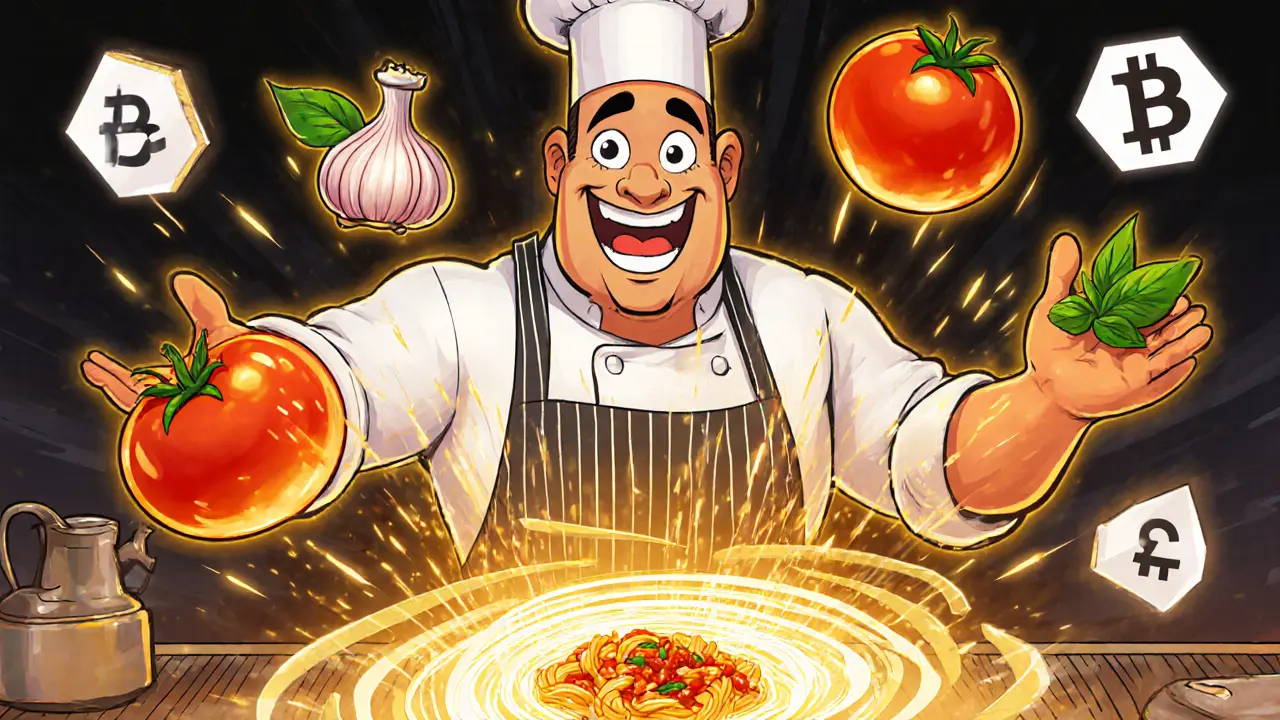
OneRare isn’t a game where you click buttons and collect pixels. It’s a food metaverse - or what they call the Foodverse - built on Polygon. Think of it like a digital kitchen where every spice, vegetable, and herb is an NFT you can grow, trade, and cook with. You don’t just own a token; you own the raw material to create real-world-inspired dishes like butter chicken, sushi, or tacos. And once you combine those ingredients into a Dish NFT, the original pieces burn. No refunds. No reuses. That’s the point.
The platform launched its first zone, Foodverse Island - The Gaming Zone, in late 2024. It’s live on Polygon, so gas fees are low and transactions are fast. You don’t need to be a blockchain expert. You just need a wallet, some ORARE tokens, and the patience to farm.
How Ingredient NFTs Are Really Distributed
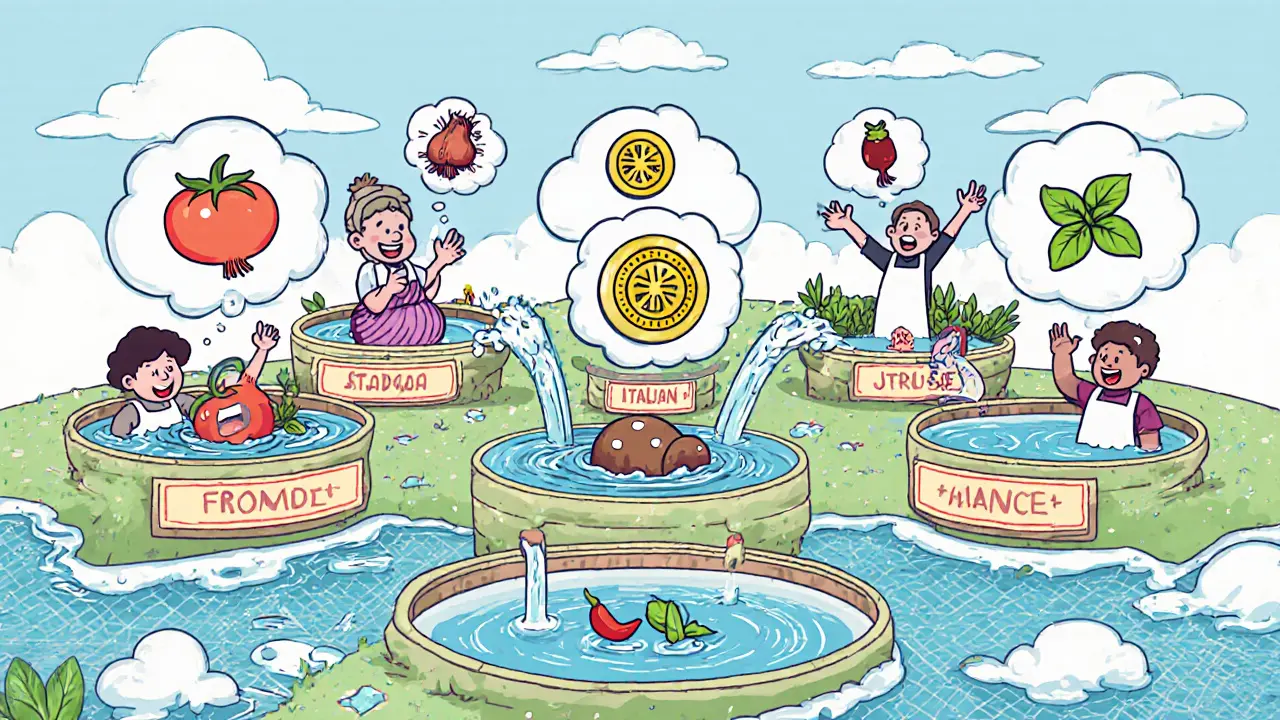
Forget airdrops. OneRare’s system is built on farming. You stake your ORARE tokens in one of six themed farming pools - each tied to a global cuisine: Indian, Italian, Japanese, Mexican, American, and Mediterranean. Every hour, the system randomly distributes ingredient NFTs to farmers in those pools. You don’t pick what you get. You get whatever the algorithm drops: onion, tomato, garlic, chili, soy sauce, or even truffle.
There’s no guarantee you’ll get the exact ingredient you want. That’s intentional. The randomness mimics real farming - you can’t control the weather, and you can’t predict the harvest. The more ORARE you stake, the higher your share of the hourly emissions. But even small stakes get something. It’s not a lottery; it’s a steady drip.
The Four Zones of the Foodverse
Once you’ve got ingredients, you enter the Foodverse’s four zones:
- Farm - Where you stake ORARE and earn ingredient NFTs. This is your garden.
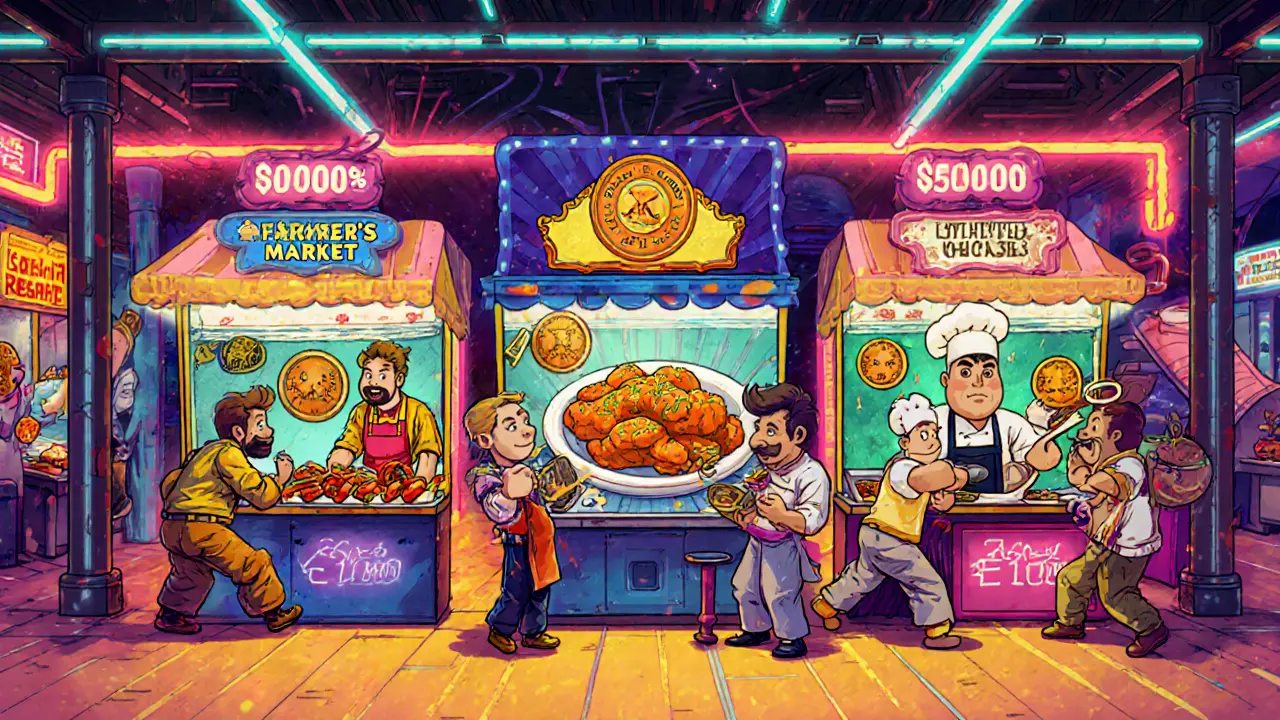
- Farmer’s Market - Three shops here: one to sell your excess ingredients, one to buy rare NFTs you can’t farm (like truffle or saffron), and one to trade Dish NFTs you’ve already made.
- Kitchen - This is where magic happens. Combine three ingredients to mint a Dish NFT. Potato + oil + salt = French fries NFT. Rice + fish + seaweed = Sushi NFT. Once you mint, the ingredients vanish. They’re burned. No going back.
- Playground - Mini-games where you use your Ingredient or Dish NFTs to win more NFTs. Think food-themed trivia, cooking races, or ingredient scavenger hunts. Win, and you get bonus NFTs - sometimes even limited-edition chef collabs.
There’s no level system. No XP. Your progress is measured in what you own and what you’ve cooked.
Real-World Food Problems, Digital Consequences
OneRare doesn’t sugarcoat farming. The Farm has weather events - just like real agriculture. Droughts kill tomato crops. Floods ruin basil. Pest attacks wipe out entire ingredient pools for days. When that happens, farming for that ingredient stops. Supply drops. Prices spike in the Farmer’s Market.
That’s not just flavor. It’s economics. If you’re holding onion NFTs and a drought hits, your onions become more valuable. If you need onions to make a dish and they’re gone for a week, you’ll pay more to buy them. This system mirrors real food supply chains. It’s not just a game - it’s a simulation of scarcity, demand, and risk.
Who’s Behind the Foodverse?
OneRare didn’t build this alone. They’ve partnered with real chefs and restaurants to bring authenticity. You’ll find NFTs tied to signature dishes from:
- Saransh Goila (Indian cuisine expert)
- Zorawar Kalra (renowned Indian chef)
- Anthony Sarpong (Michelin-starred chef)
- Reynold Poernomo (MasterChef Australia finalist)
These aren’t just logos slapped on NFTs. They’re actual recipes digitized into the game. Want to mint a dish that’s been cooked by a Michelin-starred chef? You need the exact ingredient combo they used. That’s the premium layer. These chef NFTs are harder to get. They’re rarer. And they trade for more.
OneRare is also starting to work with U.S.-based restaurant brands. Expect to see NFTs for famous burgers, BBQ ribs, or New York-style pizza in the near future.
Why This Beats a Typical Airdrop
Airdrops are one-time gifts. They’re hype. They vanish. OneRare’s system is sustainable. You earn NFTs over time. You trade them. You cook with them. You compete with them. You watch their value change based on in-game supply and demand.
Compare that to an airdrop: you get 10 free NFTs, you sell them for $2 each, and you’re done. With OneRare, you could spend $50 on ORARE, stake it, earn 50 ingredient NFTs over a month, trade three for a rare spice, cook a dish NFT, and sell it for $200. That’s not luck. That’s strategy.
And if you’re into food culture? This is the only Web3 game that lets you explore global cuisines without leaving your couch. You don’t just play a game - you learn how to make a dish by owning its parts.
What You Need to Get Started
You don’t need a fortune. Here’s the bare minimum:
- A crypto wallet (MetaMask or Trust Wallet)
- Polygon MATIC tokens (for gas fees)
- ORARE tokens (buy on exchanges like Gate.io or MEXC)
- Time - at least a few hours a week to check your farm and trade
Start with 50-100 ORARE. That’s enough to join a farming pool and see results within days. Don’t go all-in. Test it. See if you like the rhythm. The game rewards consistency, not big bets.
What’s Next for OneRare
They’re expanding. More cuisines. More chefs. More mini-games. They’re also working on cross-chain compatibility and mobile access. Right now, it’s desktop-only. But if they pull off a mobile app, this could blow up.
They’re also testing a loyalty system where long-term farmers get early access to new chef collabs. So if you stick around, you’ll get the good stuff before anyone else.
Final Thought: No Free Lunch, But a Real Meal
There’s no airdrop. No magic button. No free NFTs handed out like coupons. OneRare is a food economy - and like any real economy, it rewards effort, patience, and knowledge. If you want ingredient NFTs, you farm them. If you want rare dishes, you trade for them. If you want to profit, you learn the market.
It’s not flashy. It’s not a get-rich-quick scheme. But if you’re into food, blockchain, or just want to try something different in Web3, this is one of the few projects that actually feels alive. The ingredients change. The prices shift. The chefs come and go. And you? You’re the one cooking.