
You’ve heard about Uniswap. You’ve probably used PancakeSwap. But if you are holding assets on the Cosmos network, those platforms don’t help you much. That is where Osmosis comes in.
Osmosis isn't just another decentralized exchange (DEX). It is the liquidity hub for the entire Cosmos ecosystem. If you own ATOM, IBC tokens, or other assets built on the Cosmos SDK, Osmosis is likely your primary destination for swapping, earning yield, and providing liquidity. But is it actually good to use? Is it safe? And how does it stack up against the giants of Ethereum?
In this review, we break down exactly what Osmosis offers, who it is for, and whether it deserves a spot in your crypto toolkit right now.
What Is Osmosis?
Osmosis is a decentralized automated market maker (AMM) built specifically for the Cosmos ecosystem. Launched in October 2021, it allows users to swap tokens across different blockchains that communicate via the Inter-Blockchain Communication (IBC) protocol. Think of it as the central bank for the Cosmos internet.
Unlike traditional exchanges where you trade against an order book, Osmosis uses liquidity pools. When you want to swap Token A for Token B, you are trading against a pool of funds provided by other users. This makes trading permissionless-no one can stop you from listing a new token or creating a new pool.
The platform operates through its native governance token, OSMO. Holders of OSMO vote on proposals that determine how the platform evolves, including fee structures, supported assets, and treasury spending. This community-driven approach ensures that the exchange aligns with the needs of its users rather than a central corporate entity.
Key Features That Set Osmosis Apart
Osmosis doesn’t try to be everything to everyone. Instead, it doubles down on being the best experience for Cosmos users. Here is what makes it stand out:
- Cross-Chain Swaps: Thanks to IBC, you can swap tokens from different chains (like Neutron, Celestia, or Injective) directly within the Osmosis interface without needing complex bridges.
- Weighted Pools: Unlike standard 50/50 pools, Osmosis allows creators to set custom weights for assets. This reduces impermanent loss for correlated assets like stablecoins or BTC/LTC pairs.
- High Yield Opportunities: Liquidity providers often earn significant yields from trading fees plus potential incentives from projects launching on the network.
- User-Friendly Interface: The web interface at app.osmosis.zone is clean, intuitive, and significantly easier to navigate than many older DeFi protocols.
The user experience is so polished that industry figures like Jae Kwon, founder of Cosmos, have called the launch of Osmosis his "best moment in Cosmos" because it finally made cross-chain UX feel seamless.
Fees and Costs
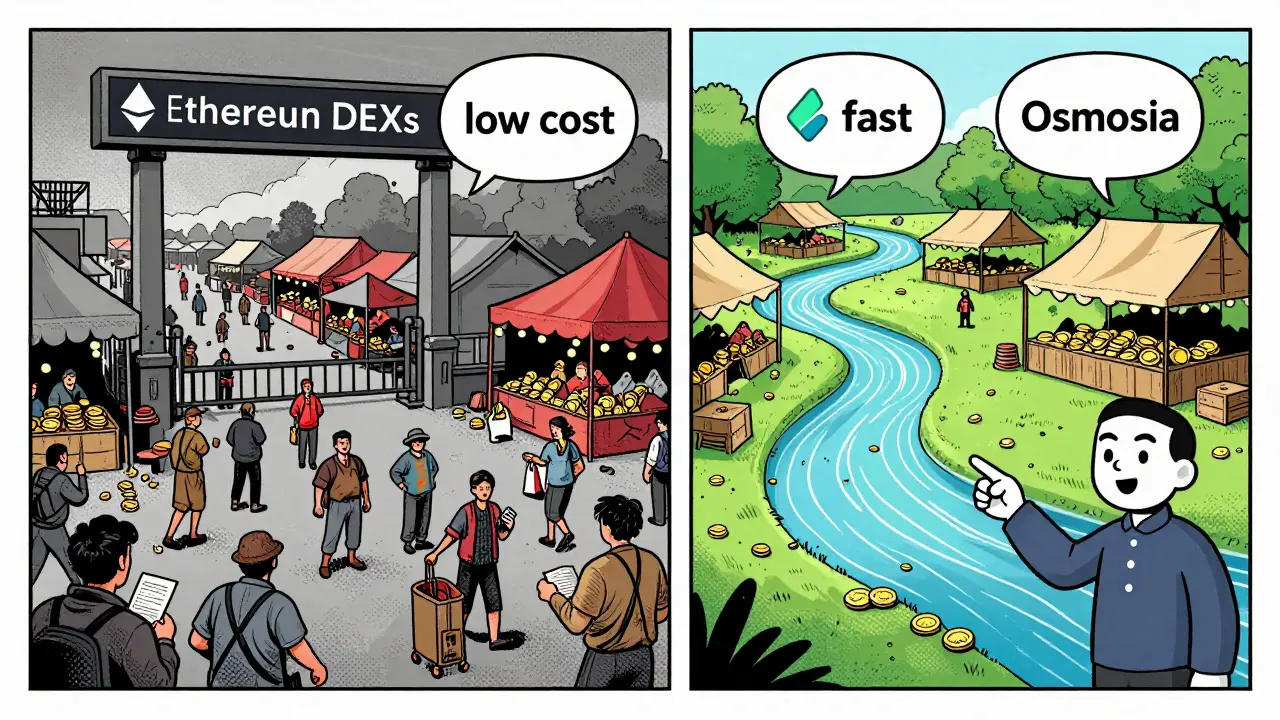
One of the biggest advantages of using Osmosis over Ethereum-based DEXs is cost. On networks like Ethereum, gas fees can spike to $50 or more during busy periods. On Cosmos, transactions are typically fractions of a cent.
However, you still need to pay attention to two costs:
- Trading Fees: These vary by pool. Standard volatile asset pools might charge 0.3%, while stablecoin pools can be as low as 0.05%. You will see the exact fee before confirming any transaction.
- Gas Fees: You need a small amount of ATOM or OSMO in your wallet to pay for network transaction fees. As of 2026, these remain negligible compared to major Layer 1 networks.
This efficiency makes Osmosis ideal for smaller trades that would be uneconomical on Ethereum mainnet.
Security and Regulation
When dealing with DeFi, security is paramount. Osmosis runs on smart contracts that have been audited by multiple leading firms. However, no code is immune to bugs. The platform has maintained a strong track record since 2021, but users should always remember that they are interacting with self-custodial protocols.
Regulatory status is another key factor. According to FxVerify and other regulatory databases, Osmosis is not regulated by any government authority. This is typical for decentralized protocols, as there is no central company to license. For institutional investors, this lack of regulation can be a hurdle. For retail users seeking true decentralization, it is a feature, not a bug. You control your keys, and therefore, your funds.
To mitigate risk, always connect using reputable wallets like Keplr or Leap Wallet, and never share your seed phrase.
Osmosis vs. Competitors
How does Osmosis compare to the big players? Let’s look at the numbers.
| Feature | Osmosis | Uniswap | PancakeSwap |
|---|---|---|---|
| Ecosystem | Cosmos (IBC) | Ethereum & L2s | Binance Smart Chain |
| Total Value Locked (TVL) | ~$150 Million | $4 Billion+ | $2 Billion+ |
| Avg. Gas Fee | < $0.01 | $1 - $50+ | $0.10 - $1 |
| Best For | Cosmos Native Assets | Ethereum Ecosystem | BSC Tokens |
| Regulation | Unregulated | Unregulated | Unregulated |
As you can see, Osmosis cannot compete with Uniswap or PancakeSwap in terms of sheer liquidity depth. If you are trading ETH or USDT, those platforms offer better slippage protection due to larger pools. However, if you are holding ATOM, INJ, TIA, or other Cosmos-native assets, Osmosis is the undisputed leader. It holds the largest market share within the Cosmos ecosystem, making it the most liquid option for these specific tokens.
Pros and Cons
Before you deposit funds, here is a balanced look at the strengths and weaknesses of Osmosis.
Pros:
- Superior UX/UI: Widely regarded as having the best interface in the Cosmos space.
- Low Fees: Transactions are cheap and fast.
- Active Governance: The community votes on updates monthly, ensuring the platform evolves rapidly.
- Cross-Chain Capability: Seamless access to hundreds of IBC-enabled tokens.
Cons:
- Limited Asset Selection: You can only trade tokens compatible with the Cosmos ecosystem. No direct ETH or SOL trading without bridging.
- Liquidity Depth: Smaller pools mean higher slippage for large trades compared to Ethereum DEXs.
- Smart Contract Risk: Like all DeFi, there is inherent risk in the underlying code.

How to Get Started with Osmosis
Getting started is straightforward if you already have a Cosmos-compatible wallet. Here is the step-by-step process:
- Install a Wallet: Download Keplr or Leap Wallet browser extension.
- Fund Your Wallet: Acquire some ATOM or OSMO to cover gas fees. You can buy these on centralized exchanges like Binance or Coinbase and withdraw them to your Keplr address.
- Connect to Osmosis: Visit app.osmosis.zone and click "Connect Wallet."
- Swap Tokens: Select the token you want to sell and the token you want to buy. Adjust the slippage tolerance if necessary (default is usually fine).
- Confirm Transaction: Approve the transaction in your wallet. The swap will execute in seconds.
If you want to provide liquidity, you can create a new pool or add to an existing one. This earns you a share of the trading fees generated by that pool. Just be mindful of impermanent loss, especially when pairing volatile assets.
Is Osmosis Safe in 2026?
Safety in DeFi is a shared responsibility. Osmosis itself has a robust security history, but you must protect yourself. The platform is non-custodial, meaning Osmosis never holds your private keys. If your wallet is compromised, no one can reverse the theft. Therefore, hardware wallets like Ledger or Trezor are highly recommended for storing significant amounts of OSMO or other assets.
Additionally, keep an eye on governance proposals. Sometimes, malicious actors attempt to pass harmful votes. While Osmosis has safeguards, staying informed helps you avoid risky pools or outdated contracts.
Final Verdict
Osmosis is not just a good DEX; it is essential infrastructure for the Cosmos ecosystem. If you are involved in Cosmos DeFi, you will almost certainly use Osmosis. Its combination of low fees, excellent user experience, and deep integration with IBC makes it the top choice for swapping Cosmos-native assets.
It may not replace Uniswap for general Ethereum trading, but for ATOM, OSMO, and the growing list of IBC tokens, Osmosis is the king. With continued development and active governance, it remains a vital part of the decentralized finance landscape in 2026.
Is Osmosis a centralized or decentralized exchange?
Osmosis is a fully decentralized exchange (DEX). It operates via smart contracts on the Cosmos blockchain, and no central authority controls user funds or dictates trading rules.
Can I trade Bitcoin or Ethereum on Osmosis?
Not directly. Osmosis supports tokens within the Cosmos ecosystem. To trade BTC or ETH, you would need to use wrapped versions of these assets that have been bridged to the Cosmos network, such as WBTC or WETH via IBC bridges.
What wallet do I need for Osmosis?
The most popular and recommended wallet for Osmosis is Keplr. Leap Wallet is also a widely used alternative. Both are compatible with the Cosmos SDK and support hardware wallet integration.
Is Osmosis regulated by any government?
No, Osmosis is not regulated by any government authority. As a decentralized protocol, it operates outside traditional financial regulatory frameworks, which is common for most DeFi platforms.
How do I earn money on Osmosis?
You can earn by providing liquidity to trading pools. In return, you receive a portion of the trading fees generated by swaps in that pool. Additionally, some pools offer extra incentives in the form of reward tokens.
Why are fees on Osmosis so low?
Fees are low because the Cosmos network uses a Proof-of-Stake consensus mechanism that is highly efficient and scalable. Unlike Ethereum, which can suffer from congestion and high gas fees, Cosmos transactions are processed quickly and cheaply.