Airdrop Verification Tool
This tool helps you verify if a crypto airdrop is legitimate. Based on the article about the SOS Foundation IDO Launch Celebration airdrop, we've identified key indicators that distinguish real airdrops from scams.
Airdrop Verification Checklist
Answer these questions to determine if the airdrop you're considering is legitimate. Click "Check" when finished.
If you’re hearing about the SOS Foundation IDO Launch Celebration airdrop for the first time, you’re not alone. There’s no official whitepaper, no verified social media announcement, and no public blockchain snapshot data confirming its existence. That doesn’t mean it’s fake - it just means you need to be extra careful before you start chasing free tokens.
Why This Airdrop Is Hard to Verify
Airdrops in crypto aren’t like gift cards you can just claim. They’re tied to specific blockchain actions: holding a token at a certain time, interacting with a smart contract, or being part of a community before a token launch. For the SOS Foundation IDO Launch Celebration airdrop, none of those details are publicly available. No contract address. No snapshot date. No eligibility rules. That’s a red flag.Legitimate projects don’t hide this stuff. If they’re giving away free tokens, they want you to know exactly how to qualify. They post it on their website, their Discord, their Twitter. They even use tools like Snapshot.org to prove the timing of token holdings. SOS Foundation hasn’t done any of that.
What You Might Be Seeing
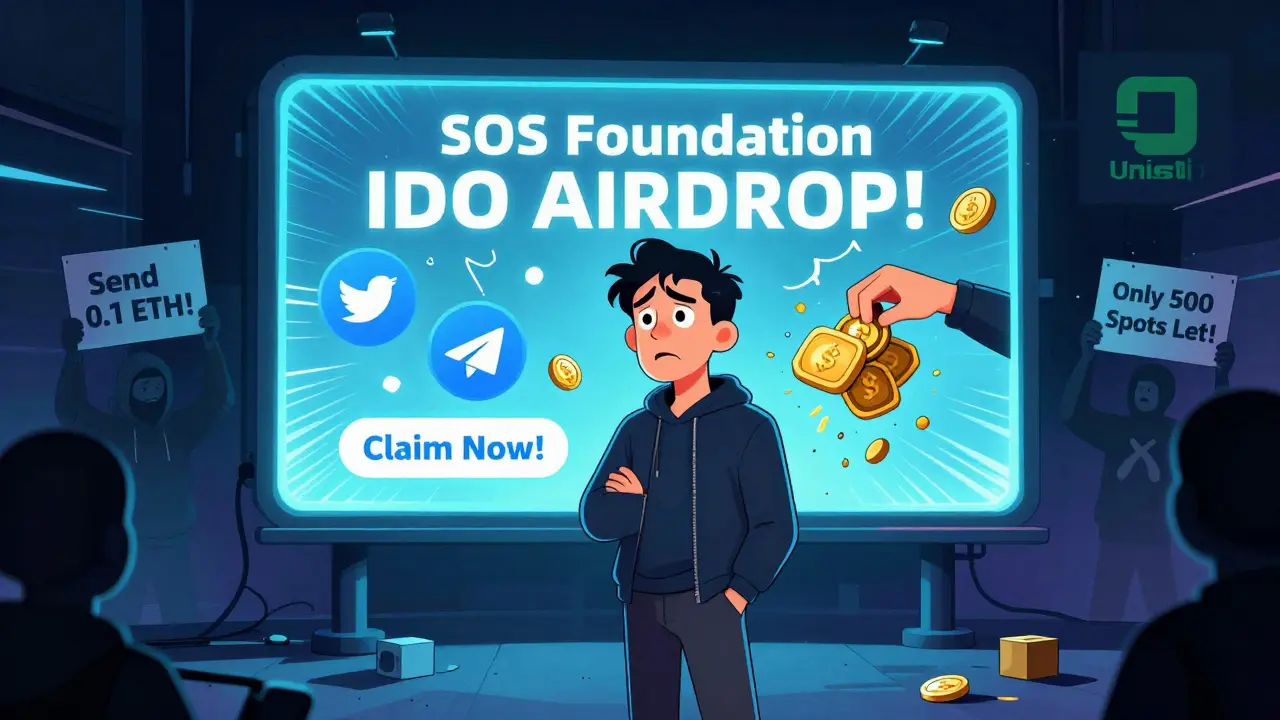
Right now, you’re probably seeing posts on Twitter, Telegram, or Reddit saying things like:- "Join now to claim your SOS tokens before the IDO!"
- "Only 500 spots left for the airdrop!"
- "Send 0.1 ETH to get 10,000 SOS!"
Those are scams. Always.
Real airdrops don’t ask you to send crypto to claim them. Ever. If someone tells you to deposit funds, wire money, or pay a "gas fee" to receive free tokens, you’re being scammed. The SOS Foundation, if it’s real, wouldn’t do that. Legit projects cover gas costs themselves or use wallet-based claims where you sign a message - no money changes hands.
How to Spot a Real Airdrop
Here’s what a real crypto airdrop looks like:- Official website with a dedicated airdrop page - not just a tweet.
- Verified social accounts - check the blue checkmark, but also look at the account’s history. New accounts with 500 followers claiming a $5M airdrop? Suspicious.
- Clear rules - "Hold 100 XRP in your wallet before April 5, 2025, at 12:00 UTC" - not "just join our Discord!"
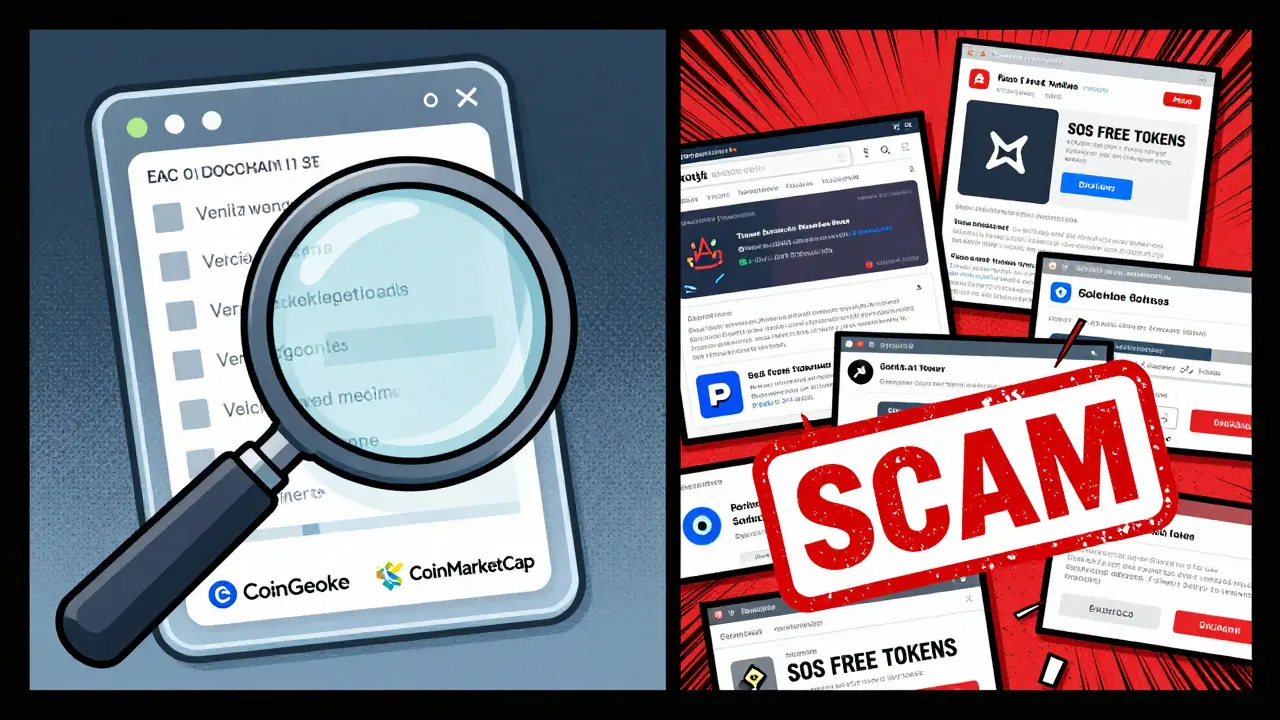
- Third-party verification - airdrops are often announced on CoinMarketCap, CoinGecko, or reputable crypto news sites like The Block or CoinDesk.
- No payment required - never pay to claim free tokens.
If SOS Foundation is running a real airdrop, it will follow these rules. If it doesn’t, it’s not real.
What’s an IDO, Anyway?
An IDO - Initial DEX Offering - is when a new crypto project sells its tokens directly on a decentralized exchange like Uniswap or PancakeSwap, instead of through a centralized exchange like Binance. It’s often tied to an airdrop to build early community support.But here’s the catch: IDOs are risky. Most new tokens crash after launch. Even if SOS Foundation is real, the token could lose 90% of its value in a week. Airdrops are not free money. They’re a way for projects to get people to hold their token and help it gain liquidity.
What You Should Do Right Now
If you’re interested in this airdrop, here’s what to do:- Search for "SOS Foundation official website" - not "SOS airdrop" or "SOS free tokens".
- Check their Twitter/X account. Look for posts from 2025. Are they verified? Do they have real engagement?
- Look for a whitepaper or technical documentation. If it’s just a one-page PDF with buzzwords like "decentralized future" and no code or tokenomics, walk away.
- Join their Discord or Telegram - but don’t send any crypto. Read the rules. If there’s no clear airdrop section, assume it’s not happening.
- Wait for coverage from trusted sources. If CoinGecko or CoinMarketCap lists SOS Foundation, that’s a sign they’ve been vetted.
Don’t rush. Most airdrop scams disappear within 72 hours of the hype. Real projects take months to build.
Why This Keeps Happening
Crypto is full of people trying to cash in on hype. Airdrops are easy to fake because they sound free and simple. Scammers know you want something for nothing. They use fake logos, copied websites, and bots to make it look real. They even create fake YouTube videos with "proof" - usually just screen recordings of wallets they control.The truth? Most airdrops in 2025 are either:
- Marketing stunts by projects that never launch
- Exit scams where the team disappears after collecting wallets
- Phishing traps that steal your private keys
There are real airdrops - like those from established DeFi protocols like Aave or Uniswap - but they’re rare, well-documented, and never ask for your money.
What to Do If You Already Sent Crypto
If you’ve already sent funds to someone claiming to be SOS Foundation, here’s the hard truth: you won’t get it back. Crypto transactions are irreversible. Once you send ETH, SOL, or any token to a scammer’s wallet, it’s gone.Don’t fall for "recovery services" either. Those are scams too. They’ll ask for another payment to "unlock" your funds. It’s a double scam.
Instead:
- Report the scam to the platform where you found it (Twitter, Telegram, Discord).
- Warn others in the same groups.
- Change your wallet passwords and enable 2FA if you haven’t already.
- Never reuse the same seed phrase across wallets.
Final Advice
Crypto airdrops can be a great way to get early exposure to new projects - but only if you do your homework. The SOS Foundation IDO Launch Celebration airdrop, as it stands today, has no verifiable details. That means it’s either not real, or it’s too early to trust.Don’t let FOMO drive your decisions. Wait for proof. Wait for transparency. Wait for a public blockchain snapshot or an official announcement from a trusted source.
If it sounds too good to be true - and it’s asking you to act fast - it probably is.
Is the SOS Foundation IDO airdrop real?
As of December 14, 2025, there is no verified information confirming the existence of the SOS Foundation IDO Launch Celebration airdrop. No official website, whitepaper, social media announcement, or blockchain snapshot has been published. Until these details are made public by a trusted source, treat this as unverified and potentially a scam.
Can I claim the SOS airdrop without sending crypto?
Yes - if it’s real. Legitimate airdrops never ask you to send any cryptocurrency to claim tokens. You might need to connect your wallet, sign a message, or hold a specific token before a snapshot date. But you should never pay anything. If someone asks for ETH, SOL, or any fee, it’s a scam.
How do I find out if SOS Foundation is legitimate?
Check their official website (not a link from a Telegram group), verify their social media accounts (look for blue checkmarks and long posting history), and search for mentions on CoinGecko, CoinMarketCap, or reputable crypto news sites like The Block. If there’s no technical documentation or team info, avoid it.
What’s the difference between an airdrop and an IDO?
An airdrop gives free tokens to users, usually to build community or reward early supporters. An IDO (Initial DEX Offering) is when a project sells its tokens directly on a decentralized exchange like Uniswap. Airdrops often happen before or alongside an IDO to generate interest, but they’re not the same thing.
Are there any safe airdrops in 2025?
Yes - but they’re rare and come from established projects. Examples include airdrops from Uniswap, Aave, or Curve Finance. These are announced on official channels, have clear rules, and never ask for money. Always research before participating. Never assume an airdrop is safe just because it’s trending.
What should I do if I think I’ve been scammed?
Stop all communication immediately. Do not send more money. Report the scam to the platform where it occurred. Warn others in the same groups. Change your wallet passwords and enable 2FA. Unfortunately, lost crypto cannot be recovered - so focus on protecting your remaining assets.



Heath OBrien
December 15, 2025 AT 06:40Kim Throne
December 15, 2025 AT 17:11Alex Warren
December 16, 2025 AT 11:37Toni Marucco
December 16, 2025 AT 21:49amar zeid
December 18, 2025 AT 00:26