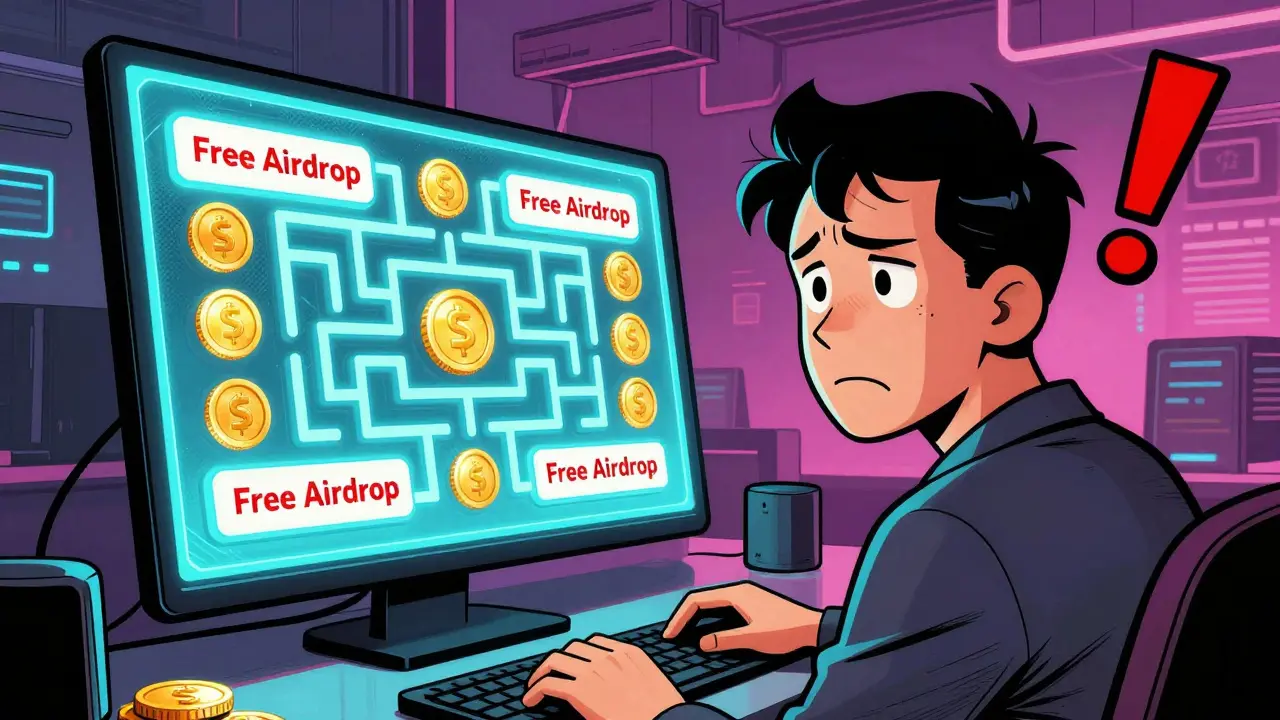
Searching for a StarSharks (SSS) airdrop often leads to a confusing maze of promises and outdated links. If you've seen claims about a massive distribution partnered with CoinMarketCap, you need to pause. In the volatile world of GameFi, distinguishing between a legitimate reward program and a phishing attempt can be the difference between a free windfall and a drained wallet.
The Truth About the CoinMarketCap x StarSharks Airdrop
Let's get the most important fact out of the way first: there is no official record of a partnered airdrop specifically administered by CoinMarketCap for StarSharks (SSS). While CoinMarketCap lists the token and provides market data, they are a data aggregator, not a distribution hub for this project. If you encounter a website asking you to connect your wallet to a "CoinMarketCap-StarSharks" portal to claim tokens, it is almost certainly a scam.
That said, StarSharks has a history of smaller, community-driven initiatives. In the past, there was a documented $20,000 airdrop program intended to seed the community, and platforms like LBank have hosted their own Launchpad rewards where users could earn SSS. However, these are separate from any official partnership with the world's largest crypto data site.
Understanding the SSS Ecosystem and Tokenomics
To understand why airdrops are so central to this project, you have to look at the BNB Smart Chain (BSC) ecosystem it lives on. StarSharks uses a dual-token model designed to balance gameplay and investment. Here is how the two tokens differ:
- SSS Token: This is the governance token. It's meant for those who want a say in how the project evolves and for those looking to hold a piece of the ecosystem.
- SEA Token: This is the utility token. You need SEA to buy blind boxes containing NFT sharks or to upgrade your existing ones. Crucially, SEA tokens used in these transactions are burned, which is meant to keep the supply in check.
The tokenomics are heavily skewed toward future rewards. A staggering 61% of the total 100 million SSS supply is locked in an initial incentive pool. This pool is designed to be released over ten years to support the "collect-to-earn" model. This explains why there is always chatter about potential airdrops-there is a massive amount of currency waiting to be released.
| Allocation Category | Percentage of Supply | Release Condition |
|---|---|---|
| Incentive Pool (Airdrops/Rewards) | 61% | 10-year gradual release |
| Team | 15% | Locked/Vested |
| Private Rounds | 7% | Vesting schedule |
| Angel Financing | 5% | 4-month lock, then quarterly |
| IDO | 3% | Immediate/Vested |
| Marketing | 3% | Operational needs |
| Liquidity Pools | 1% | Market stability |
How to Safely Manage SSS Tokens
If you have managed to acquire SSS tokens through a legitimate airdrop or trade, you'll need to manually add them to your wallet. Most users use MetaMask. To do this, you must be on the BNB Smart Chain network and import the official contract address: 0xc3028fbc1742a16a5d69de1b334cbce28f5d7eb3.
But here is the catch: having the tokens in your wallet is one thing; selling them is another. Current market data shows that liquidity for SSS is dangerously low. On exchanges like PancakeSwap, the slippage can be extreme. In some cases, a large sell order could result in a 25% loss just from the lack of available buyers. If you're holding these tokens, be aware that the market is currently "thin," meaning price swings are violent and exits are difficult.
The Red Flags: Is StarSharks Still Active?
Before you spend hours hunting for the next airdrop, you need to look at the health of the project. There are several warning signs that suggest StarSharks has entered a "maintenance mode" or is potentially abandoned. For starters, the official GitHub repository hasn't seen a code commit since March 2024. In the world of software, a year without updates usually means the developers have moved on.
Community sentiment has also plummeted. While the NFT shark designs are praised for their artistic quality, the actual gameplay-the "earn" part of collect-to-earn-is largely underdeveloped. Many early investors have reported that the roadmap promises haven't been met, and the official Twitter account has gone silent. When you combine a 99% price drop from the all-time high with a ghost-town Discord, the risk profile of any "new airdrop" increases significantly.
Comparing StarSharks to Modern GameFi
StarSharks was a pioneer in the 2021-2022 GameFi wave, but the industry has evolved. Modern projects like Illuvium or Star Atlas have focused more on actual game depth and sustainable economics rather than just token distribution. StarSharks suffered from what economists call a "premature token launch"-they released the currency before the game was actually fun or functional.
For a project to survive today, it needs a circulating supply that reflects actual usage. StarSharks has only released about 1.31% of its total supply. This creates a massive imbalance where a few large holders can manipulate the price, making airdrops for small users less valuable because the tokens are so hard to exit.
How do I know if a StarSharks airdrop is real?
Only trust announcements from the official StarSharks Twitter and Discord. If a site asks for your seed phrase or "connection fee" to claim an airdrop, it is a scam. Legitimate airdrops usually only require your wallet address and are sent directly to you without requiring a payment first.
Can I still play the StarSharks game?
Technically, yes, but it's difficult. You need at least three NFT sharks to participate in the core mechanics. Because the official marketplace has very low volume, you'll likely need to find a peer-to-peer seller to get the necessary assets.
Why is the price of SSS so low compared to its peak?
SSS hit an all-time high of $16.90 in April 2022 during the GameFi bubble. The crash occurred because the project failed to deliver a compelling gameplay loop, leading to a loss of investor confidence and a massive drop in demand.
What is the difference between SSS and SEA tokens?
SSS is a governance token used for voting and ecosystem growth. SEA is a utility token used for in-game actions like breeding and upgrading sharks. SEA is deflationary because it is burned during use, while SSS is designed for long-term holding and governance.
Is it safe to hold SSS tokens in 2026?
Holding SSS is considered high-risk. With minimal development activity and very low liquidity, the tokens may be difficult to sell. Most analysts view it as a speculative play on a potential project revival or acquisition rather than a stable investment.
Next Steps for Token Holders
If you're currently holding SSS or hoping for a distribution, your strategy should depend on your risk tolerance:
- The Speculator: Keep your tokens in a secure cold wallet and monitor for any actual development updates on GitHub. If a genuine revival happens, the low circulating supply could lead to rapid price spikes.
- The Cautious User: Attempt to exit your position using limit orders on decentralized exchanges to avoid the massive slippage associated with market orders.
- The Airdrop Hunter: Stop searching for the CoinMarketCap partnership and instead look for newer GameFi projects with active development cycles and verified liquidity pools.
Erica Mahmood
April 8, 2026 AT 20:35basically a textbook case of a liquidity crunch combined with a dead dev cycle. when the github is ghosted and the order book is that thin you're basically holding a digital paperweight unless some whale decides to manipulate the price for a pump and dump. just stick to projects with actual tvl and a functioning roadmap if you want to avoid this mess
Emma Pease-Byron
April 9, 2026 AT 21:57How utterly quaint that people still mistake these rudimentary token schemes for actual innovation. The notion that a "collect-to-earn" model could ever be sustainable is a fantasy for the mathematically illiterate.
Adriana Gurau
April 10, 2026 AT 13:01Ugh, another day another dead GameFi project 🙄 It's honestly embarrassing how many people fall for these fake airdrops. Like, please use your brain before connecting your wallet to some random site 💅
Carol Prates
April 12, 2026 AT 06:35Omg this is actually such a disaster! Imagine losing 25% just because of slippage, I literally can't even deal with how toxic this market is right now. It's basically a horror movie for your bank account but hey at least the shark art is cute lol!
Carmelita Gonzales
April 14, 2026 AT 05:35it is sad to see so many people losing their savings to these types of things. i hope everyone stays safe and looks out for one another while navigating this confusing space
Nicholas Whooley
April 14, 2026 AT 09:29It is certainly a challenging situation for the community, but perhaps there is still an opportunity for a dedicated group of holders to propose a new direction for the project. I believe that with patient collaboration, one can find a way to salvage value from such experiences.