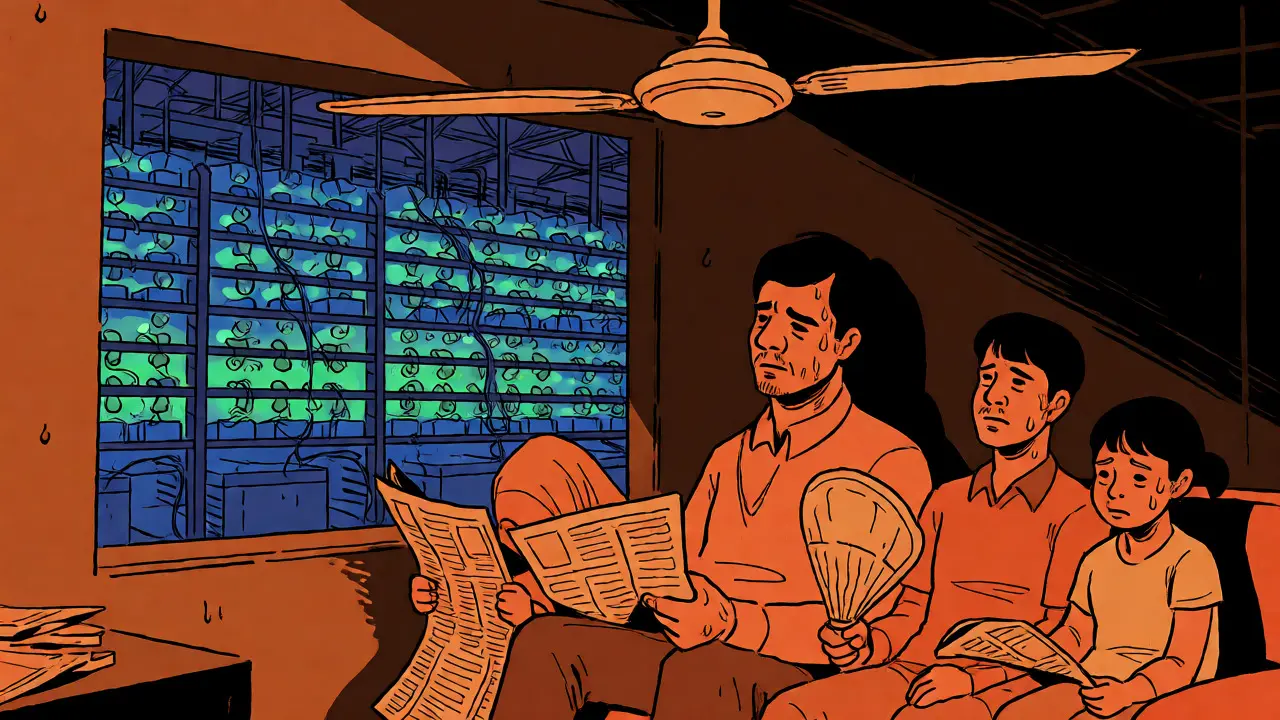
Imagine turning on your air conditioner during a scorching 45°C heatwave in Tehran, only to have the power cut out for fourteen hours straight. Now imagine that while you’re sweating through your shirt, a massive facility nearby is humming along, burning through electricity to mine Bitcoin. This isn’t a hypothetical scenario; it’s the daily reality for many Iranians living under state-controlled crypto mining operations. While the rest of the world views cryptocurrency as a decentralized revolution, in Iran, it has morphed into a tool for regime survival, a way to bypass U.S. sanctions, and a source of intense domestic friction.
The story begins in July 2018, when President Hassan Rouhani’s administration officially recognized cryptocurrency mining as a legal industry. On paper, this was about modernization and monitoring. In practice, it was a strategic pivot. With international banking channels choked off by sanctions, Tehran needed a way to move value without touching the SWIFT system. The Central Bank of Iran (CBI) even floated the idea of a national cryptocurrency backed by the rial. But as the sector grew, so did the influence of powerful entities like the Islamic Revolutionary Guard Corps (IRGC). By 2020, these groups weren’t just participating in mining; they were dominating it, setting up industrial-scale farms that would eventually contribute to nationwide blackouts.
The Rise of the Crypto Cartel
If you look closely at who runs the biggest mining rigs in Iran, you won’t find typical tech startups or venture-backed firms. You’ll find connections to the IRGC and organizations under Supreme Leader Ali Khamenei. These aren’t small basement operations; we are talking about facilities with hundreds of megawatts of capacity. A prime example is the 175-megawatt Bitcoin farm in Rafsanjan, located in Kerman province. This joint venture between an IRGC-linked enterprise and Chinese investors illustrates the model perfectly: cheap local energy meets foreign hardware expertise.
Why is this attractive? Because electricity in Iran is heavily subsidized. For state-affiliated miners, rates can drop as low as 0.004 cents per kWh. To put that in perspective, that’s roughly 1/50th of typical global commercial rates. When you convert mined Bitcoin into foreign currency at those margins, the profits are staggering. Critics call this a "crypto cartel," arguing that these entities divert national resources for private profit while enjoying immunity from the strict regulations imposed on everyone else.
| Feature | State-Affiliated (IRGC/Foundations) | Licensed Private Miners |
|---|---|---|
| Electricity Cost | ~$0.004/kWh (Subsidized) | ~$0.07/kWh (Regulated Tariff) |
| Regulatory Scrutiny | Minimal / Exempt | High (Ministry of Industry oversight) |
| Hardware Source | Mixed (often imported via partners) | Government-approved only |
| Impact on Grid | Continuous, high-load | Subject to rationing cuts |
Energy Crisis and Public Outrage
The cost of this strategy is borne by the public. Iran’s power grid struggles to keep up with demand, especially during summer peaks. When unregulated or semi-regulated state mines run at full tilt, the grid buckles. In May 2024, social media lit up with complaints about "hours-long blackouts while IRGC mines Bitcoin." One verified account reported a 14-hour outage in Tehran’s District 3 during peak temperatures, highlighting the disconnect between where the power goes and who suffers the consequences.
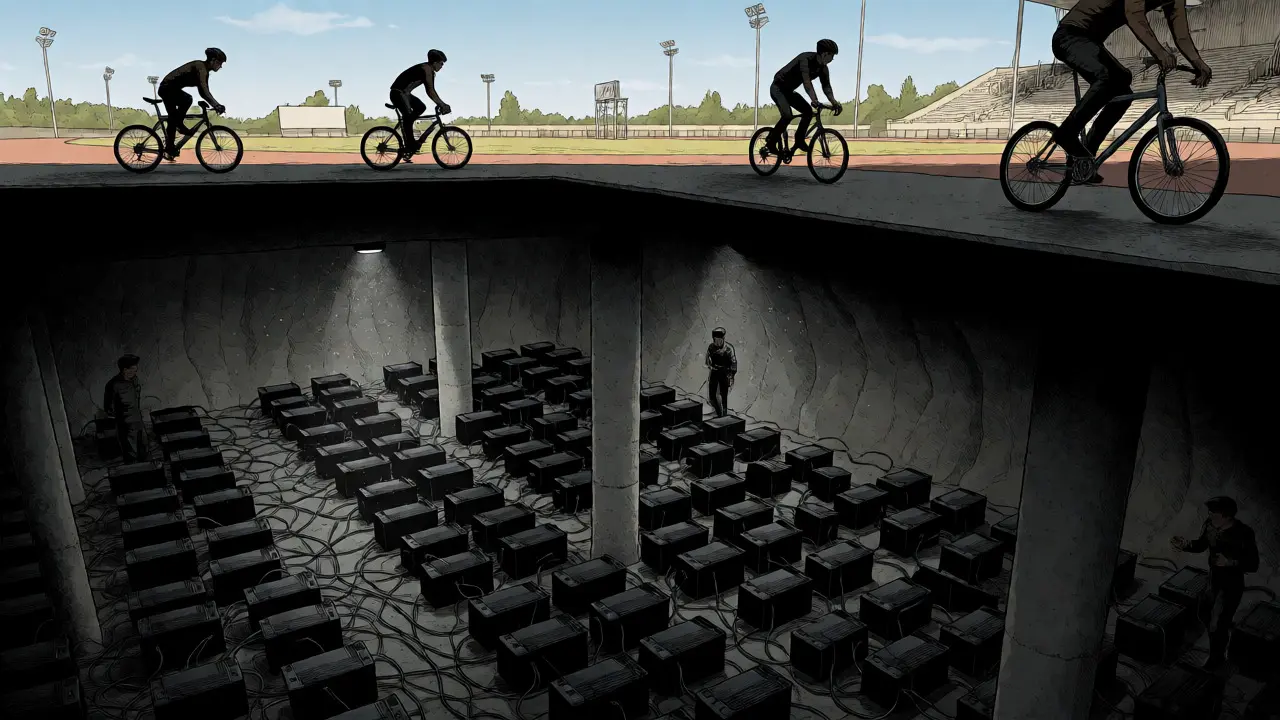
A particularly striking case occurred in Ahvaz, where authorities discovered a large-scale mining operation hidden beneath the Shahid Ghorbani Sports Complex. For over two years, ASIC miners hummed away in tunnels below the cycling track, undetected. The discovery sparked public outrage, not just because of the illegality, but because it symbolized the impunity enjoyed by connected insiders. Citizens saw their factories shutting down due to power rationing while these hidden farms continued uninterrupted.
Sanctions Evasion and Financial Engineering
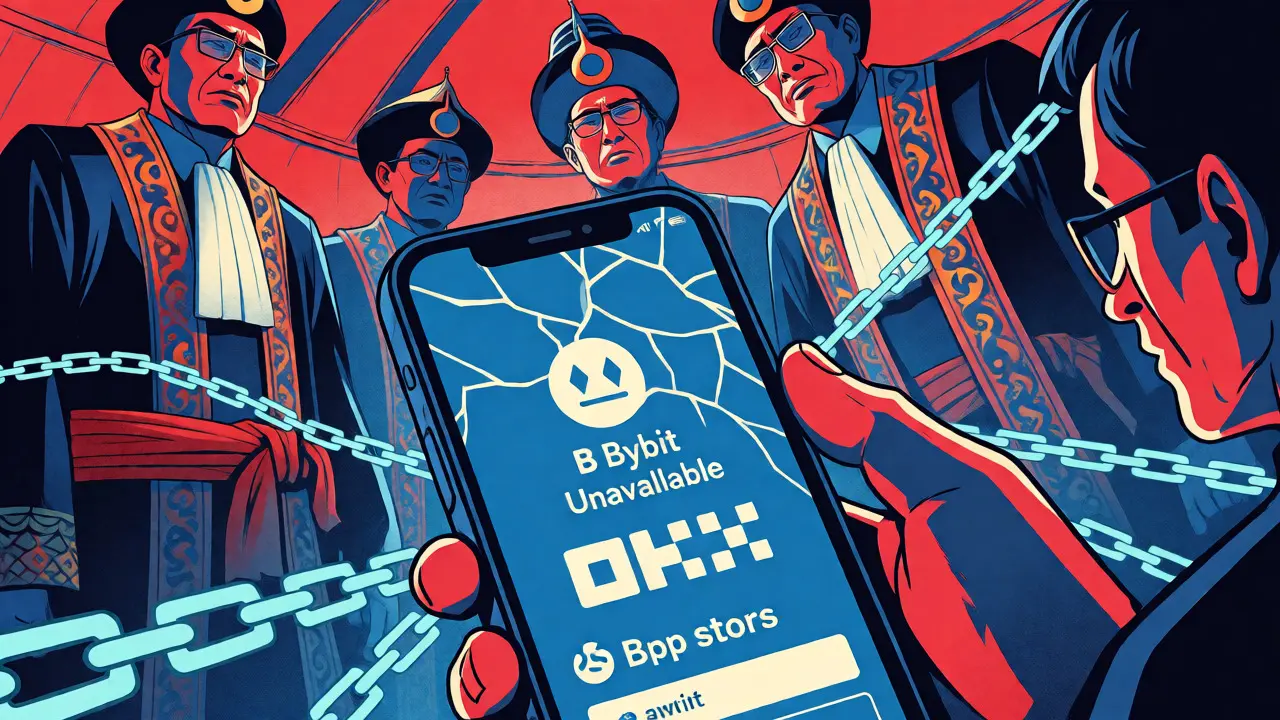
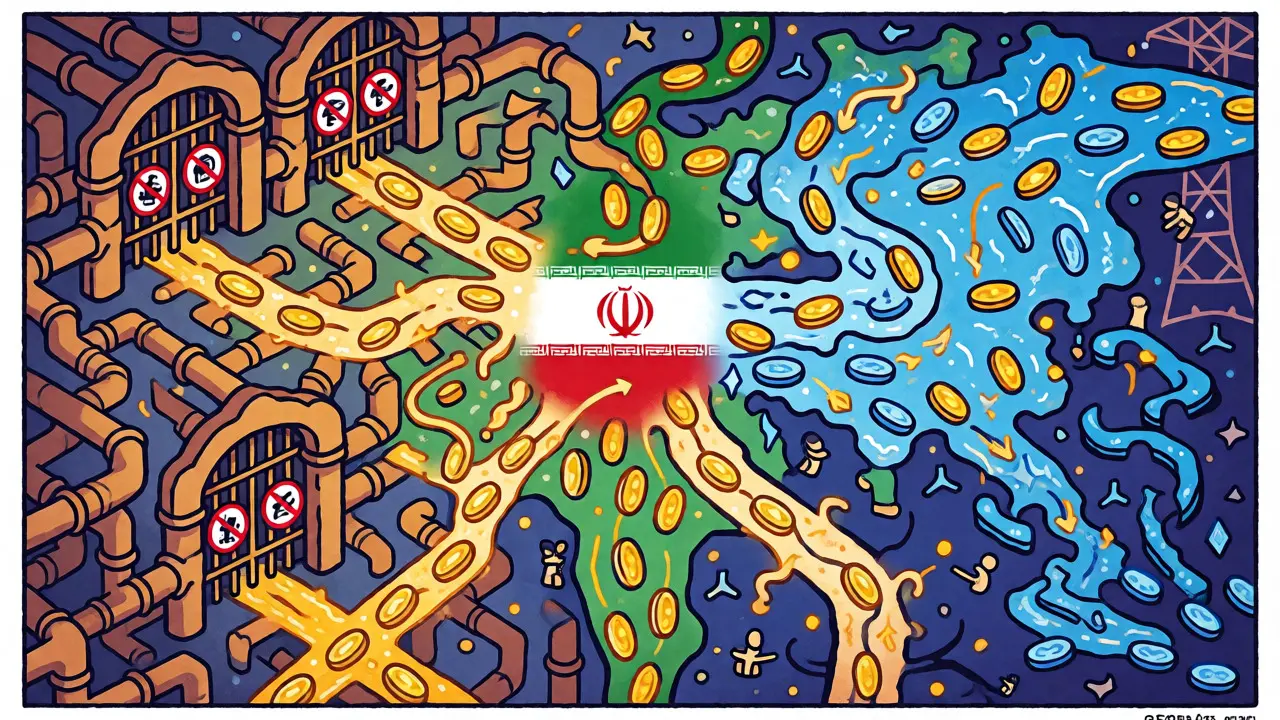
For the Iranian government, crypto mining is less about technology and more about financial engineering. It allows the conversion of domestic energy resources into liquid assets like USDT (Tether) or Bitcoin, which can then be moved internationally without traditional banking intermediaries. This capability became critical as sanctions tightened. However, the international community is watching. In July 2025, Tether executed its largest-ever freeze of Iranian-linked funds, blocking 42 addresses associated with Nobitex, Iran’s largest domestic exchange, and various IRGC wallets.
This move forced a rapid adaptation. The government coordinated a push for users to offload USDT holdings in favor of DAI via the Polygon network. It’s a cat-and-mouse game. As soon as one channel gets blocked, another opens. The goal remains constant: keep capital flowing in and out despite being locked out of the global financial system. TRM Labs notes that these freezes disrupt entrenched patterns but also demonstrate Iran’s increasing sophistication in navigating financial restrictions.
The Regulatory Whiplash
Navigating the legal landscape for crypto in Iran is exhausting. The rules change frequently, often with little warning. In early 2025, the Central Bank ordered the closure of rial payment gateways for exchanges, citing "ambiguity" and lack of transparency. Then, in January 2025, they partially reversed course, requiring API access that gave authorities "full user data." Effectively, every transaction became surveilled.
By August 2025, the situation shifted again with the enactment of the "Law on Taxation of Speculation and Profiteering." This law imposed capital gains tax on cryptocurrency trading for the first time, grouping digital assets alongside gold, real estate, and forex. For private miners and traders, this meant higher costs and stricter compliance. Yet, enforcement remains uneven. Licensed operators face heavy bureaucratic hurdles-such as mandatory use of approved hardware that reduces efficiency by 15-20%-while political connections often shield the big players from the same penalties.
Global Context and Future Outlook
Iran occupies a unique spot in the global mining map. After China banned mining in 2021, much of that hash rate migrated to Kazakhstan and North America. Iran, however, didn’t ban it; it co-opted it. At its peak, Iran accounted for approximately 4.5% of the global Bitcoin hash rate. Unlike competitive markets in the West, where private companies drive innovation and efficiency, Iran’s sector is defined by state entanglement.
Silvia Boltuc, writing for SpecialEurasia, points out the inherent tension: regulatory ambitions clash with economic necessity and energy crises. The government wants tax revenue and control, but it also needs the liquidity that crypto provides. Meanwhile, citizens want reliable electricity. These three goals are currently incompatible. Unless there is a significant infrastructure overhaul or a shift in political priorities, the friction will continue.
Looking ahead, expect tighter surveillance and potentially more aggressive international actions against Iranian-linked addresses. The regime is doubling down on using crypto as a lifeline, but the domestic cost-both in terms of energy stability and public trust-is rising. For now, state-controlled mining remains a critical, albeit controversial, component of Iran’s economic survival strategy.
Is cryptocurrency mining legal in Iran?
Yes, but it is highly regulated. Since 2018, mining has been legally recognized, but operators must obtain licenses from the Ministry of Industry, Mine and Trade. They are required to pay specific electricity tariffs and use government-approved hardware. However, enforcement is inconsistent, with state-affiliated entities often operating outside these standard rules.
How does crypto mining affect Iran's power grid?
Large-scale mining operations consume massive amounts of electricity, contributing significantly to grid instability. During peak demand periods, such as summer heatwaves, the strain from mining facilities often leads to rolling blackouts for residential and commercial users. Critics argue that subsidized rates encourage excessive consumption by miners while ordinary citizens suffer from power shortages.
What role does the IRGC play in Iranian crypto mining?
The Islamic Revolutionary Guard Corps (IRGC) is deeply involved in the sector, managing large-scale mining farms and facilitating sanctions evasion. Their operations benefit from political protection, subsidized energy, and minimal regulatory scrutiny. The IRGC uses mined cryptocurrencies to generate foreign currency reserves and conduct international transactions outside traditional banking systems.
Why did Tether freeze Iranian crypto addresses in 2025?
In July 2025, Tether froze 42 addresses linked to Iranian entities, including Nobitex and IRGC-affiliated wallets. This action was taken to comply with international sanctions and counter-terrorism financing standards. It disrupted established transaction flows and forced Iranian users to migrate to other stablecoins like DAI to maintain access to liquid assets.
Can ordinary Iranians trade cryptocurrency freely?
Trading is possible but increasingly restricted. The Central Bank of Iran has implemented measures to monitor transactions, including requiring API access for exchanges to provide user data to authorities. Recent laws have also introduced capital gains taxes on crypto trading, aiming to integrate digital assets into the formal taxed economy.