
SushiSwap V3 Liquidity Calculator
SushiSwap V3 Liquidity Calculator
Calculate potential returns from providing liquidity on SushiSwap V3 on Arbitrum. Consider fee income, Onsen rewards, and impermanent loss.
Estimated Returns
Fee Income: $0.00
Onsen Rewards: $0.00
Total Estimated Return: $0.00
Annualized Return: 0%
Risk Analysis
Impermanent Loss: 0%
Position Health: Healthy
When you’re trading crypto on Arbitrum, you don’t want to pay $20 in gas fees just to swap ETH for USDC. That’s why SushiSwap V3 on Arbitrum exists - to make DeFi trading faster, cheaper, and more rewarding. But is it actually better than Uniswap V3? Or just another option with flashy incentives that fade fast?
What Is SushiSwap V3 on Arbitrum?
SushiSwap V3 is a decentralized exchange built on Arbitrum, a Layer-2 scaling solution for Ethereum. It launched in 2023 as an upgrade to SushiSwap’s original V2 model, bringing concentrated liquidity - the same innovation Uniswap V3 introduced - to a network with far lower fees and faster speeds.
Unlike centralized exchanges like Binance or Coinbase, SushiSwap doesn’t hold your crypto. You trade directly from your wallet - MetaMask, WalletConnect, or any EVM-compatible one. All swaps happen through smart contracts. No KYC. No middlemen. Just code.
Arbitrum makes this practical. On Ethereum mainnet, a simple swap can cost $10-$50 during peak times. On Arbitrum? You’re looking at $0.01 to $0.05. Transactions confirm in 1-2 seconds instead of 15-30. That’s the difference between trading and waiting.
How SushiSwap V3 Works: Concentrated Liquidity Explained
SushiSwap V3’s biggest upgrade over V2 is concentrated liquidity. Instead of spreading your funds across every price point (like in V2), you choose a narrow price range - say, $1,800 to $2,000 for ETH/USDC - and put all your capital there.
This sounds simple. But it’s not.
Think of it like selling options. If the price stays in your range, you earn fees from every trade. If it moves outside? Your liquidity stops earning until it comes back. You need to monitor it. Or use tools like DeFi Saver or Zapper to auto-rebalance.
Why does this matter? Because it can make your capital 4,000x more efficient than V2. A $10,000 position in V2 might earn $50 in fees a month. In V3, if you nail the range, you could earn $200+. But if you get it wrong? You earn nothing. And you risk impermanent loss if the price swings hard.
Most new users lose money here. They pick wide ranges thinking they’re being safe. They’re not. They’re just back to V2 performance - but with more complexity.
Fees and Rewards: Who Gets Paid?
Every trade on SushiSwap V3 charges a 0.3% fee. That’s standard. But here’s where it splits:
- 0.25% goes to liquidity providers
- 0.05% goes to xSUSHI stakers
That 0.05% is the secret sauce. If you hold xSUSHI - the staked version of SUSHI - you earn a slice of every trade on the platform. That’s not something Uniswap offers. Uniswap gives all fees to LPs. SushiSwap gives part to its token holders too.
And then there’s the Onsen Program. This is SushiSwap’s way of attracting liquidity to new tokens. If you provide liquidity to a newly listed token on Arbitrum, you get boosted SUSHI rewards - sometimes 5x-10x more than normal. It’s a temporary incentive, but it’s powerful. In early 2025, some Onsen pools paid over $1,000 in SUSHI per $10,000 staked for a week.
But here’s the catch: these rewards are funded by token emissions, not trading fees. When the boost ends, the APY often crashes. Many users treat this like a farm-and-dump game. That’s not investing. That’s gambling with DeFi.
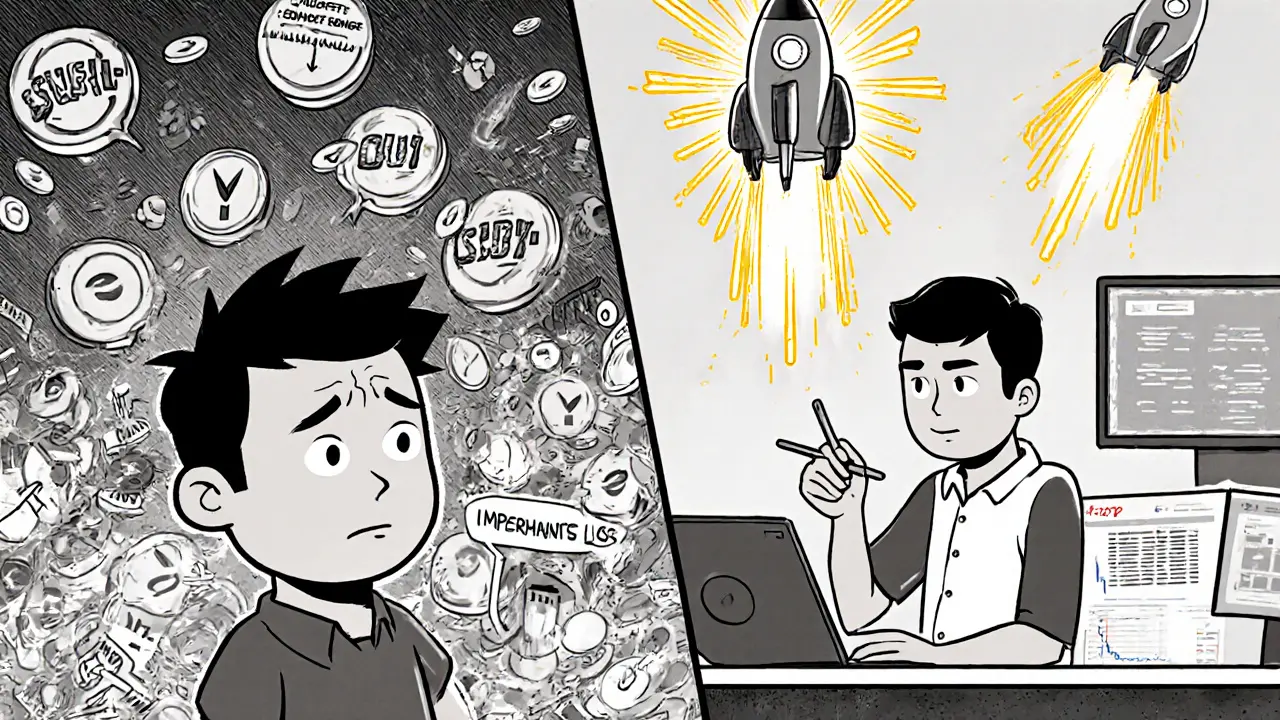
SushiSwap V3 vs Uniswap V3 on Arbitrum
Uniswap V3 on Arbitrum is the king. It has 60% of the DEX volume. SushiSwap? Around 12-15%. That’s not a small gap. It’s a chasm.
Here’s how they stack up:
| Feature | SushiSwap V3 | Uniswap V3 |
|---|---|---|
| Trading Fees | 0.3% (0.25% to LPs, 0.05% to xSUSHI) | 0.3% (100% to LPs) |
| Concentrated Liquidity | Yes | Yes |
| Token Rewards (Onsen) | Yes - boosted SUSHI for new pairs | No - no native reward program |
| TVL (Total Value Locked) | $180M (as of Nov 2025) | $950M (as of Nov 2025) |
| Daily Volume | $50M-$100M | $400M-$700M |
| Best For | Yield hunters, SUSHI stakers, new token exposure | High-frequency traders, deep liquidity, reliability |
Uniswap wins on depth. If you’re swapping large amounts or trading obscure tokens, Uniswap’s liquidity is deeper. Slippage is lower. Execution is cleaner.
SushiSwap wins on incentives. If you’re holding SUSHI or want to earn extra tokens by supporting new projects, it’s the better choice. But if you just want to swap ETH for DAI? Uniswap is simpler and safer.
Who Should Use SushiSwap V3?
You should use SushiSwap V3 if:
- You’re already holding or staking SUSHI/xSUSHI and want to earn more
- You’re willing to actively manage your liquidity positions
- You’re interested in early-stage tokens with Onsen rewards
- You’re tired of paying $5 in gas fees on Ethereum
You should NOT use SushiSwap V3 if:
- You’re a beginner who doesn’t understand impermanent loss
- You want to trade with leverage or margin (it doesn’t offer it)
- You need the deepest liquidity for large trades
- You hate monitoring price ranges or using third-party tools
There’s no shame in sticking with Uniswap. It’s the default for a reason. SushiSwap is the upgrade for those who want to go deeper.
Real Risks You Can’t Ignore
SushiSwap V3 isn’t risky because it’s hacked. It’s risky because it’s fragile.
Its TVL is a fraction of Uniswap’s. That means less fee income. Less fee income means less incentive to keep rewarding users. When the SUSHI emissions drop - and they will - what’s left? A platform with lower liquidity and no edge.
Also, the Onsen Program is a temporary fix. It’s not sustainable. If the team stops funding it, liquidity drains. That’s happened before. In 2023, SushiSwap lost over 40% of its TVL after one Onsen campaign ended.
And then there’s the regulatory shadow. The SEC is watching DeFi. If they decide SUSHI rewards are unregistered securities, the whole incentive structure could collapse overnight. That’s not speculation. It’s a real legal risk.
Finally, the interface is cluttered. Managing concentrated liquidity requires clicking through 5+ menus. There’s no guided setup. You’re on your own.

How to Get Started (Step-by-Step)
If you’re ready to try it, here’s how:
- Get an EVM wallet: Install MetaMask or use WalletConnect.
- Bridge ETH to Arbitrum: Use the official Arbitrum bridge or a trusted third-party like Stargate. Expect 10-20 minutes.
- Go to app.sushi.com and connect your wallet.
- Click "Swap" to trade, or "Liquidity" to provide funds.
- If you’re adding liquidity, pick a token pair, then drag the price range slider. Start wide (e.g., ±20% from current price) until you’re comfortable.
- Check the Onsen tab to see which pools are offering boosted rewards.
- Stake SUSHI for xSUSHI to earn the 0.05% fee share.
First-time users should spend 2-3 hours learning. Don’t rush. Mistakes here cost money.
Final Verdict: Worth It?
SushiSwap V3 on Arbitrum is not the best DEX. It’s not even the second-best. But it’s the most interesting.
If you’re here to trade and move on? Use Uniswap. It’s faster, deeper, and simpler.
If you’re here to earn - to farm, stake, and play the reward game - then SushiSwap is your playground. The rewards are real. The risk is high. The competition is fierce.
It’s not a store of value. It’s not a safe haven. It’s a high-stakes DeFi experiment. And right now, it’s one of the few places where you can still find outsized yields - if you’re willing to work for them.
For active users who understand the mechanics, it’s a powerful tool. For everyone else? Stick to the basics. Wait. Learn. Then come back.
Frequently Asked Questions
Is SushiSwap V3 on Arbitrum safe to use?
Yes, technically. The smart contracts have been audited by reputable firms like CertiK and PeckShield. No major exploits have occurred since launch. But safety isn’t just about code. It’s about sustainability. If liquidity drains or reward programs end, your funds are still there - but your returns vanish. Treat it like any DeFi protocol: never invest more than you can afford to lose.
Does SushiSwap V3 support margin or leverage trading?
No. SushiSwap V3 on Arbitrum does not offer margin or leverage trading. Some third-party sites like CoinCodex list it incorrectly, but that’s outdated or misleading data. SushiSwap is purely an AMM-based DEX. You can only swap tokens or provide liquidity. If you want leverage, you’ll need a separate protocol like GMX or dYdX.
How do I earn rewards on SushiSwap V3?
You earn rewards in two ways: First, by providing liquidity to trading pairs - you get 0.25% of every trade in that pair. Second, by staking SUSHI to get xSUSHI - you earn 0.05% of all trades across the platform. Plus, you can join Onsen pools, where new tokens offer extra SUSHI incentives. These are temporary, so check the Onsen tab weekly.
What’s the difference between SUSHI and xSUSHI?
SUSHI is the native token of SushiSwap. xSUSHI is what you get when you stake SUSHI in the protocol’s staking contract. Staking locks your SUSHI for a minimum of 30 days. In return, you get xSUSHI, which represents your share of the protocol’s fee revenue (0.05% of all trades). You can’t trade xSUSHI, but you can unstake it anytime to get your SUSHI back - plus accumulated fees.
Why is TVL lower on SushiSwap than Uniswap?
TVL is lower because Uniswap has brand recognition, simpler UX, and a larger user base. SushiSwap’s reward system attracts users, but they often leave when incentives end. Uniswap’s liquidity is sticky - people keep their funds there because it’s reliable. SushiSwap’s liquidity is transactional - people come for the rewards and leave when they disappear.
Can I use SushiSwap V3 on mobile?
Yes. You can access SushiSwap V3 through your mobile browser using MetaMask or WalletConnect. There’s no official SushiSwap app, but the web interface works fine on iOS and Android. For better usability, use the site in desktop mode. The mobile layout is clunky, especially when managing liquidity ranges.
What happens if I leave my liquidity position unmanaged?
If the price moves outside your chosen range, your liquidity stops earning fees. You’re not losing your tokens - they’re still there. But you’re not making money either. It’s like parking your car in a closed garage during rush hour. You’re not getting any traffic. You need to either adjust your range manually or use a tool like Zapper or DeFi Saver to automate rebalancing.
Is SushiSwap V3 better than Trader Joe on Arbitrum?
Trader Joe has higher TVL and better UX than SushiSwap, but it doesn’t offer the same dual-reward system. Trader Joe gives all fees to LPs. SushiSwap gives part to xSUSHI holders. If you’re holding SUSHI, SushiSwap is better. If you just want simple, deep liquidity, Trader Joe is easier. Both are solid choices - SushiSwap is for yield hunters, Trader Joe is for traders.




Tony spart
November 27, 2025 AT 10:23Mark Adelmann
November 28, 2025 AT 21:43Susan Dugan
November 30, 2025 AT 02:42SARE Homes
November 30, 2025 AT 09:16Grace Zelda
December 2, 2025 AT 08:40Sam Daily
December 4, 2025 AT 05:43