Block Validation: How Blockchain Keeps Trust Without Middlemen
When you send Bitcoin or swap tokens on Ethereum, block validation, the process that confirms and locks transactions into a permanent chain of blocks. It's what stops someone from spending the same coin twice, and it happens automatically—no bank, no lawyer, no middleman needed. This isn’t magic. It’s code, math, and network rules working together to make trust possible without trust.
Block validation relies on consensus mechanism, the system that lets thousands of computers agree on what’s true. Proof of Work is the oldest and most famous—Bitcoin miners race to solve hard puzzles, and the winner gets to add the next block. But other blockchains like Ethereum now use proof of stake, where validators are chosen based on how much crypto they lock up. Both do the same thing: make cheating expensive and lying pointless.
Without block validation, crypto would collapse. Fake transactions, double spends, and rogue nodes would take over. That’s why every major blockchain—whether it’s Bitcoin, Solana, or a niche DeFi chain—spends huge resources to get this right. You’ll see this play out in the posts below: how Venezuela’s state-run mining tries to control validation, how exchange inflows hint at miners preparing to sell, and how rollup tech is changing how fast blocks get confirmed.
Some of the coins you’ll read about here are dead. Others are scams. But the underlying idea of block validation? It’s alive, growing, and changing how money works. You don’t need to understand every detail to use crypto. But if you want to know what’s real and what’s just noise, you need to know how blocks get validated—and why that’s the foundation of everything else.
How Block Validation Works in Blockchain Networks: PoW, PoS, and Beyond
- 7 Comments
- Dec, 7 2024
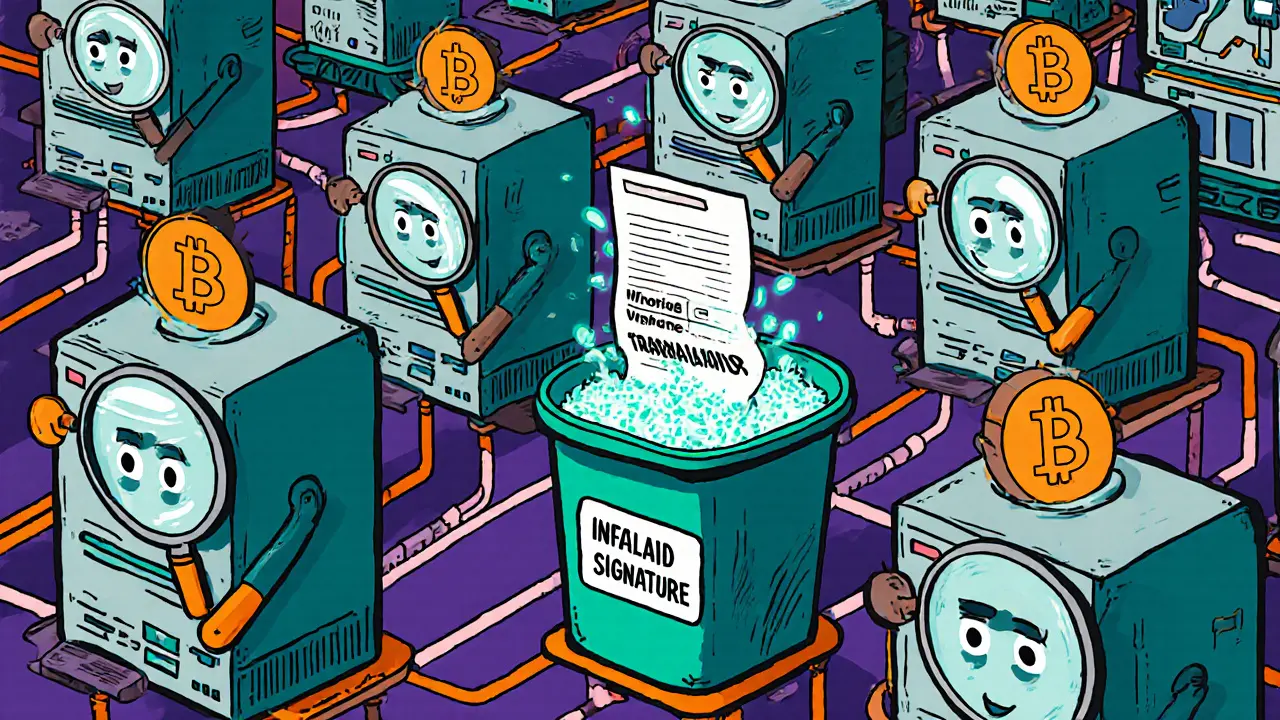
Block validation keeps blockchain networks secure by verifying transactions without central authority. Learn how Proof of Work and Proof of Stake work, their trade-offs, real-world risks, and what's next for consensus mechanisms.