Blockchain Anonymity: What It Really Means and Why It Matters
When people talk about blockchain anonymity, the illusion that crypto transactions are completely private and untraceable. Also known as pseudonymity, it's the idea that your wallet address isn't tied to your real name—but that’s where the privacy ends. Your Bitcoin or Ethereum address might look like a random string of letters and numbers, but every transaction you ever make is permanently recorded on a public ledger. Anyone with the right tools can follow those trails—linking wallets to exchanges, IP addresses, or even real-world purchases.
Real privacy in crypto, the ability to send and receive value without exposing your financial behavior to outsiders doesn’t come from using Bitcoin alone. It requires tools like mixers, privacy coins, or layer-2 solutions that obscure transaction patterns. Projects like Monero or Zcash built anonymity into their core design, but even they aren’t foolproof. Most users think they’re anonymous because they don’t use their real name—but if you bought crypto on Binance or Coinbase, your identity is already tied to your wallet. Governments and blockchain analysts track those links every day.
on-chain tracking, the process of analyzing public blockchain data to uncover user behavior and wallet relationships is now a multi-billion-dollar industry. Firms like Chainalysis and Elliptic help law enforcement trace ransomware payments, darknet market funds, and even stolen NFTs. You don’t need to be a criminal to be tracked—you just need to use crypto like most people do: sending from an exchange, swapping tokens on Uniswap, or claiming an airdrop. Each step leaves a breadcrumb.
That’s why crypto wallet privacy, the practice of protecting your identity and transaction history through deliberate choices matters more than ever. Using a new address for every transaction, avoiding centralized exchanges for sensitive transfers, and learning how to use privacy-focused wallets like Wasabi or Samourai aren’t paranoid habits—they’re basic security. The people who lose crypto to scams or seizures aren’t always hacked—they’re tracked.
What you’ll find in the posts below isn’t theory. It’s real examples: how Venezuela’s state-run mining system ignores anonymity, how Nigerian users bypass banks with crypto that leaves traces, how dead tokens like Quotient or PKG still show up on ledgers, and how exchange inflows and outflows reveal who’s holding and who’s dumping. Even the TRO airdrop rumors and BitxEX scam warnings leave digital footprints. Blockchain anonymity isn’t a feature—it’s a challenge. And the people who understand it best aren’t the ones shouting the loudest. They’re the ones staying quiet, moving carefully, and protecting what’s theirs.
Cryptocurrency Mixing Services and North Korea Money Laundering: How Illicit Funds Hide on the Blockchain
- 8 Comments
- Aug, 8 2025
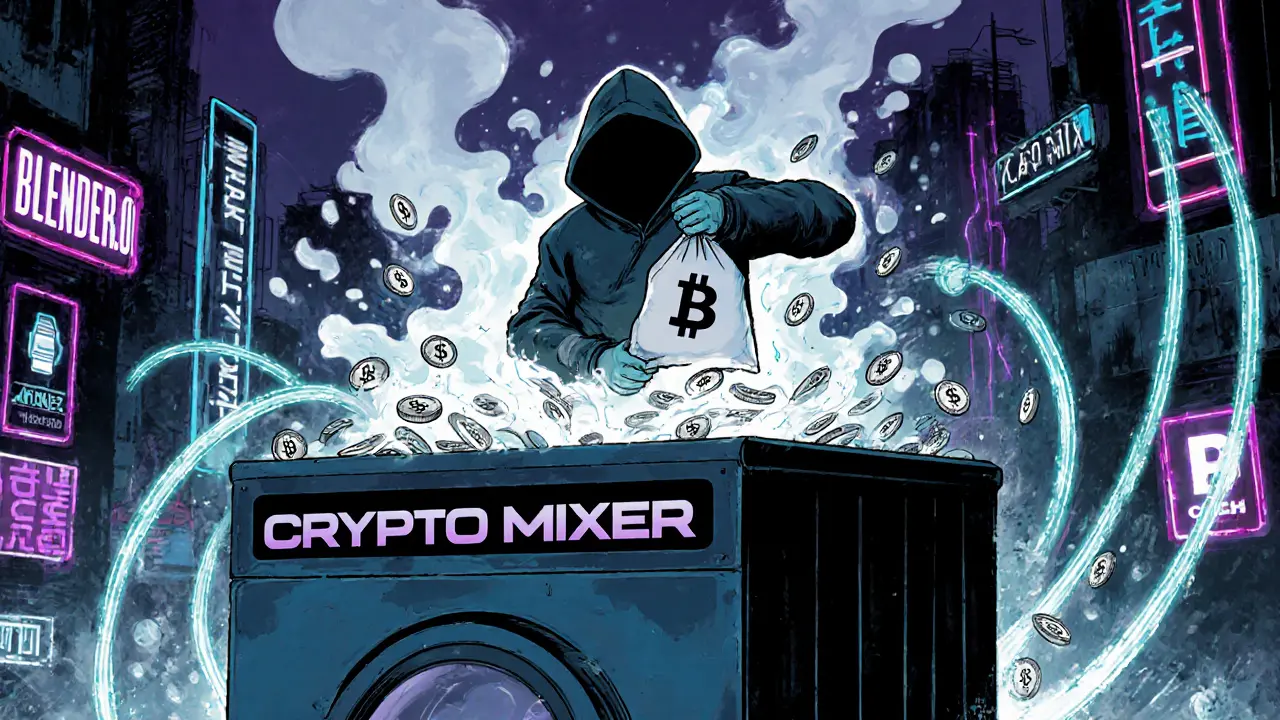
Cryptocurrency mixing services help hide the origins of stolen funds, enabling North Korea to launder billions in crypto. Learn how these tools work, why they're hard to stop, and what it means for users.