Crypto Sanctions: What They Are, Who They Target, and How They Shape the Market
When governments impose crypto sanctions, government actions that block, freeze, or ban the use of digital assets to enforce policy or punish bad actors. Also known as digital asset restrictions, these measures can shut down exchanges, seize wallets, or outlaw mining—all without touching physical cash. Unlike traditional financial penalties, crypto sanctions hit at the core of decentralization. They don’t just target banks—they go after wallets, nodes, and even individuals holding Bitcoin or stablecoins.
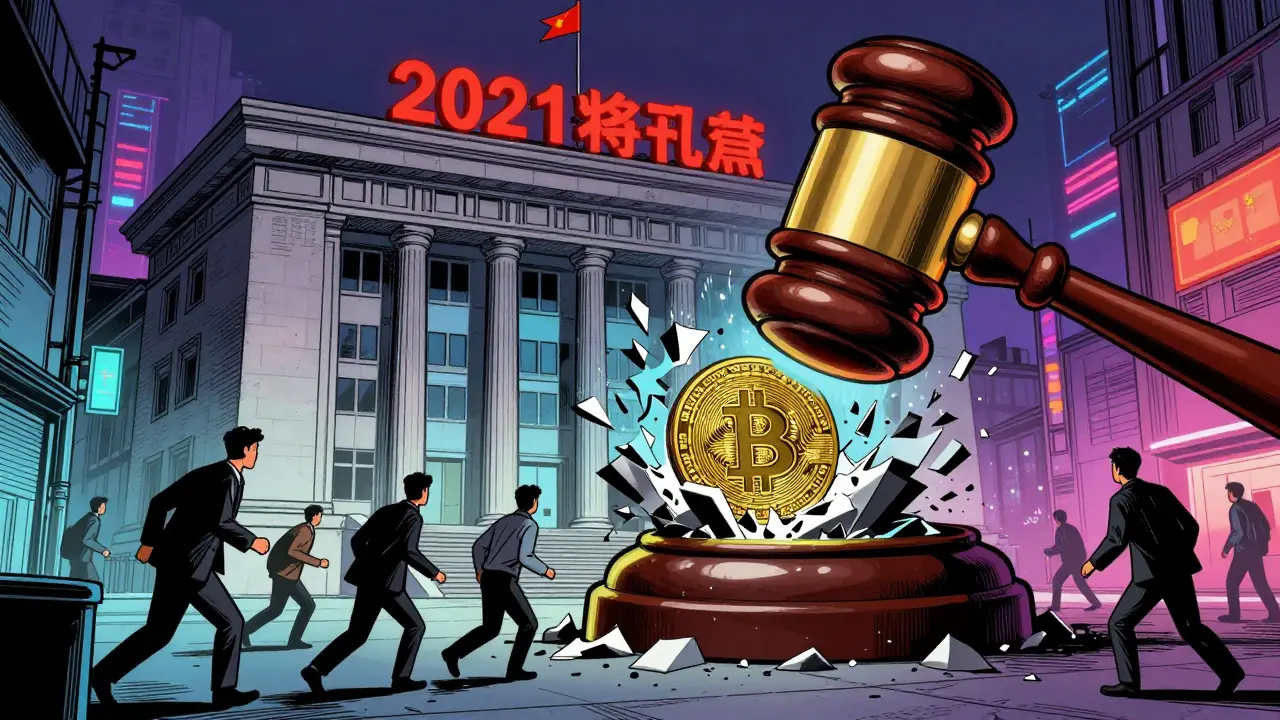
Crypto sanctions aren’t just about punishing criminals. Countries like China, a nation that completely banned cryptocurrency trading and mining in 2021, with enforcement actions continuing through 2025 use them to push their own digital currency—the digital yuan—as the only legal option. Meanwhile, the U.S. Treasury, a key enforcer of global crypto sanctions through OFAC, tracking and freezing crypto addresses linked to ransomware, terrorism, and illicit exchanges has frozen billions in crypto tied to North Korea, Iran, and Russian oligarchs. Even Venezuela, where the government once tried to control mining through SUNACRIP, the state-run crypto regulatory body that monitors and restricts digital mining activity, now struggles to stop underground mining because people need crypto to survive hyperinflation.
These moves aren’t random. They’re part of a global shift where digital money is no longer seen as optional—it’s a tool of economic warfare. When a country bans crypto, it doesn’t just stop trading. It freezes bank accounts, blocks access to exchanges, and pressures miners to shut down. In Nigeria, where millions use crypto to bypass broken banking systems, new rules force users to only use SEC-approved platforms. Use the wrong exchange? Your funds can vanish overnight.
And it’s not just about who’s banned. It’s about what happens next. When sanctions hit, prices swing. Exchanges scramble to comply. Wallets get blacklisted. Airdrops disappear. Projects like TRO or PKG Token, already dead, get buried under more scrutiny. Meanwhile, tools like exchange inflow/outflow metrics become critical signals—when users pull coins off exchanges, they’re often hiding from regulators.
What you’ll find below isn’t just news. It’s a map of how crypto sanctions ripple through the ecosystem. From China’s total ban to Nigeria’s licensing crackdown, from seized Bitcoin wallets to state-run mining schemes—you’ll see exactly how power, control, and digital money collide. No fluff. No theory. Just real cases, real consequences, and what it means for your next move.
Garantex Exchange Sanctions: How Russian Crypto Traders Are Adapting
- 5 Comments
- Jul, 15 2025
After U.S. sanctions, Garantex didn't shut down-it evolved into a hidden crypto network helping Russian traders move money abroad. Here's how it works, who's using it, and why regulators can't stop it.