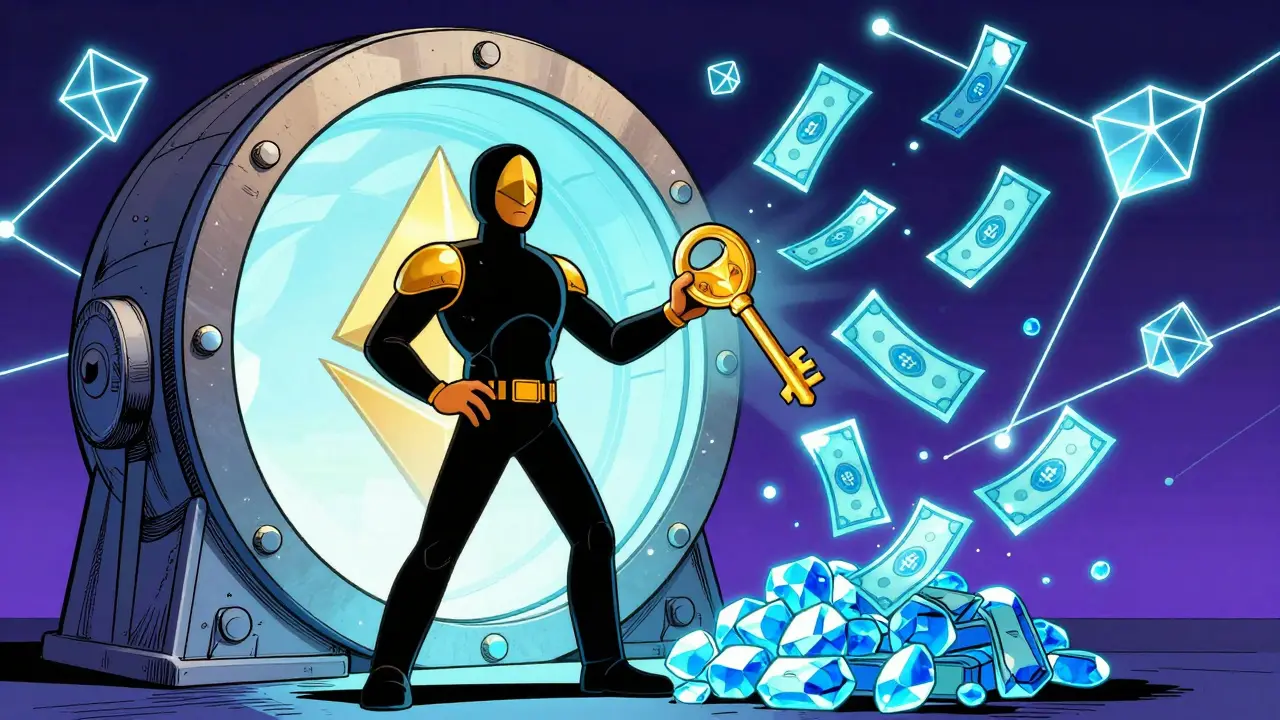
NFT Provenance: What It Is and Why It Matters in Crypto
When you buy an NFT, you’re not just buying a picture—you’re buying a NFT provenance, the verified record of every owner, transaction, and change tied to that digital asset since it was created. Also known as blockchain verification, it’s what stops someone from claiming they own a piece of art that was never theirs. Without it, NFTs are just JPEGs with a fancy label.
NFT provenance relies on the blockchain to log every transfer like a public ledger. If a CryptoPunk sold for $10 million, you can see every hand it passed through—from the original mint to the last buyer. This isn’t guesswork; it’s code. That same system tracks whether a Bored Ape was ever minted by Yuga Labs or copied by a scammer. It’s why some NFTs hold value and others vanish overnight. Provenance doesn’t just show ownership—it shows legitimacy. And in a space full of fakes, that’s everything.
Related to this are digital asset authenticity, the assurance that an NFT is original and not a copy, and NFT ownership, the legal and technical claim tied to a wallet address. These aren’t separate from provenance—they’re built into it. If the chain of custody breaks, ownership means nothing. And if authenticity can’t be proven, the asset has no market.
Some NFTs, like those tied to real-world art or music rights, use provenance to link digital tokens to physical assets. Others, like gaming items or collectibles, use it to prove rarity. Even in scams—like fake airdrops or phantom collections—provenance exposes the truth. Look at the transaction history, and you’ll often see the same wallet creating 500 copies, then selling them as unique. That’s not art. That’s fraud.
What you’ll find in the posts below isn’t just news about NFTs. It’s a look at how real crypto projects handle ownership, how exchanges track assets, and how users get burned when provenance is ignored. From dead tokens with zero history to exchanges that don’t verify sources, the pattern is clear: if you can’t trace it, you can’t trust it. These stories aren’t about hype. They’re about what happens when provenance fails—and how to avoid it.
Digital Art Authentication with NFTs: How Blockchain Verifies Ownership and Stops Forgeries
- 5 Comments
- Nov, 17 2025
NFTs are transforming how digital and physical art are authenticated by creating tamper-proof ownership records on the blockchain. Learn how QR codes, NFC chips, and digital watermarks stop forgeries and give artists true control.