OpenSea Verification: What It Is, Why It Matters, and How to Avoid Scams
When you see the OpenSea verification, a badge granted by OpenSea to legitimate NFT projects and creators to confirm authenticity and reduce fraud. Also known as OpenSea verified collection, it’s the only sign that a project has passed OpenSea’s limited review process. But here’s the truth: that blue check doesn’t mean the NFT is a good investment. It just means OpenSea didn’t outright block it. Most scams still slip through — and unverified accounts aren’t always shady. The badge is a trust signal, not a guarantee.
OpenSea verification isn’t something you apply for. It’s handed out quietly to projects with real traction, active communities, and clear ownership. Think Bored Ape Yacht Club, CryptoPunks, or well-known artists with public track records. If you’re a creator, getting verified means your collection gets shown higher in search, and buyers are more likely to trust your drops. But if you’re a buyer, that blue check is just your first filter. You still need to check the contract address, review the project’s Twitter and Discord, and see if the team is doxxed. Many fake collections copy verified ones — they even steal the logo and rename the project. The only way to avoid getting ripped off is to verify the address yourself, not the badge.
OpenSea doesn’t verify individuals — only collections. So if someone claims they’re "verified" because they have a blue check next to their profile, that’s a lie. Profile checks are just for influencers or big names who’ve been around for years. The real protection is on the collection level. That’s why you’ll see so many posts here about fake airdrops, cloned NFTs, and phishing links pretending to be from "verified" sellers. The OpenSea scam, a fraudulent NFT listing or message designed to trick users into signing malicious transactions or sending crypto is everywhere. And the most dangerous ones use the verified badge as camouflage. Always check the official OpenSea collection page directly. Never click links from DMs or Twitter bios. And never sign a transaction unless you know exactly what it does.
OpenSea verification is part of a bigger picture: NFT marketplace security. It’s not perfect, but it’s the best tool OpenSea has. Still, you’re the last line of defense. The posts below cover real cases — from fake verified NFT drops that stole thousands, to how to spot a cloned collection before you buy. You’ll find guides on checking contract addresses, understanding royalty settings, and why some "verified" projects vanish overnight. Whether you’re new to NFTs or you’ve traded for years, knowing how OpenSea verification really works saves you from losing money to a fake badge.
How NFT Marketplaces Verify Collections: Volume, Manual Review, and Technical Checks
- 8 Comments
- Jul, 12 2025
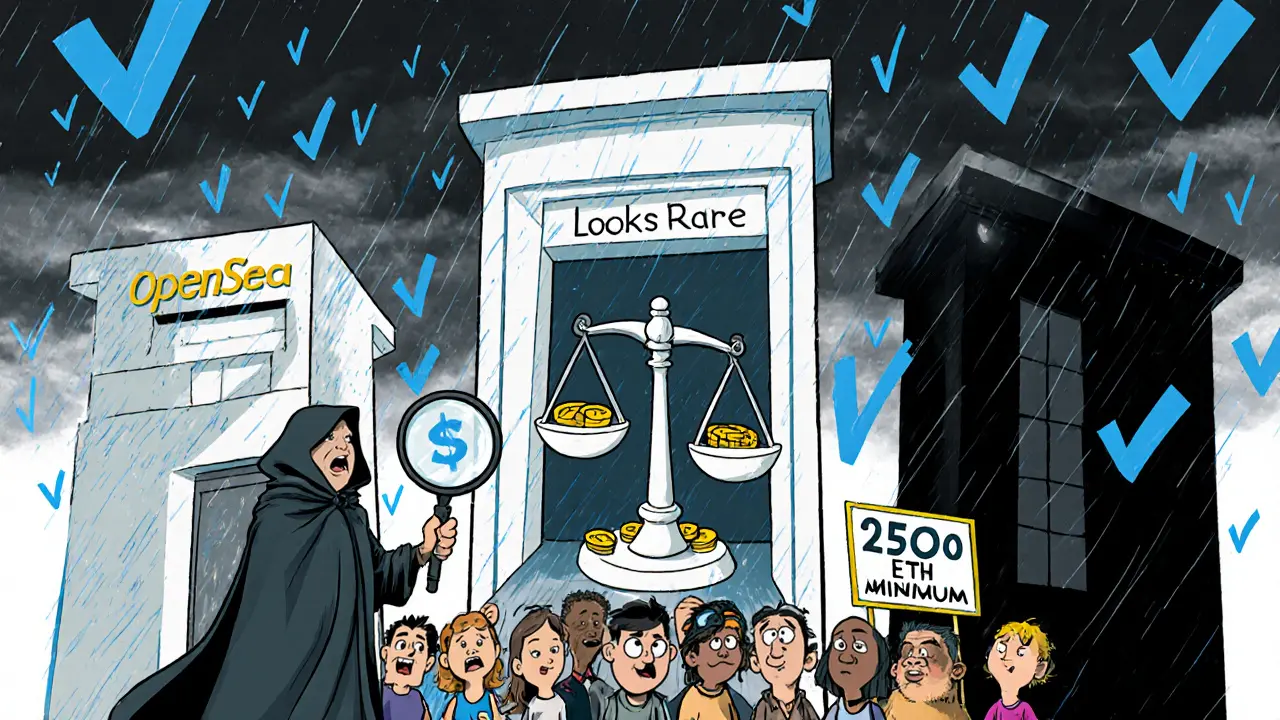
NFT marketplaces verify collections to prevent scams, using volume thresholds, manual reviews, and media signals. OpenSea is opaque, LooksRare demands trading volume, and future systems may use zero-knowledge proofs. Verification doesn't guarantee value - only legitimacy.