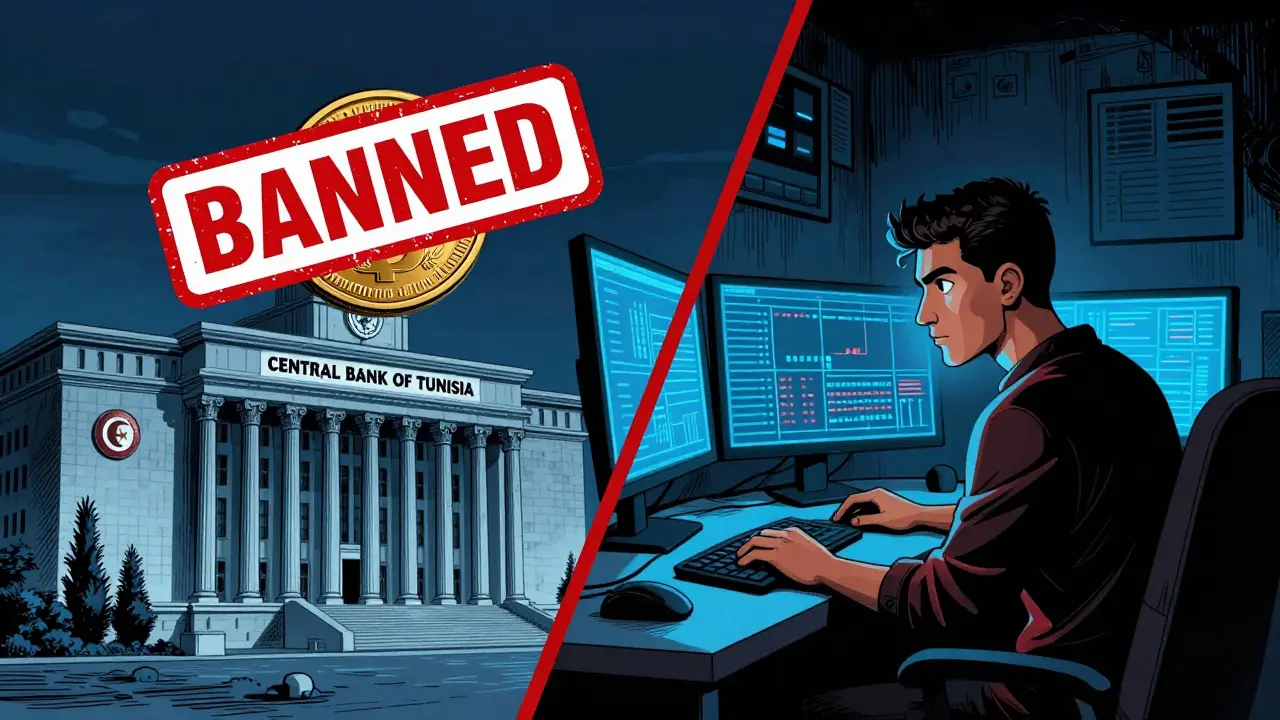
Imagine waking up to find that the digital assets you've invested in are suddenly illegal. For many in Tunisia, this isn't a hypothetical scenario-it's the daily reality of navigating a high-stakes shadow economy. Since May 2018, the Central Bank of Tunisia is the national monetary authority that implemented a comprehensive ban on all cryptocurrency transactions (BCT) has made it clear: trading crypto is a prohibited activity. Yet, despite the threat of jail time, a resilient underground market has flourished, driven by tech-savvy youths and investors who refuse to stay on the sidelines of the digital revolution.
The Core Conflict: Law vs. Adoption
The situation in Tunisia is a strange paradox. On one hand, the state maintains a hardline stance against decentralized assets. On the other, the Poste Tunisienne is the national postal service of Tunisia that has ironically explored blockchain-based payment systems is actually researching the very technology that the government forbids its citizens from using privately. This creates a jarring environment where the state explores Central Bank Digital Currency (CBDC) while arresting individuals for holding a private wallet.
For the average Tunisian, underground crypto trading in Tunisia isn't just about making a profit; it's a cat-and-mouse game with the banking system. The BCT ban transformed a regulatory gray area into a criminal offense, but it didn't stop the demand. Instead, it pushed the entire ecosystem into the shadows, where transparency is replaced by anonymity and trust is the only real currency.
How the Shadow Market Operates
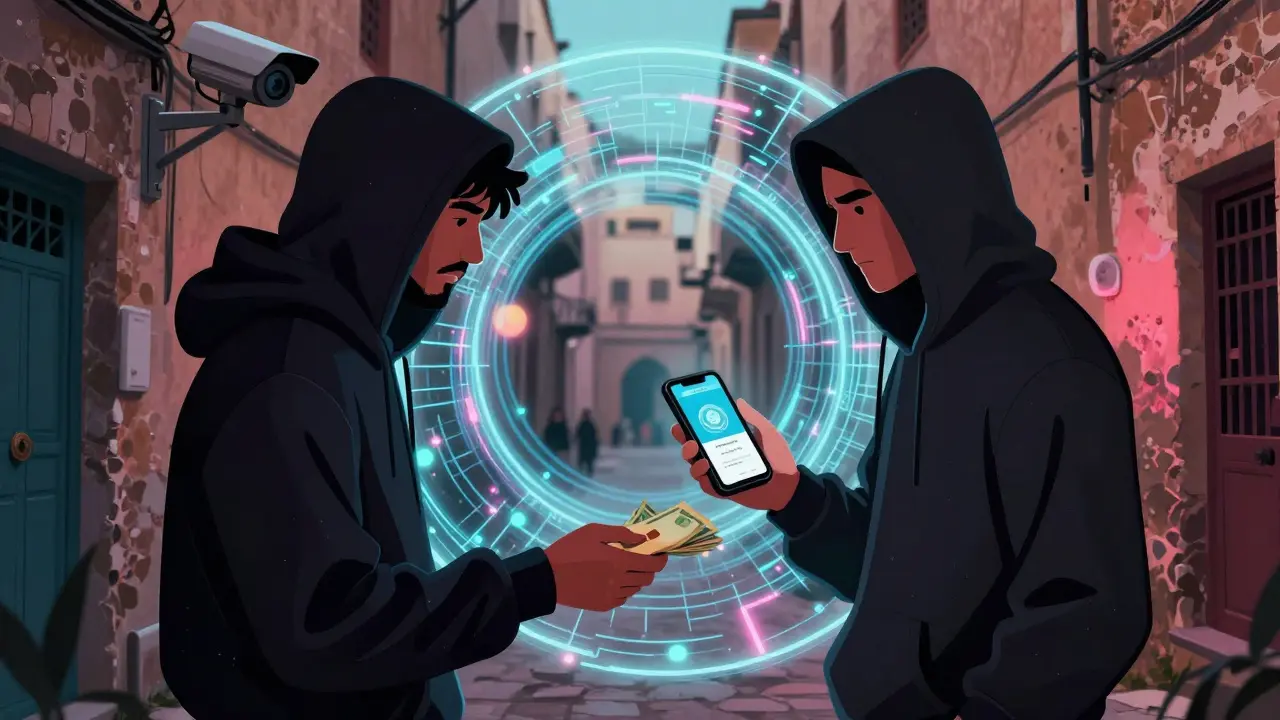
Since no licensed exchanges are allowed to operate within the country, traders have turned to decentralized and peer-to-peer (P2P) methods. The primary goal is to bypass the government's internet filters and banking blocks. To do this, most users rely on VPN (Virtual Private Networks) to access global platforms that would otherwise be blocked by Tunisian ISPs.
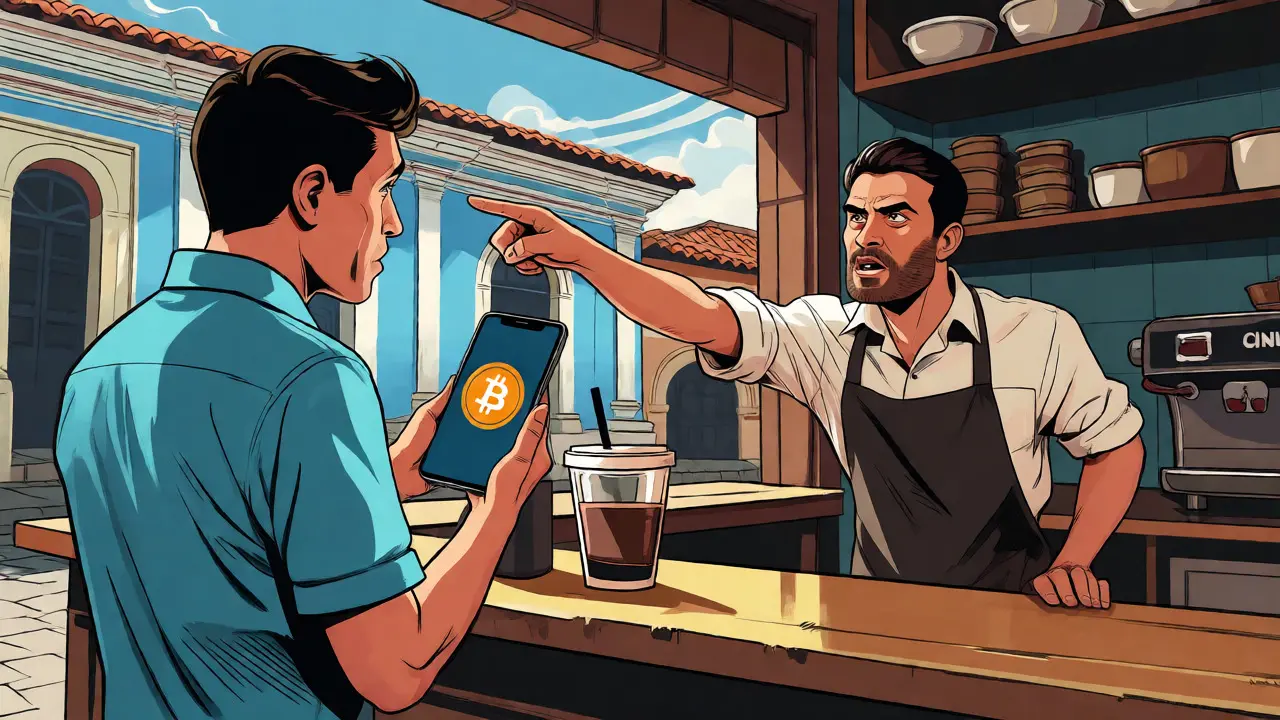
The most common way to buy or sell crypto in Tunisia is through Binance P2P, a peer-to-peer marketplace that allows users to trade directly with one another. Because banks automatically flag and block any transaction labeled "crypto," traders have had to get creative. They often use vague descriptions for bank transfers or move to cash-on-delivery style hand-offs to avoid triggering an alert at their local bank branch.
| Category | Preferred Entities | Primary Use Case |
|---|---|---|
| P2P Platforms | Binance P2P, LocalBitcoins | Buying/Selling without a central exchange |
| Top Assets | Bitcoin, Ethereum, USDT | Store of value and stable trading pairs |
| External Exchanges | MEXC, KuCoin, OKX, Gate.io | Advanced trading and altcoin access |
| Privacy Tools | VPN Services | Bypassing government IP blocks |
The High Price of Trading: Legal and Financial Risks
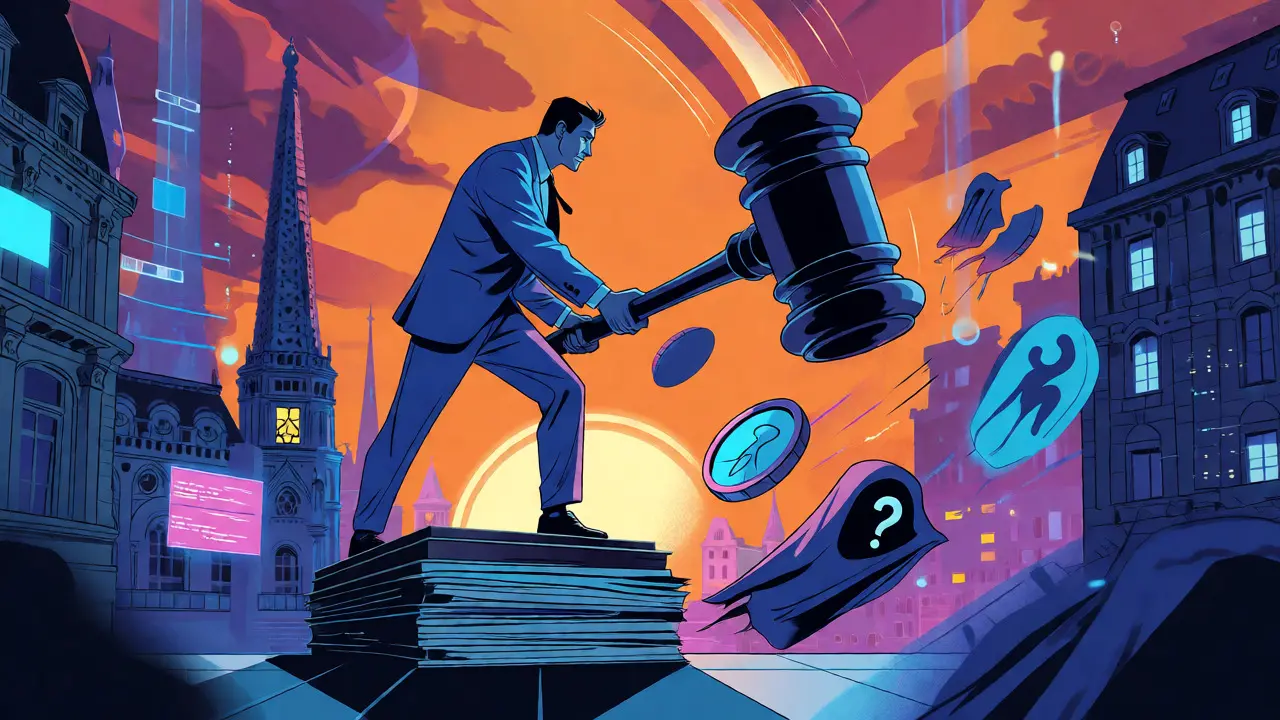
Trading in the shadows isn't without severe consequences. The Tunisian legal system doesn't view this as a minor infraction. There are documented cases, including a teenager who faced imprisonment in 2021 for simply running a small-scale exchange. When the government decides to make an example of someone, the penalties can be swift and harsh.
Beyond jail time, the financial risks are immediate. Tunisian banks employ monitoring systems that flag suspicious patterns. If a bank suspects you are converting Tunisian Dinar (TND) into digital assets, they can freeze your account instantly. Once an account is flagged, the user often finds themselves in a legal battle to prove the source of their funds, often with no legal protection since the activity itself is banned.
Furthermore, the reliance on P2P trading opens the door to scams. Without a legal framework to protect buyers and sellers, a "trusted" trader can simply vanish with the funds, leaving the victim with no recourse. You can't exactly call the police to report a stolen Bitcoin when owning Bitcoin is a crime.
The Economic Brain Drain
One of the most damaging effects of this prohibition isn't the loss of tax revenue, but the loss of talent. Tunisia has a vibrant community of developers and entrepreneurs, but many are fleeing. When you can't legally build a DeFi project or launch an NFT marketplace in your home country, you move. This has led to a significant "brain drain," with experts migrating to crypto-friendly hubs in Canada or Switzerland.
While some stay and pivot toward Blockchain applications-like supply chain management or secure voting-that don't involve currency, the innovation gap is widening. The country is effectively banning its own youth from participating in the next generation of financial technology.

Is a Legal Shift on the Horizon?
There are signs that the government is starting to realize that prohibition doesn't equal elimination. Parliamentary committees have recently discussed draft bills that could decriminalize the mere possession of cryptocurrency. The idea is to move from a total ban to a licensing regime where the state can actually oversee and tax the activity.
The Tunisian Financial Analysis Committee (CTAF) already enforces strict Anti-Money Laundering (AML) and Know Your Customer (KYC) rules for traditional finance. If the government manages to integrate these existing checks into a crypto licensing framework, it could bridge the gap between the underground market and the formal economy.
Is it illegal to own Bitcoin in Tunisia?
Yes, according to the Central Bank of Tunisia's 2018 ban, all cryptocurrency transactions are prohibited. While possession is harder to prove than trading, any activity involving the exchange of fiat for crypto is legally risky and can lead to prosecution.
How do Tunisians actually trade crypto?
Most use P2P platforms like Binance P2P and rely on VPNs to hide their location from government filters. They often use alternative payment methods or cash to avoid having their bank accounts flagged for crypto-related activity.
Can my bank account be frozen for crypto trading?
Yes. Tunisian banks monitor transactions for patterns that suggest cryptocurrency trading. If they detect such activity, they can freeze your funds and report the transaction to the authorities.
What are the safest coins for traders in Tunisia?
While no coin is "safe" legally, traders prefer Bitcoin for value and USDT (Tether) for stability, as these are the most liquid assets on P2P markets, making it easier to exit a position quickly if needed.
Will the laws change soon?
There are ongoing discussions in parliament about decriminalizing possession and creating a licensing system. However, no official law has been passed yet, and the current ban remains in full effect.
Next Steps for the Tech Community
For those looking to engage with blockchain without risking jail time, focusing on non-currency applications is the safest bet. Developing tools for logistics, healthcare records, or government transparency doesn't usually trigger the same legal red flags as trading tokens. Until the BCT officially opens the door to a regulated market, the safest path is to separate the technology (Blockchain) from the asset (Cryptocurrency).
Abhinav Chaubey
April 21, 2026 AT 07:43Typical. These countries try to play catch-up while their governments act like it is the 19th century. In India, we have our own struggles with taxation and regulation, but at least we are not treating a teenager like a high-level criminal for running a basic exchange. This is exactly why the West keeps talking about 'developing' nations-because the leadership refuses to understand basic economics. You cannot ban a mathematical protocol. It is logically impossible and honestly embarrassing for the BCT.
Luke George
April 22, 2026 AT 17:08The ban is just a front. They don't care about the coins, they care about the control. It is all about the CBDC transition. Once they ban the private stuff and push everyone into a government-controlled digital coin, they will have a perfect ledger of every single thing you buy, where you go, and who you talk to. It is the same playbook being used globally to implement a social credit system. Don't be fooled by 'licensing'-that is just a way to register you in their database before they flip the switch.
Anna Grealis
April 23, 2026 AT 16:49exactly what i thoguht... the govment just wants to track evrything through those cbdcs. they wont let us have real money
siddharth narula
April 24, 2026 AT 22:56One must contemplate the moral dichotomy of seeking liberation through a medium that inherently invites the risk of state persecution. It is a tragedy that the pursuit of financial autonomy leads to such precarious legal standings 😔. We must ask ourselves if the volatility of the asset justifies the volatility of one's freedom. True wealth is not found in a digital ledger, but in the peace of a clear conscience and a law-abiding life 🕊️.
Keri Pommerenk
April 26, 2026 AT 16:13sounds like a really tough spot for the developers there