Most people searching for Agilavetri Groups are trying to figure out if this new coin is a hidden gem or just another risky microcap. The short answer? It’s a very early-stage BEP-20 token on the BNB Smart Chain with a lot of marketing hype but very little verifiable data to back it up. If you’re considering buying AVG, you need to understand that the numbers you see on different websites might not even match each other.
Quick Summary / Key Takeaways
- Agilavetri Groups (AVG) is a BEP-20 cryptocurrency token launched in 2025 on the BNB Smart Chain.
- The maximum supply is fixed at 1 billion tokens, but circulating supply data conflicts wildly across trackers (ranging from 0 to 700 million).
- Liquidity is extremely thin, with daily trading volumes often reported as $0 or under $20,000 depending on the source.
- No named founders, audited smart contracts, or major exchange listings have been publicly confirmed yet.
- High risk profile due to data inconsistencies and lack of community traction compared to established BNB ecosystem assets.
What Exactly Is Agilavetri Groups?
At its core, Agilavetri Groups is a digital asset built to operate on the BNB Smart Chain. It uses the BEP-20 standard, which is essentially Binance’s version of Ethereum’s ERC-20 protocol. This means it benefits from the speed and low costs associated with the BNB network. According to project descriptions found on aggregators like Blockspot.io and CoinCarp, AVG aims to be a "next-generation digital currency" focused on fast peer-to-peer payments and decentralized finance (DeFi) utility.
The project claims to support an "AVG Ecosystem" that includes DeFi tools, NFT marketplaces, Web3 commerce, and gaming. However, unlike major projects that list specific partners or live applications, AVG’s public materials mostly stick to high-level goals. You won’t find a detailed whitepaper or a team roster with LinkedIn profiles easily available in public search results. This opacity is a red flag for many cautious investors who prefer transparency before committing funds.
Tokenomics and Supply Confusion
Here is where things get tricky. While every source agrees that the maximum supply is 1,000,000,000 AVG, they disagree significantly on how much is actually in circulation. This discrepancy matters because it directly affects the market cap and your potential return on investment.
| Source | Circulating Supply | Reported Price (USD) | 24h Volume |
|---|---|---|---|
| CoinMarketCap | 10 Million (Self-reported) | $9.19 | $36.38 |
| CoinCarp | 700 Million | $0.48 | $17,129 |
| Binance / LiquidityFinder | 0 | $0.52 | $0.00 |
Look at that table. One site says only 1% of tokens are circulating, while another says 70%. One price is nearly ten times higher than the other. This usually happens when a token has very few active markets and poor data indexing. If you buy based on the $9.19 price but sell on a platform tracking the $0.52 price, you could face massive slippage or liquidity issues. Always check the contract address directly on BscScan to verify holder counts yourself.

Technical Details and How to Hold AVG
Tech-wise, AVG doesn’t do anything revolutionary. It rides on the BNB Smart Chain, which processes blocks every ~3 seconds. This makes transfers fast and cheap, often costing less than $0.10 per transaction. The official contract address is 0x6df337a7b2803e6523cae85b6852dd6319023e51.
If you want to hold AVG, you’ll need a wallet compatible with the BNB Chain. Here’s how to set it up:
- Install a wallet like MetaMask, Trust Wallet, or Binance Chain Wallet.
- Add the BNB Smart Chain network manually if it isn’t pre-loaded (Chain ID: 56, RPC URL: https://bsc-dataseed.binance.org).
- Go to the "Import Token" feature in your wallet.
- Paste the AVG contract address listed above.
- Your AVG balance should now appear if you hold any.
To buy it, you typically swap BNB or a stablecoin like USDT on a decentralized exchange (DEX). Since centralized exchanges haven’t widely listed AVG yet, DEXs like PancakeSwap are likely the primary venues. But remember: low volume means high slippage. A trade of even $500 could move the price noticeably.
Risk Factors and Red Flags
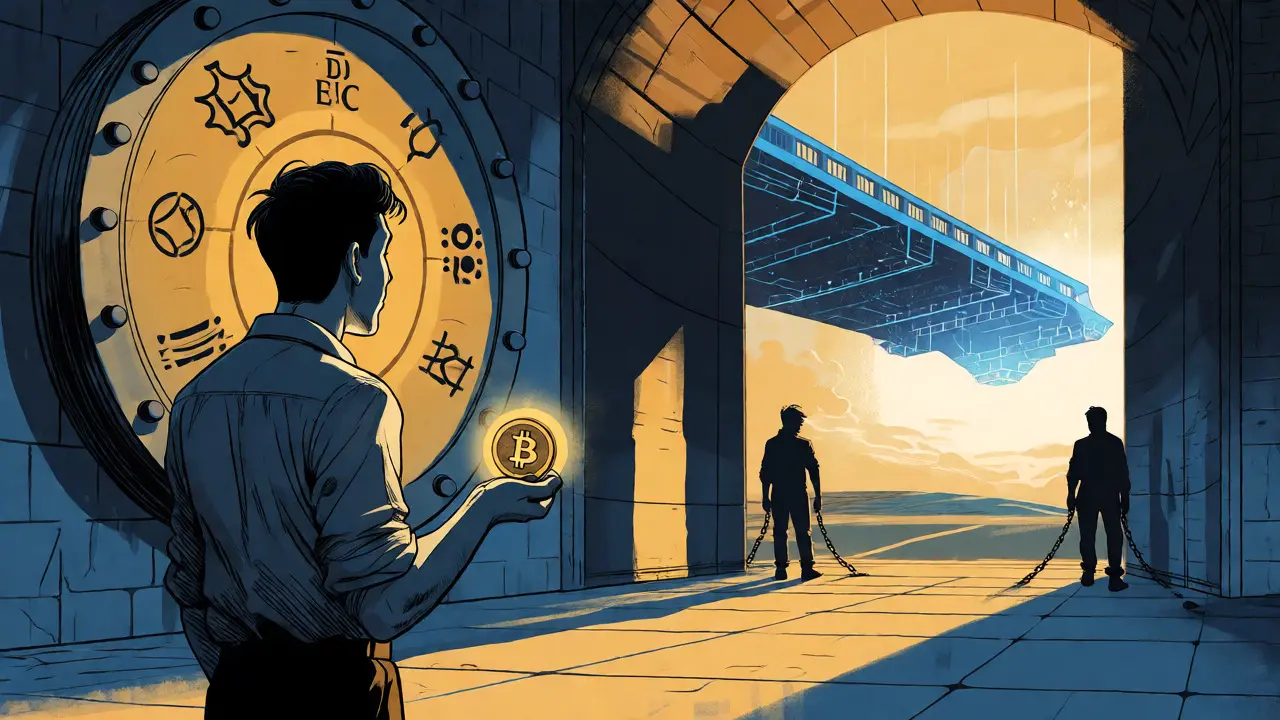
Let’s be honest: AVG carries significant risk. First, there’s no publicly named development team or corporate entity backing the project. In crypto, anonymity isn’t always bad, but combined with low liquidity, it increases the chance of a "rug pull." Second, there are no known smart contract audits from reputable firms like CertiK or Trail of Bits. Without an audit, you’re trusting the code blindly.
Third, the community footprint is tiny. Search Reddit, Twitter, or YouTube, and you’ll find very little organic discussion about Agilavetri Groups. Most mentions come from automated aggregator sites rather than real users sharing experiences. Compare this to established BNB tokens like CAKE or BNB itself, which have millions of holders and deep liquidity. AVG is currently ranked around #5,000-#8,000 by market cap, placing it firmly in the microcap category.
Finally, regulatory uncertainty looms over all unregistered tokens. The SEC and ESMA have been cracking down on projects that promise profits without clear utility. Since AVG’s utility claims are still largely aspirational, it operates in a gray area legally.
Is AVG Worth Buying in 2026?
That depends entirely on your risk tolerance. If you’re looking for a safe, blue-chip asset, look elsewhere. BNB and Ethereum remain the safer bets for long-term holding. But if you enjoy high-risk speculation and believe in the potential of the AVG Ecosystem, you might allocate a small percentage of your portfolio-money you can afford to lose completely.
Before you buy, do your own homework:
- Check BscScan for the actual number of unique holders. If it’s close to 1, that’s a huge centralization risk.
- Verify the liquidity pool depth on the DEX where you plan to trade.
- Follow the official website (avgcoin.org) for roadmap updates, but treat them with skepticism until they’re delivered.
Frequently Asked Questions
What is the contract address for Agilavetri Groups?
The BEP-20 contract address for AVG is 0x6df337a7b2803e6523cae85b6852dd6319023e51. Always double-check this address on multiple sources before sending funds to avoid scams.
Which blockchain does AVG use?
AVG operates on the BNB Smart Chain (also known as BSC or BNB Chain). It follows the BEP-20 token standard, allowing it to interact with wallets and DEXs compatible with the Binance ecosystem.
Why do different websites show different prices for AVG?
Price discrepancies occur because AVG trades on very few markets with low liquidity. Different data aggregators may track different order books, stale prices, or misconfigured contract mappings. Always verify the price on the actual trading pair interface before executing a large trade.
Has Agilavetri Groups been audited?
As of mid-2026, there are no widely publicized smart contract audits from major security firms linked to the project’s main channels. Investors should assume the contract is unaudited unless official proof is provided on their website or social media.
Where can I buy AVG coin?
Currently, AVG is primarily traded on decentralized exchanges (DEXs) within the BNB Chain ecosystem, such as PancakeSwap. Centralized exchange listings are limited or non-existent. You will need BNB or a stablecoin to perform the swap.

Alan Hawkins
August 28, 2026 AT 13:56Good summary. The supply discrepancy is the biggest issue here.
Steve Sulley
August 30, 2026 AT 10:05everyone is so scared of risk lol
if you look at the big picture, all crypto is a gamble anyway.
these people just dont understand the philosophy of decentralization yet.
they are stuck in the old world thinking banks are safe.
which they arent, as we saw in 2008.
so why fear this one token?
it is just a new tool for the future.
the ones who win are the ones who take chances.
the rest are sheep following the herd.
typical mindset of the masses.
you need to think outside the box.
or stay poor forever.
my advice is simple: buy low, sell high, repeat.
don't overthink it with all these audits and stuff.
just trust the code.
Linda Jevne
September 1, 2026 AT 01:59It feels like trying to navigate a foggy forest without a map.
The data inconsistencies are almost poetic in their chaos.
One tracker sees a ghost, another sees a giant.
Which reality do we choose?
Perhaps the truth lies somewhere in the murky middle.
Or perhaps there is no truth, only liquidity.
It makes me wonder if the project is even real.
Or just a mirage created by algorithmic echoes.
We are all searching for signal in the noise.
But sometimes the noise is the only thing that exists.
A beautiful, terrifying ambiguity.
I hope someone finds the anchor.
Until then, we drift.
Laine Van Sickle
September 2, 2026 AT 03:07honestly i think this whole thing is just a scam waiting to happen.
who would trust a coin with no team?
its so irresponsible to even talk about it.
people should stop wasting time on microcaps.
just buy bitcoin or something stable.
why risk your money on this nonsense?
it makes me sick seeing all this hype.
we need more regulation asap.
until then its just casino gambling.
good luck to anyone holding this bag.
probably going to zero soon.
very sad state of affairs.
Martha Packard
September 2, 2026 AT 04:26You're all missing the point entirely.
Why care about the team if the tech works?
Stop being such sheep.
This is a chance for the common man to get rich.
Don't let the elites scare you off.
Your caution is just cowardice dressed up as wisdom.
Look at the volume, it's growing.
Maybe not fast enough for your slow brains, but it's there.
Stop crying about audits.
Just buy and hold.
That's all there is to it.
Simple as pie.
Or maybe you're too stupid to understand.
Either way, you'll miss out.
Enjoy your poverty while you can.
Because this will moon eventually.
Trust me.
Jarnail Singh
September 2, 2026 AT 05:53Very interesting analysis indeed 🇮🇳
However, one must consider the broader geopolitical implications of such decentralized finance instruments which often operate outside the purview of traditional regulatory frameworks that many developed nations have meticulously crafted over decades of financial evolution.
While the BNB chain offers certain efficiencies, it is crucial to remember that true financial sovereignty lies in the hands of those who control the underlying infrastructure, and often, that is not where one might expect it to be, especially when considering the dominance of Western institutions in setting global standards for digital assets.
Therefore, while AVG may seem like an opportunity, it is also a reflection of the fragmented nature of our modern economic landscape, where borders matter less than network effects, yet national interests still play a pivotal role in determining which technologies gain traction and which fade into obscurity.
So, proceed with caution, my friend, for the winds of change are blowing from many directions, and not all of them are favorable to the average investor seeking stability and growth in an increasingly volatile market environment.
Jane yuan
September 3, 2026 AT 18:02US investors should watch out for SEC risks here.
Kevin Payette
September 5, 2026 AT 04:43Typical.
Everyone acts smart until the rug pulls.
Then they cry for help.
Pathetic.
Ian Munro
September 5, 2026 AT 23:53Fair points. The lack of verifiable data is concerning.