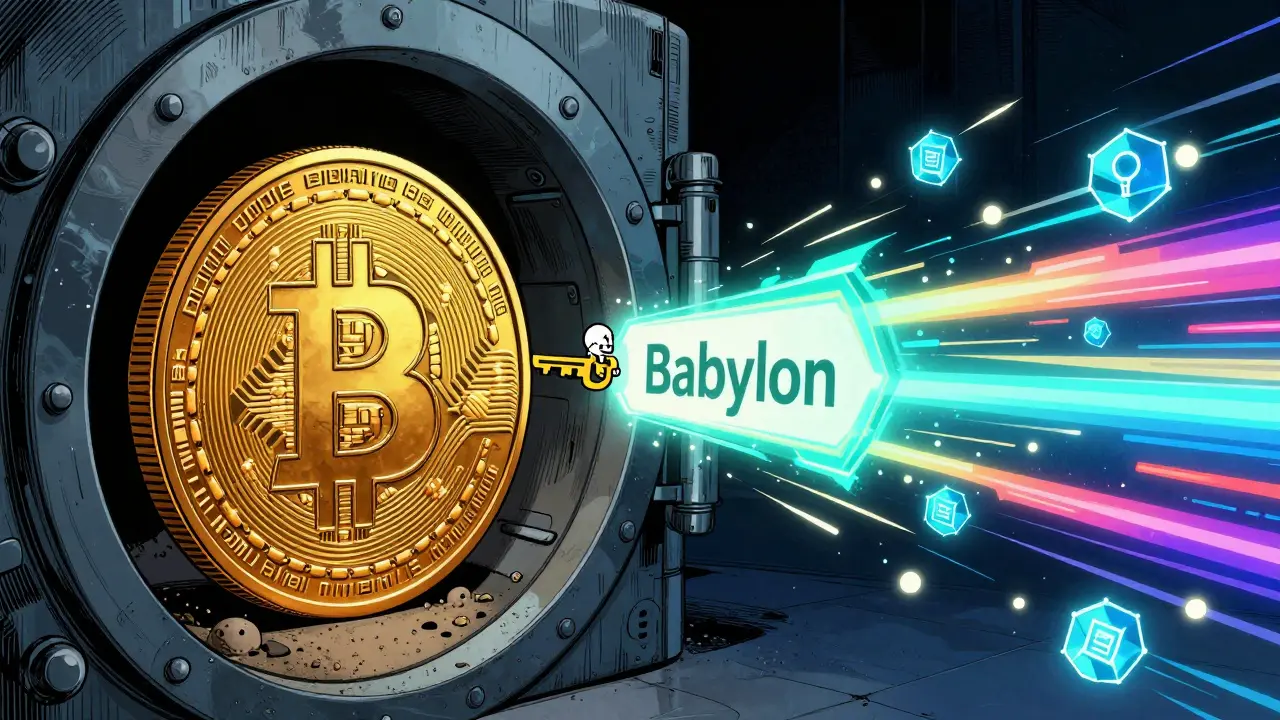
Have you ever wondered why Bitcoin, despite holding the largest market cap in crypto, sits idle while other blockchains race to build DeFi ecosystems? The answer lies in a technical gap: Bitcoin’s Proof-of-Work design makes it hard to use for securing other networks without complex, risky bridges. This is exactly where Babylon (BABY) comes in.
If you’ve seen the ticker "BABI" floating around social media, stop right there. That’s likely a typo or a scam. The legitimate project is Babylon (BABY), a protocol that lets Bitcoin holders stake their BTC to secure Proof-of-Stake chains without giving up custody of their coins. Founded in 2022 by Stanford Professor David Tse and Dr. Fisher Yu, Babylon isn’t just another altcoin; it’s an infrastructure layer designed to unlock the trillions of dollars in dormant Bitcoin value.
The Core Problem: Why Bitcoin Needs Babylon
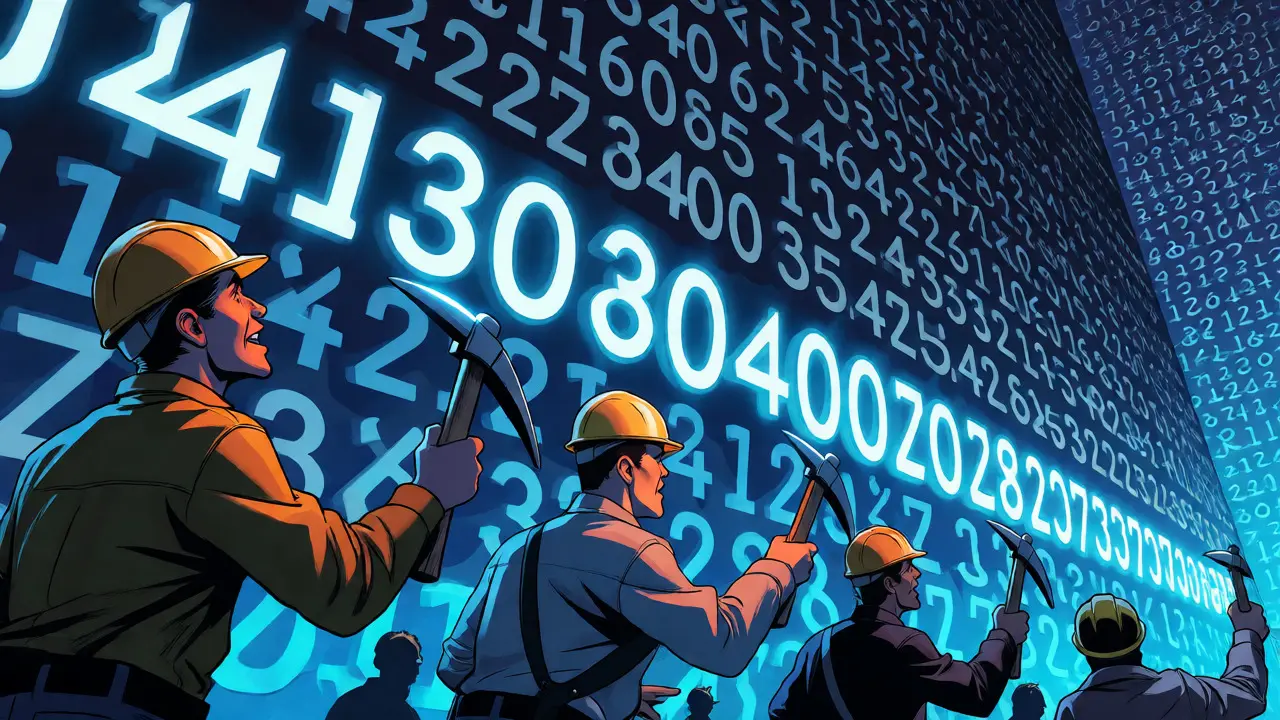
Bitcoin is incredibly secure, but it’s also slow and expensive to program. Most decentralized applications run on faster chains like Ethereum, Solana, or Cosmos, which use Proof-of-Stake (PoS). These chains need economic security to prevent attacks, but they often lack the massive market capitalization that Bitcoin has.
Traditionally, if you wanted to use your Bitcoin in these ecosystems, you’d have to wrap it into tokens like WBTC. This introduces custodial risk-you’re trusting a centralized company not to steal your funds. Babylon solves this by creating a non-custodial bridge. It allows Bitcoin holders to stake their native BTC directly from their wallets to secure PoS networks. In return, these networks become "Bitcoin Secured Networks" (BSNs), inheriting a fraction of Bitcoin’s immense hash power and economic weight.
How Babylon Genesis Works
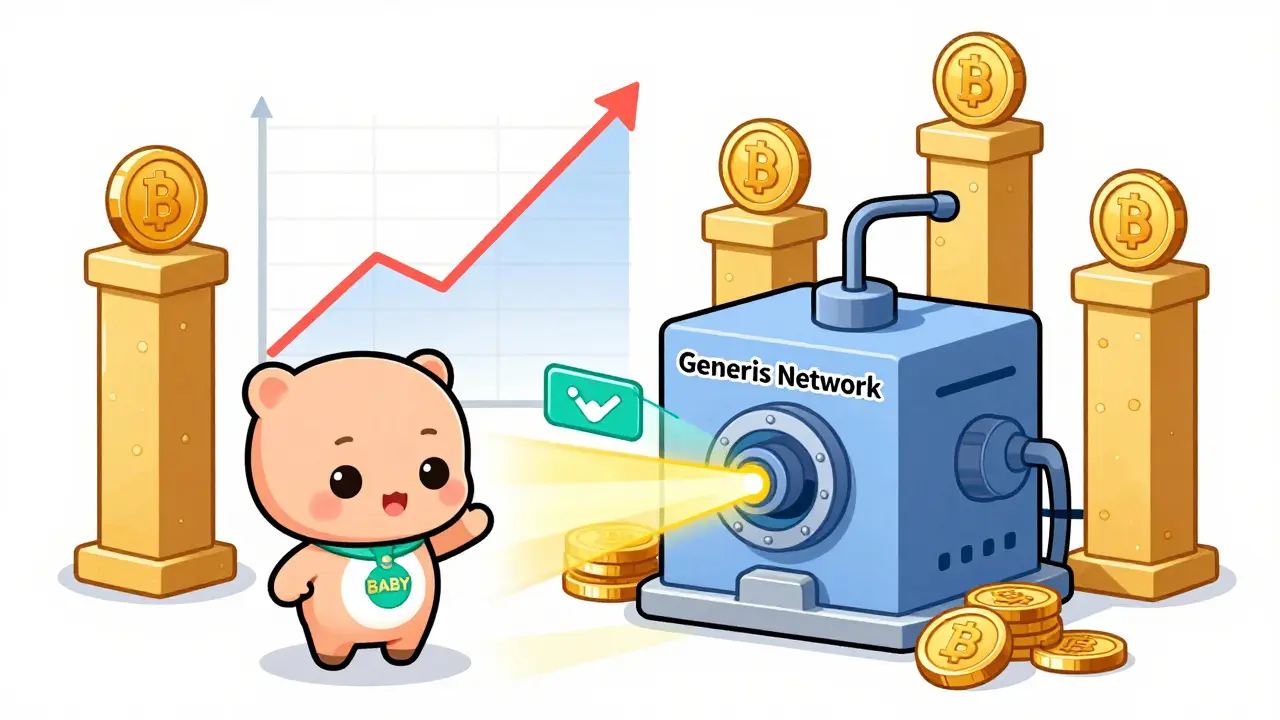
To make this happen, Babylon launched its own blockchain called Babylon Genesis. Think of it as the coordination layer between Bitcoin and the rest of the crypto world. It doesn’t replace Bitcoin; it extends it.
The system relies on two main mechanisms:
- Bitcoin Timestamping: PoS chains can write verifiable timestamps onto the Bitcoin blockchain. This creates an immutable record that anchors their state to Bitcoin’s security.
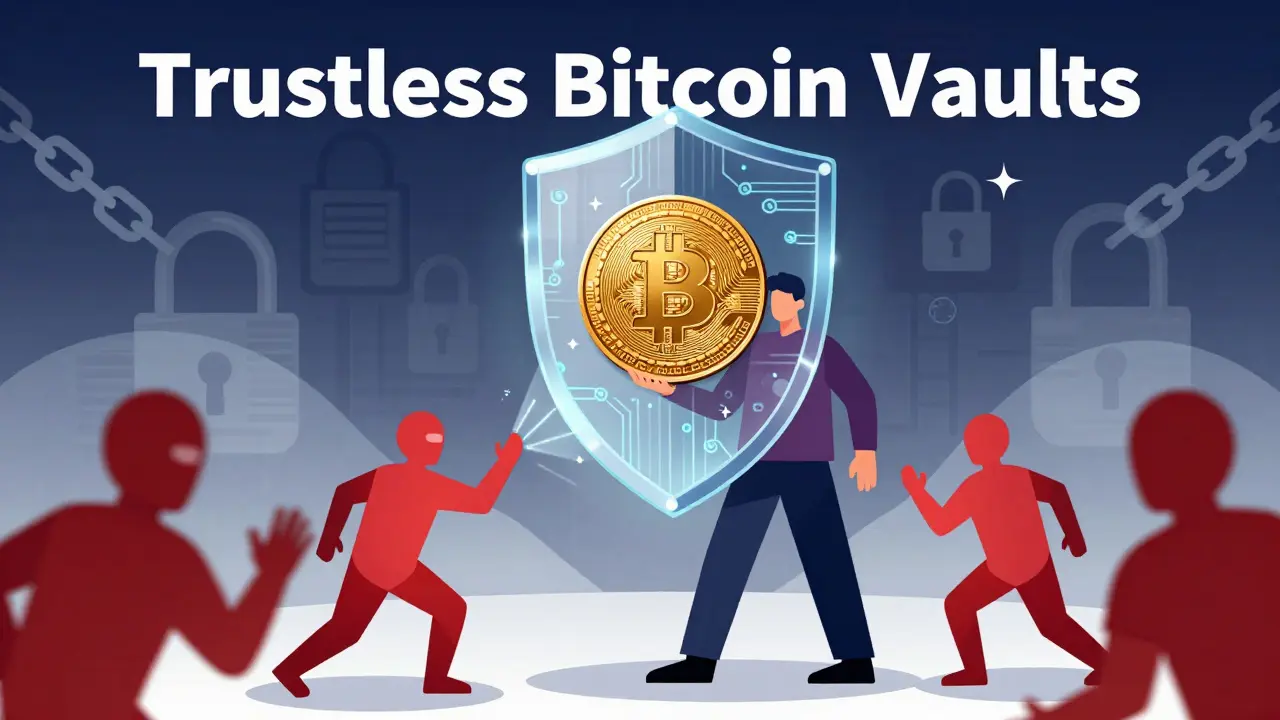
- Bitcoin Staking: Users lock their BTC in "Trustless Bitcoin Vaults." These are smart contracts on Bitcoin that enforce rules without a middleman. If a validator on a connected PoS chain acts maliciously, the vault can slash (confiscate) the staked BTC as punishment.
This architecture means you never leave your Bitcoin wallet. You don’t wrap your coins. You simply sign transactions that signal your intent to stake, and the protocol handles the rest via Bitcoin scripts.
Understanding the BABY Token
So, what does the BABY token actually do? It’s easy to confuse it with Bitcoin, but they serve different roles. While BTC provides the heavy economic collateral, BABY is the fuel for the Babylon Genesis network.
| Attribute | Value / Description |
|---|---|
| Ticker | BABY |
| Total Initial Supply | 10,000,000,000 (10 Billion) |
| Maximum Supply | Unlimited (Inflationary) |
| Annual Inflation Rate | 5.5% |
| Primary Use Cases | Gas fees, Governance, Validator Rewards |
| Denomination Unit | ubbn (1 BABY = 1,000,000 ubbn) |
Here is how BABY functions in practice:
- Gas Payments: Every transaction on the Babylon Genesis chain requires BABY to pay for computation. This ensures the network remains resistant to spam attacks.
- Governance: Holders of BABY vote on protocol upgrades and parameter changes. Note that BTC stakers do not govern the chain; control stays with BABY holders to keep the ecosystem aligned.
- Rewards: Both BTC stakers and BABY stakers receive rewards in BABY. This dual-staking model incentivizes long-term participation from both communities.
It’s crucial to note that Babylon explicitly states BABY is not intended as an investment product. Its value is derived from its utility within the network. However, like all crypto assets, its price fluctuates based on market demand.
Tokenomics and Supply Dynamics
One of the most critical aspects for any investor to understand is supply. Unlike Bitcoin, which has a hard cap of 21 million, BABY has an unlimited maximum supply. This might sound alarming, but it’s a common feature in inflationary PoS models designed to fund security.
The annual inflation rate is set at 5.5%. This new issuance goes primarily to validators and stakers. Why? Because you need to pay people to secure the network. If the reward is too low, validators will leave, and the chain becomes vulnerable. If it’s too high, holders suffer from dilution.
Babylon started with a total initial supply of 10 billion BABY. As of recent data snapshots, the circulating supply hovers between 2.3 billion and 3.7 billion, depending on the exchange reporting it. The difference between circulating and total supply represents tokens locked in vesting schedules for the team, investors, and ecosystem funds.
This inflationary model means that for BABY’s price to appreciate significantly over time, the demand for gas fees and governance participation must outpace the 5.5% annual increase in supply. If adoption stalls, holders face steady dilution.
Market Performance and Volatility
Crypto markets are notoriously volatile, and BABY is no exception. At its peak in April 2025, BABY reached an all-time high of approximately $0.1649. Since then, like many mid-cap altcoins, it has experienced significant drawdowns.
Recent data from aggregators like CoinGecko and CryptoRank shows BABY trading in the $0.014-$0.018 range. While daily trading volumes occasionally spike above $100 million-indicating strong liquidity and interest-the market capitalization remains relatively small, often hovering between $50 million and $70 million. This places it firmly in the mid-to-small-cap category, meaning it carries higher risk than established giants like Ethereum or Solana.
You can trade BABY on major exchanges including Binance, Kraken, and Bitget. Pairs like BABY/USDT and BABY/USDC provide deep liquidity. However, always check the specific volume on your chosen exchange, as prices can vary slightly between platforms due to arbitrage delays.
Risks You Must Consider
Before buying or staking, let’s talk about what could go wrong. No technology is perfect, and Babylon operates in a high-stakes environment.
- Smart Contract Risk: Although Babylon uses Bitcoin scripts to minimize trust assumptions, the code is complex. Bugs in the timestamping or staking modules could theoretically lead to losses.
- Adoption Risk: Babylon’s value proposition depends on other PoS chains choosing to be "Bitcoin Secured." If major chains ignore Babylon, the demand for its security services drops, reducing the utility of BABY.
- Inflation Dilution: With a 5.5% annual inflation and unlimited max supply, long-term holders must ensure that network usage grows fast enough to offset the increasing token count.
- Regulatory Uncertainty: The SEC and other global regulators are still defining the rules for staking and token classification. Changes in regulation could impact how exchanges list BABY or how users access staking rewards.
Who Is Babylon For?
Babylon isn’t for everyone. If you’re looking for a simple buy-and-hold asset with no technical involvement, BABY might be too complex. However, it’s ideal for:
- Bitcoin Maximalists: Who want to put their BTC to work earning yield without leaving the Bitcoin ecosystem or using wrapped tokens.
- DeFi Developers: Building on PoS chains who need additional security layers to protect their protocols from attacks.
- Risk-Tolerant Traders: Who understand the volatility of mid-cap infrastructure tokens and believe in the narrative of Bitcoin becoming a foundational security layer for all crypto.
In short, Babylon (BABY) represents a bold attempt to merge the security of Bitcoin with the flexibility of modern smart contract platforms. It’s a high-risk, high-reward play on the future of cross-chain interoperability. Do your own research, understand the tokenomics, and never invest more than you can afford to lose.
Is BABY the same as BABI?
No. The correct ticker for the Babylon protocol token is BABY. "BABI" is likely a typo or a reference to a different, unrelated asset. Always verify the contract address and ticker on official exchanges like Binance or Kraken before trading.
Can I stake my Bitcoin on Babylon without losing custody?
Yes. Babylon uses "Trustless Bitcoin Vaults" which allow you to stake native BTC directly from your wallet. You do not need to wrap your Bitcoin into WBTC or send it to a centralized custodian. Your BTC remains on the Bitcoin blockchain under your control, though it may be locked for a period to enforce slashing conditions.
What is the maximum supply of BABY?
The maximum supply of BABY is unlimited. It has an initial supply of 10 billion tokens and an annual inflation rate of 5.5%, which is used to reward validators and stakers. This differs from deflationary assets like Bitcoin or Ethereum.
Where can I buy BABY token?
BABY is listed on several major cryptocurrency exchanges, including Binance, Kraken, and Bitget. You can typically trade it against USDT or USDC pairs. Always check the current listing status on the exchange website, as availability can change.
Who founded Babylon?
Babylon was founded in 2022 by David Tse, a professor at Stanford University known for his work in information theory, and Dr. Fisher Yu. Their goal was to create a mechanism for native Bitcoin staking that enhances the security of other blockchains.
Does Babylon compete with Wrapped Bitcoin (WBTC)?
Yes, in terms of utility. WBTC requires you to give up custody of your Bitcoin to a centralized entity. Babylon aims to eliminate this custodial risk by allowing native BTC staking through non-custodial vaults, making it a safer alternative for users who want to utilize Bitcoin in DeFi or security contexts.


Terry Hyland
June 15, 2026 AT 23:01it is just another way for the elites to steal your money. they want you to trust their code instead of holding your own keys. it is all a scam designed to make the rich richer while we lose everything. stay away from this garbage.
Monica Pathammavong
June 17, 2026 AT 10:29actually u dont get it at all. the tokenomics are super complex and ur missing the point about the slashing conditions. its not just staking its about economic security layers. also babbi is a typo lol. read the article before u comment like an idiot. i know how smart contracts work on btc better than u do trust me.
Tim Lefebvre
June 18, 2026 AT 15:53hey there, i think terry is just worried but its true that custodial risk is bad. i have been looking into this and the vaults seem cool because u keep ur btc in ur wallet. its kinda neat how they use scripts to enforce rules without a middleman. hope it works out for everyone involved
Benjamin Eisen
June 20, 2026 AT 03:53i really appreciate the detailed breakdown here. it seems like a promising step for bitcoin utility. i am curious if the inflation rate will stabilize over time or if it stays at 5.5 percent forever. it would be great to see more adoption by other chains to make it truly secure.
Kenneth Riley
June 21, 2026 AT 07:14unlimited supply?? are u kidding me right now. this is absolute trash. why would anyone hold a token with infinite dilution. it is a rug pull waiting to happen. the founders are laughing at us while we buy the dip. total disaster coming for this project mark my words.
ravi mahla
June 23, 2026 AT 03:01oh wow look at kenny getting so dramatic lol. maybe read the part about rewards funding security? it is standard for pos chains. chill out man. i am just happy to see innovation in the space even if some people cant handle volatility. let the market decide bro.
Mark Brunschwiler
June 24, 2026 AT 06:51the essence of value is perception and when perception shifts so does reality. we are all just staking our hopes on digital promises. does the token matter or is it the faith we place in the network that gives it life. i feel a deep connection to the idea of shared security. it speaks to the human need for community and protection against chaos.
Sonya O'Brien
June 24, 2026 AT 08:55i completely agree with the sentiment that this technology could bridge the gap between bitcoin's security and the flexibility needed for modern decentralized applications, which is why i find the concept of non-custodial staking particularly appealing as it mitigates the risks associated with centralized entities holding user funds, and furthermore, the potential for increased liquidity and utility within the broader cryptocurrency ecosystem suggests that this protocol might indeed play a significant role in the future landscape of blockchain interoperability, assuming that regulatory frameworks evolve in a manner that supports such innovations rather than stifling them through excessive bureaucracy or uncertainty.
Charles Pawlikowski
June 26, 2026 AT 02:24make america great again by sticking to real gold and silver. this crypto stuff is made up by globalists to control the economy. keep ur money in american banks where it belongs. :)