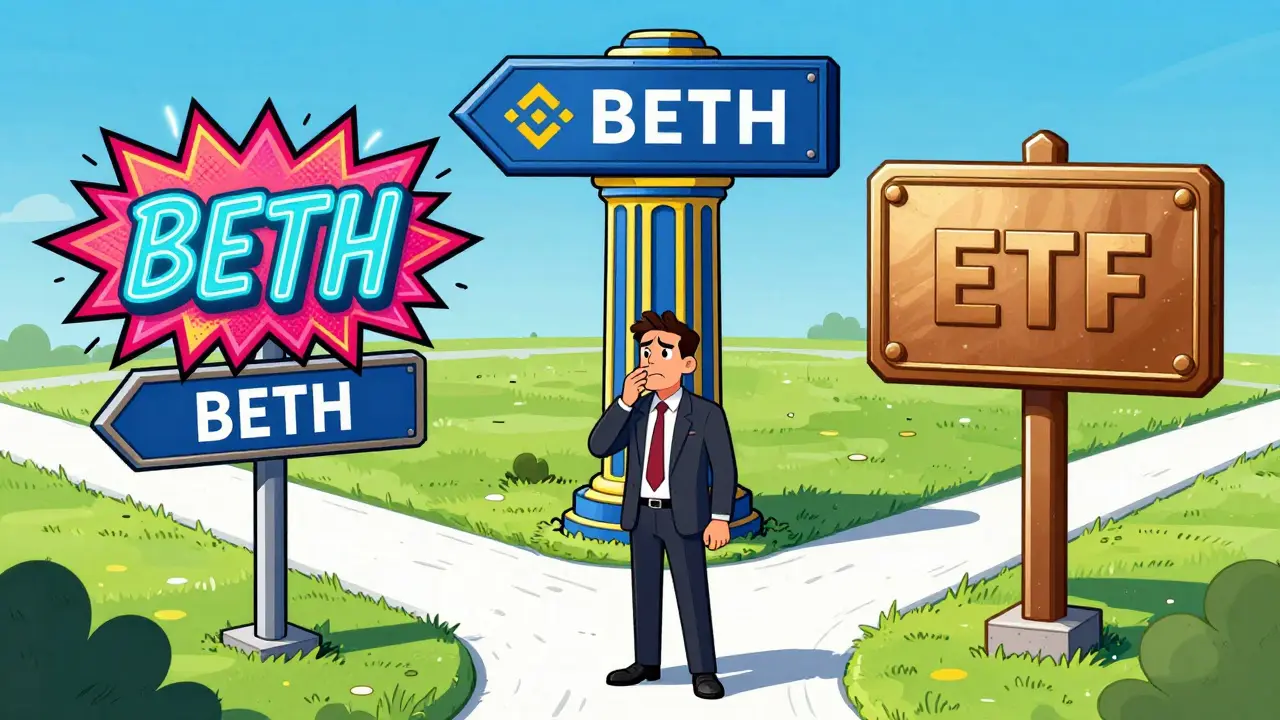
If you've started searching for BETH crypto coin, you've probably already noticed something confusing: there isn't just one "BETH." Depending on where you look, you'll find a speculative meme coin on Solana, a professional staking tool on Binance, or even a traditional investment fund. This is a classic case of ticker symbol overlap, where different projects use the same shorthand, leading many investors to buy the wrong asset by mistake.
Getting these mixed up isn't just a minor error; it's the difference between holding a regulated financial instrument and a high-risk digital collectible. To keep your portfolio safe, you need to know exactly which version of BETH you're dealing with before you hit the "buy" button.
The Quick Breakdown: Which BETH is Which?
Before getting into the weeds, let's clear up the confusion. There are three primary entities using the BETH label. One is designed for gamblers, one for Ethereum enthusiasts, and one for traditional stock investors.
| Feature | Solana BETH | Binance BETH | ProShares BETH ETF |
|---|---|---|---|
| Type | Meme Coin | Wrapped Staking Token | Exchange Traded Fund |
| Network | Solana | Ethereum (Wrapped) | Stock Market (Traditional) |
| Purpose | Community/Speculation | Liquidity for Staking | Market Exposure |
| Risk Level | Extremely High | Moderate (Smart Contract Risk) | Low to Moderate |
The Solana BETH Meme Coin: High Risk, High Noise
First, we have the version of BETH that lives on the Solana blockchain. This is a meme coin inspired by a character from the 'Boys Club' comic series. Unlike institutional tools, this token is entirely community-driven, meaning its value is based on hype and social media trends rather than technical utility.
The tokenomics are straightforward: 95% of the supply is meant for the market, while 5% is set aside for burning and promotion. However, the numbers tell a cautionary tale. After hitting an all-time high of $0.014781, the price collapsed significantly. By late 2025, it was trading around $0.00003060. With a market cap that has dipped as low as $29.3 thousand, this isn't a project for the faint of heart.
If you're trading this version, you'll mostly find it on Raydium, a decentralized exchange (DEX) on Solana. A big red flag for traders here is the liquidity. When 24-hour volume on a main pair is as low as $25, you'll run into massive slippage. This means if you try to sell a few hundred dollars worth of the coin, you might accidentally crash the price further just by exiting your position.
Binance BETH: The Liquid Staking Solution
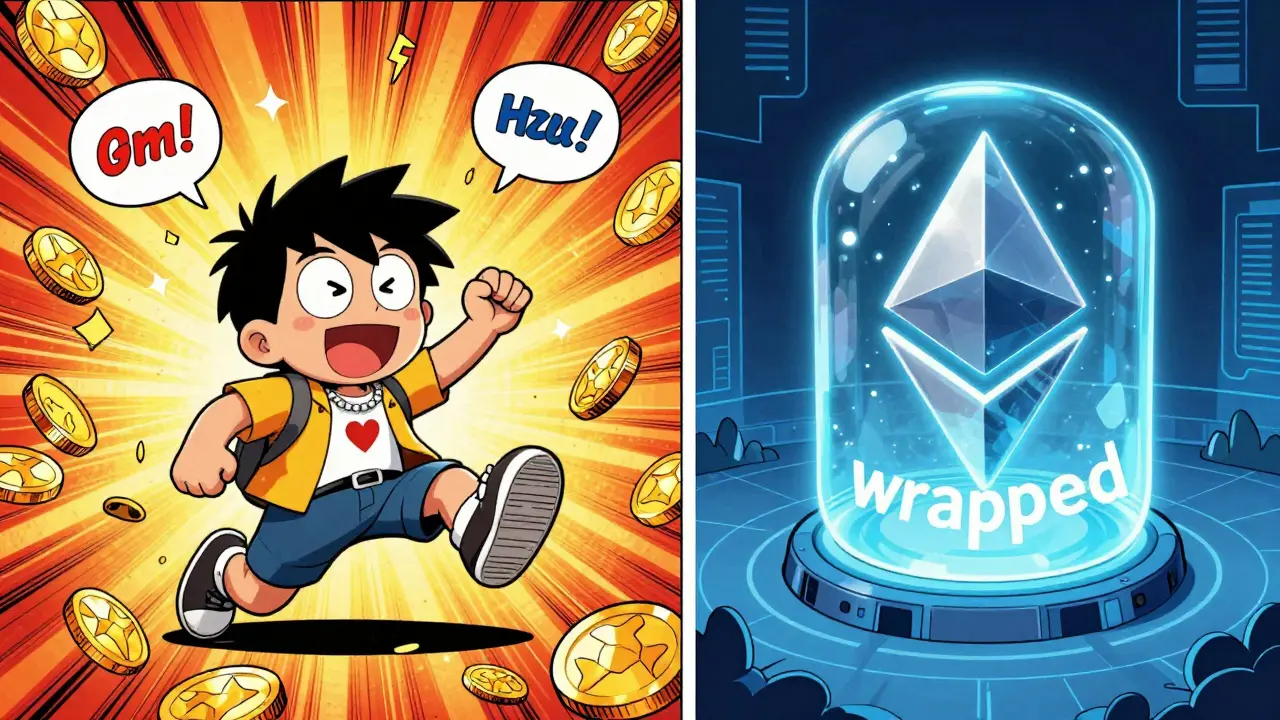
Now we move to a completely different world. Binance BETH is a "wrapped" token. To understand this, you first have to understand Ethereum 2.0. When you stake your Ethereum (ETH) to help secure the network, your coins are typically locked up for a long period-sometimes up to 24 months.
Binance created BETH (Beacon ETH) to solve this "lock-in" problem. When you stake your ETH through Binance, they give you BETH in return. This token maintains a 1:1 parity with ETH, acting as a receipt. Because BETH is liquid, you can trade it or use it in other DeFi applications while your actual ETH remains locked in the staking contract earning rewards.
This version of BETH is an essential tool for the Proof of Stake (PoS) ecosystem. It allows institutional investors to keep their capital moving while still benefiting from the network's validation rewards. It's far more stable than the Solana meme coin because its value is tied directly to the price of Ethereum.
ProShares BETH ETF: Crypto for the Stock Market
Finally, there is the BETH ticker used by ProShares for their Bitcoin & Ether Market Cap Weight ETF. This isn't a coin you hold in a digital wallet at all. It's a regulated financial product traded on traditional stock exchanges.
This ETF provides a weighted exposure to both Bitcoin and Ethereum. It's designed for people who want the price action of the two biggest cryptos without the headache of managing private keys, seed phrases, or worrying about exchange hacks. It's the "safest" way to get BETH exposure, but you lose the ability to stake your assets or interact with decentralized apps.
How to Avoid the "BETH Trap"
So, how do you make sure you're buying the one you actually want? The biggest mistake people make is searching for "BETH" on a generic price tracker and clicking the first result. Here is a simple decision tree to follow:
- Do you want a gamble? Look for the Solana-based BETH on Raydium. Be prepared to lose 100% of your investment.
- Do you want to earn staking rewards? Use the Binance platform and look for BETH within their staking dashboard.
- Do you want a regulated investment for your brokerage account? Search for the ProShares ETF on your stock trading app.
Always check the Contract Address. Every single token on a blockchain has a unique string of letters and numbers. If the contract address on the website doesn't match the one on a reputable aggregator like CoinGecko or CoinMarketCap, you're likely looking at a scam or a different version of the token entirely.

The Long-Term Outlook: Utility vs. Hype
Looking at the trajectory of these three assets, the gap in sustainability is huge. The Solana meme coin is fighting an uphill battle. Most meme projects fail once the initial wave of hype dies down, and with a shrinking market cap and low liquidity, the risk of this project becoming "dead」 is high. Its success depends entirely on the team's ability to launch actual tools or merchandise to give the token a reason to exist beyond a funny comic character.
On the other hand, liquid staking tokens like Binance BETH are growing. As more institutional money enters the crypto space, the demand for ways to stake ETH without locking up capital increases. With billions of dollars already locked in Ethereum 2.0, the utility of wrapped staking tokens is a fundamental part of the future financial system.
Is BETH a safe investment?
It depends entirely on which BETH you mean. The Solana-based BETH is an extremely high-risk meme coin with high volatility and low liquidity. Binance BETH is generally considered safe as it is pegged to Ethereum, though it carries the risk of the Binance platform itself. The ProShares ETF is the most stable as it is a regulated security.
How do I trade Solana BETH?
You will need a Solana-compatible wallet (like Phantom) and some SOL for gas fees. You can then connect your wallet to the Raydium decentralized exchange and swap SOL for BETH using the BETH/SOL trading pair.
Can I convert Binance BETH back to ETH?
Yes, BETH is designed to be redeemable. You can either sell it on the open market for ETH or go through the official Binance redemption process to unlock your original ETH from the staking contract.
Why is the price of Solana BETH so low?
Meme coins often have massive initial supplies and extreme price swings. The decline from its all-time high is typical for speculative assets that lack a strong fundamental utility or a large, sustained user base.
What is the difference between BETH and ETH?
ETH is the native currency of the Ethereum network. BETH (in the Binance context) is a derivative token that represents your staked ETH. While they often trade at a similar price, BETH is a tool used specifically to maintain liquidity while earning staking rewards.
What to do next
If you already own BETH and aren't sure which one it is, check your wallet's network. If it's in a Solana wallet, you've got the meme coin. If it's in a Binance account or an Ethereum wallet, it's likely the staking token. For those looking to enter the market, start by defining your goal: are you looking for a lottery ticket or a steady yield? Your answer will tell you exactly which BETH to ignore and which one to research further.

Amanda Faust
April 11, 2026 AT 13:20everyone knows the ticker overlap is just a way to trap newbies who dont check the contract address because basically if you cant read a block explorer you shouldn't be in crypto
Jessie Tayaban
April 12, 2026 AT 11:22OMG i literally almost did this!! Like I almost bought the solana one thinkin it was the stakinn thing!! Absolute nightmare fuel right there!!!!
ssjuul z
April 12, 2026 AT 11:47Exactly the point! Always do your own research and double check those addresses before jumping in! Keep grinding and stay safe out there! 🚀🔥
Aaliyah BROTHERS
April 12, 2026 AT 11:54Typical globalist scamming!!! They create ten different coins with the same name just to bleed us dry while the elites laugh in their bunkers!!! It's a psychological operation to keep the American patriot confused and broke!!! Wake up people!!!
jennelle williams
April 13, 2026 AT 14:20money is just a tool
be kind to your wallet
Rima Dinar
April 15, 2026 AT 07:58I truly believe that for anyone who is just starting their investment journey, the most important thing is to develop a habit of patience and thorough verification, because while the fast gains of a meme coin might look tempting, the long-term stability offered by liquid staking solutions like the Binance BETH option provides a much more sustainable path toward wealth creation, and I would encourage everyone to spend at least an hour reading the whitepapers of these projects before committing even a single dollar of their hard-earned savings to ensure they aren't falling for a simple naming trap that could cost them their entire portfolio.
Agnessa Dale
April 15, 2026 AT 13:59It's actually really great that we have so many options now, from the high-energy meme coins to the professional ETFs, it just means there is something for everyone regardless of their risk tolerance!