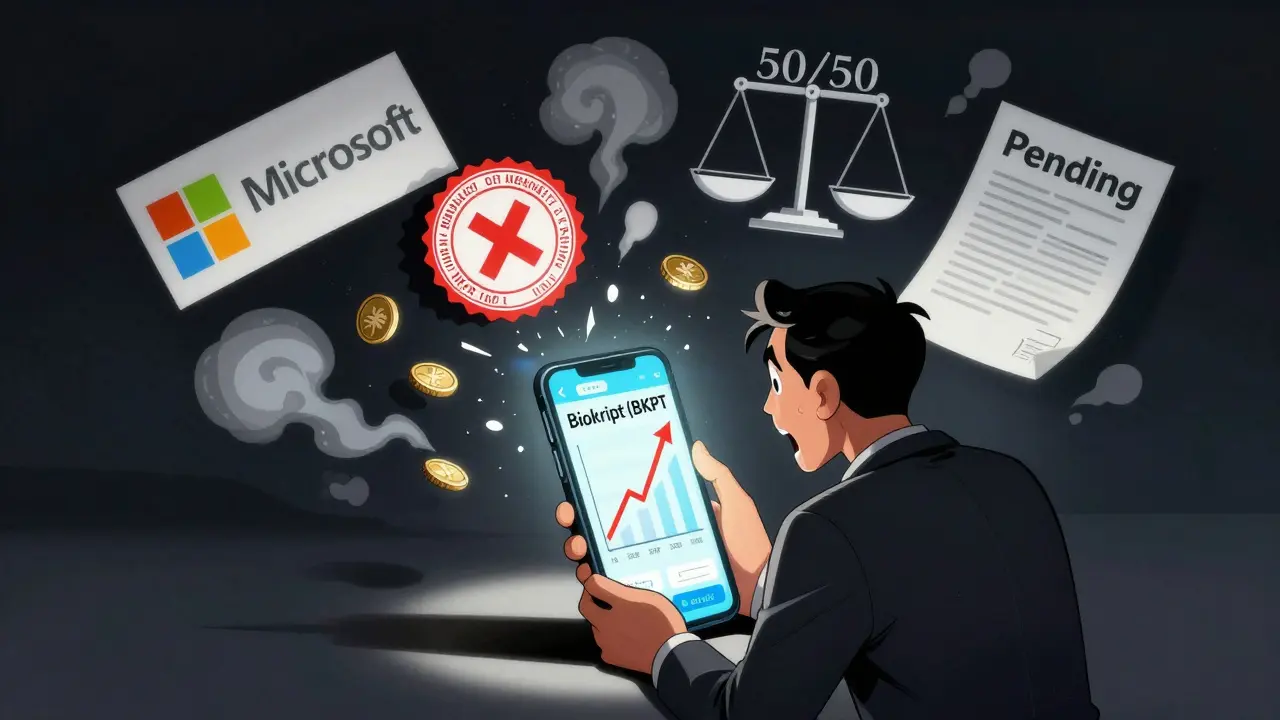
Biokript (BKPT) sounds like it could be the next big thing in crypto. A hybrid exchange. Shariah-compliant. 50/50 profit sharing. Microsoft-backed. Sounds too good to be true? That’s because it is.
Biokript is a token built on the Solana blockchain, promoted as a revolutionary platform that merges centralized and decentralized trading. Its website claims to be the world’s first Shariah-compliant hybrid crypto exchange, with features like AI-driven trade execution, automated sniping, and anti-rug mechanisms. The big hook? Holders get 50% of all trading fees. Sounds fair, right? But here’s what you won’t find on their flashy site: real trading volume, real market value, or real proof that any of this works.
What BKPT Actually Is (And Isn’t)
Biokript (BKPT) is not listed on Binance for trading. That’s not a mistake. Binance, one of the largest exchanges in the world, explicitly states on its own site: "This coin is not listed on Binance for trading and services." That alone should raise red flags. If a token isn’t on Binance, it’s usually because it doesn’t meet basic standards for liquidity, security, or compliance.
The token’s price has collapsed from an all-time high of $0.010586 down to $0.000104 - a 99.02% drop. That’s not a market correction. That’s a death spiral. At this price, even if you bought $1,000 worth of BKPT, your holdings are now worth less than $10. And with a 24-hour trading volume of just $27.86, you won’t find buyers or sellers unless you’re willing to wait days or accept massive slippage.
Even more alarming? Binance reports a market cap and circulating supply of $0. That means, according to the exchange that tracks billions in crypto daily, there’s no actual value backing this token. Not $1 million. Not $10,000. $0.
The "50/50 Profit Share" Myth
The core promise of Biokript is that 50% of all trading fees go to BKPT holders. Sounds generous? Let’s break it down.
If the platform truly generated trading volume, this model might make sense. But with only $27.86 traded in 24 hours, where are the fees coming from? Even if you assume every dollar of volume generates a 0.1% fee (which is high for crypto), that’s $0.02786 in fees. Half of that? $0.0139. That’s less than a penny. And who gets it? No one - because there’s no mechanism to distribute it. No smart contract audits. No on-chain records. No transparency.
Compare that to BNB, where Binance burns 20% of quarterly profits to reduce supply and increase value. Or FTT, which used to give 30% of fees to holders - and even that collapsed when the platform failed. Biokript’s 50/50 model doesn’t just lack proof - it defies basic math. You can’t share profits you don’t have.
Shariah Compliance? No Verification
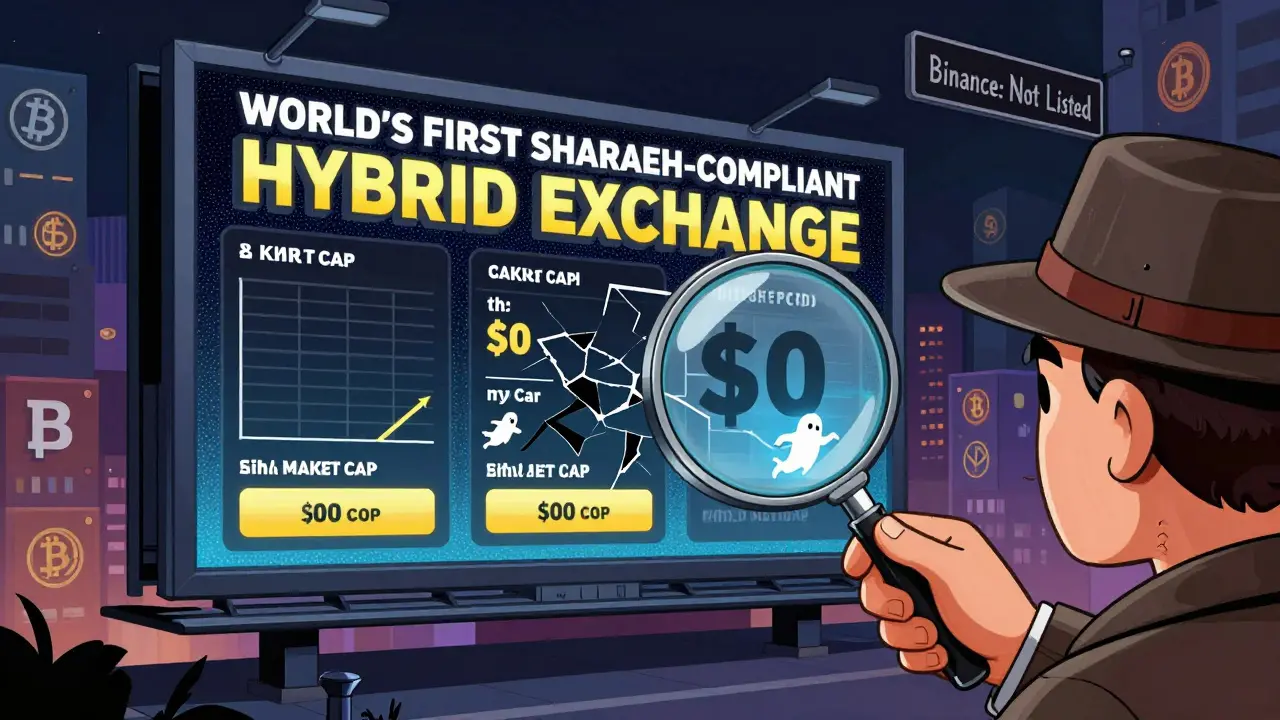
Biokript claims to be the first Shariah-compliant hybrid crypto platform. That’s a big claim. Shariah compliance isn’t something you just label on your website. It requires review and certification from recognized Islamic finance bodies - like the Accounting and Auditing Organization for Islamic Financial Institutions (AAOIFI) or the Islamic Financial Services Board (IFSB).
There’s zero evidence Biokript has undergone any such review. No certificates. No auditors named. No documentation. Meanwhile, Islamic Coin (ISLM), a real player in this niche, has been vetted and has a market cap of $42 million. Biokript’s claim feels like a marketing trick to attract Muslim investors who may not know how to verify religious compliance.
The "Microsoft Partnership" That Doesn’t Exist
Biokript’s site says it uses "cutting-edge security powered by Microsoft." That sounds impressive - until you check Microsoft’s official partner directory. Or their press releases. Or even LinkedIn profiles of their security team. There’s nothing.
Microsoft doesn’t just license its name to random crypto startups. If they were involved, there’d be a press release, a joint blog post, or at least a mention on Microsoft’s cybersecurity page. The absence of any trace means this is either a lie or a desperate attempt to borrow credibility from a trusted brand.
Patent Pending? That’s Not a Shield
The project claims to have a "pending U.S. utility patent" for its hybrid exchange system. But here’s the truth: a pending patent gives you zero legal protection. It doesn’t stop anyone from copying your idea. It doesn’t validate your technology. And it certainly doesn’t mean your token is worth anything.
Patent attorney David Boundy has said that crypto-related patent applications face extremely high rejection rates at the USPTO. Most are either too vague, too obvious, or just copied from existing systems. A "pending" patent is often used as a marketing tool - not proof of innovation.
Whale NFT Program: A Trap?
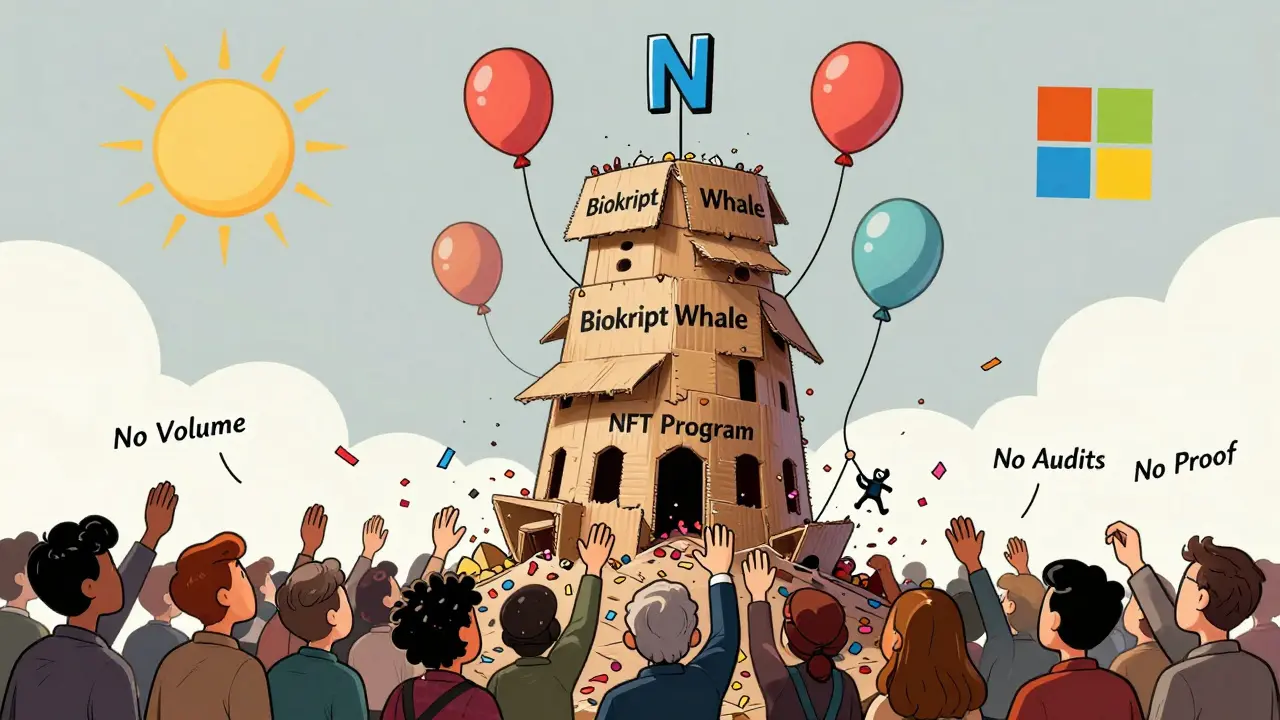
Biokript’s Whale NFT program promises trading credits equal to your investment. Buy a $2,000 NFT? Get $2,000 in trading credits. Sounds like a bonus. But users on Telegram report they can’t redeem those credits. Some say they’ve been waiting for months. Others say the system just doesn’t work.
And here’s the kicker: Solana blockchain explorers show almost no activity tied to these NFTs. No transfers. No trades. No interaction with the claimed platform. This isn’t a feature. It’s a bait-and-switch.
Why This Isn’t Just Another Scam - It’s Worse
Most crypto scams are obvious. Pump-and-dumps. Rug pulls. Fake influencers. Biokript is different. It’s not a flash-in-the-pan coin. It’s a slow-burn deception.
It uses real tech (Solana), real language (Shariah, AI, non-custodial), and real-looking websites. It doesn’t vanish overnight. It lingers - with a tiny price, a tiny volume, and just enough activity to keep people hoping. It feeds on the belief that "maybe this time it’s different."
But the data doesn’t lie. No market cap. No volume. No exchange listings. No verification. No transparency. And a 99% price drop. This isn’t a startup. This is a ghost.
What Should You Do?
If you’re thinking of buying BKPT: don’t. Even if you believe the claims, the risk is total. You’re not investing. You’re gambling on a token that has no foundation, no liquidity, and no future.
If you already own it: consider it lost. There’s no recovery path. No roadmap. No team update. No community growth. Just silence.
If you’re researching hybrid exchanges: look at real ones. Injective Protocol. Coinbase. Even smaller players like KuCoin. They have market caps, trading volumes, audits, and public teams. Biokript has none of that.
The crypto market is full of noise. Biokript isn’t a signal. It’s static.
Is Biokript (BKPT) a real cryptocurrency?
Biokript exists as a token on the Solana blockchain, but it has no real market value. With a $0 market cap reported by Binance and only $27.86 in daily trading volume, it lacks the liquidity and adoption of a legitimate cryptocurrency. It’s more accurately described as a speculative token with no operational platform.
Can I trade BKPT on Binance?
No. Binance explicitly states that Biokript (BKPT) is not listed for trading or services. While price trackers like CoinGecko may show a price, this is based on minimal activity on decentralized exchanges - not legitimate trading. Binance’s disclaimer is a major red flag for any investor.
Does Biokript really share 50% of profits with holders?
There is no evidence this happens. With only $27.86 traded in 24 hours, there aren’t enough fees to distribute. No smart contract audits, no on-chain distribution logs, and no public financial reports exist to verify this claim. The 50/50 model is mathematically impossible given the current trading volume.
Is Biokript Shariah-compliant?
There is no proof. No Islamic finance authority - such as AAOIFI or IFSB - has certified Biokript. The claim appears to be a marketing tactic to attract Muslim investors without undergoing the rigorous verification required for true Shariah compliance.
Why is the price so low?
The price dropped 99.02% from its all-time high due to lack of demand, zero exchange listings, and failed promises. Tokens with sustained $0 market caps and near-zero volume typically indicate the project has been abandoned. Biokript’s current price reflects a complete loss of market confidence.
Should I invest in Biokript?
No. Biokript has no real value, no liquidity, no verified team, and no credible partnerships. Any money spent on BKPT is highly likely to be lost. The project shows all signs of a failed or abandoned initiative. Treat it as a warning, not an opportunity.
Biokript (BKPT) isn’t a cryptocurrency you should consider. It’s a lesson in how marketing can mask complete emptiness. Don’t chase hype. Check the data. And if the data says $0 - walk away.


bala murali
February 13, 2026 AT 12:42Biokript’s entire model hinges on phantom liquidity and performative compliance. Shariah-compliant? Without AAOIFI certification, it’s just a buzzword slapped on a whitepaper. The 50/50 profit share? Try 50% of $0.02786 - that’s 1.39 cents. Distributed how? To whom? No on-chain logs, no smart contract audit, no transparency. This isn’t a project - it’s a spectral DApp with no backend.
And the Microsoft claim? That’s not misleading - it’s outright fraud. Microsoft’s enterprise partnerships are documented, auditable, and publicly announced. If they were involved, there’d be a press release, a GitHub repo, or at least a LinkedIn post from a PM. There’s nothing. Zero. Nada.
Patent pending? Please. The USPTO rejects 92% of crypto patents for being obvious or abstract. A pending patent is a legal placeholder, not a validation. It’s like claiming your IKEA bookshelf is ‘patent-pending’ because you drew a sketch on a napkin.
This isn’t a rug pull. It’s a ghost town with a website.
Kaz Selbie
February 15, 2026 AT 02:56Bro this is the most obvious scam I’ve seen since that ‘Bitcoin Mining USB Stick’ on eBay. 99% price drop? $0 market cap? $27 in volume? You’re telling me people still have money tied up in this? That’s not greed - that’s stockholm syndrome.
And the Whale NFT thing? ‘Buy $2k NFT, get $2k trading credits’ - sounds like a pyramid scheme with extra steps. If the platform had real volume, why would they need to bribe people with fake credits? It’s not a feature - it’s a trapdoor.
Also, ‘Shariah-compliant’? You’re telling me a Solana token with zero oversight is somehow halal? Next they’ll claim it’s blessed by the Dalai Lama. Wake up. This isn’t finance - it’s performance art for the gullible.
SAKTHIVEL A
February 16, 2026 AT 14:41One must interrogate the ontological foundations of this purported asset-class. Biokript (BKPT) does not possess the necessary attributes of a fungible, liquid, or verifiably decentralized asset. Its existence is predicated upon performative semantics - ‘hybrid exchange,’ ‘AI-driven trade execution,’ ‘anti-rug mechanisms’ - all semiotic constructs devoid of operational substrate.
The claim of 50% profit-sharing is mathematically incoherent given the 24-hour trading volume of $27.86. Even assuming a 0.1% fee rate - which is excessive for a DEX - the fee pool is $0.02786, of which $0.01393 is purportedly distributed. To whom? To what wallets? Where is the transaction history? On-chain analytics reveal zero relevant transfers.
Furthermore, the invocation of Microsoft’s brand constitutes a classic appeal to authority fallacy. Microsoft does not license its name to unregistered Solana tokens. The absence of any corporate disclosure, press release, or API integration is not an oversight - it is evidence of fraud.
The Whale NFT program is a liquidity illusion. No transfers. No redemptions. No on-chain interaction. This is not innovation. This is a necromantic attempt to animate a corpse with buzzwords.
One must conclude: BKPT is not a cryptocurrency. It is a linguistic artifact - a hallucination encoded in JSON.
Tammy Chew
February 18, 2026 AT 02:13I mean… I just bought $500 of this because I thought ‘Shariah-compliant’ meant it was safe?? Like… I thought that was some kind of seal of approval??
Turns out it’s just a word people throw on websites to make Muslims feel good while they drain their wallets.
And Microsoft?? I literally Googled ‘Microsoft crypto partnerships’ and found NOTHING. Like… why do I trust random websites??
I feel so dumb. Like… I read the whole thing and thought ‘this is the future’ and now I’m holding a token worth less than my coffee.
Also the Whale NFT? I bought one. Still waiting. Like… 6 months. No reply. No update. Just silence.
Why do we keep falling for this??
Lindsey Elliott
February 18, 2026 AT 07:35