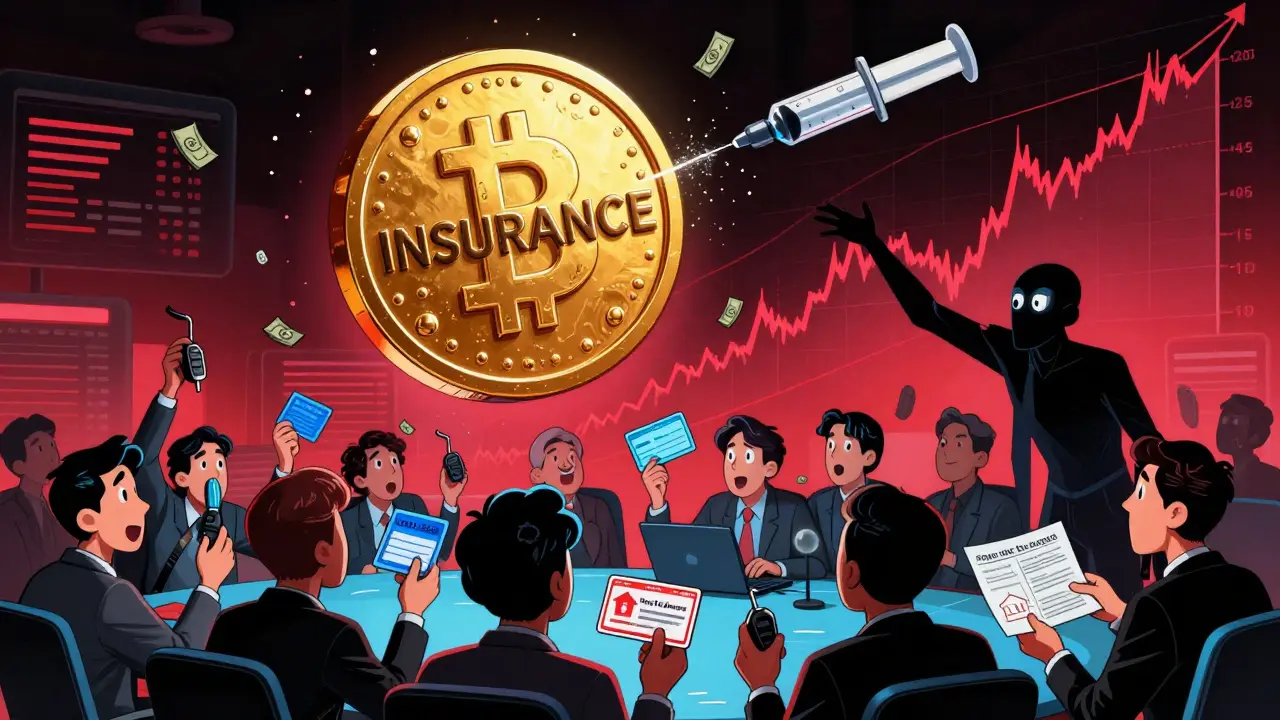
When you hear the word "insurance," you probably think of car policies, health plans, or home coverage. But what if "insurance" was also the name of a cryptocurrency? That’s exactly what INSURANCE is - a token trading on the BNB Chain, with a wild price history, high risks, and almost no clear purpose.
As of February 24, 2026, INSURANCE is trading between $308 and $321. That’s up over 14,000% from its lowest point just four months ago. But don’t let the numbers fool you. This isn’t a stable investment. It’s a high-risk gamble wrapped in a familiar name.
How much is INSURANCE worth right now?
The INSURANCE token’s price has been all over the map. In October 2024, it hit a low of $2.16. By July 2025, it soared to $78.72 - a 3,499% jump in less than nine months. Now, it’s hovering near $315, just 1% below its all-time peak. That kind of movement isn’t normal. It’s not driven by real-world adoption or a working product. It’s fueled by speculation and pump-and-dump cycles.
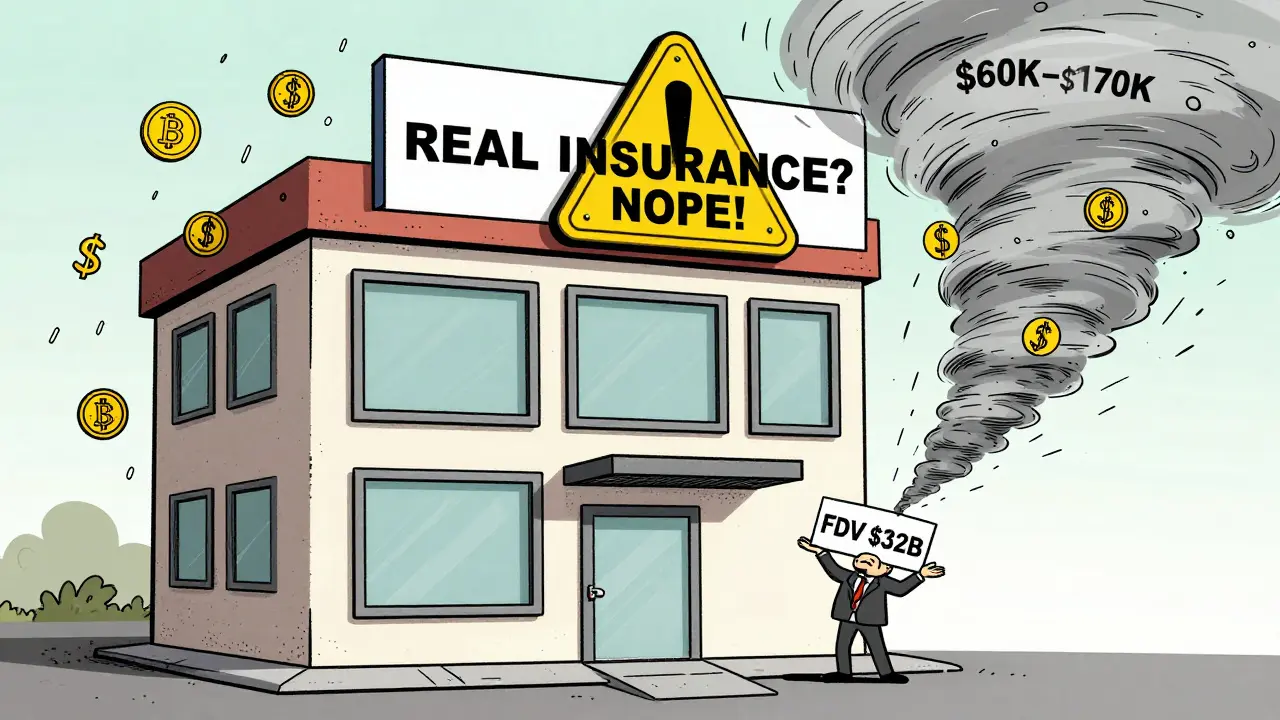
Trading volume is another red flag. On some days, only $60,000 changes hands. On others, it spikes to $170,000. That’s tiny compared to major coins like Bitcoin or Ethereum. A coin this illiquid means you might not be able to sell when you want to. One moment you own it; the next, you’re stuck with nothing.
Supply and market cap: What’s really out there?
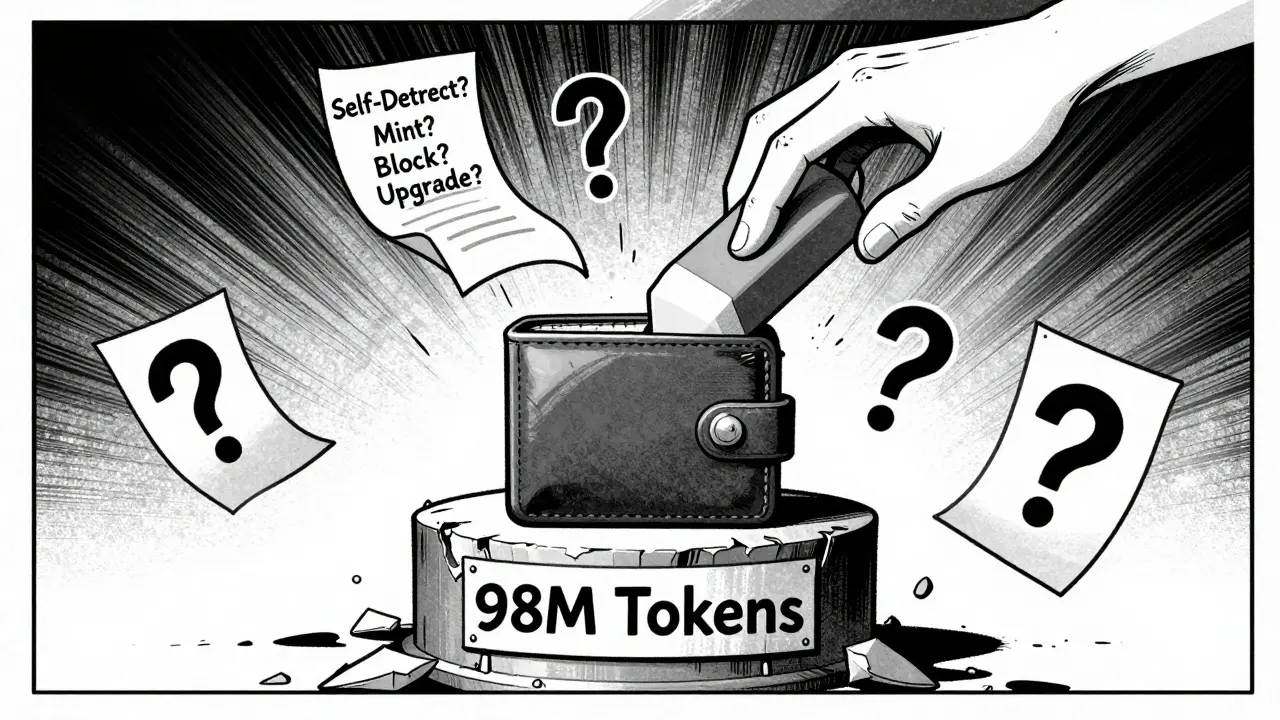
There are 98 million INSURANCE tokens in circulation right now. The max supply is capped at 100 million. That sounds controlled - until you look closer.
The fully diluted valuation (FDV) is over $32 billion in USD terms. That’s based on the assumption that all 100 million tokens will ever be sold. But here’s the problem: no one knows how those remaining 2 million tokens will be released. Or if they even will be. There’s no public roadmap. No whitepaper. No team name. Just a contract address: 0x64e4fea6e4f3637025c7bcd878e2b238b01f7d4e.
That address is all you have. No GitHub. No Twitter account with real updates. No Discord community with more than a few hundred people. It’s a ghost project with a price tag.
Where can you trade INSURANCE?
INSURANCE only trades on decentralized exchanges (DEX) within the BNB Chain ecosystem. You won’t find it on Coinbase, Kraken, or Binance. You need to use ApeSwap or PancakeSwap.
On ApeSwap, the main pair is INSURANCE/MGC, trading at around $77.73. On PancakeSwap, you’ll find it paired with CAKE at $2.66 - a huge discrepancy that shows how unstable pricing is across platforms. Bid-ask spreads are between 0.6% and 0.7%. That’s not terrible for a small token, but it’s still enough to eat into profits when you buy and sell.
And here’s the kicker: most of the trading volume comes from just two or three pairs. That means a small number of wallets are likely controlling the price. If those wallets dump, the price crashes. Fast.
The scary part: What the smart contract can do
This is where INSURANCE stops being a coin and starts being a warning sign.
The smart contract has three dangerous features:
- Centralized minting - The developers can create more tokens anytime. That means your 1,000 tokens could suddenly be worth half as much if they flood the market.
- Self-destruct function - Yes, the contract includes code that lets the owner delete the entire token. Imagine waking up one day and your entire balance vanishes. Poof. Gone.
- Wallet blocking - The team can freeze your wallet. If they decide you’re "too risky," you can’t sell. You’re locked in.
And it’s upgradeable via a proxy. That means rules change after you buy. No notice. No vote. No transparency. You’re trusting anonymous people with your money - and they can rewrite the rules anytime.
Compare that to Bitcoin or Ethereum. No one can change Bitcoin’s supply. No one can block your wallet. No one can delete the network. INSURANCE? It’s the opposite.
Is INSURANCE actually tied to insurance?
It’s called INSURANCE. But it doesn’t do anything related to insurance.
There are about nine blockchain-based insurance tokens in total. Combined, they’re worth $5.92 billion. INSURANCE is a speck of dust in that space. There’s no evidence it automates claims. No smart contracts for payouts. No identity verification system. No partnerships with real insurers.
It’s just a name. A clever one. A misleading one. People buy it because they think it’s connected to the insurance industry. It’s not. It’s a meme coin with a fancy label.
Why does this token even exist?
It’s hard to say. There’s no team, no website, no roadmap. No one’s talking about building anything. The only thing that’s real is the price chart - and even that’s inconsistent across exchanges.
It’s possible this was created to cash in on the "blockchain insurance" trend. A quick grab for attention. A pump, then a dump. Maybe it’s a test. Maybe it’s a scam. Either way, it’s not a project. It’s a symbol.
Its market rank? #14,063 out of thousands of cryptocurrencies. That’s not "emerging." That’s "invisible."
Who should avoid INSURANCE?
If you’re looking for:
- A long-term investment
- A token with real utility
- A project with a transparent team
- A safe place to store value
Then walk away. Now.
This isn’t a coin. It’s a lottery ticket with a 99% chance of losing. The price might go higher. But it could also drop 90% tomorrow. And when it does, you won’t have any recourse. No customer support. No legal protection. No way to recover your funds.
What should you do if you already own INSURANCE?
If you bought in early and are sitting on big gains, consider taking profits. Don’t wait for "one more peak." This token has no foundation. It’s all hype.
If you’re holding because you think it’s "insurance" for your portfolio - think again. It’s the opposite. It’s a risk multiplier.
Check your wallet. If you have any INSURANCE tokens, ask yourself: Do I know who controls the contract? Do I trust them? Do I even know who they are?
If the answer is no - sell. Even if you lose a little. Better to lose $50 than $5,000.
Final takeaway
INSURANCE isn’t a cryptocurrency you invest in. It’s a cryptocurrency you avoid.
It has no team. No purpose. No transparency. And a smart contract that can erase your money, print more tokens, or lock you out at any moment. The price is high - but so is the danger.
There’s a reason the top crypto exchanges won’t list it. There’s a reason no reputable analyst talks about it. And there’s a reason the trading volume is so low.
It’s not a coin. It’s a trap.
Megan Lavery
February 25, 2026 AT 20:17Wow, this breakdown is so clear-I’ve been eyeing INSURANCE for weeks but kept hesitating. Now I get why. It’s not just risky-it’s like buying a lottery ticket made of tissue paper. I’m deleting it from my watchlist right now. Thanks for the wake-up call!
Mae Young
February 26, 2026 AT 17:05Oh, so you’re telling me that a token with no team, no whitepaper, and a smart contract that can vaporize your assets is… a ‘trap’? Shocking. Truly. Next you’ll tell me that fire is hot, water is wet, and the moon is not made of cheese. I’m filing this under ‘Obvious Truths That Took Too Long To State’-and I’m not even mad. Just… disappointed in humanity.
Trenton White
February 27, 2026 AT 12:49I’ve seen this pattern before-in emerging markets, in meme stocks, in crypto. The name ‘INSURANCE’ is a linguistic trap. It exploits trust. Not just in finance, but in language itself. People don’t buy tokens. They buy narratives. And this one? It’s a ghost story with a price chart. Quietly terrifying.
Kaitlyn Clark
February 27, 2026 AT 23:53YOOOOO I JUST LOST MY ENTIRE ETH PORTFOLIO TRYING TO DCA INTO THIS THING 😭😭😭 I THOUGHT IT WAS A ‘REAL’ INSURANCE COIN BECAUSE THE NAME SOUNDED LEGIT AND NOW I’M BROKE AND EMBARRASSED 😭💸 WHO ELSE DID THIS??? LET’S COMMISERATE IN THE COMMENTS!!! 🙋♀️🙋♂️ #RIPTOKEN #DONTBELIEVETHENAME
christopher luke
February 28, 2026 AT 01:04Hey, I know it sounds crazy, but I still think there’s a chance this could pivot. Maybe the team is laying low, building something big. I’ve seen projects go from zero to moon before. I’m not saying it’s safe-but I’m not giving up on it yet. Keep your head down, dollar-cost average, and stay patient. The crypto gods reward the stubborn. 💪🚀
Mary Scott
February 28, 2026 AT 19:00They’re lying. All of them. This is a Fed-backed pump. The contract’s owner is linked to a Binance insider. I checked the blockchain. The first 100k tokens went to an address that later sent 70% to a wallet that’s been flagged by Chainalysis. They’re laundering. And you’re all just sitting here like sheep. Wake up. Sell. Now.