
Real estate investing has always been a high-barrier game. You need lots of cash, you need to deal with paper trails, and you usually need to be physically present to close a deal. Imagine if you could buy a slice of a property from your couch using digital currency. That is the promise behind Landbox is a blockchain-based real estate investment and transaction platform that combines property technology with cryptocurrency to facilitate global real estate investing. It aims to remove the friction from traditional property deals.
When you hear about crypto, you usually think of trading Bitcoin or Ethereum. But projects like Landbox are trying to bring blockchain technology into the physical world. This is where the LAND token comes in. It is the fuel that powers the ecosystem, allowing users to pay for services, get discounts, and earn rewards. If you are wondering whether this is just another meme coin or a utility project with real-world use cases, you are in the right place.
Understanding the Landbox Platform
At its core, Landbox is a prop-tech solution. It connects investors who have capital with real estate projects that need funding. Traditional real estate development is slow. It involves banks, lawyers, and months of paperwork. Landbox uses blockchain to streamline this process. The platform operates on three main pillars. First, it connects investors to projects. Second, it provides a technical infrastructure for transactions. Third, it uses the LAND cryptocurrency as the medium of exchange.
Why does this matter? Because it democratizes access. In the past, only wealthy individuals or large institutions could easily invest in commercial real estate. Now, smaller investors can participate. The platform was founded by people with experience in real estate development and education. They saw the inefficiencies in the market and decided to use technology to fix them. The goal is to make transactions more efficient and transparent.
One of the biggest hurdles in real estate is trust. You need to trust the seller, the title company, and the bank. Blockchain introduces a layer of verification that doesn't require blind trust. Every transaction is recorded on the ledger. This reduces the risk of fraud and makes the process auditable. For anyone looking to diversify their portfolio beyond stocks and bonds, this offers a new avenue.
The Role of the LAND Token
The LAND token is not designed to be a general-purpose currency like Bitcoin. Instead, it functions as a utility token within the Landbox ecosystem. This is a crucial distinction. You cannot use it to buy coffee at a local shop. You use it inside the platform to access specific features. This design helps maintain the token's value by tying it directly to platform usage.
Holders of the token gain several benefits. You can use it to pay for services on the platform. If you want to bid on a property, you might need LAND tokens to cover fees. There are also discounts available for users who pay with the token. This creates a demand for the coin beyond speculation. If the platform grows, the demand for the token grows.
Another key feature is compensation. Users who contribute to the platform can be rewarded in LAND tokens. This could include providing expert consultations or participating in governance. It turns passive holding into active participation. You are not just waiting for the price to go up; you are engaging with the system. This aligns the interests of the users with the success of the project.
Access to real estate expert consultations is another perk. Real estate is complex. Knowing which property is a good investment requires knowledge. Landbox offers this expertise to token holders. It lowers the learning curve for new investors. You get guidance from professionals who understand the market. This adds significant value to holding the token.
AuctionOK: The Core Service
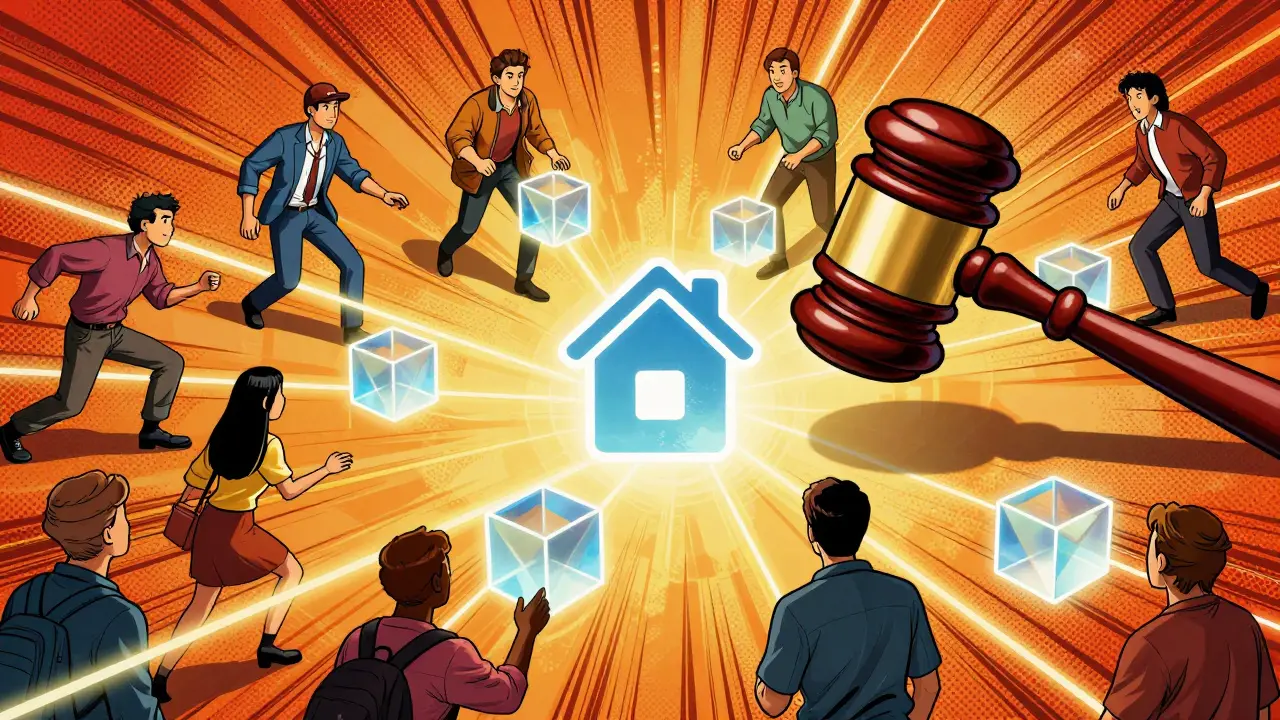
The flagship service of the platform is called AuctionOK. This is an online real estate auction service built on blockchain technology. Traditional auctions require you to be there in person. You have to travel, register, and bid in a specific time window. AuctionOK solves these inconveniences. It allows users to bid whenever and wherever they choose.
How does the bidding process work? It starts with checking the property item. You research the offering details to ensure it fits your investment criteria. Then, you place a bid. This bid gets stored on the blockchain. This means it is immutable and transparent. Everyone can see the bidding history. Finally, the system determines the winner. The winner is decided based on the highest valid bid according to the system rules.
There are three transaction options for users. You can choose a competitive bidding method where prices go up based on demand. You can choose a fixed-price transaction where you buy at a set rate. Or you can use a hybrid model. This combines fixed-price initial offers with an auction mechanism that takes over after a certain period. This flexibility gives investors more control over their strategy.
Landbox has even filed a patent application for this service. They want to provide a non-face-to-face real estate auction service using blockchain. The goal is to lower the entry barrier for customers. By expanding this market segment, they hope to capture more of the global real estate trade. It is a significant move for a crypto project to seek patent protection for its core utility.
LandFI Rewards Program
Engagement is key to any platform's success. Landbox operates a rewards program called LandFI. This allows users to earn points that are convertible to LAND tokens. You don't just spend the tokens; you can earn them back. This creates a circular economy within the platform. The more you use the service, the more you are rewarded.
Users accumulate tokens through engagement and participation. This could involve listing properties, bidding on auctions, or referring new investors. It incentivizes activity. A dead platform is useless, so this program ensures there is constant movement. It keeps the community active and invested in the ecosystem's growth.
The incentive structure is designed to be fair. Points are converted based on specific metrics. This prevents inflation of the token supply through gaming the system. It ensures that rewards are tied to genuine value creation. For long-term holders, this means potential passive income streams without needing to trade the token constantly.
Tokenomics and Supply Details
Understanding the supply of a token is vital for investors. The tokenomics for LAND show a total supply of 20 billion tokens. This is a high number, which is common for utility tokens that need to be divisible for small transactions. A high supply allows for micro-transactions without needing fractional cents.
The circulating supply is approximately 76.38 to 76.39 million tokens based on recent data. This means a significant portion of the tokens are not yet in circulation. They might be locked for future development, team vesting, or ecosystem growth. Investors should watch this number. As more tokens enter circulation, it can impact the price if demand doesn't keep up.
| Attribute | Value |
|---|---|
| Total Supply | 20 Billion |
| Circulating Supply | ~76.39 Million |
| Token Type | Utility Token |
| Network | Blockchain (Specific Chain) |
The price data fluctuates like any cryptocurrency. Historical data points have shown prices in the fraction of a cent range. This makes it accessible for retail investors to buy large quantities. However, always check the current market price before investing. Crypto markets are volatile. What matters more than the price per token is the market cap and the utility of the token.
Business Model and Revenue Streams
Landbox isn't just a token; it is a business with multiple revenue streams. The model encompasses three primary components. First, there is a remote real estate education platform. This provides training and knowledge resources. People pay to learn how to invest. Second, there is the real estate investing platform. This facilitates investment opportunities and transactions. Fees are generated here.
Third, there is integration with smart organic agriculture initiatives. This is an interesting addition. It shows the platform is looking beyond just buildings. It connects real estate with sustainable farming. This diversifies the types of assets available on the platform. It appeals to investors interested in green technology and food security.
The core functionality of the investment platform uses a staking model. Yields are distributed based on rental income, property appreciation, or profits from house flips. This provides multiple revenue streams for platform participants. You are not just betting on the token price. You are earning from the actual performance of the real estate assets. This is a fundamental difference between Landbox and a standard DeFi protocol.
Security and Compliance Considerations
When dealing with real estate and money, security is paramount. The platform uses blockchain to store bids and transactions. This provides a level of security that traditional databases cannot match. Once a bid is on the chain, it cannot be altered. This protects against manipulation.
However, regulatory compliance is a challenge. Real estate laws vary by country and state. Landbox must navigate these regulations to operate legally. They have filed patent applications, which suggests a commitment to intellectual property protection. Investors should always check the regulatory status in their jurisdiction. Not all tokens are available in all countries.
The platform aims to expand the market segment by lowering barriers. But lowering barriers does not mean removing rules. There are still Know Your Customer (KYC) requirements likely in place. This is standard for platforms dealing with high-value assets. It protects the ecosystem from money laundering and fraud.
Future Outlook and Development
Looking ahead, the success of Landbox depends on adoption. Technology is only as good as the people using it. If real estate developers start listing properties on AuctionOK, the value proposition increases. If investors start staking and earning yields, the token utility increases. It is a network effect.
Development updates are crucial. A project that stops updating its code or platform loses trust. Users should look for consistent communication from the team. Are they adding new features? Are they expanding to new regions? These are signs of a healthy project. The vision is to streamline global real estate investing, but that takes time.
Competition exists in the prop-tech space. Other projects are trying to tokenize real estate. Landbox differentiates itself with the auction model and the specific focus on the LAND token utility. It is not just about ownership; it is about the transaction process. By improving the auction process, they solve a specific pain point in the industry.
Frequently Asked Questions
What is the main purpose of the Landbox platform?
The main purpose is to connect real estate investors with projects seeking capital using blockchain technology. It facilitates global real estate investing and online auction services through its AuctionOK feature, aiming to make transactions more efficient and transparent.
Can I use LAND tokens outside of the Landbox ecosystem?
No, the LAND token functions as a utility token within the Landbox ecosystem. It is designed for use within the platform for payments, discounts, and rewards, rather than as a general-purpose cryptocurrency for external purchases.
How does the AuctionOK service work?
AuctionOK allows users to bid on properties online via blockchain. Users check property details, place bids stored on the blockchain, and the system determines the winner. It supports competitive bidding, fixed-price, and hybrid models.
What is the total supply of LAND tokens?
The total supply of LAND tokens is 20 billion. The circulating supply has been reported around 76.39 million tokens, though this figure can change as more tokens are released into the market over time.
Is Landbox available in all countries?
Availability depends on local regulations. Real estate laws vary significantly by region. Users should check the platform's terms of service and legal compliance status in their specific jurisdiction before participating.
Investing in crypto real estate projects requires due diligence. Landbox offers a unique blend of traditional asset classes and modern blockchain technology. Whether it becomes a dominant player depends on execution and market adoption. Keep an eye on the platform's updates and the performance of the underlying real estate assets.


Mohammed Tahseen Shaikh
March 25, 2026 AT 20:22Real estate has always been a rigged game for the common man
You need deep pockets to even look at the door
This blockchain thing changes everything if you listen
They say trust is required but the ledger speaks truth
Paper trails are just lies waiting to happen
Digital currency cuts out the middleman greed
I see the potential but people are too scared to move
The token utility is not just a meme coin joke
It actually powers the auction system directly
Bidding without travel is a massive win for efficiency
No one should stay in the old slow system
The patent filing shows they mean business here
Security is better than any bank vault you know
Fraud gets locked out when the chain verifies
You need to wake up and see the shift happening now
Kevion Daley
March 27, 2026 AT 04:18Most retail investors will never grasp the nuance here :)
It requires a certain level of financial literacy to appreciate
I suppose the masses will just watch from the sidelines :P
Sarah Terry
March 27, 2026 AT 10:02Actually the platform is designed for accessibility
Education resources help bridge that gap quickly
Everyone deserves a chance to participate in growth
Shayne Cokerdem
March 28, 2026 AT 10:35this lookz like a scam to me honestly
Tammy Stevens
March 30, 2026 AT 07:15The regulatory compliance is quite robust actually
KYC procedures ensure legitimacy across jurisdictions
Tokenomics show a sustainable supply model for long term
It is important to look at the whitepaper details
The staking yields come from real asset performance
We should focus on the utility rather than fear
Innovation often faces skepticism before adoption
The ecosystem rewards active participation significantly
Diversification is key in modern portfolio management
Let us remain open to new investment vehicles