Imagine asking a chatbot to analyze Bitcoin’s price action, summarize the latest Ethereum upgrade news, and then automatically execute a trade if certain conditions are met. That is the core promise of PAAL AI. But before you buy any tokens, you need to know what you are actually getting. Is it just another hype-driven meme coin, or does it have real utility?
PAAL AI is an ecosystem that combines artificial intelligence tools with cryptocurrency services. It operates on the Ethereum blockchain, meaning its native token, PAAL, is an ERC-20 asset. The project aims to help investors make better decisions by providing AI-driven research, automated trading bots, and community management tools. However, like many projects in the "AI + Crypto" sector, it comes with significant volatility and specific risks that you must understand.
The Core Problem PAAL AI Tries to Solve
Cryptocurrency markets never sleep. Prices swing wildly in seconds, and new information drops constantly. For most retail investors, keeping up with this pace is impossible. You cannot watch charts 24/7, read every whitepaper, or monitor sentiment across Discord and Telegram simultaneously. This information overload leads to poor decision-making and missed opportunities.
PAAL AI positions itself as the solution to this chaos. Instead of relying on your own limited time and knowledge, you use their AI agents to do the heavy lifting. The platform offers natural language processing to answer complex questions about blockchain technology and image recognition to analyze market visuals. More importantly, it attempts to automate actions. If you set up a bot to buy when a specific indicator hits a certain level, the bot does it for you. This shifts the user role from active trader to strategy manager.
How the PAAL Ecosystem Works
The platform is not just one tool; it is a suite of products designed to interact with each other. Understanding these components helps you see where the value lies.
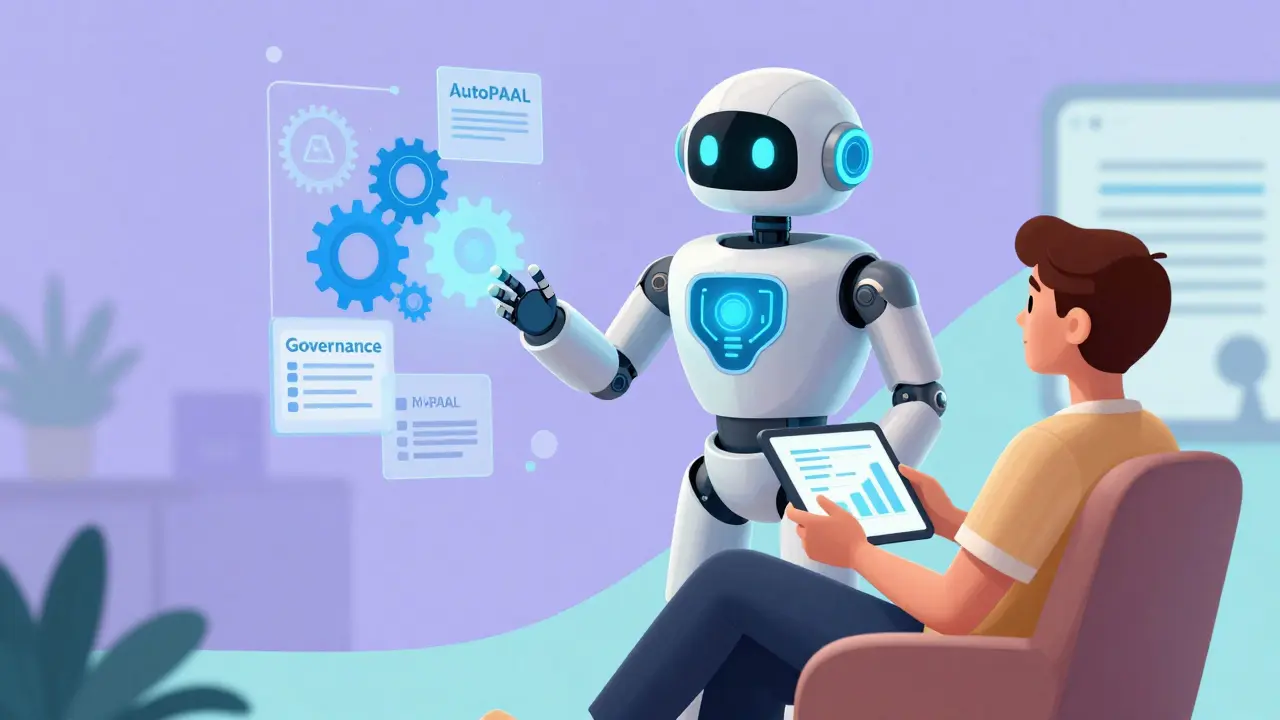
- MyPAAL: Think of this as your personal assistant. It is a customizable AI chatbot that you can train or configure to answer questions specific to your interests. Whether you want deep technical analysis of Solana or simple price alerts, MyPAAL handles the conversation.
- AutoPAAL: This is the automation engine. It focuses on executing tasks without human intervention. This could include posting updates to social media channels or triggering basic trading strategies based on predefined rules.
- AutoPAAL-X: Positioned as the advanced version, this likely handles more complex workflows, potentially involving multi-step logic or integration with external APIs for deeper market data analysis.
All these tools run off-chain, meaning the actual AI computation happens on servers hosted by PAAL or their cloud partners (logos for IBM and Google Cloud appear on their site, suggesting infrastructure support). The blockchain part-the PAAL token-is primarily used for access, governance, and economic incentives.
Tokenomics: Supply, Utility, and Buybacks
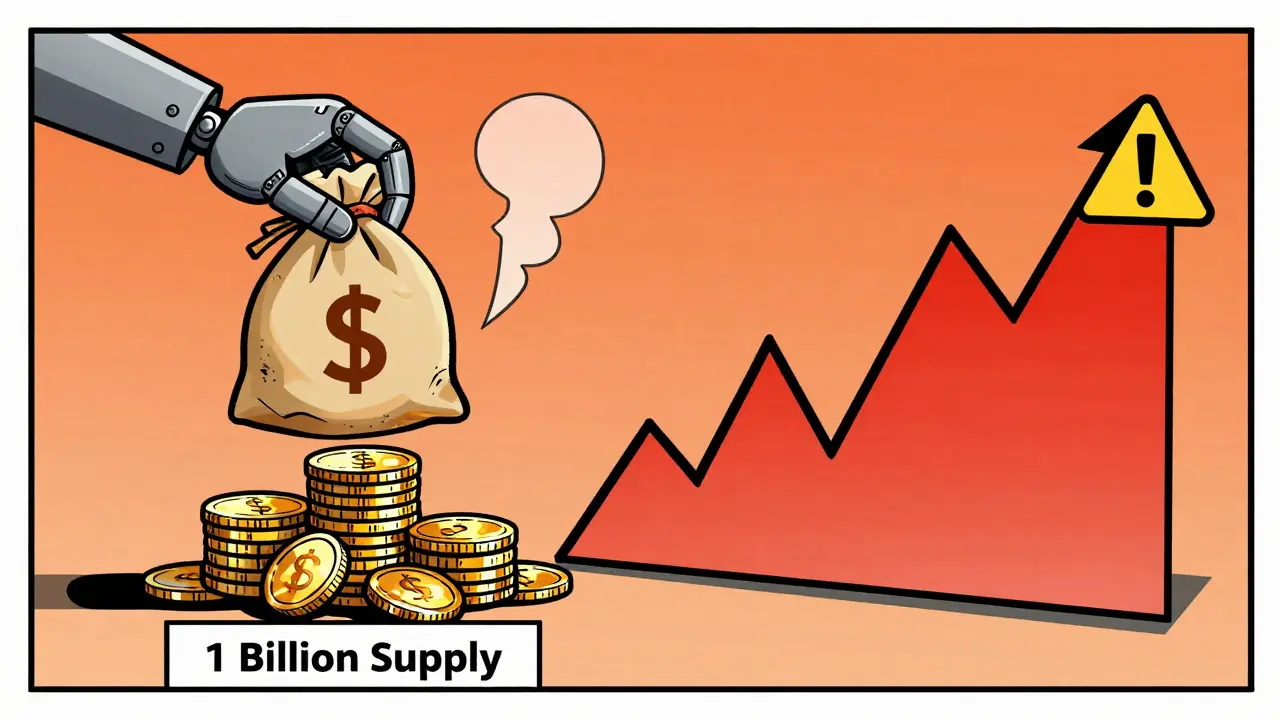
To evaluate any cryptocurrency, you must look at its economics. PAAL has a fixed maximum supply of 1 billion tokens. This cap prevents infinite inflation, which is a positive sign for long-term holders. Currently, the circulating supply hovers around 900 million to 983 million tokens, depending on which data aggregator you check. This means nearly all tokens are already in circulation.
Why would anyone hold PAAL? The project outlines three main utilities:
- Premium Access: Staking PAAL tokens unlocks higher-tier features. Free users might get basic chat responses, but stakers get faster processing, more complex agent configurations, and priority support.
- Governance: Holders can vote on future developments. This gives the community a say in how the platform evolves, such as deciding which new exchanges to list on or which AI models to integrate.
- Profit Sharing and Buybacks: This is often the most attractive feature. The protocol generates revenue from premium subscriptions and usage fees. A portion of this revenue is used to buy back PAAL tokens from the open market. These bought-back tokens are either burned (destroyed) or distributed to stakers. This mechanism aims to create upward price pressure by reducing supply while increasing demand.
| Attribute | Value |
|---|---|
| Blockchain | Ethereum (ERC-20) |
| Max Supply | 1,000,000,000 PAAL |
| Primary Utility | Staking for Premium Features |
| Revenue Model | SaaS Subscriptions & Agent Usage |
| Buyback Mechanism | Yes (from platform revenue) |
Market Performance and Volatility Risks
You cannot talk about PAAL without addressing its price history. Like many narrative-driven tokens, PAAL has experienced extreme swings. In March 2024, the token hit an all-time high of approximately $0.86. Since then, it has faced significant drawdowns, trading in ranges much lower than its peak, sometimes below $0.01 in various snapshots.
This volatility is normal for small-to-mid-cap cryptocurrencies, but it requires caution. Data discrepancies between exchanges like CoinMarketCap, CoinGecko, and Coinbase are common. One platform might show a price of $0.008 while another shows $0.12 due to lagging feeds or different liquidity pools. Always verify prices across multiple sources before making a trade.
Furthermore, PAAL competes in a crowded field. While giants like Fetch.ai (FET) and Render (RNDR) focus on decentralized compute infrastructure, PAAL focuses on end-user applications. This makes it comparable to AI trading bot platforms rather than foundational AI networks. Its success depends entirely on user adoption of its tools, not just speculation on the AI trend.
Security and Trust Factors
When dealing with AI and finance, security is paramount. PAAL’s smart contract is on Ethereum, which is generally secure. However, the AI models themselves are centralized. This means PAAL controls the algorithms. If the code contains biases or errors, the advice given by the bots could be flawed. Always double-check critical financial decisions, even if an AI suggests them.
Additionally, look for independent audits. While major exchanges like Kraken and Robinhood list PAAL, implying some level of compliance checks, the absence of prominent third-party security audits for the AI backend is a gap. Users should assume that the platform is still maturing and proceed with only capital they can afford to lose.
Who Should Use PAAL AI?
PAAL is not for everyone. If you are a passive investor who buys and holds Bitcoin for years, this tool offers little value. It is designed for active participants:
- Crypto Traders: Those who need real-time data analysis and automated execution to save time.
- Community Managers: Project founders who need bots to moderate Discords and answer FAQs automatically.
- AI Enthusiasts: Users interested in testing how large language models perform in financial contexts.
If you fall into these categories, PAAL provides a structured way to leverage AI. Start with the free tier to test the accuracy of the insights before staking significant amounts of tokens for premium access.
Is PAAL AI a safe investment?
No cryptocurrency is guaranteed safe. PAAL AI is a volatile asset with a history of sharp price swings. While it has legitimate utility in AI-driven crypto tools, its value depends on user adoption and market sentiment. Always conduct your own research and never invest more than you can afford to lose.
Where can I buy PAAL tokens?
PAAL is listed on several major centralized exchanges including Kraken, Robinhood Crypto, and Crypto.com. You can also purchase it on decentralized exchanges like Uniswap using an Ethereum wallet, though you will need to pay Ethereum gas fees for transactions.
What is the difference between PAAL and other AI coins like FET?
Projects like Fetch.ai (FET) and Render (RNDR) focus on building decentralized infrastructure for AI computing power. PAAL AI focuses on application-layer tools, specifically chatbots and trading assistants for crypto investors. PAAL is more of a SaaS (Software as a Service) product with a token, whereas others are infrastructure plays.
Do I need to stake PAAL to use the bots?
You can likely use basic features without staking, but staking PAAL tokens unlocks premium tiers. These tiers offer faster response times, more complex automation capabilities, and access to advanced AI agents. Staking also allows you to participate in profit-sharing buybacks.
How does the buyback mechanism work?
PAAL AI generates revenue from users paying for premium AI services. A portion of this revenue is used to buy PAAL tokens from the open market. These tokens are then either burned to reduce supply or distributed to stakers, theoretically supporting the token's price through reduced supply and increased demand.