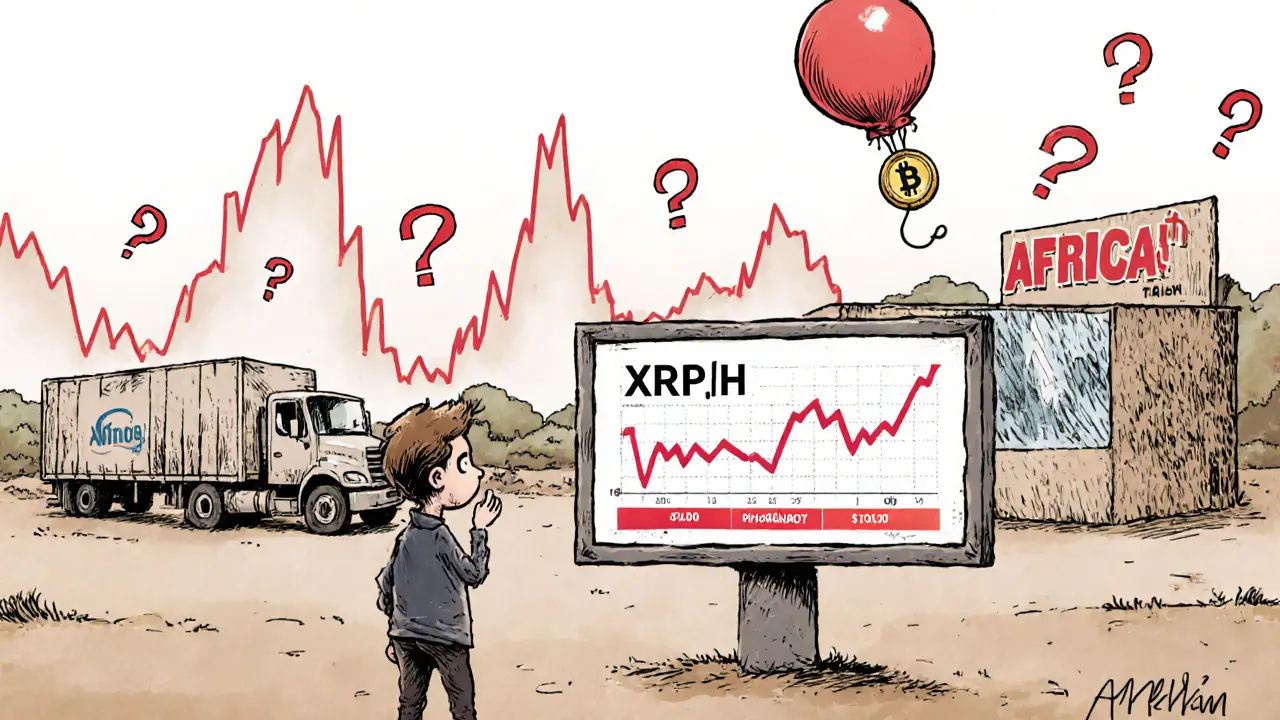
When you hear "XRP Healthcare" or "XRPH", you might think it’s the next big thing in crypto - a digital coin designed to fix healthcare payments, especially in places where banks don’t work well. But here’s the truth: XRP Healthcare (XRPH) isn’t a protocol, not a decentralized app, and definitely not tied to Ripple’s XRP. It’s a healthcare company that created a token - and that difference changes everything.
What XRPH Actually Is (And What It Isn’t)
XRP Healthcare (XRPH) is a cryptocurrency token built on the XRP Ledger. That means it uses the same fast, cheap blockchain that powers XRP - transactions settle in under 4 seconds and cost less than a penny. But unlike XRP, which is a digital currency for global payments, XRPH is meant to be used inside a specific healthcare business model. It’s not open-source. There’s no public GitHub. No developer community. No whitepaper you can download. Just a website and a token.
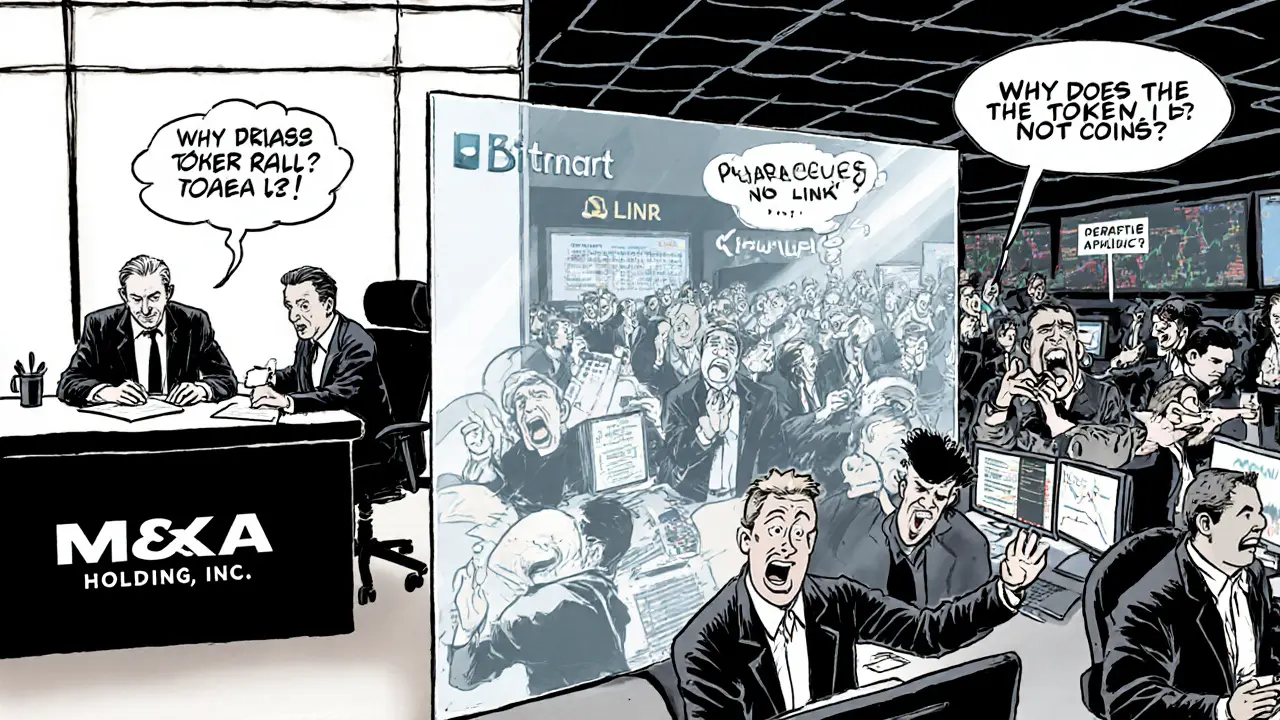
The company behind it, XRP Healthcare LLC, says the token helps pay for medical services and drugs across borders. But here’s the twist: the real business isn’t the token. It’s XRP Healthcare M&A Holding Inc., a Dubai-based firm buying up pharmacy chains in Africa. They completed their first acquisition in 2025 - a retail and wholesale pharmacy network - and they’re planning to go public. That’s right: they want to list on a stock exchange, not just trade a coin.
And here’s the legal fine print: the company says the token issuer (XRP Healthcare LLC) has no control over the healthcare business (M&A Holding Inc.). That’s intentional. It’s meant to separate liability. But for investors, it creates a huge question: if the pharmacy chain grows, why would the token price go up? There’s no clear link between the business profits and the token’s value. No dividends. No buybacks. No governance rights. Just a token floating in the crypto market.
How XRPH Is Trading Right Now
As of October 31, 2025, XRPH trades at around $0.04014 on CoinMarketCap. Sounds low? It is. But it’s also up 43.7% over the last year. In the past week, it jumped 30.6%, while the broader crypto market dropped. That kind of volatility isn’t rare in small-cap coins - it’s the norm.
Most of the trading happens on just two exchanges: BitMart and MEXC. Together, they handle over 93% of all XRPH volume. BitMart alone does more than half. That’s a red flag. If one of those exchanges goes down, gets hacked, or delists XRPH, the price could crash overnight. The order book is thin - a $200 buy order can move the price 5%. That’s not liquidity. That’s a casino.
Prices vary wildly across platforms. On BitMart, it’s trading at $0.061. On the XRP Ledger’s own decentralized exchange, it’s at $0.037. That’s a 65% difference. Why? Because there’s no unified price. No arbitrage bots cleaning up the gaps. Just fragmented trading with no oversight.
Why the Price Is So Wild
XRPH doesn’t have a fixed supply. No one knows how many tokens exist. No one knows how many are locked up, how many are in team wallets, or when they’ll be released. There’s no burn mechanism. No staking rewards. No utility beyond “paying for healthcare.” But who actually uses it? No patient testimonials. No hospital partnerships announced. No integration with African clinics or pharmacies. Just promises.
Analysts are all over the place. Some predict $0.13 by the end of 2025. Others say $0.0436 by December. One source claims it could hit $0.17. But here’s the thing: none of these predictions are based on real data. No revenue figures. No user growth. No adoption metrics. Just speculation wrapped in technical jargon.
Even the technical indicators are broken. On Investing.com, all charts show “NaN” - Not a Number. No RSI. No moving averages. No pivot points. Why? Because there’s not enough historical data. The coin hasn’t been trading long enough, or widely enough, to be analyzed. That’s not a sign of strength. It’s a sign of obscurity.
The Real Business: Buying Pharmacies in Africa
If you want to understand XRPH, stop looking at the price chart. Look at the acquisitions.
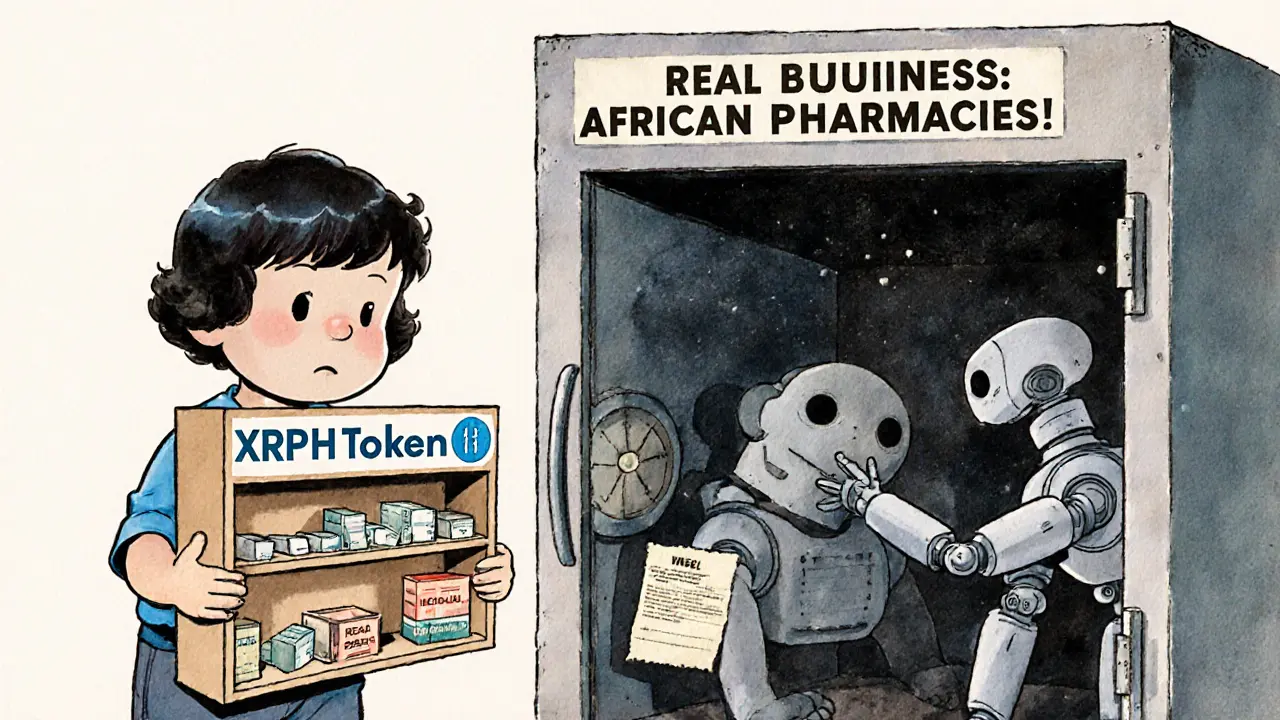
XRP Healthcare M&A Holding Inc. is buying pharmacy chains across Africa - places where medicine is hard to get, where supply chains are broken, where people travel hours just to fill a prescription. Their first acquisition was a full retail and wholesale network. That’s not a startup. That’s a real business with inventory, staff, logistics, and regulatory hurdles.
They’re using AI to manage inventory, predict demand, and reduce waste. They’re building a connected healthcare system - physical stores, digital records, and yes, a token that’s supposed to make payments faster. But here’s the catch: they don’t need XRPH to make this work. They could use PayPal, Stripe, or even cash. The token isn’t essential. It’s an add-on.
And now they’re planning to go public. That’s unusual. Most crypto projects stay private, raise money through tokens, and hope for a lucky pump. But XRP Healthcare wants to list on a stock exchange. That means audited financials. SEC-style disclosures. Board members. Compliance officers. If they succeed, they’ll be one of the first healthcare companies to blend traditional business with a crypto token.
Is XRPH a Scam?
No, it’s not a scam - at least not in the classic sense. There’s a real company doing real things. They bought pharmacies. They have a website. They’ve announced plans. They’re not running a fake team or pretending to be something they’re not.
But it’s a high-risk, low-transparency investment. You’re not buying into a blockchain protocol. You’re buying into a speculative bet that a healthcare company’s token will somehow rise in value because… well, because someone thinks it will. There’s no guarantee the token has any link to the business’s success. No legal right to profits. No voting power. No roadmap beyond “go public.”
Compare it to other healthcare crypto projects. Solve.Care has real clients - hospitals and insurers using their platform. MediBloc lets patients own their medical data. XRPH? It’s just a token with a vague promise and zero public usage data.
Who Should Even Care About XRPH?
If you’re looking for a stable, utility-driven crypto project - walk away. XRPH doesn’t fit.
If you’re a crypto speculator who chases 30% weekly pumps and doesn’t mind losing it all? Maybe you’ll take a small position. But treat it like lottery tickets - not an investment.
If you’re interested in healthcare innovation in Africa? Follow the company’s acquisition news, not the token price. That’s where the real story is.
The token might one day become useful - if the pharmacy network grows, if they actually integrate it into payment systems, if patients start using it. But right now? It’s a coin with no clear reason to exist beyond speculation.
What’s Next for XRPH?
No one knows. The roadmap is empty. No timelines. No milestones. No updates on the AI app they keep mentioning. No details on how the token will be used in clinics. The only thing they’ve clearly announced is the plan to go public - and even that lacks details. Will token holders get shares? Will the token be delisted? Will it become a security? No answers.
Until they release real data - actual usage numbers, financials, integration plans - XRPH remains a mystery wrapped in blockchain tech.



George Kakosouris
November 27, 2025 AT 08:12Let’s cut through the crypto fluff: XRPH isn’t a blockchain revolution - it’s a shell game with a pharmacy logo. The token has zero utility beyond being a speculative vessel for a company that’s literally buying brick-and-mortar clinics in Africa. No whitepaper, no dev activity, no on-chain governance - just a ticker and a dream. And yet, people are chasing 30% weekly pumps on BitMart like it’s the next Dogecoin. The real story isn’t the token price - it’s that a Dubai holding company is quietly building a healthcare infrastructure on the back of a coin no one uses. That’s not innovation. That’s financial engineering with a blockchain veneer.
And don’t get me started on the price fragmentation. $0.061 on BitMart, $0.037 on the XRP Ledger? That’s not market inefficiency - that’s market manipulation. Thin order books, zero arbitrage, and zero transparency. This isn’t DeFi. It’s a pump-and-dump dressed up as African healthcare reform.
Anyone who thinks this token has intrinsic value is either delusional or on the payroll. The company’s going public? Great. Then why not just sell shares? Why create a token with no legal standing, no revenue linkage, and no roadmap? Because they know retail crypto traders will chase anything with a ‘healthcare’ label and a 20% weekly chart spike. Classic.
The only thing more dangerous than investing in XRPH is believing the narrative that this is ‘blockchain for good.’ It’s not. It’s capitalism with a crypto coat of paint. And the people who lose money here won’t be the ones writing the whitepapers - they’ll be the ones scrolling Reddit at 3 AM hoping for a moon.
Bottom line: if you’re not gambling, you’re not investing. And if you’re investing, you’re just giving them your money to buy more pharmacies - while you sit there watching your wallet evaporate because the token’s value is entirely detached from the business.
Stay away. Or better yet - short it. Someone’s gotta clean up this mess.
Ben Costlee
November 28, 2025 AT 14:47I get why people are drawn to this - the idea of using crypto to fix broken healthcare systems in places like Nigeria or Ghana sounds noble. But the disconnect here is heartbreaking. The real work - buying pharmacies, deploying AI for inventory, hiring local staff - that’s actually changing lives. But instead of celebrating that, the whole conversation gets drowned out by traders shouting about price targets and exchange spreads.
There’s a real company doing something meaningful on the ground, and we’re reducing it to a ticker symbol. That’s not just unfair - it’s dangerous. People are going to lose money chasing a coin that doesn’t reflect the actual progress being made. Meanwhile, the patients who need medicine don’t care if the payment system is blockchain-based. They just need pills.
I wish the founders would stop talking about the token and start publishing data: how many clinics are open? How many prescriptions are filled monthly? Are patients even using the token? If they’re serious about impact, they need to lead with that - not with price charts and vague promises.
Let’s not confuse innovation with speculation. The pharmacy acquisitions? That’s innovation. The token? That’s a gamble. And if we’re going to talk about crypto in healthcare, let’s make sure we’re honoring the real heroes - the pharmacists, the logistics teams, the nurses - not the guys running liquidity pools on MEXC.
Mark Adelmann
November 30, 2025 AT 05:11Man, I read this whole thing and I’m just shook. I thought XRPH was some new DeFi health thing, but nope - it’s a pharmacy chain with a coin attached. That’s wild.
Like, if you’re trying to fix healthcare in Africa, just go do it. Don’t slap a token on it and call it a revolution. People are dying because they can’t get meds - they don’t care if you use blockchain or PayPal.
But hey, if the company’s actually buying clinics and hiring locals? That’s legit. I’d rather see them post photos of their pharmacies in Lagos than post a token roadmap.
And that price difference between exchanges? That’s not a market - that’s a casino with bad lighting. I’m not saying don’t invest - I’m saying if you do, don’t bet your rent money. Treat it like a lottery ticket you bought because the logo looked cool.
Also - who’s the guy in Dubai running this? I want to know his story. Because if he’s actually building something real, that’s way more interesting than any crypto whitepaper.
ola frank
November 30, 2025 AT 19:33The structural dissonance in XRPH’s model is not merely a flaw - it is a systemic epistemological failure. The token, as an asset, is ontologically disconnected from the underlying enterprise value. There exists no mechanism of value transfer from the M&A Holding Inc. operational surplus to the XRPH token economy. This violates the fundamental axiom of tokenomics: utility must be causally linked to demand.
Furthermore, the absence of on-chain transparency - no burn mechanisms, no vesting schedules, no treasury disclosures - renders the token a non-fungible liability disguised as an asset. The fragmentation across exchanges is not an inefficiency - it is a symptom of market illegitimacy.
The claim that this is not a scam is misleading. It is not a Ponzi, but it is a speculative construct predicated on narrative, not data. The lack of historical price data (NaN indicators) is not an anomaly - it is a red flag of insufficient market depth. The absence of user adoption metrics confirms the token’s role as a liquidity vehicle, not a medium of exchange.
Moreover, the decision to pursue a public listing while retaining a speculative token creates a regulatory minefield. If the token is deemed a security, the entire structure collapses under SEC scrutiny. If it is not, then its entire raison d’être evaporates.
This is not crypto innovation. It is financial obfuscation wrapped in the rhetoric of social impact. The real story - African pharmacy acquisitions - is being hijacked by a speculative artifact that adds no value to the actual business. The token is a distraction. And distractions, in finance, are often the prelude to collapse.
imoleayo adebiyi
December 1, 2025 AT 05:27As someone from Nigeria, I’ve seen how hard it is to get medicine in rural areas. The fact that a company is actually buying pharmacies here - that’s something. I don’t know much about crypto, but if this token helps people pay for insulin or antibiotics without waiting days for bank transfers, then maybe it has a point.
But you’re right - no one is showing proof. No clinics using it. No patients saying, ‘I bought my meds with XRPH.’ If they’re serious, they should partner with local health workers and show real stories.
It’s not about the price. It’s about trust. And right now, the trust is missing. If they want us to believe in this, they need to show us the medicine, not the math.