You’ve probably heard the phrase "not your keys, not your coins." But what happens when you need a centralized exchange to buy Bitcoin quickly with a credit card? That’s where platforms like YiBi Exchange come into play. But here is the hard truth: in the world of cryptocurrency, trust is earned, not given. With so many scams popping up every week, asking if YiBi is safe isn’t just a good question-it’s the only one that matters before you deposit a single dollar.
I’ve spent years tracking crypto platforms, looking at their licenses, their tech stacks, and their user bases. Today, we’re pulling back the curtain on YiBi. We’ll look at its regulatory status, its trading features, and whether it actually delivers on its promise of being an easy-to-use platform for beginners and pros alike. By the end of this review, you’ll know exactly where YiBi stands in the crowded 2026 crypto market.
The Quick Verdict: Who Should Use YiBi?
- Best For: Beginners looking for a simple interface and users in regions where major exchanges are restricted.
- Regulatory Status: Holds Water: YiBi obtained US Money Service Business (MSB) licenses in 2019, which adds a layer of compliance credibility.
- Trading Volume: Moderate daily volume (~$187 million), meaning liquidity is decent for major pairs but might slip on obscure altcoins.
- Key Features: Offers margin trading, NFT marketplace, OTC desk, and a social trading mobile app.
- Caution: Lower global brand recognition compared to giants like Binance or Coinbase; always verify current licensing status directly with regulators.
What Is YiBi Exchange? A Deep Dive into the Platform
At its core, YiBi Exchange is a digital asset trading platform founded in early 2019 that aims to bridge traditional finance with cryptocurrency through diverse services including spot trading, margin lending, and NFT markets. Unlike some fly-by-night operations that appear overnight, YiBi has been around since 2019. In crypto years, that counts as stability.
The platform positions itself as more than just a place to swap tokens. It wants to be a comprehensive financial hub. They claim to serve approximately 550,000 customers across more than 15 countries. While this number sounds impressive, it’s crucial to put it in perspective. Top-tier exchanges like Binance or Coinbase boast tens of millions of users. YiBi sits firmly in the mid-tier category-large enough to have infrastructure, but small enough that you might not find extensive third-party reviews or community forums dedicated solely to it.
The team behind YiBi claims significant pedigree. According to their public information, developers hail from tech giants like Microsoft, Amazon, and Tencent. If true, this suggests the platform was built using enterprise-grade coding practices rather than quick scripts. This background is vital because security breaches often stem from poor code architecture, not just bad luck.
Regulatory Compliance: The MSB License Factor
Let’s talk about the most important aspect of any exchange review: regulation. In 2019, YiBi announced it had received the first batch of Money Service Business (MSB) licenses in the United States. Why does this matter? Because an MSB license requires strict adherence to federal anti-money laundering (AML) laws and the Bank Secrecy Act (BSA).
This isn’t just paperwork. It means YiBi must implement identity verification (KYC) procedures, monitor transactions for suspicious activity, and report certain activities to the Financial Crimes Enforcement Network (FinCEN). For a user, this offers a baseline of legal protection. If something goes wrong, there is a regulatory body involved, unlike unregulated offshore exchanges that can vanish without a trace.
However, keep this in mind: having a license doesn’t guarantee the platform is immune to failure. FTX had licenses too. So, while the MSB status is a strong positive signal for legitimacy, it should be viewed as one piece of the puzzle, not a free pass. Always check if their license is currently active by visiting official FinCEN registries.

Trading Features: What Can You Actually Do?
If you’re looking to trade, YiBi offers a surprisingly broad suite of tools for a mid-sized exchange. Here is a breakdown of what you get:
- Spot Trading: Over 100 trading pairs, including major assets like Bitcoin (BTC), Ethereum (ETH), and Tether (USDT). This covers the basics for most investors.
- Margin & Leverage Trading: For experienced traders who want to amplify their positions. Note that leverage increases risk significantly-you can lose more than your initial deposit if the market moves against you.
- OTC Desk: Over-the-counter trading allows for large-volume transactions outside the public order book. This is useful for institutional clients or high-net-worth individuals who don’t want to slippage impact the market price.
- NFT Marketplace: YiBi integrates non-fungible token trading, allowing users to buy, sell, and mint digital collectibles directly within the ecosystem.
- Launchpad: Access to new token launches. This gives early access to promising projects, though remember that new tokens are highly volatile and risky.
The 24-hour trading volume reported is around $187.61 million. To put that in context, top exchanges process billions daily. YiBi’s volume is healthy for a niche player but means you might experience wider bid-ask spreads on less popular altcoins. For BTC and ETH trades, liquidity should be sufficient for retail investors.
User Experience: Mobile App and Interface
One area where YiBi tries to differentiate itself is accessibility. Their mobile application, available on the Google Play Store under the name "YIBI - Buy Bitcoin Instantly," emphasizes simplicity. The last update was recorded in June 2025, showing the platform is actively maintained.
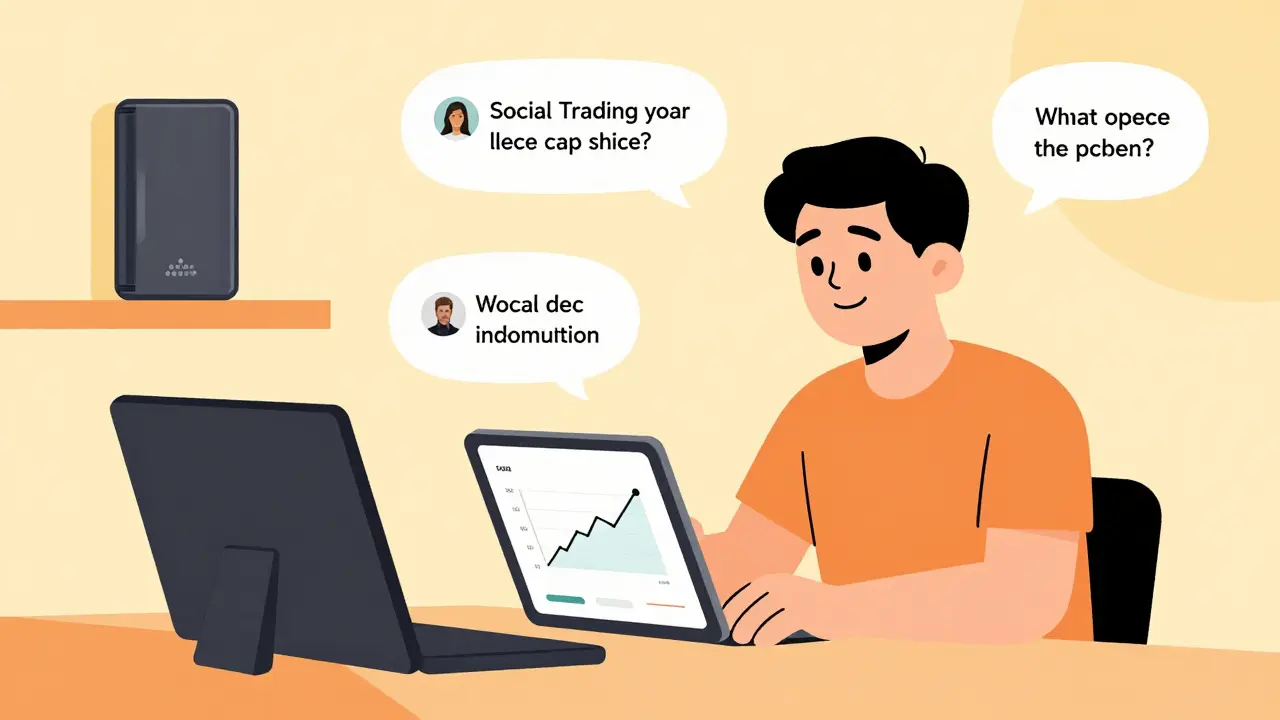
The app includes social trading features, which is a unique twist. Instead of just staring at charts, users can engage in chat functions and follow other traders’ strategies. This appeals to beginners who feel overwhelmed by technical analysis. However, social trading also carries risks-just because someone else made money doesn’t mean you will. Always do your own research.
The interface supports real-time graphs, instant Bitcoin purchases via credit card, and integrated wallet functionality. For desktop users, they offer a web-based platform that mirrors these features. The design philosophy seems to prioritize ease of use over complex customization, making it a solid choice for those who want to buy and hold without diving deep into order book mechanics.
Security Measures: How Safe Is Your Money?
Security is non-negotiable in crypto. While specific details of YiBi’s internal security architecture aren’t fully publicized, we can infer several layers of protection based on industry standards and their compliance status:
- Cold Storage: Like most reputable exchanges, YiBi likely keeps the majority of user funds in offline cold wallets. This protects assets from online hacks.
- Two-Factor Authentication (2FA): Essential for account security. Ensure you enable this immediately after signing up.
- AML/KYC Compliance: As mentioned, their MSB license mandates strict identity checks, reducing the risk of fraud and illicit activity on the platform.
- Team Expertise: With developers from Microsoft and Amazon, the underlying codebase should adhere to robust security protocols.
That said, no exchange is 100% hack-proof. Best practice remains: never keep more long-term holdings on an exchange than you intend to trade in the short term. Move your profits to a hardware wallet like Ledger or Trezor for maximum security.
YiBi vs. Major Competitors: How Does It Stack Up?
To help you decide if YiBi is right for you, let’s compare it against two industry giants: Binance and Coinbase. These comparisons highlight where YiBi shines and where it falls short.
| Feature | YiBi Exchange | Binance | Coinbase |
|---|---|---|---|
| Founded | 2019 | 2017 | 2012 |
| Regulatory Focus | US MSB License (2019) | Global (varies by region) | US Publicly Traded (NASDAQ) |
| Trading Pairs | 100+ | 1,000+ | 200+ |
| Daily Volume | ~$187 Million | $30+ Billion | $1+ Billion |
| Best For | Beginners, Social Trading | Advanced Traders, Altcoins | US Residents, Institutional Safety |
| Fees | Competitive (Maker/Taker model) | Lowest in Industry | Higher for Retail Users |
As you can see, YiBi doesn’t compete on sheer scale. If you want to trade hundreds of obscure memecoins, Binance is your go-to. If you want the highest level of regulatory oversight in the US, Coinbase is the standard. YiBi’s sweet spot is users who want a regulated, user-friendly platform with moderate fees and social features, particularly in regions where larger exchanges may face restrictions.
Potential Risks and Red Flags to Watch
No review is complete without addressing the downsides. Here are the potential risks associated with using YiBi:
- Liquidity Risk: With lower trading volume, executing large orders might result in slippage (getting a worse price than expected).
- Brand Recognition: Less known globally means fewer independent audits and community resources. You’re relying more on the company’s self-reported data.
- Geographic Restrictions: While they serve 15+ countries, ensure your specific location is supported. Crypto regulations change rapidly, especially in 2026.
- Leverage Danger: Margin trading is offered, but it’s a double-edged sword. New users often underestimate how quickly leveraged positions can liquidate.
Always start with a small deposit to test withdrawal speeds and customer support responsiveness before committing significant capital.
Final Thoughts: Is YiBi Worth It in 2026?
YiBi Exchange is a legitimate, regulated platform that offers a solid entry point for cryptocurrency trading. Its US MSB license provides a necessary layer of trust, and its focus on user experience makes it appealing for beginners. The inclusion of social trading and NFT markets shows they are adapting to modern trends.
However, it is not a replacement for top-tier exchanges if you require deep liquidity or a vast array of altcoins. Think of YiBi as a specialized tool rather than a one-stop shop for all things crypto. If you value simplicity, regulatory compliance, and social interaction, it deserves a spot in your portfolio toolkit. Just remember to diversify your storage and never invest more than you can afford to lose.
Is YiBi Exchange safe to use?
YiBi holds a US Money Service Business (MSB) license, which requires compliance with strict anti-money laundering and security standards. While no exchange is 100% immune to risks, this regulatory status makes it safer than unlicensed offshore platforms. Always use two-factor authentication and withdraw large holdings to personal wallets.
What cryptocurrencies can I trade on YiBi?
YiBi supports over 100 trading pairs, including major assets like Bitcoin (BTC), Ethereum (ETH), and Tether (USDT). They also frequently add new tokens through their Launchpad service. Check their live market page for the most current list of available pairs.
Does YiBi support margin trading?
Yes, YiBi offers margin and leverage trading capabilities. This allows experienced traders to borrow funds to increase their position size. Be cautious, as leverage amplifies both gains and losses, potentially leading to rapid liquidation.
How does YiBi compare to Binance?
Binance is much larger, with higher trading volumes and thousands of trading pairs. YiBi is smaller, focusing on user experience, social trading, and regulatory compliance in specific regions. Choose Binance for variety and depth; choose YiBi for simplicity and localized support.
Can I buy Bitcoin instantly on YiBi?
Yes, YiBi’s mobile app and web platform allow for instant Bitcoin purchases using credit cards and fiat gateways. This feature is designed for beginners who want to enter the market quickly without navigating complex order books.