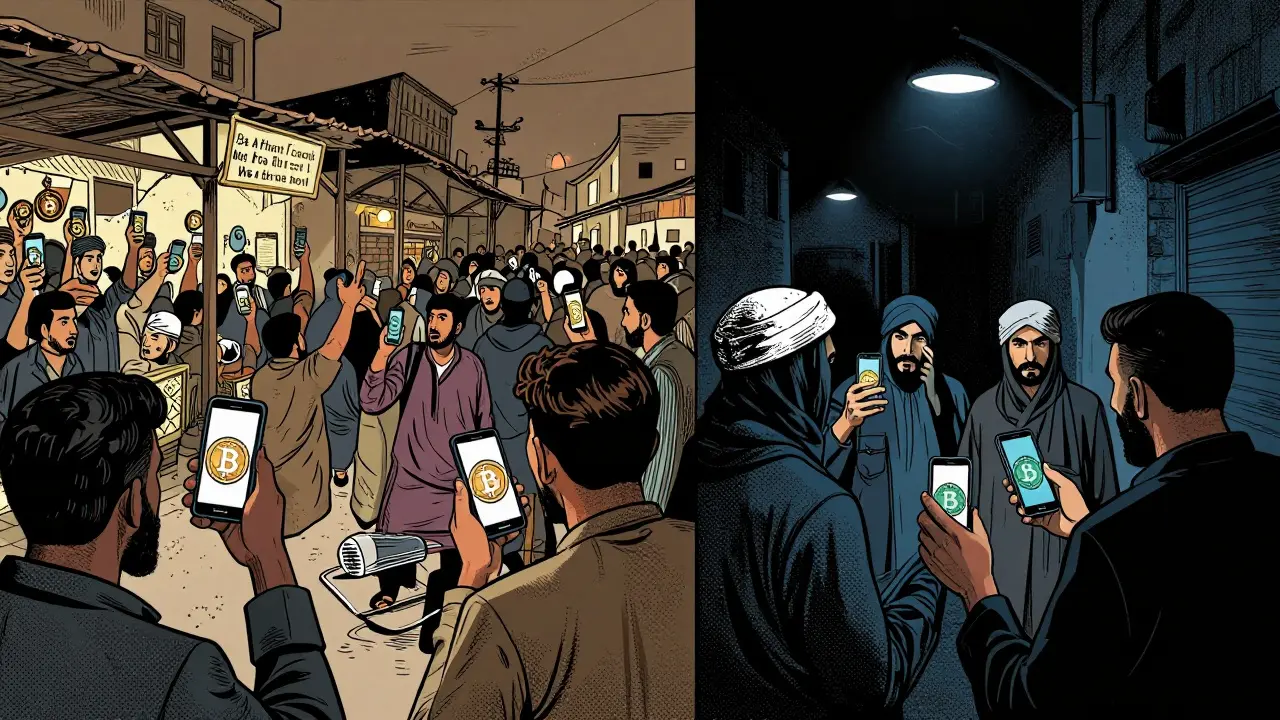
In August 2022, Afghanistan is a landlocked country in South Asia that experienced a dramatic shift in its financial landscape following the return of the Taliban to power made a decision that shocked the global digital asset community. The de facto government issued a blanket ban on all cryptocurrency is digital or virtual currency secured by cryptography, making it nearly impossible to counterfeit or double-spend activities. This move transformed a nation that had briefly become a hotspot for Bitcoin adoption into one of the most restrictive jurisdictions on Earth. But here is the twist: the ban didn’t stop people from using crypto. It just pushed them underground.
To understand why this happened, we have to look at what was going on before the hammer dropped. In 2021, as international sanctions froze Afghanistan’s foreign reserves and traditional banking systems collapsed, ordinary citizens turned to digital assets for survival. Suddenly, a country with limited internet access was ranking 20th globally in crypto adoption. Then, almost overnight, the rules changed completely. Today, in July 2026, navigating this landscape means understanding not just the laws, but the reality of life in the shadows.
The Religious Rationale Behind the Ban
The Taliban did not issue this prohibition based on economic theory or financial stability concerns alone. Their justification is rooted strictly in their interpretation of Sharia law is Islamic religious law derived from the Quran and Hadith, which governs various aspects of Muslim life including finance. Officials declared cryptocurrencies haram, meaning forbidden. They argued that because these digital tokens lack backing by real-world assets like gold or fiat currency, they are inherently speculative. In their view, trading them amounts to gambling, which is prohibited under Islamic law.
This stance puts Afghanistan in a very small club. According to data from major exchanges like Binance, only nine countries worldwide still maintain a total prohibition on Bitcoin usage. Most other nations that previously banned crypto-such as Morocco, which lifted its ban in 2024-have moved toward regulation rather than elimination. Afghanistan remains an outlier, standing firm against the global trend of accepting digital assets.
| Country | Status (2026) | Reason for Restriction |
|---|---|---|
| Afghanistan | Total Ban | Religious grounds (Sharia), speculation |
| China | Total Ban | Financial security, capital control |
| Egypt | Total Ban | Regulatory uncertainty, fraud prevention |
| Morocco | Lifted Ban (2024) | Previously restricted due to monetary policy |
| USA | Regulated | Tax compliance, anti-money laundering |
From Boom to Bust: The Timeline
The speed of change in Afghanistan’s crypto market was staggering. During the chaos of 2021, when the previous government fell and international aid dried up, Afghans needed a way to send money across borders and preserve value. With banks inaccessible and the Afghan afghani losing trust, Bitcoin became a lifeline. By mid-2021, the country saw meteoric growth in digital wallet registrations and transaction volumes.
Then came August 2022. The Taliban authorities officially halted all domestic Bitcoin trading. The impact was immediate and brutal. By November of that same year, the value of monthly cryptocurrency transactions plummeted to just $80,000. Compare that to the millions flowing through the system earlier in the year, and you can see how effective the initial shock of the ban was. However, effectiveness in stopping transactions is different from effectiveness in stopping usage.
Throughout 2023 and 2024, enforcement intensified. Authorities cracked down on forex traders and digital asset exchanges. Yet, despite these efforts, the underlying demand remained. Why? Because the traditional financial infrastructure simply does not exist for many people anymore. The ban killed the legal market, but it could not kill the need.
The Underground Economy: P2P Networks Thrive
If you think the ban stopped crypto usage, you aren’t looking at the right places. The prohibition forced all activity into peer-to-peer (P2P) networks are decentralized systems where users trade directly with each other without intermediaries, often used to bypass centralized controls. These underground markets have become crucial for remittances and savings. For a population cut off from the global SWIFT banking system, stablecoins like USDT is Tether, a stablecoin pegged to the US dollar, widely used for preserving value and facilitating cross-border transfers and Bitcoin serve as vital tools for sending money home from abroad.
Enforcement is inconsistent. The Taliban lacks the resources to monitor every smartphone transaction in a country of 40 million people, especially when only about 8.64 million have reliable internet access. The decentralized nature of blockchain technology makes it incredibly difficult to eradicate completely. While authorities do conduct raids and arrest traders, these actions are sporadic. The black market adapts quickly, shifting platforms and methods to stay ahead of regulators.
This creates a paradoxical situation. The government declares crypto illegal, yet the economy relies on it for basic survival. Digital assets have become a key component of the informal economy, allowing families to receive support from relatives overseas who cannot use traditional banking channels due to sanctions.
Humanitarian Impact: Women and Financial Freedom
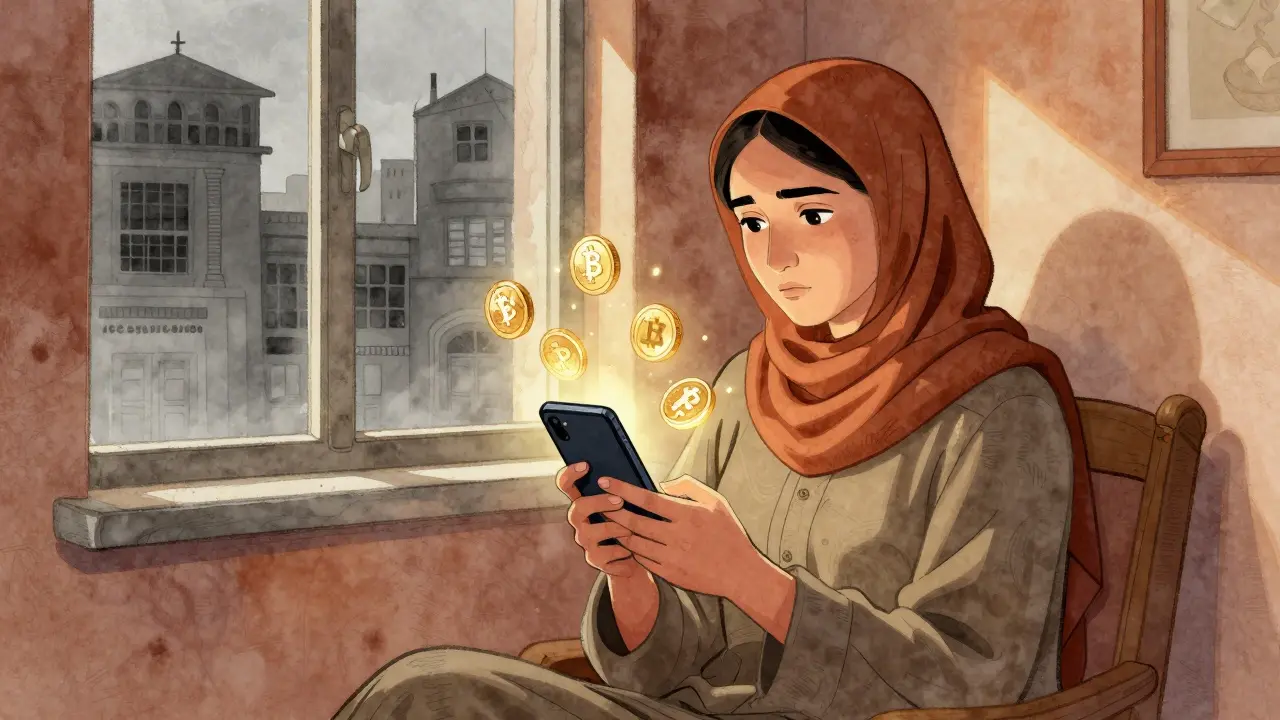
Perhaps the most poignant aspect of this story involves women. Under the current restrictions, Afghan women face severe limitations on employment, education, and even movement. They are often denied identification documents required for opening bank accounts. This exclusion from the formal financial system left them vulnerable until they found an alternative.
Roya Mahboob, founder of the Digital Citizen Fund, has been working tirelessly to provide Afghan women with digital literacy and financial tools. Her organization focuses heavily on Bitcoin ownership and usage. Mahboob notes that cryptocurrency offers a unique hope for financial freedom. Because it doesn’t require a bank account or ID card, it allows women to store value and transact independently. "It gives them a hope of financial freedom," she explained. Collaborating with groups like the Human Rights Foundation, these initiatives leverage the decentralized nature of Bitcoin to democratize access to finance in one of the most oppressive environments in the world.
For many women, holding crypto isn’t about getting rich; it’s about having a safety net that the state cannot easily seize or block. It is a tool of resilience in the face of systemic exclusion.
Economic Desperation Drives Adoption
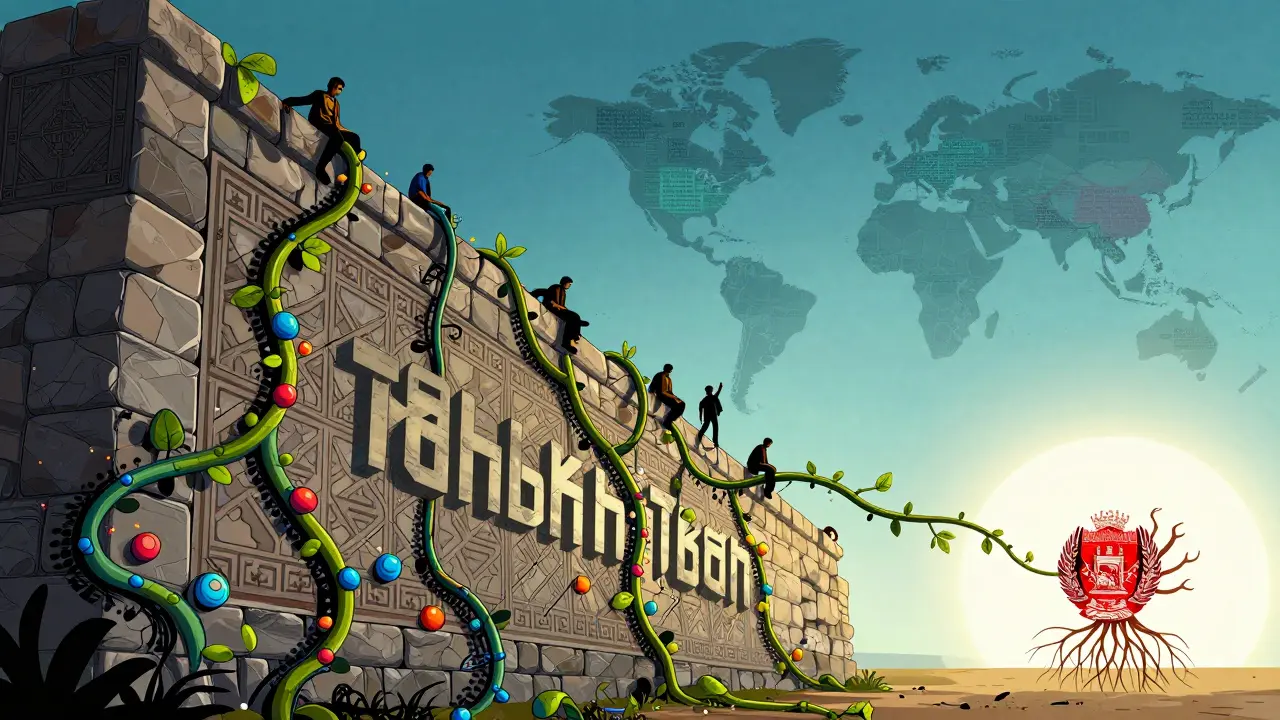
You cannot separate the crypto ban from the broader humanitarian crisis. The United Nations warned in 2022 that 97% of Afghans would fall below the poverty line. Food is available in markets, but people lack the purchasing power to buy it. Traditional aid flows have been disrupted, and foreign reserves remain frozen.
In this context, cryptocurrency becomes less of an investment vehicle and more of a survival mechanism. When your local currency is unstable and your bank accounts are frozen or inaccessible, digital assets offer a way out. Despite high illiteracy rates and unreliable power supplies, the population has adapted. Mobile phones, even basic ones, allow access to lightweight wallets and P2P trading platforms. The desperation to survive overrides the fear of punishment.
Experts argue that the long-term sustainability of this ban is questionable. As long as the traditional banking sector remains broken and sanctions persist, the demand for alternative financial rails will grow. The Taliban may control the streets, but they struggle to control the code.
What Does the Future Hold?
Looking ahead to late 2026 and beyond, the outlook for Afghanistan’s crypto landscape remains tense. The government shows no signs of reversing its stance. In fact, additional restrictions on high-speed internet access complicate matters further, potentially limiting accessibility while also hindering enforcement capabilities.
However, global trends are moving away from prohibition. With over half of the countries that once banned crypto now lifting those restrictions, Afghanistan stands increasingly isolated. Industry analysts believe the likelihood of future global bans is very small. Governments are realizing that accommodation yields tax revenue and innovation, while prohibition drives activity underground.
For the average Afghan citizen, the strategy remains simple: stay quiet, use trusted P2P networks, and rely on stablecoins for daily needs. For the rest of the world, Afghanistan serves as a stark reminder that you can ban the technology, but you cannot ban the human desire for financial autonomy.
Is Bitcoin legal in Afghanistan in 2026?
No, Bitcoin and all other cryptocurrencies are strictly illegal in Afghanistan. The Taliban government banned all crypto activities in August 2022, citing religious grounds under Sharia law. Engaging in trading, mining, or holding crypto can lead to arrests and penalties.
Why did the Taliban ban cryptocurrency?
The primary reason is religious. The Taliban considers cryptocurrencies 'haram' (forbidden) because they view them as speculative and lacking real-world asset backing, which they equate to gambling. There are also concerns about capital flight and loss of monetary control.
How do people use crypto if it is banned?
People use peer-to-peer (P2P) networks and underground markets. Since centralized exchanges are shut down, individuals trade directly with each other via mobile apps and messaging platforms. Stablecoins like USDT are particularly popular for remittances and saving value.
Does the crypto ban affect women differently?
Yes, significantly. Many Afghan women are excluded from the formal banking system due to lack of ID and employment restrictions. Cryptocurrency provides them with a rare avenue for financial independence and security, allowing them to receive funds without needing a traditional bank account.
Will Afghanistan lift the crypto ban soon?
It is unlikely in the near future. The Taliban's stance is deeply rooted in their ideological interpretation of Islamic law. While global trends favor regulation over prohibition, Afghanistan remains an outlier with no indicated plans to reverse the ban.




Drew M
July 3, 2026 AT 07:04Oh, the sheer drama of it all! 😱 It is absolutely fascinating how these so-called 'restrictive jurisdictions' end up creating the most vibrant underground economies. 📉📈 The irony is just palpable, isn't it? While the Taliban are busy issuing decrees based on some archaic interpretation of Sharia, the people are out there using Bitcoin to survive. 🙄 It’s almost poetic in a tragic sort of way. One has to admire the resilience, even if the situation is utterly abysmal. 💅✨
Nick Wengel
July 4, 2026 AT 19:50I think we need to look at this with more empathy rather than just judging the political situation. People are trying to survive when their banks are frozen and their currency is worthless. It is not about rebellion; it is about feeding families. The P2P networks mentioned here are lifelines for many who have no other choice. We should respect that they found a way to keep money flowing despite the heavy restrictions placed upon them by those in power.
Deep Rahman
July 5, 2026 AT 16:54When one considers the fundamental nature of human existence, the drive for financial autonomy becomes not merely an economic desire but a profound philosophical necessity that transcends borders and laws. The Taliban's attempt to suppress this through religious doctrine ignores the basic reality that value is a social construct agreed upon by participants, and when the state fails to provide a stable medium of exchange, the people will inevitably create their own decentralized systems to ensure their continued survival and dignity in a world that has largely abandoned them to their fate without recourse or support from the international community which watches from afar.
Melissa Beckwith
July 7, 2026 AT 01:02You really need to understand that blockchain technology is inherently resistant to censorship because it relies on distributed consensus mechanisms that no single entity can control or shut down effectively without controlling the majority of the network hash rate which is practically impossible in this context. The article mentions USDT but you have to realize that stablecoins are just as susceptible to de-pegging risks during times of extreme geopolitical stress, yet they remain the primary vehicle for remittances because traditional SWIFT channels are completely blocked for Afghan entities due to sanctions that have been in place for years now making digital assets the only viable option for cross-border transactions regardless of what the local authorities say about haram gambling.
Tuan Nguyen
July 8, 2026 AT 08:37The entire premise of this narrative is flawed because it romanticizes a black market that is likely rife with fraud, scams, and exploitation by local warlords who use these unregulated channels to siphon funds while the average citizen bears the brunt of volatility and lack of legal recourse. It is naive to assume that P2P networks offer true freedom when they are often monitored by sophisticated surveillance tools available to any regime with decent tech infrastructure, and the idea that women are gaining empowerment through crypto is a simplistic Western projection that ignores the harsh realities of patriarchal enforcement where possession of such devices could lead to severe physical punishment rather than financial independence.
Ray Arney
July 8, 2026 AT 11:07I agree with Nick that empathy is key here. It's hard to judge people when they are just trying to eat. The part about Roya Mahboob's work is really important too. Giving women tools to manage their own money without needing ID is huge for their safety. I hope more NGOs focus on this kind of digital literacy instead of just sending food aid that gets stuck in bureaucracy.
Josephine Finlayson
July 9, 2026 AT 00:21I completely agree with Ray! It is so heartwarming to see how technology can be used for good in such difficult circumstances. We must support these initiatives that help women gain independence. It is truly inspiring to see resilience in action. Let us continue to spread awareness about these issues. Thank you for sharing this perspective. It is very helpful.
Alicia Hull
July 10, 2026 AT 16:42This is a critical issue that demands immediate attention from the global community. How can we claim to support human rights while ignoring the financial exclusion of Afghan women? The ban is not just an economic policy; it is a tool of oppression. We need to pressure international bodies to find ways to bypass these sanctions for humanitarian crypto aid. Silence is complicity. We must act now to protect vulnerable populations from systemic erasure.
Hazel Fruitman
July 11, 2026 AT 09:33its sad but its also kinda funny how they try to ban something thats already everywhere lol. people always find a way around rules. guess they forgot the internet isnt a toy they can just turn off. whatever tho, hope everyone stays safe out there.