
BitMEX is not for beginners
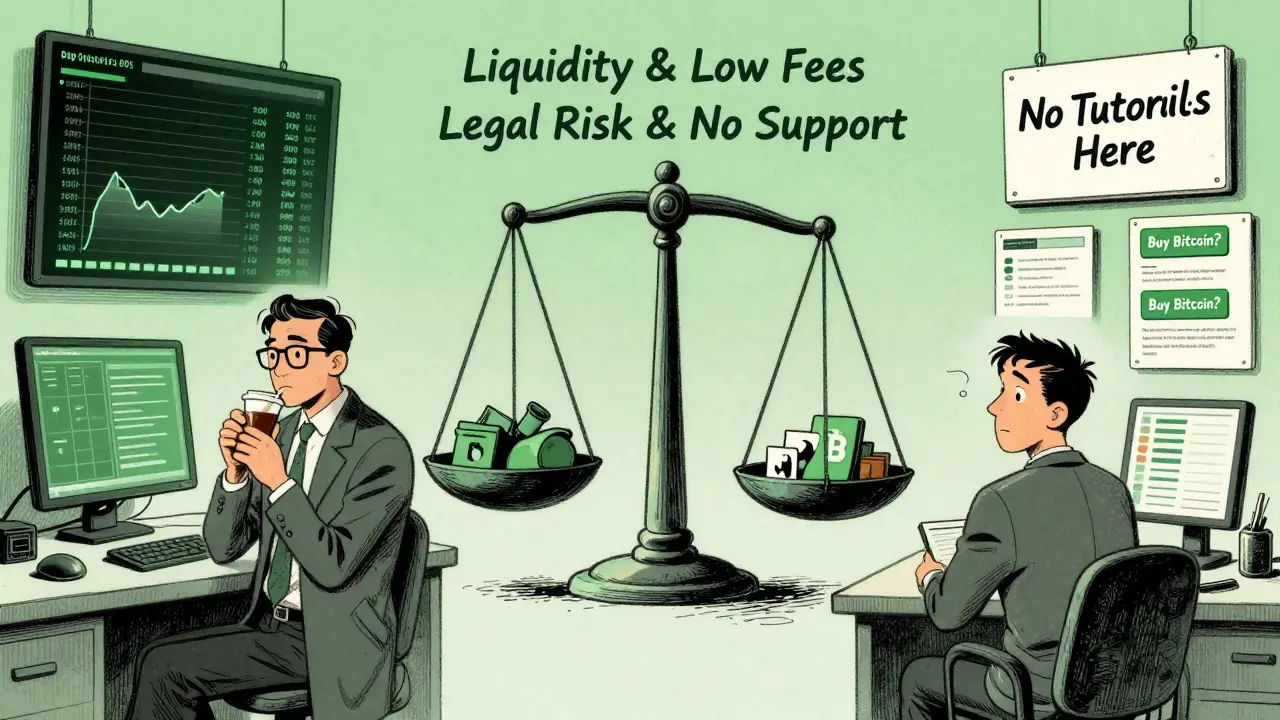
If you're new to crypto trading, BitMEX will overwhelm you. The interface doesn't hold your hand. There are no guided tutorials. No simple buy buttons. You need to understand order types, funding rates, and liquidation mechanics before you even deposit a dollar. This isn't Robinhood. This is a professional trading floor built for people who already know how markets move. If you're looking for a simple way to buy Bitcoin and hold it, walk away. BitMEX isn't that platform.
What BitMEX actually offers
BitMEX launched in 2014 as the first exchange to offer 100x leverage on Bitcoin trades. At the time, most platforms gave you 3x or 5x. BitMEX changed the game. Today, it still leads in liquidity for Bitcoin perpetual swaps. On a good day, you’ll see $1.5 billion to $2.3 billion traded in just 24 hours. That’s more than most exchanges handle in a week. Why does that matter? Because deep liquidity means you can enter and exit large positions without crashing the price. For institutional traders and hedge funds, that’s gold.
BitMEX now also offers spot trading for 12 coins, including BTC, ETH, and SOL. But don’t get excited-this isn’t Binance. You won’t find hundreds of tokens here. The real power is still in derivatives. Perpetual contracts, futures, and options dominate. You can trade BTC/USD, ETH/USD, SOL/USD, and a few others with leverage up to 100x. That means you can control a $100,000 position with just $1,000. Sounds powerful? It is. Until the market moves against you.
The high-risk, high-reward reality
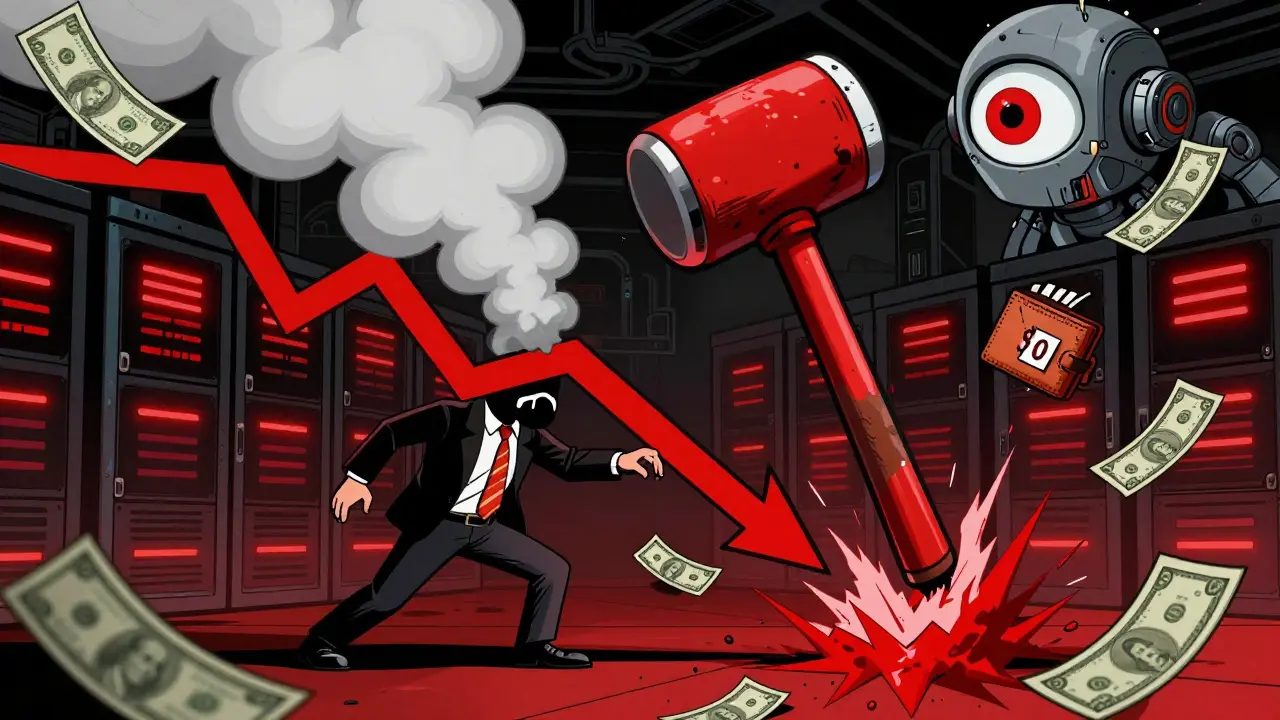
100x leverage isn’t a feature. It’s a warning label. Most retail traders who use that level of leverage get wiped out. BitMEX doesn’t stop you. It doesn’t even warn you clearly. One moment you’re up $5,000. The next, your position is liquidated because Bitcoin moved 1% against you. That’s how leverage works. And BitMEX’s liquidation engine is brutal. Users on G2 and Reddit report being liquidated even when they had stop-losses set. Why? Because during fast market swings, the system can’t fill orders fast enough. The price gaps past your stop. You lose everything.
But here’s the flip side. Traders who know what they’re doing make serious money. One Reddit user reported making $28,000 in three weeks during a Bitcoin rally using 25x leverage. That’s not luck. That’s discipline. They had a plan. They managed risk. They didn’t over-leverage. BitMEX gives you the tools. It doesn’t give you the wisdom.
Fees and costs
BitMEX’s fee structure is one of its strongest points. Makers (people who add liquidity by placing limit orders) get paid -0.025%. That means you earn money just for placing an order that gets filled later. Takers (those who remove liquidity by market orders) pay 0.075%. Compare that to Binance Futures, where makers pay 0.04% and takers pay 0.08%. BitMEX rewards you for being patient.
Withdrawal fees are simple: 0.0005 BTC for Bitcoin. No other cryptocurrencies are accepted for withdrawals. You must convert everything to BTC first. That’s inconvenient, but not unheard of. Other exchanges like Deribit do the same. The real issue? Withdrawals can take 2.3 hours on average during high traffic. That’s longer than most platforms. If you’re day trading and need to move funds fast, you’ll feel the delay.
Security and trust
BitMEX stores 98.5% of its users’ funds in cold storage, according to a March 2025 audit by Kudelski Security. That’s solid. Two-factor authentication is mandatory. Withdrawal whitelisting lets you lock down which addresses you can send funds to. These are standard best practices.
But trust isn’t just about tech. It’s about history. In October 2020, BitMEX paid a $100 million fine to the U.S. Commodity Futures Trading Commission (CFTC) for failing to run an anti-money laundering program. The founders were accused of ignoring U.S. laws for years. The platform immediately stopped serving American users. That’s not a minor slip-up. That’s a systemic failure. Even now, regulators in Seychelles require BitMEX to hold $150 million in segregated customer funds. That’s good-but it doesn’t erase the past.
Some experts warn that BitMEX’s offshore structure creates counterparty risk. If the company gets shut down tomorrow, you might not get your money back. That’s not paranoia. It’s reality. Platforms like Kraken and Coinbase are regulated in the U.S. and Europe. BitMEX isn’t. You’re trusting a company in Seychelles with your life savings.
Who should use BitMEX?
BitMEX is ideal for experienced traders who:
- Understand how perpetual swaps and funding rates work
- Have a strict risk management system
- Trade large positions (minimum $10,000)
- Need deep liquidity for BTC and ETH
- Are outside the U.S. and can’t access regulated futures platforms
It’s terrible for:
- Beginners
- People who want to buy and hold crypto
- Those who need fiat deposits (USD, EUR, etc.)
- Anyone who expects customer service to solve their problems
The interface is cluttered. The learning curve is 30 to 45 hours, according to a 2025 survey of 1,240 traders. There are no educational videos on the homepage. No FAQs for new users. You’re expected to already know how to trade. The mobile app scores 3.5/5 on Google Play. That’s below average. It works-but it’s not intuitive.
Alternatives and competition
BitMEX used to be the undisputed king of crypto derivatives. Now, it’s third. Binance Futures handles nearly $50 billion in daily volume. Bybit hits $22 billion. Deribit is strong in Europe. Kraken Futures is growing fast, especially since it’s regulated in the U.S.
BitMEX still wins on Bitcoin liquidity. Its order book depth-500 BTC within 0.5% of the mid-price-is deeper than anyone else’s. That’s why institutional traders still use it. But for retail users? The gap is closing. Platforms like Bybit now offer similar leverage, better UIs, and fiat on-ramps.
If you’re in the U.S., BitMEX is off-limits. You’ll need Kraken Futures, Coinbase Advanced, or OKX (via VPN, which violates their terms). Outside the U.S., Bybit and OKX are often better choices because they support more coins, have easier interfaces, and accept bank transfers.
What’s next for BitMEX?
BitMEX announced a roadmap for 2026. They plan to add fiat on-ramps in 15 new countries-just not the U.S. They’re expanding spot trading to 25 coins. They launched a social trading feature called Guilds 2.0 with weekly prize pools. They’re integrating Chainlink oracles for more accurate price feeds.
But the future is uncertain. Market share has dropped from 15.2% in 2020 to 8.7% in 2025. Regulators are watching. Fitch Ratings downgraded BitMEX to ‘CCC’-a speculative grade with high default risk. Arcane Research says there’s a 78% chance it survives through 2027. That’s not a guarantee. It’s a guess.
BitMEX isn’t dying. But it’s shrinking. It’s no longer the wild frontier of crypto trading. It’s a niche tool for a small group of professionals who know how to use it-and who are willing to accept the risks.
Final verdict
BitMEX is still the deepest pool for Bitcoin derivatives. If you’re a pro trader outside the U.S., it’s worth using. The fees are low. The liquidity is unmatched. The tools are powerful.
But if you’re a beginner, a casual trader, or someone who wants safety and simplicity-avoid it. The risks aren’t just financial. They’re legal, operational, and psychological. The platform doesn’t protect you from yourself. It gives you the rope. And if you hang yourself with it, they won’t blame themselves.
Use the TestNet account first. Trade with fake money for weeks. Learn the interface. Understand liquidations. Then, if you still feel confident, deposit a small amount. Never risk more than you can afford to lose. And never, ever use 100x leverage unless you’ve studied every edge case.
BitMEX isn’t broken. It’s just not for everyone.
Is BitMEX still operational in 2026?
Yes, BitMEX is still fully operational as of early 2026. It serves over 1.2 million active monthly users, mostly outside the United States. The platform continues to process trades, support withdrawals, and update its infrastructure. However, it remains banned in the U.S. and several other jurisdictions due to its 2020 regulatory settlement.
Can I deposit USD or EUR on BitMEX?
No, BitMEX does not accept fiat currency deposits like USD, EUR, or GBP. You can only deposit cryptocurrencies-primarily Bitcoin (BTC). You must first buy crypto on another exchange (like Binance or Kraken), then transfer it to your BitMEX wallet. This is a major limitation for beginners and users in countries with limited crypto access.
Why do people get liquidated on BitMEX even with stop-losses?
BitMEX uses a price index based on multiple exchanges to determine liquidations. During extreme volatility, the market price can spike or crash faster than the platform’s matching engine can process orders. This causes a gap between your stop-loss trigger and the actual execution price. Your position gets liquidated at a worse price than expected. This is called slippage, and it’s more common on high-leverage trades. BitMEX doesn’t guarantee execution prices-only that the system will close your position when conditions are met.
Is BitMEX safe for long-term holdings?
No. BitMEX is not designed for holding crypto. It’s a trading platform. While 98.5% of assets are in cold storage, the platform is optimized for active trading, not storage. Withdrawals can be slow during high volume. There’s no insurance fund like some regulated exchanges offer. For long-term storage, use a hardware wallet like Ledger or Trezor. Keep your trading funds on BitMEX only if you’re actively trading.
Does BitMEX have a mobile app?
Yes, BitMEX has official apps for iOS and Android. The iOS version is 3.7.2 (updated August 2025), and Android is 4.1.0 (updated September 2025). Both apps allow you to place trades, check positions, and manage withdrawals. However, reviews are mixed-3.8/5 on Apple Store and 3.5/5 on Google Play. Many users report lag during volatility and a confusing layout. It works, but it’s not as smooth as apps from Bybit or Kraken.
What’s the minimum deposit on BitMEX?
The minimum deposit for spot trading is $10 worth of cryptocurrency. For derivatives trading, you need at least $100 to open a position. However, to make meaningful trades with leverage, most users deposit $1,000 or more. The platform doesn’t enforce a hard minimum beyond these thresholds, but trading smaller amounts is often impractical due to fees and slippage.
Can I trade on BitMEX if I live in the U.S.?
No. BitMEX completely blocked access to U.S. users after its October 2020 settlement with the CFTC. The platform uses IP blocking and KYC verification to prevent U.S. residents from signing up. Even if you use a VPN, you’re violating their terms of service. If caught, your account may be frozen, and funds could be locked indefinitely. Don’t risk it.
How does BitMEX compare to Binance Futures?
Binance Futures has higher overall volume ($48B daily vs. BitMEX’s ~$5B), supports over 350 trading pairs, offers fiat on-ramps, and has a more user-friendly interface. BitMEX has deeper liquidity in Bitcoin perpetuals and better maker rebates (-0.025% vs. Binance’s 0.04%). BitMEX’s interface is more complex, lacks educational tools, and doesn’t support fiat. Binance is better for most users. BitMEX is better for professionals who prioritize BTC liquidity and low fees.



Tiffani Frey
January 12, 2026 AT 03:41Tre Smith
January 13, 2026 AT 07:15Rahul Sharma
January 13, 2026 AT 08:54Brittany Slick
January 14, 2026 AT 04:05greg greg
January 15, 2026 AT 17:43LeeAnn Herker
January 17, 2026 AT 12:48