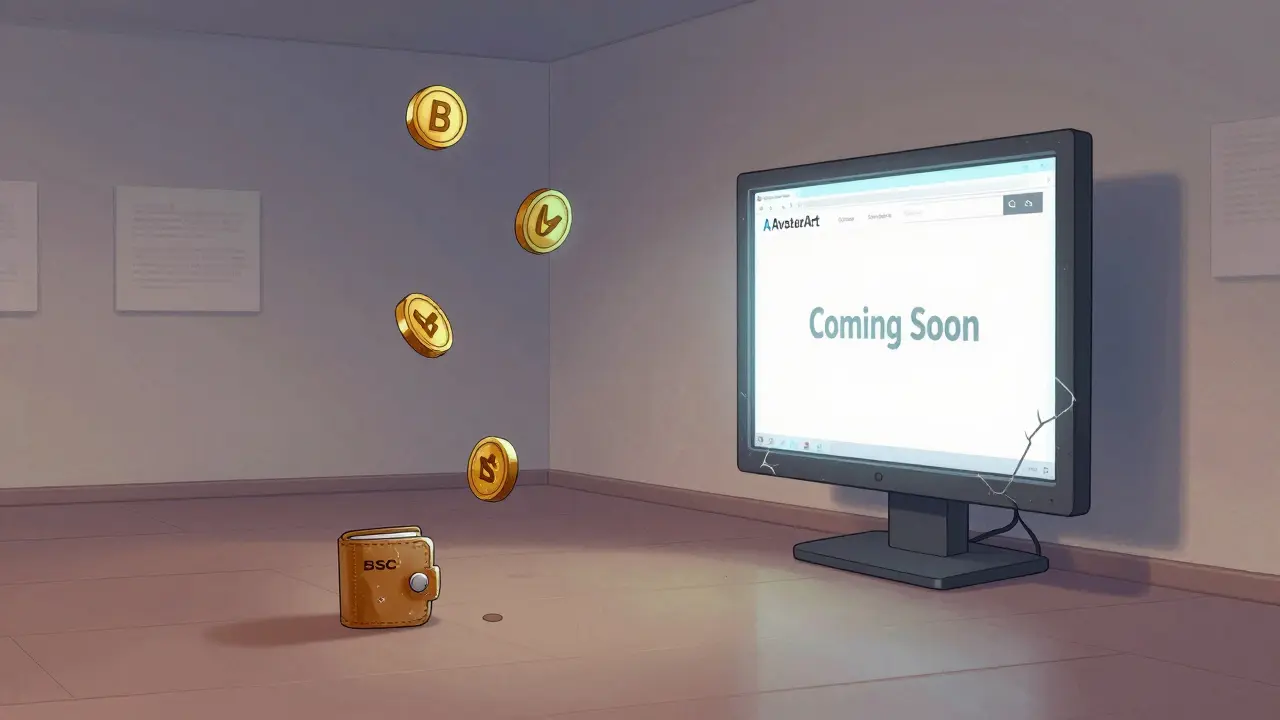
Back in July 2025, ByteNext ran a quiet but significant airdrop for its BNU token - 25,000 tokens split among 1,000 winners, each getting exactly 25 BNU. It wasn’t flashy. No big influencers, no viral TikTok campaigns. Just a straightforward community push to seed users for their AvatarArt NFT marketplace. If you missed it, you’re not alone. Most people didn’t even notice - and now, months later, the token is practically dead.
How the BNU Airdrop Actually Worked
The airdrop didn’t require you to buy anything. No upfront cost. No KYC. But it did ask you to do five things, all of which were designed to spread awareness and build a real user base. Here’s what you had to do to qualify:- Add BNU to your CoinMarketCap watchlist using the official token page
- Follow both ByteNext Twitter accounts: @Bytenextio and @zeusc_ventures
- Join the official Telegram group (t.me/ByteNextOfficial) and the announcement channel (t.me/ByteNextAnnouncement)
- Retweet the campaign post and tag at least five followers
- Have a Binance Smart Chain (BSC) wallet ready - no Ethereum, no Solana, just BSC
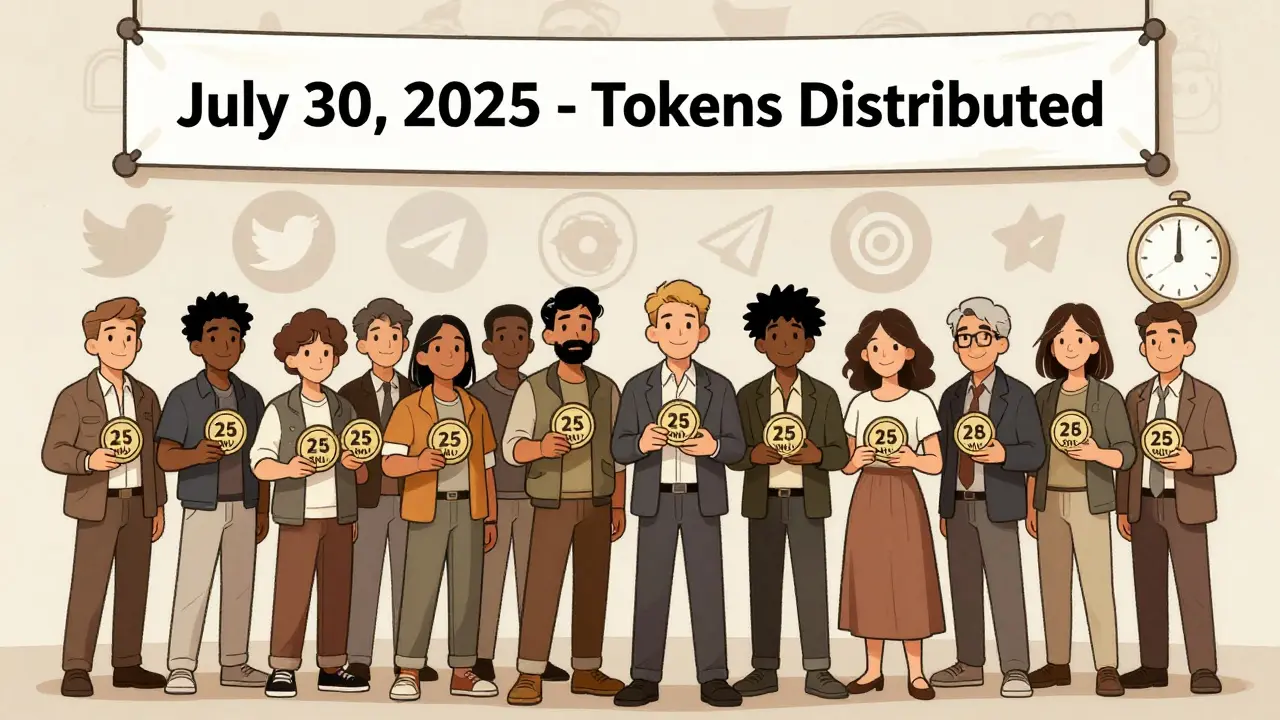
That’s it. No complex tasks. No mining. No holding for 30 days. Just social media and wallet setup. The campaign ran for five days - July 3 to July 8, 2025 - and winners were picked randomly from everyone who completed all five steps. No favors. No insider access. The results were announced on July 15, and tokens hit wallets on July 30.
Why these steps? Because ByteNext wasn’t trying to pump the price. They were trying to build a community of real users - artists, collectors, and early adopters - who would actually use their platform. The BNU token wasn’t just a speculative asset. It was meant to be the fuel for their NFT marketplace.
What BNU Was Actually For
If you got those 25 BNU tokens, you didn’t just get a random crypto asset. You got access to a small but functional ecosystem:- Pay fees to list or sell NFTs on AvatarArt
- Buy ad space in virtual 3D art galleries
- Pay artists directly when you buy their work - the token handled royalties automatically
- Stake BNU or NFTs in liquidity pools to earn more tokens
- Vote on which artworks get featured in curated exhibitions
- Vote on platform updates - like changing fee structures or adding new features
This wasn’t a meme coin. It was built like a real decentralized platform. The token had utility. It had governance. It had a clear role in the ecosystem. That’s rare for a project that did an airdrop. Most airdrops are just giveaways with no plan. ByteNext had one - at least on paper.
What Happened After the Airdrop
The airdrop ended. Winners got paid. And then… silence.By December 2025, the BNU token had stopped trading on every major exchange. CoinGecko, CoinMarketCap, Binance - all of them showed zero volume for 24 hours. On Coinbase, the last trade was $6.36 in total volume. That’s less than the cost of a coffee. The price? Around $0.0006 per token. It used to hit $0.00074. Now it’s down 18.6% from its all-time high - and 99.9% from its peak in BTC terms.
Think about that. 200 million BNU tokens were created. The entire market cap? Just $120,584. That means the project distributed 0.0125% of its total supply in the airdrop. That’s not a big giveaway. It’s a seed. And the seed didn’t grow.
There’s no new blog posts. No Twitter updates since August. The GitHub repo hasn’t had a commit in over four months. The Telegram group has 1,200 members - but only 3 or 4 active messages a week. The website, bytenext.io, still loads. But there’s no live marketplace. No NFTs being sold. No artists signing up.
It’s not that the idea was bad. NFT marketplaces for artists are still a real need. But execution failed. The team didn’t follow up. No marketing push after the airdrop. No partnerships. No features launched. The token was given away, but the platform never got used.
Why the Airdrop Failed to Create Momentum
Airdrops can work. Look at Uniswap or Arbitrum - they gave away tokens, then built real utility, then got people to use them. ByteNext did the first part. They skipped the rest.Here’s what they missed:
- No onboarding - Winners got tokens, but no guide on how to use them
- No incentives - No rewards for listing art, no bonuses for inviting others
- No transparency - No roadmap updates. No team announcements. No progress reports
- No community building - The Telegram group was a ghost town
- No exchange listings - After the airdrop, they didn’t try to get listed on any new exchanges
People don’t care about tokens unless they can do something with them. If you got 25 BNU and had no idea how to use them, you probably just sold them for a few cents or forgot about them. That’s what most did.
Is There Any Hope Left for BNU?
Technically, yes. The code exists. The wallet addresses are still valid. The NFT marketplace concept is still valid. But practically? No.Without active development, no new users, and zero trading volume, the token is essentially worthless. Even if someone revived the platform tomorrow, the token’s reputation is damaged. People won’t trust it. Exchanges won’t list it. Artists won’t risk their work on a dead platform.
There’s no evidence of a new airdrop. No announcements. No team updates. The project appears abandoned.
If you still have BNU tokens in your wallet - hold them. They’re not going to crash to zero. But don’t expect them to rise either. They’re digital artifacts now. A relic of a campaign that started strong but faded fast.
What You Can Learn From This
This isn’t just a story about one failed airdrop. It’s a lesson for anyone thinking about joining one:- Check the team - Are they active? Do they post updates? Or do they vanish after the airdrop?
- Check the utility - Does the token do anything real? Or is it just a placeholder?
- Check the volume - If trading volume is under $100 a day, the project is probably dead
- Don’t chase free tokens - Free doesn’t mean valuable. Sometimes, it means the project has no money left to pay for marketing
- Use the token or lose it - If you get tokens, try to use them. If you can’t, sell them before they become worthless
The BNU airdrop wasn’t a scam. It was a missed opportunity. A project with potential that didn’t follow through. And that’s more common than you think.
Was the ByteNext BNU airdrop legitimate?
Yes, it was legitimate. The airdrop ran through CoinMarketCap, had clear rules, and distributed tokens to verified wallets on Binance Smart Chain. No one was asked to send crypto to participate. However, legitimacy doesn’t mean success. The project stopped developing after the airdrop, so while it wasn’t a scam, it also didn’t deliver on its promises.
Can I still claim BNU tokens from the airdrop?
No. The airdrop ended on July 8, 2025. Winners were selected and paid by July 30, 2025. There are no active claims open, and no official announcements suggest a new airdrop is planned. Any website or social media post claiming you can still claim BNU is likely a scam.
What’s the current price of BNU?
As of December 2025, BNU trades at approximately $0.0006 per token on the few remaining decentralized exchanges. The 24-hour trading volume is under $10 across all platforms. The token has stopped trading on major exchanges like Binance and Coinbase, and its market cap is around $120,584 with a 200 million token supply.
Do I need a BSC wallet to use BNU?
Yes. The BNU token runs exclusively on the Binance Smart Chain (BSC). You need a wallet like MetaMask, Trust Wallet, or any wallet that supports BSC to receive, hold, or use BNU tokens. You cannot store BNU on Ethereum, Solana, or centralized exchange wallets that don’t support BSC.
Is the AvatarArt NFT marketplace still active?
No. The AvatarArt NFT marketplace, which was the main purpose of the BNU token, has been inactive since mid-2025. There are no listings, no artist sign-ups, and no updates from the team. The website still exists, but it’s essentially a static page with no functionality.
Should I buy BNU tokens now?
Almost certainly not. With zero trading volume, no development, and no community activity, BNU has no future as an investment. The token’s value is based entirely on speculation, and there’s no reason to believe that will change. If you already hold BNU, you might as well hold it as a curiosity. If you don’t, don’t buy it.
Shawn Roberts
December 26, 2025 AT 10:17Thought it was gonna be big like UNI but nah
Still have it in my trust wallet like a digital fossil
At least i didnt lose money on it 🤷♂️
Abhisekh Chakraborty
December 27, 2025 AT 05:29They hype you up with free tokens then vanish like a ghost
My cousin got 50 BNU and sold it for 30 cents
Now he says he learned his lesson
But he still joins every airdrop 🤦♂️
dina amanda
December 28, 2025 AT 00:10That's a government backdoor to track crypto users
They knew who got the tokens and now they're watching us
Why else would they pick BSC? So the feds could monitor wallets
They don't want you to succeed they want to control you
Emily L
December 29, 2025 AT 23:46Not because i think it'll go up
But because i refuse to let these guys win
They thought they could just drop tokens and disappear
Well guess what i'm keeping them as a reminder
Don't trust free shit
Gavin Hill
December 31, 2025 AT 00:20It's the wasted potential
Artists needed a fair platform
And someone built the engine but never turned the key
We keep chasing free tokens
But forget to ask what they're for
Maybe that's the real lesson
Not the money
But the meaning
SUMIT RAI
December 31, 2025 AT 04:54Got 1000 tokens from some project last year
Now they're worth less than my coffee
But hey at least i got the free gas fees 😎
Andrea Stewart
January 1, 2026 AT 18:02Here's what you can do
First check your BSC wallet balance on BscScan
Then try sending 1 BNU to a friend who also has it
It still works technically
And if you're feeling nostalgic
Try visiting the AvatarArt site on archive.org
You'll see the original vision
It's dead but not gone
And sometimes that's enough