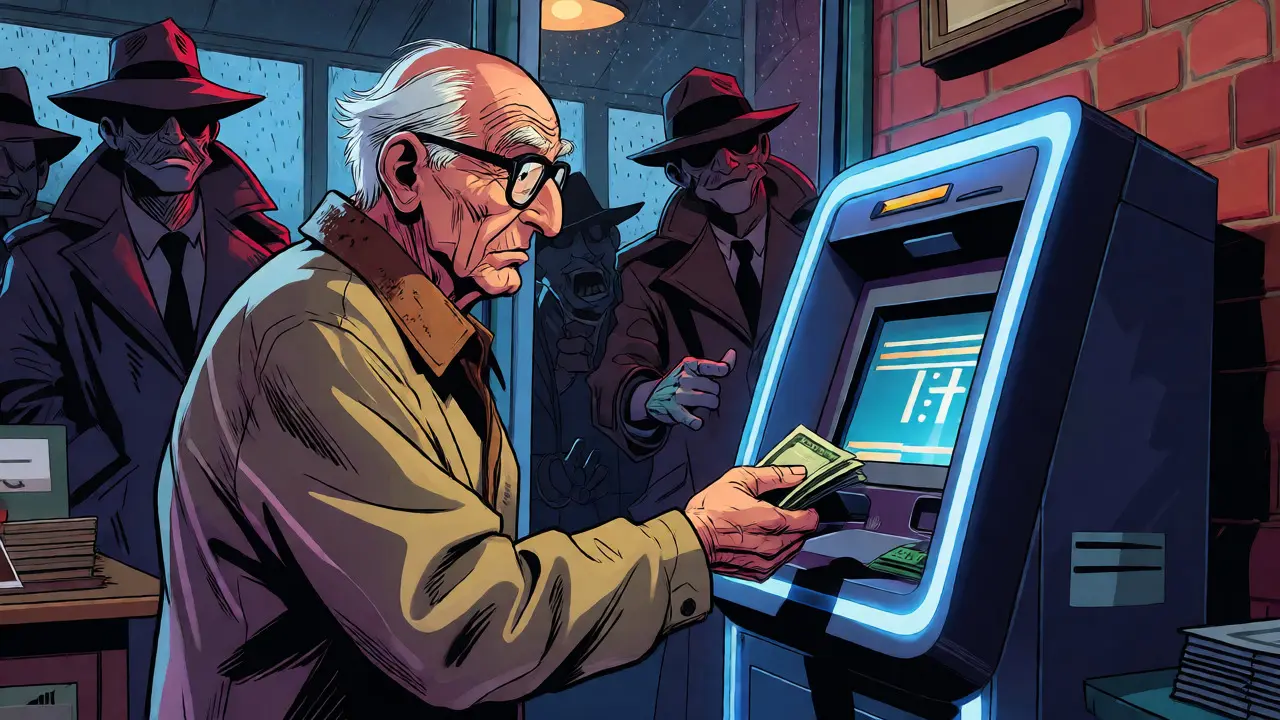
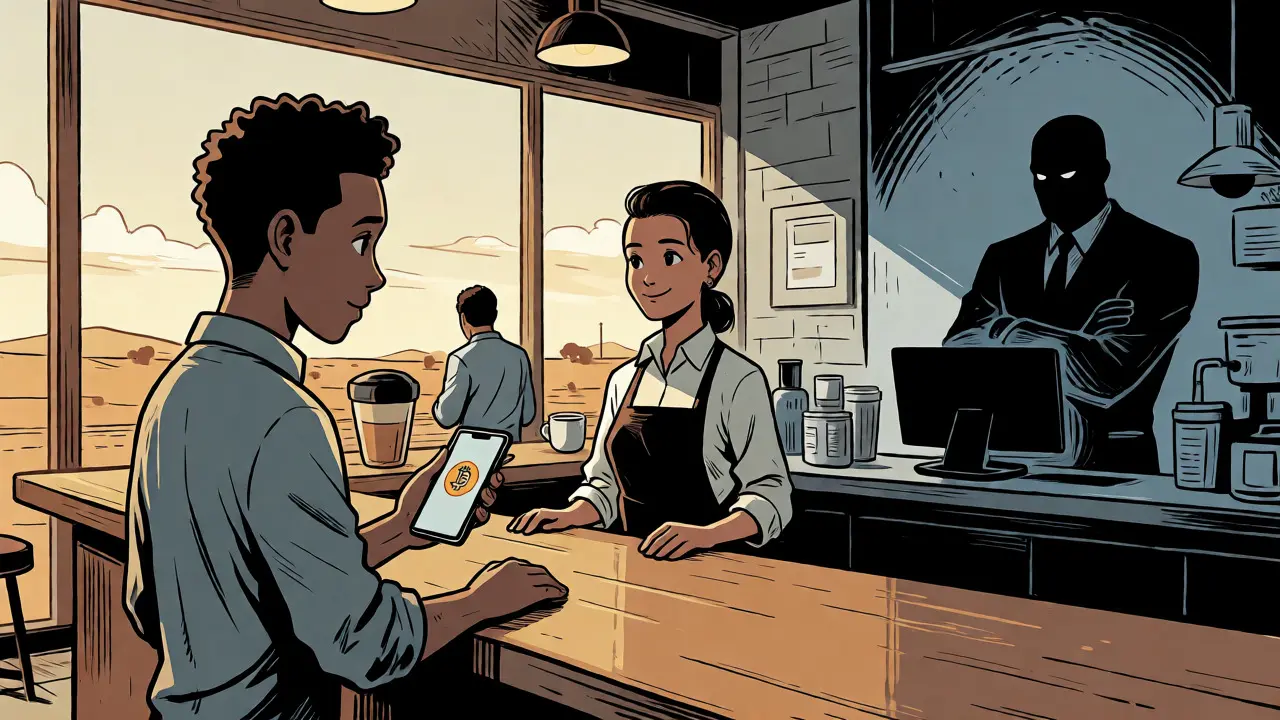
You walk into a gas station or a corner store, see a machine that looks like an ATM but promises Bitcoin, and think it’s just another way to access digital money. But for thousands of Americans, that convenience turned into a nightmare. In 2024 alone, victims lost over $246 million to scams facilitated by these kiosks. That’s not a rounding error; it’s a crisis hiding in plain sight.
The numbers are staggering. The FBI’s Internet Crime Complaint Center (IC3) logged more than 10,956 complaints related to cryptocurrency ATMs last year. Most heartbreaking? Two-thirds of those victims were over 60 years old. These aren’t tech-savvy traders getting burned on volatile markets; they’re grandparents losing retirement savings because a scammer told them to "secure" their funds by sending cash to a machine.
| Metric | Data Point | Source/Context |
|---|---|---|
| Total Reported Losses | $246.7 Million | FBI IC3 Data |
| Number of Complaints | 10,956+ | Law Enforcement Records |
| Primary Victim Demographic | Seniors (60+) | 66% of all victims |
| Arizona State Losses | $177 Million | State Attorney General Report |
Why These Machines Are a Magnet for Scammers
Think about how you use a regular bank ATM. If you send money to the wrong person, you can often call your bank, dispute the transaction, or reverse a wire transfer within a certain window. Crypto ATMs don’t work that way. They are designed for speed and anonymity, which is great for legitimate users who value privacy, but terrible for fraud prevention.
Scammers love this setup. Once you feed cash into the machine and hit "send," the transaction is irreversible. There is no customer service number to call at 2 AM when you realize you’ve been tricked. The money vanishes into the blockchain, often moving through multiple wallets in seconds before landing in the hands of someone you’ll never meet.
Unlike traditional financial institutions, many crypto ATM operators operate in a regulatory gray area. While they are technically Money Services Businesses (MSBs) under federal law, enforcement has been patchy. Many machines lack robust Know Your Customer (KYC) checks. You might need to scan an ID for large amounts, but smaller transactions-exactly the kind scammers target-often go through with minimal scrutiny. This gap between innovation and regulation is where the theft happens.
The Technical Vulnerabilities No One Talks About
It’s not just social engineering; the hardware itself can be flawed. Security researchers from IOActive discovered critical vulnerabilities in popular models like the Lamassu Douro. Imagine being able to gain root access to an ATM simply by creating a malicious file in a specific folder during an update process. That’s exactly what CVE-2024-0674 allowed attackers to do.
This means a sophisticated criminal could potentially compromise the machine’s software, altering how transactions are processed or even stealing data directly from the device. While most everyday scams rely on manipulating the user rather than hacking the machine, these technical flaws highlight that the infrastructure supporting these kiosks isn’t always as secure as we assume. When you combine a vulnerable machine with an unregulated environment, the risk profile skyrockets.
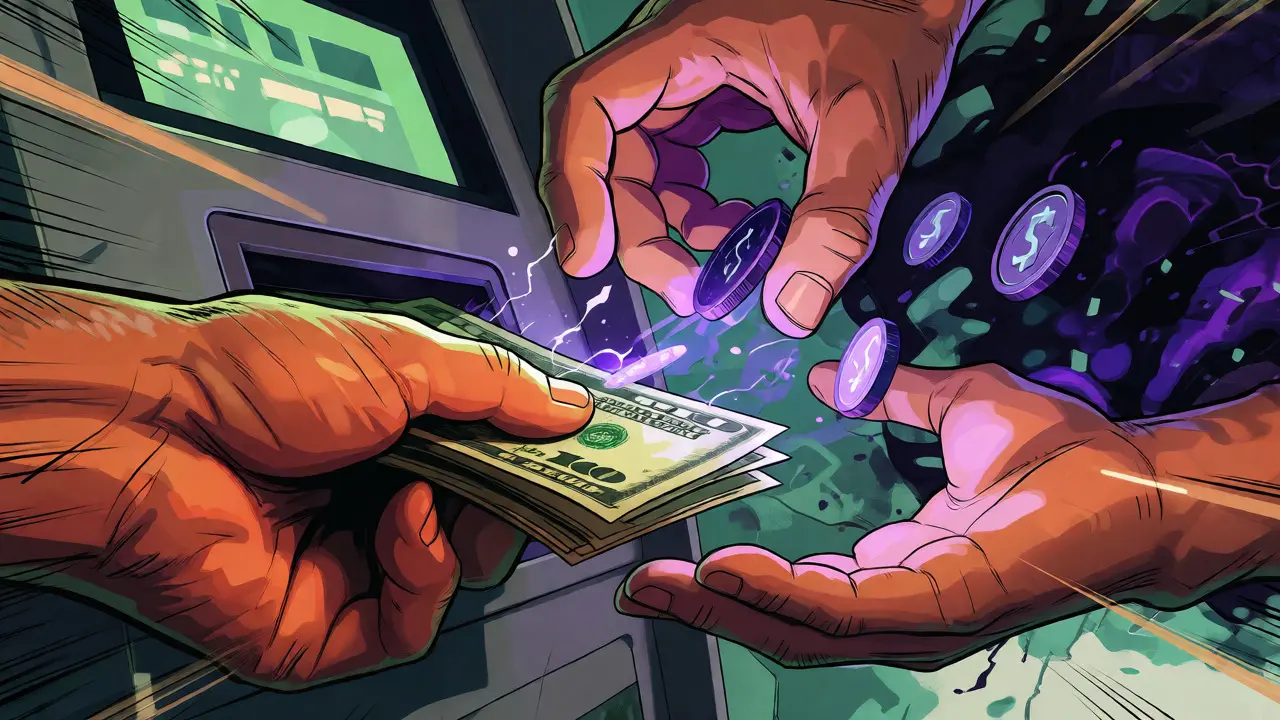
Who Is Getting Hit Hardest?
If you think crypto scams only affect young people trying to get rich quick, look again. The data shows a clear pattern: older adults are disproportionately targeted. Scammers know that seniors may be less familiar with the irreversibility of blockchain transactions. They use classic tactics-impersonating IRS agents, grandchild emergencies, or romance scams-to pressure victims into acting fast.
Consider Arizona, a state with roughly 600 crypto ATMs. Residents there lost $177 million in 2024. In Scottsdale alone, police reported $5 million in losses just this year. It’s not just big cities; families in Peoria lost nearly $1 million the previous year. These are real communities feeling the pinch. AARP executives have noted bipartisan concern among lawmakers, recognizing that while crypto offers innovation, the current safety net is full of holes.
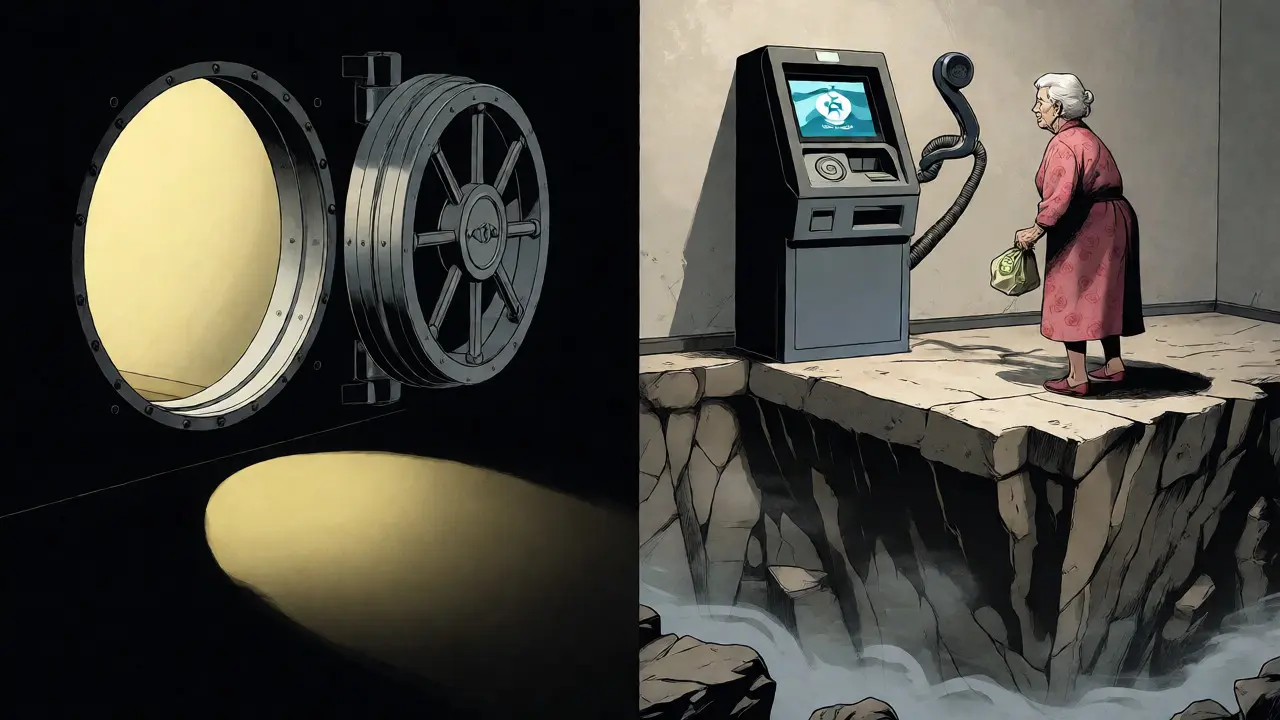
The Regulatory Crackdown: What’s Changing?
Governments are finally waking up. FinCEN issued a formal notice in August 2025 warning financial institutions about the rising risks associated with convertible virtual currency (CVC) kiosks. They’re pushing for better suspicious activity reporting and stricter adherence to Bank Secrecy Act obligations.
States are moving faster than the feds. Arizona recently passed a comprehensive law requiring daily transaction limits ($2,000 for new customers, $10,500 for existing ones) and mandating enhanced warnings on screens. Operators must now issue refunds to new customers who report fraud within 30 days. It’s a start, but enforcement remains tricky. Other states are following suit, with at least 40 introducing some form of crypto legislation in 2025.
How to Protect Yourself (and Your Parents)
You don’t need to be a tech expert to stay safe, but you do need to change your mindset. Treat every crypto ATM interaction like handing cash to a stranger on the street. Would you give a stranger $500 without a receipt, a contract, or a way to get it back? Probably not.
- Never send money based on a phone call. If someone calls you claiming to be from the government, Microsoft, or your bank and asks for crypto, hang up. Legitimate agencies do not demand payment via Bitcoin ATMs.
- Check the operator. Look for reputable brands. Avoid machines in isolated locations or stores with poor lighting.
- Read the screen carefully. New regulations require warnings, but don’t just click "I Agree." Take ten seconds to read what you’re acknowledging.
- Start small. If you must use a crypto ATM, test it with a tiny amount first to ensure the process works as expected.
- Talk to your parents. Explain that crypto is like cash, not like a credit card. Once it’s gone, it’s gone. Show them the news stories about local losses to make it real.
The industry is growing, and so is the threat landscape. Quantum computing threats loom on the horizon, potentially rendering current encryption methods obsolete, which adds another layer of complexity to long-term storage. But right now, the biggest danger isn’t futuristic tech-it’s human psychology meeting poorly regulated machines.
We shouldn’t ban innovation, but we must stop pretending these kiosks are safe banks. They are high-risk tools that require high-risk awareness. Until regulations catch up fully, your best defense is skepticism. If a deal sounds too good to be true, or if someone pressures you to act immediately, walk away. Your money-and your peace of mind-is worth more than a quick transaction.
Are crypto ATMs regulated like regular banks?
No, not entirely. While they fall under Money Services Business rules, many crypto ATMs operate with fewer safeguards than traditional banks. Unlike banks, they often lack immediate fraud reversal options and strict identity verification for smaller transactions, making them attractive targets for scammers.
Can I get my money back if I’m scammed at a crypto ATM?
Usually, no. Cryptocurrency transactions are irreversible. However, some new state laws, like Arizona’s, require operators to refund new customers who report fraud within 30 days. Always check local regulations, but assume recovery is unlikely once the transaction is confirmed on the blockchain.
Why are seniors targeted by crypto ATM scams?
Scammers exploit the fact that many seniors may not understand the irreversibility of crypto transactions. They use urgent narratives (e.g., IRS debt, emergency repairs) to pressure victims into using cash-based kiosks quickly, bypassing the time needed to verify the request.
What is the biggest risk with crypto ATMs?
The combination of anonymity, speed, and lack of consumer protection. Once cash is converted to crypto and sent, there is no central authority to reverse the transaction, unlike credit card disputes or bank wires.
Are there technical hacks involved in crypto ATM scams?
Yes, though social engineering is more common. Researchers have found vulnerabilities in hardware like the Lamassu Douro model, allowing potential system compromises. However, most losses currently stem from users being tricked into sending money voluntarily.


Jamie Robb
October 20, 2026 AT 05:30my grandma lost like $2k to one of these things last year and i was so mad but honestly who puts that much cash in a machine at a gas station without checking the fine print first lol
Mark Regan
October 20, 2026 AT 18:32Oh, please. Spare me the tears for the "victims" who couldn't figure out how a simple electronic device works!! You know what's really shocking? That people still trust anonymous machines with their life savings while ignoring basic common sense!!! It’s not a crisis; it’s natural selection for the financially illiterate!!! We need to stop coddling adults who think Bitcoin is magic beans and start holding them accountable for their own stupidity!!! Why should the rest of us pay for regulations because some folks can’t read a screen or verify a phone call?!?! The government stepping in just creates more bureaucracy and delays for actual users!!! Let the market sort it out by letting these shady operators go bust when everyone realizes they’re getting ripped off!!! I’m sick of seeing headlines blaming technology instead of human error!!! If you send money to a stranger via an ATM, YOU are the idiot, not the machine!!! Wake up sheeple!!!
Brian Klidies
October 22, 2026 AT 10:48I understand the frustration with user error, but labeling seniors as financially illiterate feels a bit harsh given how sophisticated these scams have become. Many victims are manipulated by emotional triggers rather than ignorance.
Mark Regan
October 24, 2026 AT 01:58Harsh?! Life is harsh!!! Stop trying to be nice about incompetence!!!
Grace Glandy
October 24, 2026 AT 05:09Wow, this hits home! 🚀 My uncle almost fell for a grandkid emergency scam last month. He had the cash ready to shove into the kiosk until I called him and made him hang up. These machines are basically traps for lonely hearts and tired minds. We need to empower our elders, not shame them. Knowledge is power, and sharing stories like this saves lives! 💪🔥
Jack Denter
October 25, 2026 AT 21:29This is such an important topic for global awareness 🌍. In many countries, crypto adoption is huge, but consumer protection lags behind 📉. It’s fascinating how different regions handle this. Some places require biometric scans, others don’t. We need international cooperation on standards 🤝. Otherwise, scammers will just move their operations to less regulated jurisdictions 🏃♂️💨. Great article highlighting the human cost 🔥❤️.
Joy Joseph
October 26, 2026 AT 19:07The disparity in regulatory enforcement across states is indeed concerning. Arizona's approach offers a promising model, yet its effectiveness relies heavily on consistent implementation. It is imperative that other jurisdictions consider similar frameworks to mitigate risk. Furthermore, public education campaigns must be robust and accessible to all demographics, particularly the elderly. Without comprehensive understanding, technological convenience becomes a liability. We must advocate for stronger consumer protections to ensure equitable access to financial services.
Anshu Raj
October 28, 2026 AT 15:46they dont want us to know that the banks are losing control and this is their way of keeping fees high. the fbi data is probably filtered. real losses are higher. always higher. follow the money trail. its never clean.
Ankush Goyal
October 28, 2026 AT 16:42It is morally wrong to allow unregulated machines to prey on the vulnerable. . . . . People must learn responsibility. . . . . If you do not check the ID, you deserve the loss. . . . . Simple. . . . .
Edington Vernita
October 29, 2026 AT 19:29I appreciate the balanced perspective here. It seems clear that while personal vigilance is key, systemic changes are also necessary to protect those who may not have the same level of digital literacy. Finding a middle ground between innovation and safety is crucial for community well-being.