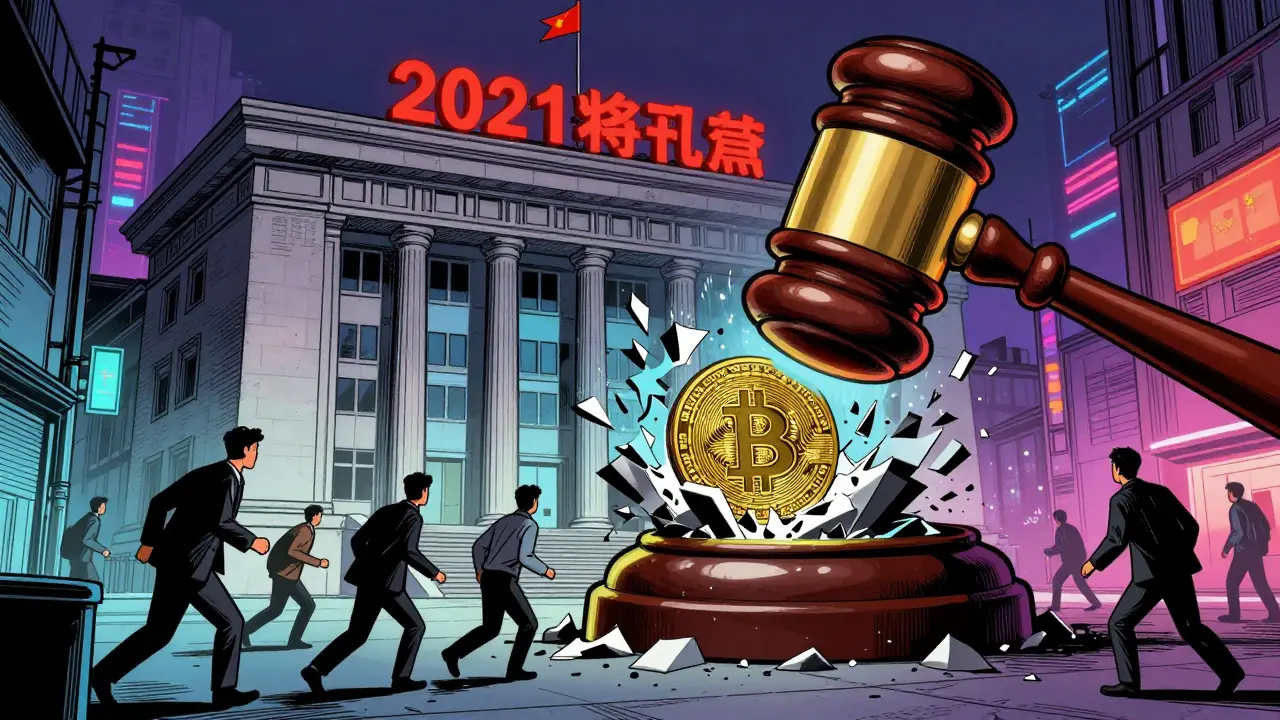
Why is this still happening? It comes down to a fascinating legal loophole. While the government banned the act of trading via exchanges, courts in cities like Shenzhen and Shanghai have previously ruled that Chinese citizens still have the right to own cryptocurrency as virtual property. This creates a weird gray area: you can own the coins, but you can't use a formal platform to trade them. This gap is where P2P trading thrives, turning a national ban into a massive natural experiment in decentralized resilience.
The Underground Mechanics of P2P Trading
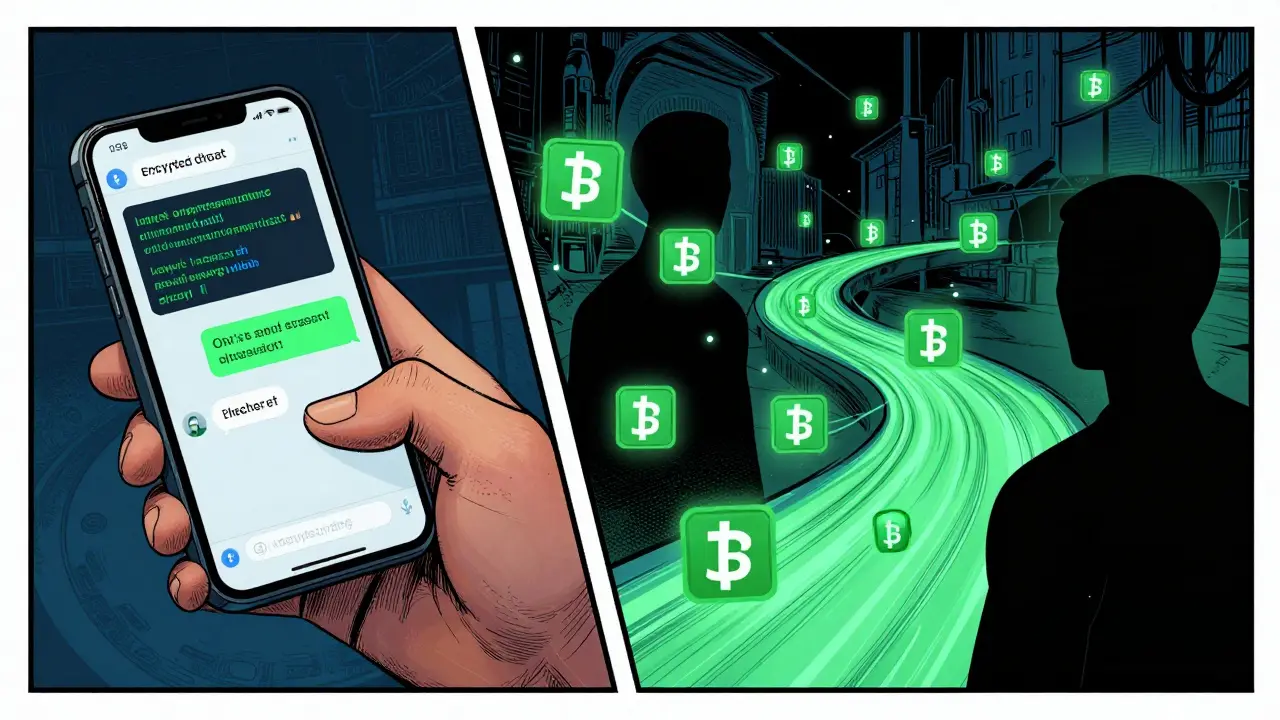
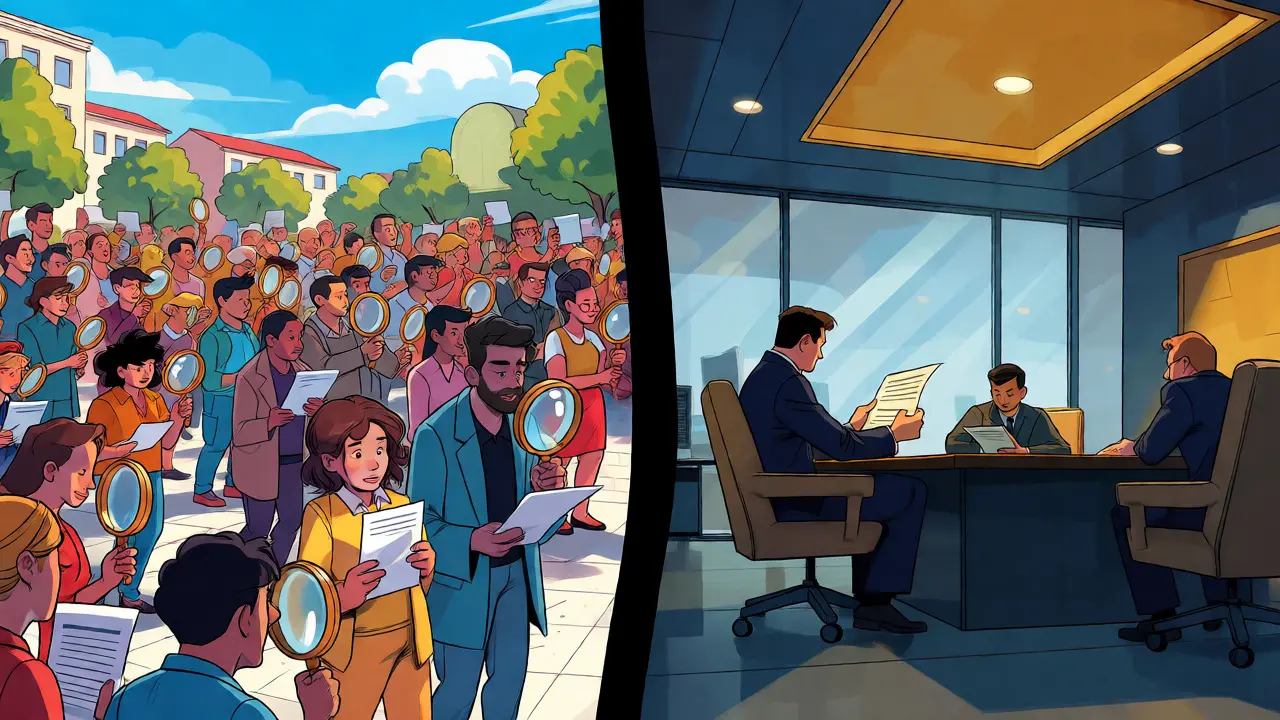
Since they can't use a central website to match buyers and sellers, traders in China have moved to encrypted shadows. Most of the action now happens on Telegram or WeChat, where private groups operate under code names to avoid government surveillance. Instead of a "Buy" button, traders use direct bank transfers or mobile payment apps.
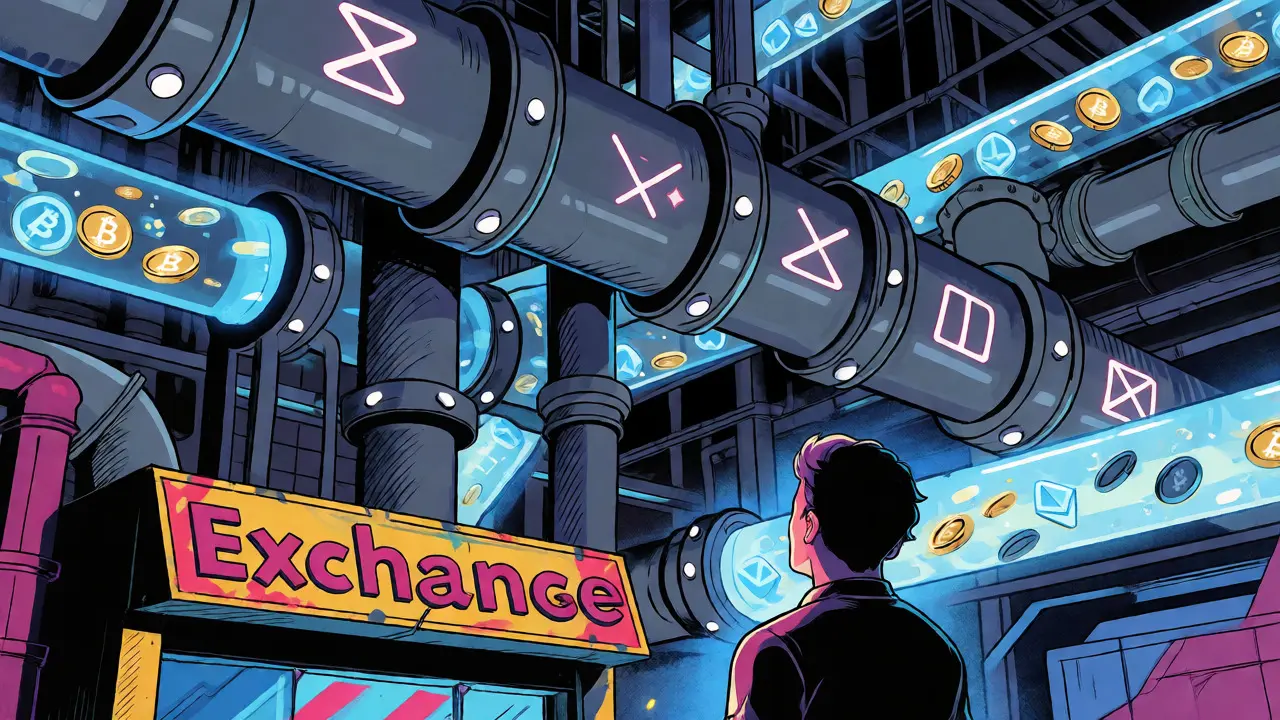
There's also a massive shift in what is being traded. While Bitcoin is the gold standard, USDT (Tether) has become the preferred tool for most P2P users. Because it's a stablecoin pegged to the US Dollar, it avoids the wild price swings of Bitcoin while still allowing people to move value across borders. It's essentially the digital version of a suitcase full of cash, making it the perfect vehicle for bypassing strict capital controls.
To stay invisible, traders have developed a strict set of operational security (OpSec) rules. You won't find people using their main bank accounts for these deals. Instead, they use burner phones and temporary accounts. Many have adopted "transaction splitting," where they break a large payment into several chunks under 50,000 RMB. Why? Because transfers above that threshold often trigger automatic red flags in the banking system.
The Risks: Scams and Frozen Accounts
Trading in a banned market isn't exactly a walk in the park. When you remove the middleman (the exchange), you also remove the protection. This has led to a surge in fraud. One common nightmare is the "flash freeze," where a scammer initiates a trade, receives the money, and then immediately reports the transaction as fraud to the bank. This freezes the victim's account instantly, leaving them with no way to recover their funds.
The cost of doing business has also gone up. Before the ban, P2P fees were tiny-maybe 0.5% to 1%. Now, because the risk of getting caught or scammed is so high, traders charge a premium. It's not uncommon to see fees jump to 3-5% just to compensate for the danger involved. For many, this is a price they are willing to pay to move money out of the country.
| Feature | Pre-2021 Era | Post-2021 P2P Era |
|---|---|---|
| Primary Platform | Centralized Exchanges (CEX) | Encrypted Apps & DEXs |
| Dominant Asset | Bitcoin (BTC) | Tether (USDT) |
| Average Fees | 0.5% - 1% | 3% - 5% |
| Risk Level | Moderate (Exchange Risk) | Extreme (Counterparty/Legal Risk) |
| Detection Risk | Low (Legalized/Gray) | High (Active Monitoring) |
How Traders Evade the Great Firewall
The technical barrier to entry is now much higher. You can't just download an app and start trading. To even access global P2P platforms like Bisq or Paxful, traders rely heavily on VPNs to bypass the Great Firewall. Most experienced users suggest using a non-Chinese email address and wallets that don't have a Chinese language interface to avoid leaving a digital breadcrumb trail for authorities.
The learning curve is steep. Newcomers often spend weeks learning how to verify a counterparty's legitimacy. This usually involves "multi-platform checks"-verifying a seller's identity across different forums or encrypted groups to ensure they aren't a bot or a government sting operation. Some have even turned to "crypto barter," exchanging digital assets for physical luxury goods as a way to move value without ever touching the banking system.
The Driving Force: Why the Ban Failed to Stop It
If the government is so intent on stopping this, why does it still exist? The answer is simple: demand. A huge driver is capital flight. Data from Chainalysis showed that billions of dollars left East Asian accounts in the years leading up to the ban. For wealthy urban professionals-typically those aged 25 to 45 with international connections-crypto is the most efficient way to diversify their wealth away from the yuan.
This persistence proves a core tenet of blockchain technology: decentralized networks are incredibly hard to kill. As experts have noted, China's attempt to wipe out crypto basically created a laboratory for resilience. When the government shuts down a centralized hub, the network doesn't break; it just fragments into thousands of smaller, harder-to-track connections.
Looking Ahead: The Future of the Gray Market
The government isn't standing still. In 2023, the PBOC issued new guidelines (Notice No. 2023-017) specifically targeting decentralized transactions. They are investing heavily in blockchain surveillance technology to track the movement of funds. Yet, as long as there is a desire to move money across borders and a technical way to do it, P2P trading will likely persist.
We are seeing a shift toward even more obscure methods. Some are using NFTs as value transfer vehicles, while others are relying on trusted intermediaries who act as "transaction bridges." While the volume of trading in China has dropped significantly from its 2020 peak, it remains a stubborn 3-5% of global activity. It's a stalemate: the state can't fully eliminate the trade without implementing capital controls so restrictive they would damage the legitimate economy.
Is it legal to own Bitcoin in China?
Yes, generally. Courts in several major Chinese cities have ruled that cryptocurrency is considered virtual property. While trading it through exchanges is illegal, the act of holding it as an asset is not explicitly criminalized for individuals.
What is the safest way P2P traders operate in China?
Experienced traders use a combination of VPNs, non-Chinese email accounts, and "transaction splitting" (keeping transfers under 50,000 RMB). They often use Alipay's "friend transfer" feature and operate within vetted, encrypted Telegram groups to find trusted counterparties.
Why is USDT more popular than Bitcoin for P2P in China?
USDT is a stablecoin pegged to the US Dollar. Traders prefer it because it eliminates the volatility of Bitcoin, making it much easier to agree on a price for a P2P trade while still providing a way to move value internationally.
What happens if a bank account is flagged for crypto trading?
Bank accounts can be frozen instantly if the system detects suspicious patterns or if a counterparty reports the transaction as fraud. Recovery is extremely difficult, and in some cases, it can lead to investigations by the State Administration of Foreign Exchange (SAFE).
Are there any platforms that still work in China?
International P2P platforms like Bisq, Paxful, and LocalBitcoins are still used, but they require a VPN to access. Domestic exchanges have been entirely replaced by these decentralized or international alternatives.

JERRY ORTEGA
April 6, 2026 AT 13:18it's pretty wild how the tech just adapts when the government tries to kill it. the shift to usdt makes total sense since nobody wants to gamble on volatility when they're already risking a prison sentence just to move money
shubhu patel
April 7, 2026 AT 03:58I find it quite fascinating how these communities develop such intricate systems of trust and verification through multi-platform checks, because when you are operating in a gray area where the law is heavily skewed against you, the social capital and the reputation of a trader become the only real currency that matters before the actual digital assets even change hands.
gladys christine
April 8, 2026 AT 21:41OMG the absolute terror of a flash freeze is literally a nightmare scenario!! imagine just losing everything in a blink because some random person decided to play games with the bank. absolutely heartbreaking
Robert Coskrey
April 9, 2026 AT 03:27The operational security mentioned is indeed impressive... however, it is quite concerning that the risks have escalated to such a degree!!! The use of burner phones is a necessary evil in this environment...
June Coleman
April 10, 2026 AT 18:04Oh sure, because nothing says "secure financial future" like splitting your life savings into 50k chunks and hoping a random person on Telegram isn't a government spy. Truly a foolproof system.
Emily 2231
April 11, 2026 AT 21:07The state surveillance apparatus is merely a precursor to a global digital panopticon where no one possesses true sovereignty over their wealth. It is evident that the PBOC is not merely targeting currency but is instead perfecting the architecture of total control. One must consider the implications of these blockchain surveillance technologies. They are likely sharing data with other regimes to ensure that no citizen anywhere can escape the gaze of the state. We are witnessing the death of privacy in real time and the naive believe that a VPN is a shield. It is not. The metadata alone is enough to condemn a person. This is why the decentralized nature of the web is being systematically dismantled. If you think this is only about China, you are blind to the geopolitical chess match. The goal is a social credit system for the entire planet. Every transaction will be logged. Every asset will be tagged. The transition to stablecoins is just a temporary detour. Eventually, they will force everyone into a CBDC. Once that happens, the "gray market" will be an impossibility because the money itself will be a programmable snitch. This is the end game for all of us if we do not wake up to the reality of the digital cage being built around us. The infrastructure is already in place. The laws are being drafted. The technology is operational. We are simply waiting for the switch to be flipped. It is a tragedy of epic proportions that people ignore the signs until the handcuffs are already on their wrists.
Brooke Herold
April 12, 2026 AT 10:33The part about using luxury goods as barter is actually a very old-school way of doing things brought into the modern age.