NFT Loan Calculator
Calculate realistic loan terms for NFT-backed financing based on 2025 market standards.
2025 Market Insight: NFT-backed loans reached $1.2B in Q2 2025 with 70% lower transaction costs than 2022. Typical terms: 3-24 months.
Note: This calculator uses current 2025 market standards from platforms like NFTfi and Arcade. Values reflect real-world asset tokenization trends discussed in the article.
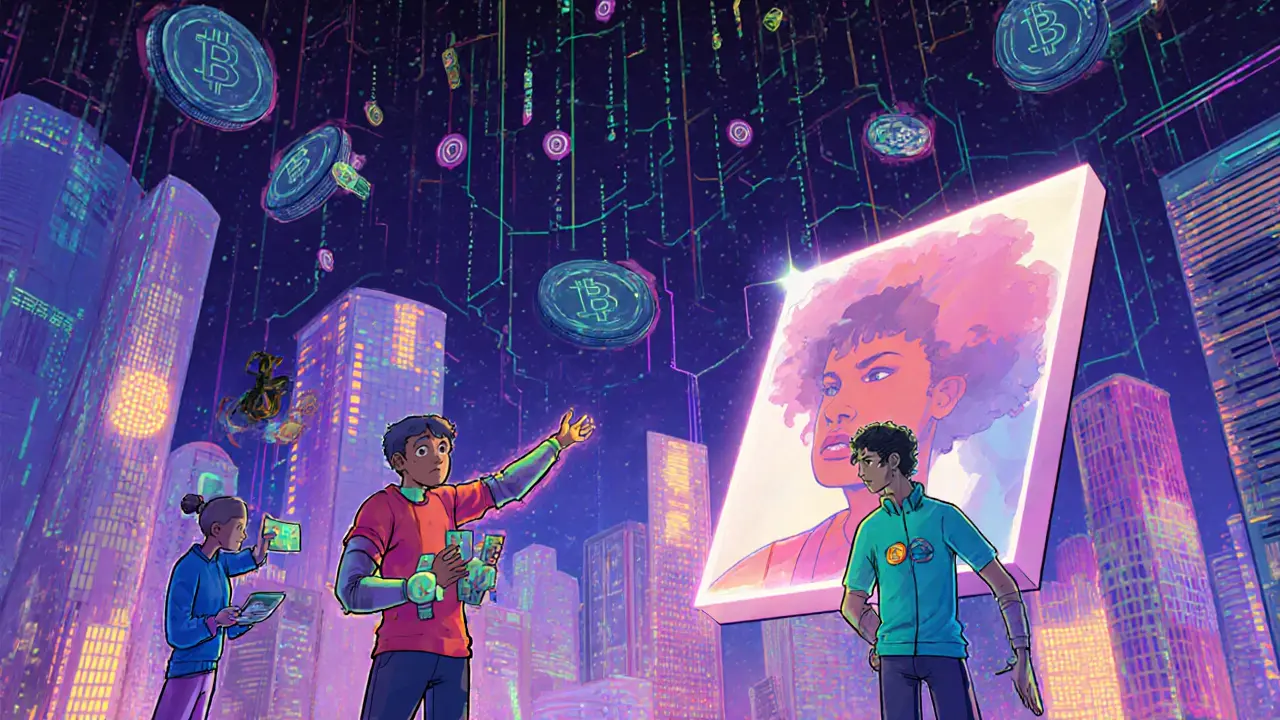
The NFT marketplace isn’t what it was in 2021. No more $10 million Bored Apes flipping overnight. No more gas fees so high you’d rather skip the sale. The hype died down, and what’s left is something stronger: a real, working system built on blockchain that’s quietly changing how we own, use, and profit from digital things. By 2025, NFT marketplaces aren’t just places to buy pixel art-they’re evolving into full-blown digital economies with AI-driven assets, fractional ownership, and even pieces of real estate trading like stocks.
Smart Contracts Are Now the Default, Not the Bonus
Every NFT marketplace today runs on smart contracts. That’s not new. But now, they’re doing way more than just transferring ownership. They’re handling royalties automatically-every time an NFT sells on the secondary market, the original creator gets paid, no matter who owns it. This isn’t a feature you toggle on. It’s baked in. Platforms like OpenSea, Blur, and Magic Eden now enforce royalty payments by default, and creators are finally seeing consistent income from their work. No more middlemen cutting them out. No more loopholes. Just code that pays fairly.And it’s not just about money. Smart contracts now control access. Want to enter a private Discord? Own the NFT. Want to unlock a VIP concert ticket? Own the NFT. Want to use a rare weapon in a game? That’s your NFT, locked to your wallet. These aren’t collectibles anymore. They’re keys. And the marketplaces are becoming the gatekeepers of digital access.
AI Is Making NFTs Alive
The biggest shift in 2025? NFTs that change. Not just in appearance, but in behavior. Thanks to the ERC-7857 standard introduced by 0G Lab in January 2025, NFTs can now carry AI agents inside them. These aren’t just static images. They’re intelligent. They learn from how you interact with them. They adapt. They generate new content. They remember your preferences.Imagine buying an NFT avatar that starts as a basic character. Over time, it changes its outfit based on your mood, learns your favorite music, and even generates new art in your style. Or picture a digital painting that evolves as you hang it in your virtual home-adding brushstrokes, shifting colors, responding to the time of day. These are real. They’re live. And they’re being traded on marketplaces like SuperRare and Foundation.
For creators, this is huge. They’re not just selling a one-time asset. They’re selling a living product that keeps earning. The AI inside the NFT can be re-encrypted when sold, so the new owner gets full control-but the original artist still gets royalties from every interaction. This isn’t science fiction. It’s happening now. Around 30% of new NFT projects in 2025 include some form of AI functionality.
DeFi Turned NFTs Into Financial Tools
NFTs used to be seen as risky bets. Now, they’re being used like bonds, stocks, and collateral. You can stake your NFTs to earn yield. You can borrow money against them. You can split ownership so ten people own 10% of a $500,000 digital artwork. That’s not fantasy. It’s on platforms like Fractional.art and NFTX.Here’s how it works: A high-value NFT gets locked in a smart contract. The contract issues tokens that represent shares. Anyone can buy a share. When the NFT sells, the profits are split proportionally. No need to be rich to own a piece of a CryptoPunk. This opens up the market to regular people, not just whales.
And lending? You can now get a loan using your NFT as collateral-just like using a car title. Platforms like Arcade and NFTfi let you borrow ETH or USDC without selling your asset. If you pay back the loan, you get your NFT back. If you don’t, the lender takes it. This turns idle NFTs into active financial instruments. And it’s growing fast. In Q2 2025, NFT-backed loans hit $1.2 billion in volume-up 210% from last year.
Real-World Assets Are Now on the Blockchain
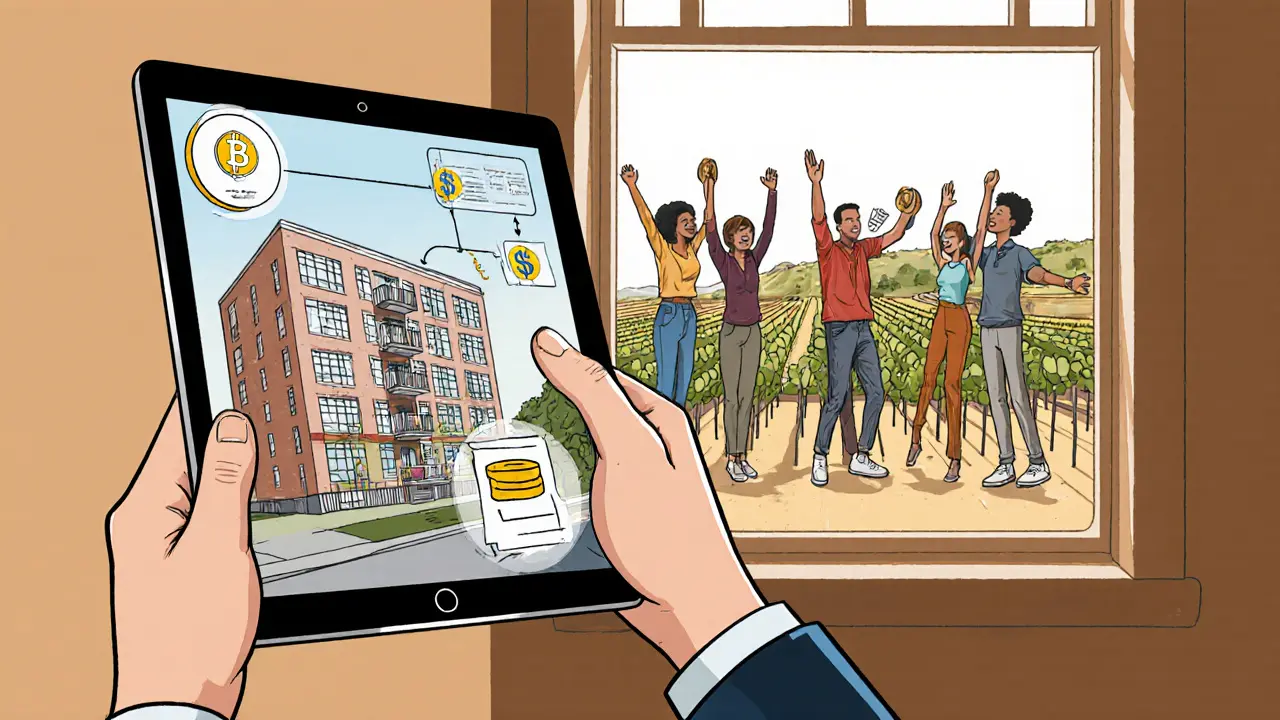
The most surprising development? You can now buy a slice of a Manhattan apartment, a Picasso, or a barrel of vintage wine as an NFT. Real-world asset (RWA) tokenization is no longer experimental. It’s live. Companies like Securitize and RealT are partnering with NFT marketplaces to bring physical assets on-chain.How? A legal entity owns the real asset. They issue tokens-each representing a fraction of ownership. Those tokens are minted as NFTs and sold on platforms like Rarible or Nifty Gateway. Buyers get legal rights: rental income from the property, dividends from the wine collection, or appreciation on the art. All tracked on the blockchain. Provenance? Verified. Ownership? Transparent. Liquidity? Way higher than traditional markets.
This is the bridge between Wall Street and Web3. A 25-year-old in Denver can now own 0.5% of a vineyard in Napa. A retiree in Florida can earn monthly rent from a tokenized apartment in Berlin. And marketplaces are adapting-adding KYC checks, legal documentation layers, and custody solutions to make this safe and compliant.
Multi-Chain Is No Longer Optional
Remember when you had to choose between Ethereum’s security and Solana’s speed? Now you don’t. The best marketplaces in 2025 are multi-chain by default. You can list an NFT minted on Polygon, sell it to someone using a Solana wallet, and get paid in USDC-all without switching networks or paying bridge fees.Platforms like Blur and Element have built cross-chain aggregators that pull listings from Ethereum, Solana, Base, Arbitrum, and zkSync into one interface. Users don’t care which chain their NFT is on. They just want to buy, sell, and trade fast and cheap. And marketplaces are responding. Transaction costs on these platforms are down 70% from 2022. Speed? Under 2 seconds. That’s not an improvement. That’s a revolution.
Even the blockchain you use doesn’t matter anymore. What matters is the asset. And the marketplace? It’s the universal marketplace-not tied to one chain, but connected to them all.
Utility Is the New Gold
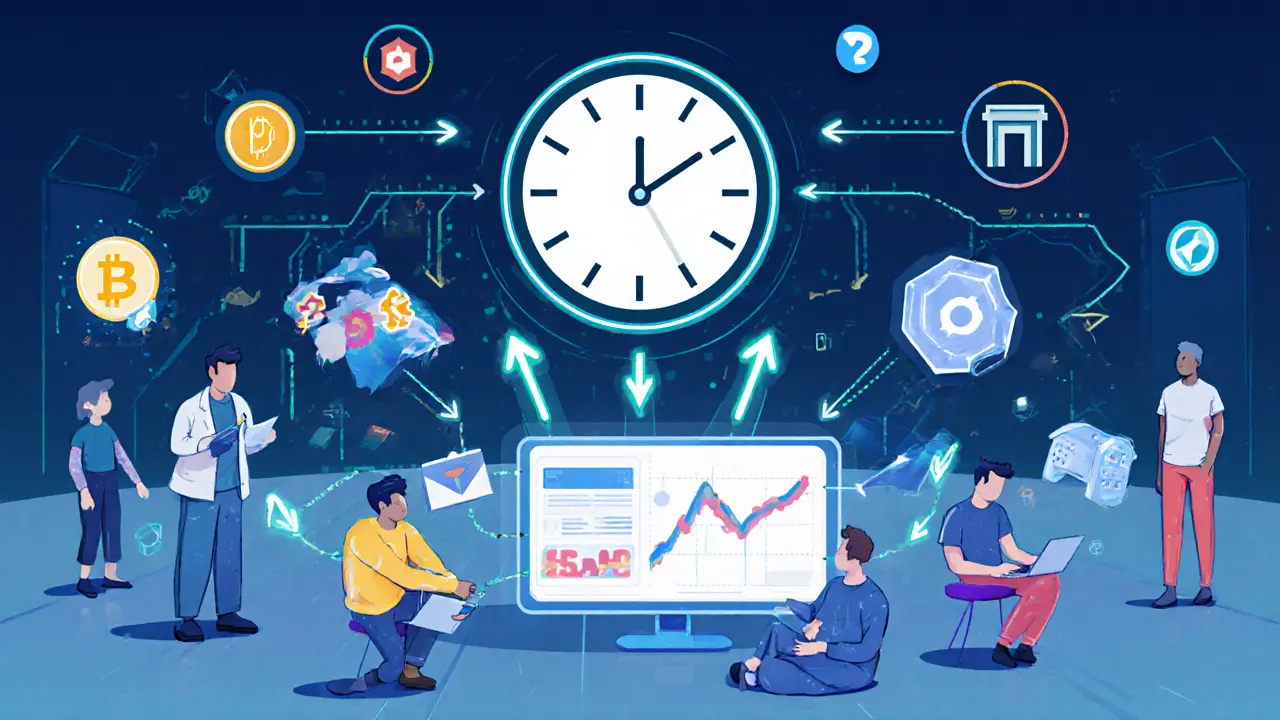
The NFTs that survived the crash? The ones that did something. Not just looked cool. Not just had a big name attached. They gave you something real.Gaming NFTs? Now they’re playable. Own a weapon in Axie Infinity? It boosts your damage. Own a rare skin in The Sandbox? It unlocks special animations. Own a membership NFT for a music festival? It gets you backstage access. These aren’t gimmicks. They’re functional. And they’re driving repeat usage.
Same with community NFTs. Own the NFT for a DAO? You get voting rights. Own the NFT for a creator’s newsletter? You get early access. Own the NFT for a fitness app? You unlock premium workouts. The value isn’t in the image. It’s in the access. And marketplaces are building tools to let creators easily add these features-without coding.
What’s Next? The Quiet Revolution
The future of NFT marketplaces isn’t about bigger numbers. It’s about deeper integration. AI will keep making NFTs smarter. DeFi will keep turning them into financial tools. Real-world assets will keep blurring the line between digital and physical. And multi-chain will keep making everything faster, cheaper, and easier.What won’t survive? The empty hype. The JPEGs with no utility. The projects that just copied a Bored Ape and called it art. The market is filtering them out. What’s left is building real systems-systems that serve creators, collectors, gamers, investors, and even traditional businesses.
By 2026, NFT marketplaces won’t be a separate category. They’ll just be part of how you interact with digital life. Buying a ticket? It’s an NFT. Accessing your gym? NFT. Owning part of a rental property? NFT. The technology is no longer about speculation. It’s about ownership. And that’s here to stay.


Vance Ashby
November 27, 2025 AT 05:25SHIVA SHANKAR PAMUNDALAR
November 28, 2025 AT 16:55Shelley Fischer
November 28, 2025 AT 16:59Puspendu Roy Karmakar
November 30, 2025 AT 12:25Evelyn Gu
December 1, 2025 AT 14:00Michael Labelle
December 3, 2025 AT 03:29Michael Fitzgibbon
December 3, 2025 AT 17:49priyanka subbaraj
December 4, 2025 AT 19:05Komal Choudhary
December 5, 2025 AT 17:46