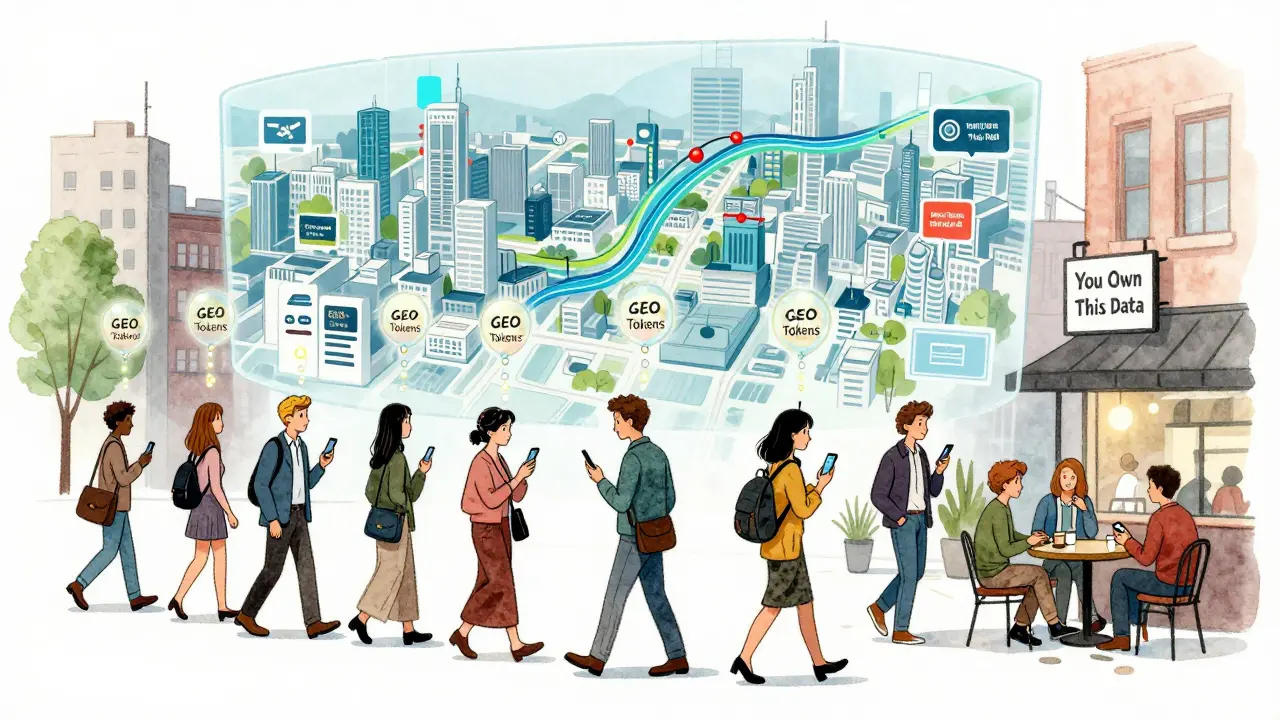
Back in 2020, GeoDB launched one of the more unusual cryptocurrency airdrops you’d see - not because it promised millions in free cash, but because it asked you to give up something most people never think twice about: your location data. The project, called GEOCASH, promised to pay users in GEO tokens for simply having their smartphone on and letting the app track where they went. It wasn’t a flashy NFT project or a meme coin. It was a quiet challenge to how Big Tech makes money off your movements - and it actually paid out.
Here’s the deal: if you downloaded the GeoDB app and kept it running, you’d earn GEO tokens daily. No mining rigs. No staking. Just your phone, your GPS, and a few taps. The app collected location data - where you walked, where you stopped, even where you hung out for a while. That data was then sold to researchers, advertisers, and mapping services. And instead of the company keeping all the profit, they gave you a cut - in GEO tokens.
How the GEO Airdrop Actually Worked
The airdrop wasn’t a one-time giveaway. It was designed as a daily reward system. Users had to:
- Download the official GeoDB app (Android or iOS)
- Create a wallet inside the app
- Enable location tracking
- Log in daily to claim tokens
Each day, users earned a base amount - sometimes as much as 5-10 GEO tokens - just for having the app open and active. But the real kicker was the referral program. If you invited friends using your unique code (like MDHALIM759_PXGYZQ), you got bonus tokens for every person who signed up and kept the app running. Some users reported earning over $5 a day in GEO tokens during the peak of the campaign, especially in markets like India, where GeoDB ran localized promotions offering 10 free GEO tokens per user.
The tokens were minted on Ethereum, with the contract address 0x147f...126750. That meant you could send them to any Ethereum wallet, trade them, or hold them. But GeoDB didn’t stop there. They built their own wallet system - the Wallace Wallet - to make managing your GEO tokens easier. It wasn’t just a wallet. It was the gateway to the whole ecosystem: claiming rewards, viewing your data earnings, and even seeing who bought your anonymized location data.
What Was the Point of GEO Tokens?
GeoDB wasn’t trying to be another crypto project that just printed tokens and hoped they’d go up in value. Their goal was bigger: to flip the script on data ownership. Right now, companies like Google, Apple, and Facebook collect your location, search history, and app usage - and sell it to advertisers. You? You get nothing. Not even a thank you.
GeoDB said: “What if you owned that data?”
They built a platform where users could opt in to share their location and behavioral data. In return, they received GEO tokens. The data was anonymized, encrypted, and sold to legitimate buyers - academic researchers studying urban mobility, logistics companies optimizing delivery routes, even city planners improving public transit. The money from those sales went straight back to users.
The total supply of GEO tokens was capped at 350 million. As of early 2026, around 313 million were in circulation, with roughly 82 million actively being traded. That’s a lot of tokens, but not a lot of buyers.
What Happened to GEO’s Value?
At its peak, the GEO token was listed on exchanges like Bitforex and traded on Uniswap. Some early users sold their tokens for a few cents each, cashing out small but real profits. But here’s the truth: the market didn’t grow like they hoped.
Today, GEO trades at around $0.0001664. That’s less than a tenth of a cent. The 24-hour trading volume? Just $120.24. That’s not a dead coin - but it’s not exactly liquid either. Most trades happen on Uniswap V2, and the last recorded trade was over two days ago. The token’s price has been flat for months, with tiny daily swings up or down by less than 1%.
Why? Because the ecosystem didn’t scale. The app stopped being promoted. The referral program faded. And most users - even those who earned hundreds of tokens - just held onto them, waiting for a price jump that never came. The project quietly shifted focus from “earn tokens” to “build infrastructure.”
The Migration to ODIN Chain
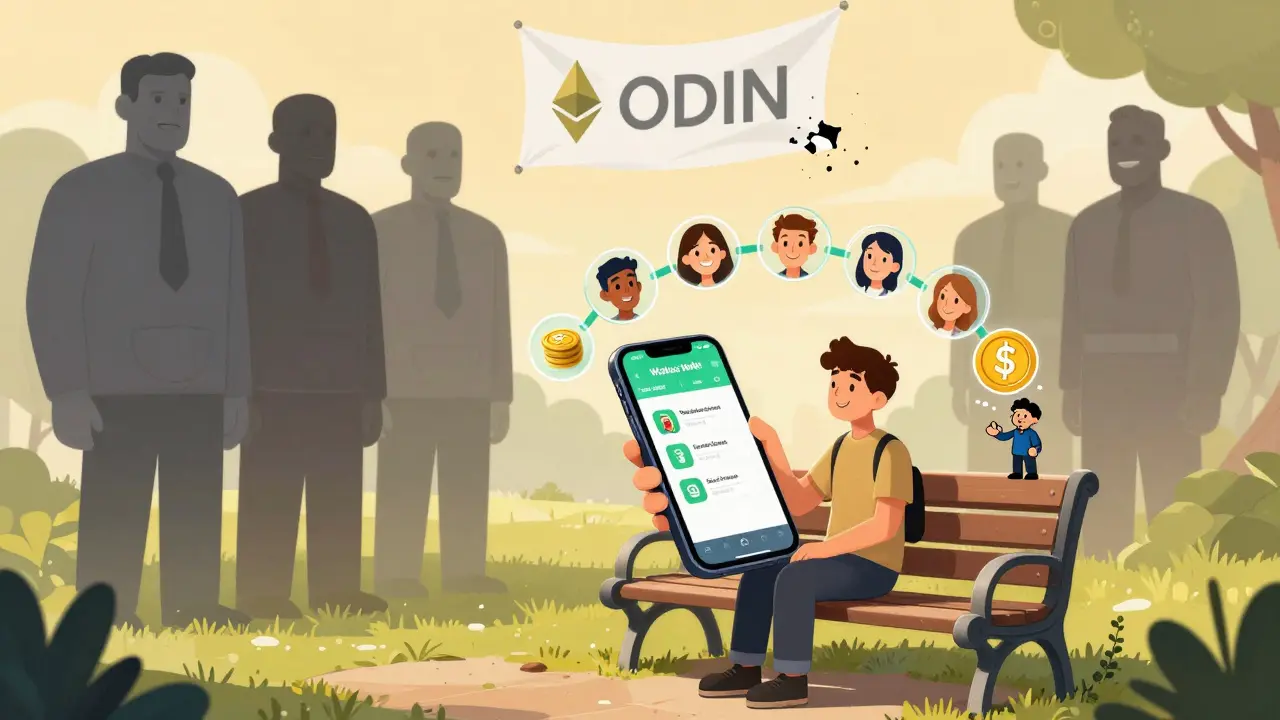
In 2023, GeoDB announced a major move: they were leaving Ethereum and migrating GEO tokens to the ODIN Chain. This wasn’t just a technical upgrade. It was a strategic pivot.
ODIN Chain is a newer blockchain built for data-heavy applications. It’s faster, cheaper to use, and designed specifically for decentralized data marketplaces. The migration meant users had to claim their tokens on the new network - and many didn’t. Some lost access. Others didn’t bother.
The Wallace Wallet was updated to support ODIN Chain. But the number of active users dropped sharply. The app still exists. The tokens still work. But the buzz? Gone.

Was It Worth It?
Let’s be real. If you joined in 2020 and stayed active, you probably earned a few hundred GEO tokens. At today’s price, that’s less than $1. But back then? If you referred 20 friends and claimed daily, you might have earned $10-$20 a month. That’s not life-changing - but it’s real money you earned just by using your phone normally.
And that’s the real legacy of GeoDB. It proved something: people will give up data - if they’re paid for it. Most crypto projects promise riches. GeoDB promised fairness. It didn’t make its founders rich. But it gave hundreds of thousands of users a glimpse of what a fair data economy could look like.
Today, you can still download the GeoDB app. You can still claim tokens. But the airdrop phase is over. The project is now focused on building the ODIN Chain data marketplace. If you’re still holding GEO tokens, they’re not worthless - just dormant. And if you’re curious about owning your data? GeoDB still stands as one of the few real-world experiments that tried to make it happen.
What’s Left of GeoDB Today?
The official website is still up. The Wallace Wallet app is still available on Google Play and the App Store. The Telegram group (t.me/WallaceWallet) still has a few hundred members - mostly people asking if the price will go up.
There’s no new airdrop. No big marketing push. No celebrity endorsements. Just quiet development. The team is still working on improving data privacy protocols, integrating with more research institutions, and expanding ODIN Chain’s capabilities.
So if you’re wondering whether to join now - don’t. The free tokens are gone. But if you’re wondering whether GeoDB was a scam? No. It was an honest attempt to change how data works. And even if it didn’t explode, it left behind a proof of concept: people will participate when the system works for them - not just for the company.
Did the GeoDB airdrop really pay users?
Yes. Users who downloaded the GeoDB app, enabled location tracking, and claimed tokens daily received GEO tokens as rewards. Referrals added extra earnings. Thousands of users earned tokens, and many cashed out small amounts on exchanges like Bitforex and Uniswap during 2020-2021.
Can I still join the GEO airdrop today?
No. The official airdrop campaign ended in late 2021. While you can still download the GeoDB app and claim tokens, the daily rewards are no longer active. The project has shifted focus to the ODIN Chain infrastructure and data marketplace.
Where can I trade GEO tokens now?
GEO tokens are primarily traded on Uniswap V2 (Ethereum) as a GEO/WETH pair, and on ODIN Chain via Wallace Wallet. Trading volume is very low - under $150 per day - so liquidity is limited. Don’t expect to easily buy or sell large amounts.
Is GEO token still on Ethereum?
Originally, GEO was an ERC-20 token on Ethereum. But since 2023, the project has migrated to ODIN Chain. Users must now use the Wallace Wallet to claim and manage tokens on the new network. Old Ethereum wallets still hold the tokens, but they can’t be used without bridging them to ODIN Chain.
What happened to the GeoDB app?
The GeoDB app still exists and is available on Android and iOS. It now functions as a gateway to the ODIN Chain ecosystem. While daily token claims are inactive, the app still collects anonymized location data for research partners and allows users to view their historical earnings.



Chris Thomas
February 21, 2026 AT 01:19Let’s cut through the crypto bro noise here. GeoDB didn’t ‘invent’ data ownership-it just slapped a token on a model that’s been around since 2015 with platforms like Helium and Streamr. The real issue? They never solved the incentive alignment problem. Users weren’t paid for *quality* data, just *presence*. A phone sitting on a couch in Boise generates the same token as someone walking through Tokyo’s Shibuya crossing. That’s not a data economy-it’s a surveillance lottery.
And don’t get me started on the ODIN Chain migration. Moving from Ethereum to a private chain with zero on-chain transparency? Classic rug-pull theater. You’re not ‘upgrading,’ you’re obfuscating. The contract address they gave? Still live on Etherscan. But the new ODIN ledger? No explorer. No audit logs. Just a wallet app with a ‘claim your tokens’ button that’s been broken since Q3 2023.
They claimed to be ‘fair.’ But fairness requires accountability. Where’s the public ledger of who bought your data? Where’s the breakdown of revenue per user? There isn’t one. Because the real product wasn’t GEO tokens-it was anonymized behavioral datasets sold to third-party analytics firms. And the users? Just the raw material.
It’s not that GeoDB was a scam. It’s that it was a poorly executed thought experiment in neoliberal data capitalism. You gave up your location for pennies while the company monetized your movements at scale. The only thing that changed? The middleman’s name. Now it’s ‘ODIN Chain’ instead of ‘GeoDB.’ Same playbook. Different branding.
And yet, somehow, people still cling to the myth that ‘if you hold long enough, it’ll rebound.’ That’s not hope. That’s cognitive dissonance dressed up as crypto wisdom.
Andrew Edmark
February 22, 2026 AT 15:53honestly? i still have the geo app open on my old phone. not because i think it'll pay off, but because it felt kinda nice to know that somewhere, a researcher was studying how people move through cities… and i was part of that. 😊
i didn't earn much, maybe $3 total over a year, but i didn't feel like i was being used. you know? like, with google maps, you're just feeding the machine. with geo, it felt like we were all in it together.
i miss the little daily notifications - 'you earned 2.3 geo today!' - it was tiny, but it made me feel seen. like my movements mattered. even if it was just for a few minutes of data.
i know the price is trash now. but i still believe in what they tried to do. not every project has to go to the moon to be meaningful. sometimes, just being honest matters more.
if you're still holding geo tokens… keep them. not as an investment. as a reminder. 🌍💛
Jennifer Riddalls
February 23, 2026 AT 17:24kieron reid
February 24, 2026 AT 14:00So let me get this straight. You’re telling me people gave up their location data for tokens worth less than a candy bar… and now they’re calling it a ‘movement’?
Pathetic. The entire thing was a marketing stunt disguised as a revolution. They didn’t build a data marketplace-they built a honeypot for gullible crypto bros who thought ‘anonymized’ meant ‘untraceable.’
Real data markets don’t need apps. They need contracts, audits, and liquidity. This? This was a glorified screensaver with a wallet. And now it’s a graveyard.
Save your nostalgia. The only thing GeoDB proved is that people will trade privacy for pennies… and then feel proud about it.
Nikki Howard
February 25, 2026 AT 13:37While I appreciate the sentimentality some of you are attaching to this, we must confront the economic reality: this was a failed experiment in tokenized data commodification. The tokenomics were fundamentally flawed.
With a 350M supply and only 82M actively traded, the dilution was catastrophic. No utility was ever meaningfully embedded into the token beyond speculative hope. The Wallace Wallet’s migration to ODIN Chain wasn’t an upgrade-it was a forced consolidation to obscure the fact that liquidity had evaporated.
Moreover, the lack of a transparent revenue-sharing model for data purchasers renders the entire premise hollow. If users were truly ‘owners,’ why was there no public dashboard showing who bought their data, at what price, and how much they earned?
This wasn’t a movement. It was a poorly structured ICO with a humanitarian veneer. The emotional attachment some users display is a psychological coping mechanism for financial irrelevance.
Move on. There are better ways to reclaim data sovereignty than clinging to a dead token.