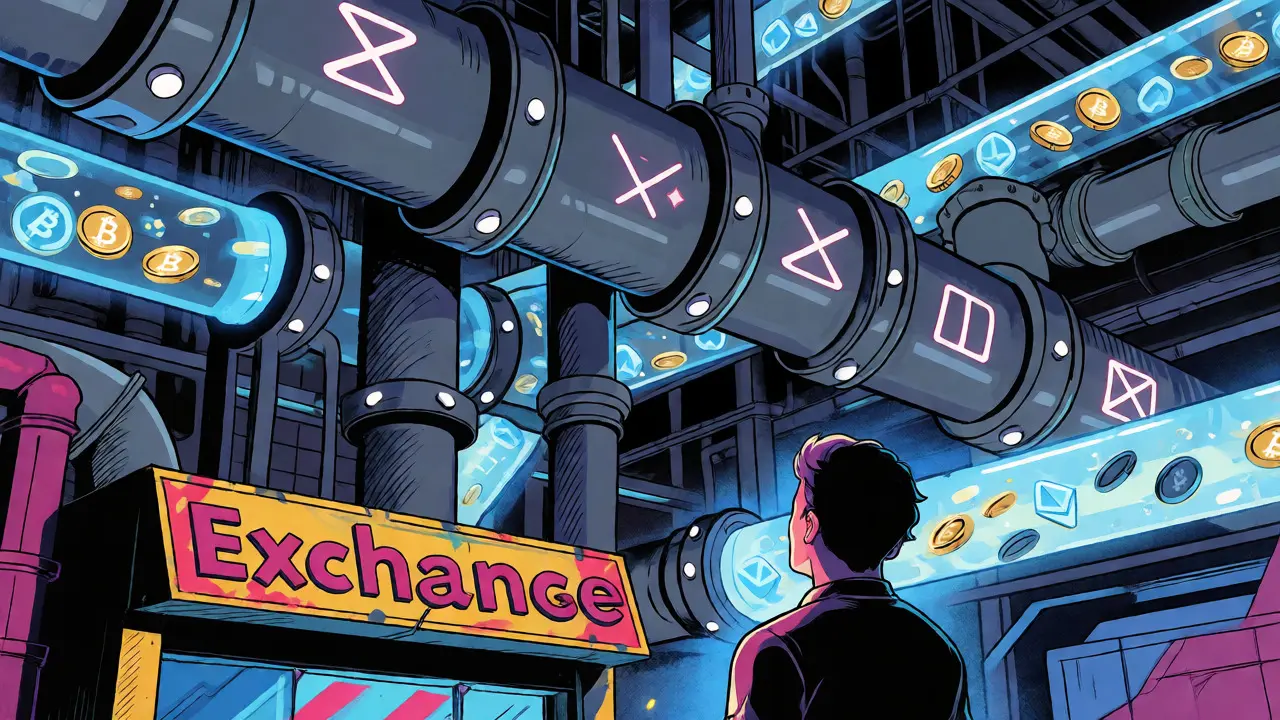
Imagine trying to send money to a family member abroad. You open your banking app, but the fees are high, the transfer takes days, and the exchange rate feels unfair. Now imagine doing this in Nepal, where using cryptocurrency for any purpose is strictly illegal under national law. For millions of Nepalis, especially those relying on remittances from overseas workers, this isn't just an inconvenience-it's a financial bottleneck. Yet, despite one of the strictest cryptocurrency bans in Asia, digital assets are quietly flowing through the country. How? And why do people risk prison time to use them?
The answer lies in the gap between government policy and economic reality. While the state enforces a total prohibition, citizens find ways to bypass restrictions to access faster, cheaper financial tools. This creates a complex underground ecosystem that operates in direct defiance of the law.
The Legal Wall: Why Crypto Is Banned in Nepal
To understand how people break the rules, you first need to know what the rules are. In September 2021, the Nepal Rastra Bank (NRB), the central bank of Nepal, issued a circular that effectively banned all cryptocurrency activities. This wasn't a minor restriction. It covered trading, mining, payments, and even holding digital assets. The legal basis comes from the Foreign Exchange Regulation Act (2019), which gives the NRB authority to control foreign currency transactions.
The penalties for breaking these laws are severe. If caught engaging in crypto-related activities, individuals face:
- Imprisonment of up to three years
- Fines equal to three times the value of the transaction
- Confiscation of assets, including hardware wallets and linked bank accounts
- Cybercrime charges under the Electronic Transaction Act (ETA) of 2063
The government’s stance is clear: they view cryptocurrencies as threats to financial stability, potential vehicles for money laundering, and risks to the national currency, the Nepalese Rupee (NPR). High-profile arrests in Kathmandu and other districts serve as warnings. Police actively monitor digital footprints, and banks are required to report suspicious transactions related to virtual assets.
Despite this iron grip, the demand for crypto hasn’t disappeared. It has gone underground.
The Remittance Engine: Why People Risk It All
Nepal’s economy runs on remittances. According to recent data, remittances account for roughly 25% of the country’s GDP. Millions of Nepali workers live abroad in countries like Qatar, Malaysia, Singapore, and the United States. They send money home to support families, pay for education, and invest in small businesses.
Traditional remittance channels-like Western Union, MoneyGram, or bank wire transfers-are expensive and slow. Fees can range from 5% to 10%, and transfers often take several days. For a worker sending $500 home, that’s $25 to $50 lost to fees alone. Over time, this adds up significantly.
Cryptocurrencies offer a different path. Using stablecoins like USDT (Tether), a cryptocurrency pegged to the US dollar, or USDC, another regulated stablecoin, allows for near-instant transfers with fractions of a cent in fees. There’s no middleman taking a cut. No waiting periods. Just peer-to-peer value transfer across borders.
This efficiency is irresistible. Even with the risk of arrest, many Nepalis see crypto as the only viable option for moving money quickly and cheaply. The result? A thriving informal network where crypto becomes a tool for survival, not speculation.
How the Underground Network Works
Since there are no licensed exchanges or legal platforms in Nepal, users rely on decentralized methods. Here’s how the typical flow works:
- Overseas Sender Buys Crypto: A Nepali worker in Dubai buys USDT using local fiat currency via a P2P platform like Binance P2P or Bybit P2P.
- Digital Transfer: The sender transfers the USDT to a wallet address provided by their family member in Nepal. This happens instantly, regardless of time zones.
- Local Conversion: The recipient in Nepal doesn’t necessarily hold the crypto. Instead, they sell it immediately through trusted contacts or informal networks. These sellers accept bank transfers or mobile wallet payments (like eSewa or Khalti) in exchange for the crypto.
- Cash-Out: The seller converts the crypto back into NPR and deposits it into their bank account. The cycle repeats.
This system relies heavily on trust. Users often work within closed groups on Telegram or WhatsApp, where reputations matter more than contracts. Scams happen, but so do successful transactions. The lack of regulation means there’s no recourse if something goes wrong-but the speed and cost savings outweigh the risks for many.
Some users also leverage decentralized finance (DeFi) protocols to swap tokens without intermediaries. However, this requires technical knowledge and carries higher security risks, such as smart contract vulnerabilities or phishing attacks.

The Role of Tech-Savvy Youth
While older generations may stick to traditional banking, younger Nepalis are driving much of the underground crypto activity. Many have grown up with smartphones and internet access, making them comfortable with digital tools. They’re also more likely to be aware of global trends in blockchain technology.
Universities in Kathmandu and Pokhara host coding clubs and tech meetups where students discuss Bitcoin, Ethereum, and Layer-2 solutions. Some even experiment with building dApps (decentralized applications) or participating in testnets. But because public discussion of crypto usage can lead to trouble, these conversations often stay private or coded.
This generational divide creates tension. The government sees youth engagement with crypto as a threat to financial order. Young people see it as an opportunity for innovation and financial freedom. Neither side is willing to compromise.
Government Response: CBDC vs. Crypto
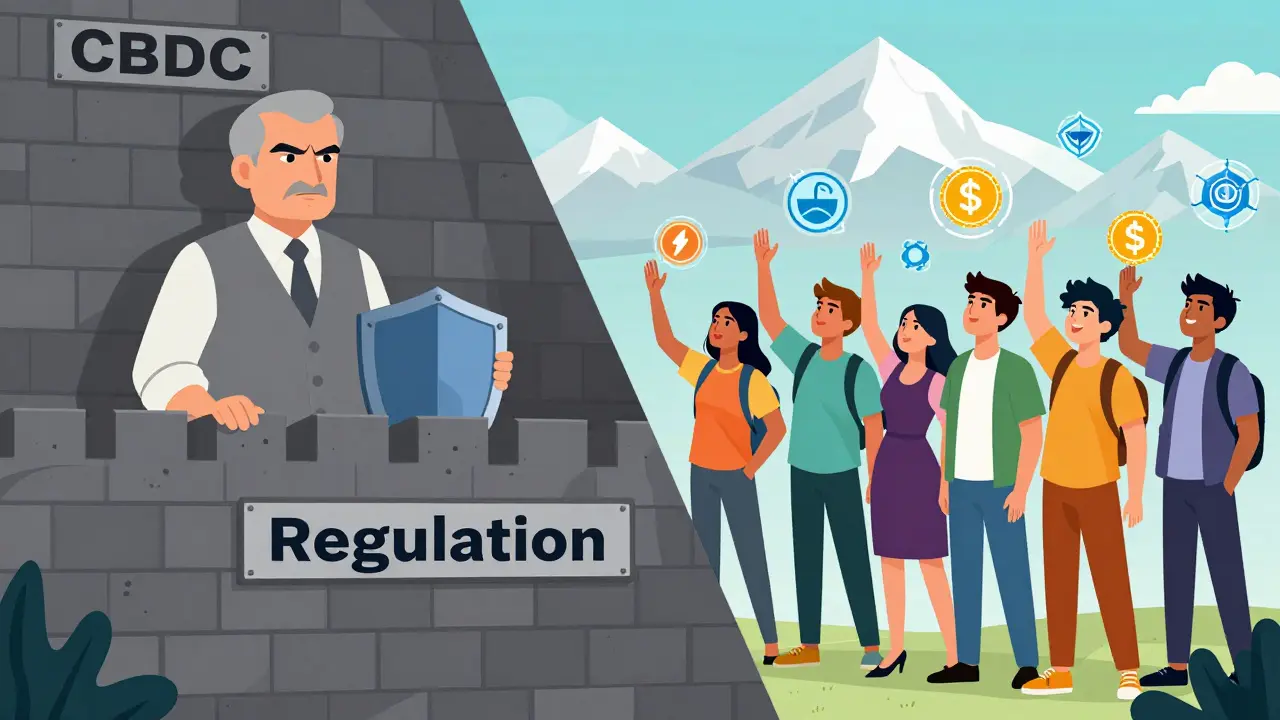
Rather than relaxing its stance on cryptocurrencies, the Nepal Rastra Bank is doubling down on state-controlled alternatives. Plans are underway to launch a Central Bank Digital Currency (CBDC) within the next two years. Unlike Bitcoin or Ethereum, a CBDC would be fully regulated, traceable, and issued directly by the central bank.
The idea behind a CBDC is to provide the benefits of digital payments-speed, low cost, transparency-without losing control over monetary policy. It could potentially reduce reliance on cash and improve financial inclusion. However, critics argue that a CBDC won’t solve the core problem: the inefficiency of cross-border remittances.
If the CBDC doesn’t integrate seamlessly with international payment systems, it may fail to attract users who already have access to faster, cheaper options like stablecoins. Until then, the underground market will likely continue to grow.
| Feature | Traditional Remittance | Underground Crypto |
|---|---|---|
| Transfer Time | 1-5 business days | Seconds to minutes |
| Fee Range | 5%-10% | <1% |
| Legal Status | Fully legal | Illegal (criminal offense) |
| Security | Regulated institutions | No protection; user responsibility |
| Accessibility | Requires bank account | Requires smartphone + internet |
Risks and Realities of Going Off-Grid
Using crypto in Nepal isn’t just about saving money. It comes with serious risks. Without regulatory oversight, users have no legal protection against fraud, theft, or platform failures. If a P2P trader disappears with your funds, there’s no customer service line to call. No insurance. No recourse.
Additionally, law enforcement is getting smarter. Banks now flag unusual transaction patterns, and police collaborate with cybersecurity firms to track illicit flows. Several cases have resulted in frozen accounts and confiscated devices. For some, the consequences aren’t worth the savings.
Yet, for others, the choice is simple: either adapt to the new financial landscape or remain dependent on outdated systems. As long as remittances remain vital to Nepal’s economy, the pressure to find better solutions will persist.
What Comes Next?
The current situation is unsustainable. On one hand, the government insists on maintaining a total ban. On the other, citizens keep finding ways around it. This mismatch suggests that change is inevitable-even if it doesn’t come soon.
Possible outcomes include:
- Regulatory Shift: The NRB might eventually allow limited crypto usage, similar to India’s approach of taxing gains while banning speculative trading.
- Enhanced Enforcement: Stricter monitoring and harsher penalties could drive activity deeper underground, increasing risks for users.
- CBDC Success: If the planned CBDC offers real advantages over both traditional banking and crypto, it could reduce demand for informal markets.
Until then, Nepalis will continue navigating a gray zone where innovation meets restriction. Whether this leads to reform or repression remains to be seen.
Is cryptocurrency completely illegal in Nepal?
Yes. Since September 2021, the Nepal Rastra Bank has banned all cryptocurrency activities, including trading, mining, and payments. Violators face imprisonment, fines, and asset confiscation.
Why do Nepalis still use crypto despite the ban?
Many use crypto for cross-border remittances because it’s faster and cheaper than traditional banking. With remittances making up ~25% of Nepal’s GDP, the demand for efficient money transfer drives underground adoption.
How do people buy and sell crypto in Nepal?
Users rely on peer-to-peer (P2P) platforms and informal networks. Overseas buyers purchase stablecoins like USDT and send them digitally. Local recipients convert them to NPR through trusted contacts or mobile wallets.
What are the penalties for using crypto in Nepal?
Penalties include up to 3 years in prison, fines up to three times the transaction amount, and confiscation of assets. Cybercrime charges may also apply under the Electronic Transaction Act.
Will Nepal ever legalize cryptocurrency?
It’s uncertain. The government prefers developing a Central Bank Digital Currency (CBDC) instead. However, growing underground usage may force future regulatory changes.