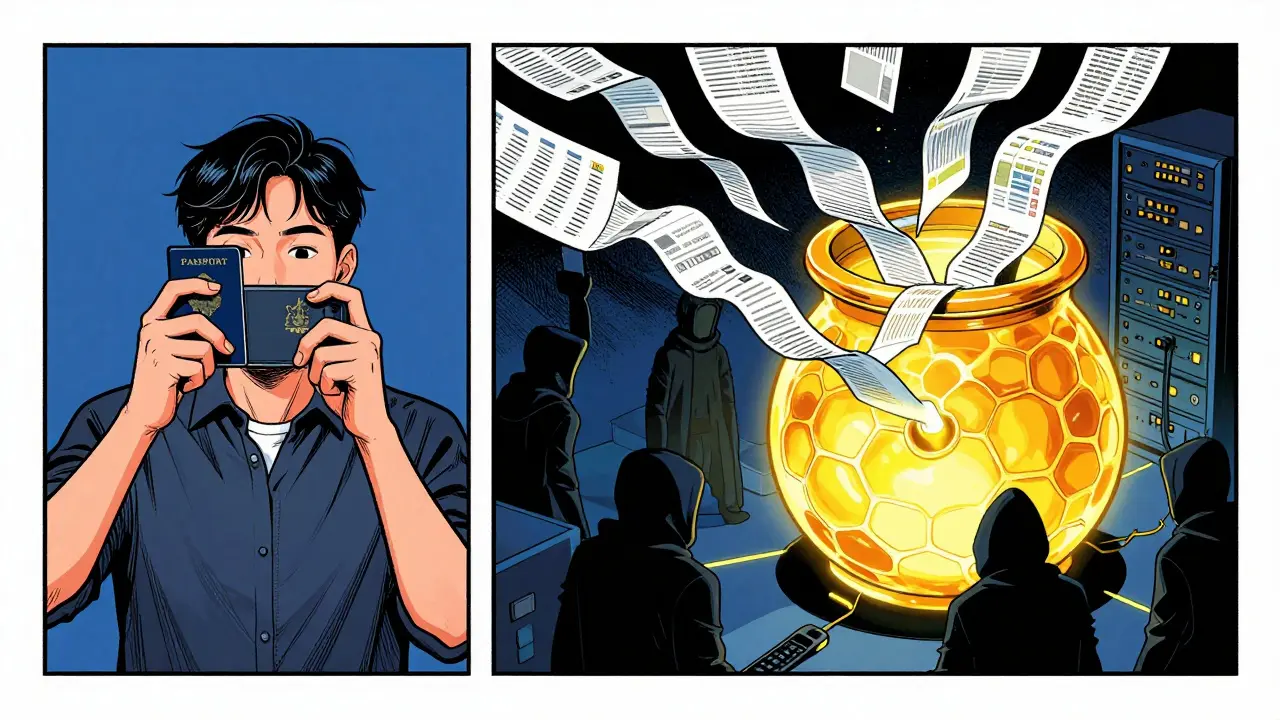
Imagine handing over your passport, a live selfie, and your home address to a company, only to find out later that a hacker now has all of it. This isn't a hypothetical nightmare; it's a recurring reality in the world of Crypto KYC is the mandatory process where cryptocurrency exchanges verify the identity of their users to prevent money laundering and fraud. While it aims to clean up the industry, it creates a massive contradiction: the technology designed for financial freedom is now demanding the same invasive data as a traditional bank, but often with far less security.
The High Cost of "Knowing Your Customer"
For many, the appeal of cryptocurrency was the promise of pseudonymity. You could hold assets without a middleman watching every move. However, global regulators have pushed back. The Crypto KYC trend accelerated after the Financial Action Task Force (FATF) updated its virtual asset guidelines in 2019, and the EU's Markets in Crypto-Assets (MiCA) regulation in 2024 made strict identity checks mandatory for service providers. Now, if you want to trade on a major platform, you can't just create an account with an email.
The data collection is exhaustive. Most platforms require a full name, date of birth, residential address, and a government-issued ID. To stop people from using fake photos, services like Coinbase use "liveness detection," forcing you to move your face in real-time. This creates biometric templates-digital maps of your face-that are stored in centralized databases. The problem? These databases are essentially "honeypots" for hackers. If a centralized exchange is breached, it's not just your password that's gone; it's your legal identity.
Centralized Honeypots and the Breach Reality
The risk isn't just theoretical. A 2024 audit by Trail of Bits found that 78% of major exchanges store this sensitive data in centralized systems. Even worse, many keep this data for over seven years after you close your account, which often clashes with GDPR's "data minimization" rules. Consider the Crypto.com breach in January 2022, where the KYC data of 4.5 million users was exposed. When your passport scan and home address leak, you're not just dealing with a lost account; you're dealing with potential identity theft and physical security risks.
| Feature | Centralized Exchanges (CEX) | Decentralized Exchanges (DEX) | Privacy Coins (e.g., Monero) |
|---|---|---|---|
| Identity Requirements | Strict (ID, Biometrics, Address) | Low to Moderate (Wallet screening) | None (Pseudonymous) |
| Data Storage | Centralized Databases | On-chain / Minimal | Encrypted / Private |
| Regulatory Risk | Compliant / Regulated | Increasing Pressure (OFAC) | High (Being delisted) |
| User Anonymity | Zero | Partial | Very High |
The Compliance Conflict: Security vs. Surveillance
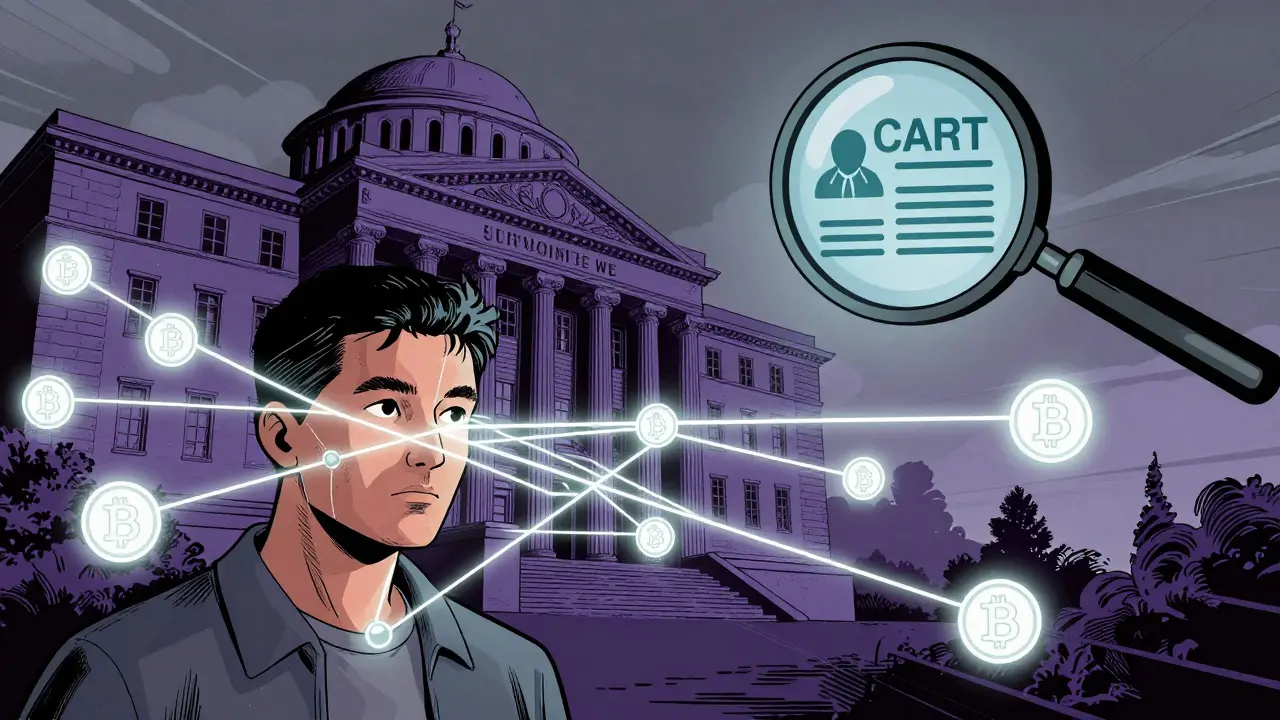
There are two sides to this coin. Regulators argue that without identity checks, crypto is a playground for ransomware and darknet markets. The FATF has claimed that anonymous transactions facilitate the vast majority of these crimes. On the flip side, privacy advocates, including Edward Snowden, argue that KYC turns financial tools into surveillance tools. It creates a permanent trail of every transaction you've ever made, linked directly to your legal identity.
This surveillance extends beyond criminals. The Electronic Frontier Foundation (EFF) noted a sharp rise in law enforcement subpoenas for user data. In 2024 alone, Coinbase was subpoenaed over 12,000 times. Often, users aren't even notified that their financial history is being handed over to the government. This creates a chilling effect for people living in volatile political climates who use crypto to protect their savings from unstable regimes.
Practical Ways to Protect Your Privacy
If you must use a KYC-compliant exchange, you don't have to go in blind. While you can't skip the ID check, you can limit the surrounding data leak. Use a dedicated email address specifically for your exchange accounts-don't use the one linked to your social media or primary bank. This prevents a breach at the exchange from being used to pivot into your other online accounts through phishing.
For those who prioritize privacy, non-custodial wallets are the gold standard. These wallets allow you to hold your own private keys, meaning no one can freeze your funds or demand your ID to let you access your money. You can also explore Monero is a privacy-focused cryptocurrency that hides the sender, receiver, and the amount of every transaction. However, be aware that these are becoming harder to trade on major platforms as countries like Japan have moved to ban them.
The Future: Compliance Without Exposure
Is there a middle ground? The industry is currently experimenting with Zero-Knowledge Proofs is a cryptographic method that allows one party to prove to another that a statement is true without revealing any information beyond the validity of the statement itself. In simple terms: you could prove you are over 18 or a citizen of a certain country without actually showing your passport or giving away your name.
Projects like Polygon ID are already piloting decentralized identity solutions. This would allow you to hold your "verified" status in a digital wallet and simply grant the exchange a "yes/no" confirmation. It removes the need for the exchange to store your actual documents, effectively killing the "honeypot" problem. While this tech is promising, it's still in the early stages. For now, the burden of privacy remains on the user.
Why do crypto exchanges require KYC if blockchain is anonymous?
While the blockchain itself is pseudonymous, exchanges act as the bridge between traditional money (USD, EUR) and crypto. To prevent money laundering and comply with laws like the Bank Secrecy Act and MiCA, they must verify who is moving the money to stop illicit activities.
What happens to my KYC data after I close my account?
It depends on the exchange. Many store data for seven years or more to satisfy regulatory audits. While GDPR allows you to request data deletion, many crypto platforms have complex processes that make this difficult to execute fully.
Are decentralized exchanges (DEXs) a safe alternative for privacy?
Generally, yes, because they don't require a central account. However, this is changing. Some DEXs are implementing wallet screening to comply with sanctions (like OFAC), meaning they might block certain addresses even if they don't have your legal name.
Can a KYC leak lead to identity theft?
Yes. If a hacker gets your passport scan, date of birth, and address, they can use that information to open fraudulent bank accounts, take out loans, or conduct sophisticated phishing attacks against you.
What are the best ways to mitigate KYC privacy risks?
Use a separate email for verification, utilize non-custodial wallets for long-term storage, and look for platforms that use decentralized identity (DID) or zero-knowledge proofs to minimize the amount of raw data they store.





Anna Grealis
April 17, 2026 AT 16:03Told you guys this was coming... it's all just a giant trap to link our real lives to the ledger so they can flip a switch and freeze us out when the "new world order" hits. The biometric templates are the real horror story here because you can't exactly change your face once it's leaked in a data breach. It's basically a digital leash. Most people are just too blind to see that "compliance" is just a fancy word for total surrender. They want every cent tracked, every move mapped, and every soul indexed. I bet the 78% stat is actually way higher if you look at the redacted reports. Don't trust any CEX, ever. Just get your stuff off those platforms and hide it where the alphabet agencies can't find it. The risk isnt just identity theft, its total control. I'm barely even using a phone anymore because of this junk. We are literally building our own panopticon and paying them for the privilege. It's honestly pathetic how easy it was to trick everyone into this. Just a little bit of convenience and suddenly you're handing over your soul in a .jpg format. Wake up before your passport becomes a key to a cell you didnt even know you were in.
Nishant Goyal
April 18, 2026 AT 14:10Interesting perspective. ZK-proofs sound like a great way forward for everyone.
Andrew Southgate
April 19, 2026 AT 14:00I've spent a fair amount of time researching non-custodial options and I honestly believe that's the only viable path for the average person who cares about their privacy. When you use a hardware wallet, you're essentially removing the middleman who is responsible for the 'honeypot' risk mentioned in the post, which is a massive relief because, as we've seen, centralized entities often prioritize growth and ease of onboarding over the rigorous security protocols required to protect sensitive PII. It's a bit of a learning curve at first, especially dealing with seed phrases and the fear of losing your keys, but that's a small price to pay compared to the lifelong nightmare of identity theft following a corporate breach. I always tell people to start small, maybe move 10% of their holdings first, get comfortable with the interface, and then gradually migrate away from these KYC-heavy exchanges before the regulations get even more suffocating.
Vicky Duffala
April 21, 2026 AT 08:43This is such a wake-up call! 🚀 We need to stop acting like this is normal. Why are we okay with this? Let's push for those ZK-proofs and decentralized IDs right now! It's time to evolve past the dinosaur banking era and actually use the tech for what it was meant for! ✨
Tracy Sperandio
April 22, 2026 AT 02:20Absolute madness that we're still playing this game! It's like the industry is just sprinting toward a cliff of surveillance. We need to be louder and more aggressive about demanding privacy-first infrastructure before these 'honeypots' become the only way to interact with money. This is a total disaster waiting to happen on a global scale!
Trudy Morse
April 22, 2026 AT 10:30Actually, the irony is that most people don't even understand what a honeypot is until their data is on the dark web. It's just basic logic: more data equals more risk. Simple.
Alex Long
April 24, 2026 AT 09:16Typical. Just another long post telling us things we already know. Everything is a scam anyway.
Prachi Bhadarge
April 25, 2026 AT 01:36Oh sure, just trust the company that 'accidentally' leaked 4.5 million records to keep your passport safe. Great business model there. 🙄
Kevin Lư
April 25, 2026 AT 09:48I don't see the big deal, I already gave my info to a dozen other apps and I'm fine. But hey, if it makes you feel safer, go ahead and hide in your wallet!
Robert Preston
April 26, 2026 AT 18:20While I understand the frustration, we should remember that these regulations are often designed to prevent some truly horrific crimes. However, the implementation is clearly flawed. If you're feeling overwhelmed by the security risks, I highly recommend focusing on the 'practical ways' section of the post-especially the part about using dedicated emails and non-custodial wallets. It's about managing risk, not eliminating it entirely, but taking those small steps can significantly reduce your attack surface if a major exchange ever goes down.