ChainX Review: What It Is, How It Works, and If It's Still Relevant
When you hear ChainX, a cross-chain protocol built to connect Bitcoin with other blockchains using a sidechain model, you might think it’s still a major player in crypto. But ChainX isn’t what it was in 2020. It started as a bold attempt to let Bitcoin holders interact with DeFi without giving up their BTC—no wrapping, no bridges, just direct access. The idea was simple: create a Bitcoin sidechain that supports smart contracts, native staking, and token swaps. That’s not just technical—it’s ambitious. But ambition doesn’t always last. ChainX’s ChainX token, the native currency used for governance, staking rewards, and transaction fees on the ChainX network peaked in 2021 and has since faded into near silence. No major updates. No new partnerships. No clear roadmap. If you’re wondering whether ChainX is worth your time today, the answer isn’t in the whitepaper—it’s in the on-chain data.
ChainX was never meant to be another altcoin. It was designed as a cross-chain protocol, a system that allows assets and data to move between different blockchains without centralized intermediaries. Think of it like a translator between Bitcoin and Ethereum, but instead of just copying data, it let Bitcoin be used directly on a chain that could run apps. That’s different from wrapped BTC or sidechains like Liquid. ChainX tried to be a true bridge—where your BTC stays on Bitcoin, but you can still use it to earn yield or trade on ChainX’s own DEX. The project even launched its own exchange, a decentralized trading platform built natively on the ChainX blockchain for swapping tokens and staking assets. But without active development, user growth, or liquidity, the exchange became a ghost town. No one’s trading. No one’s staking. The community vanished. And when a project’s core users disappear, the tech doesn’t matter anymore.
So what’s left? A blockchain that still exists, but doesn’t move. A token with zero trading volume on major exchanges. A team that stopped posting. ChainX didn’t get hacked. It didn’t get shut down. It just faded out. People moved to more active chains like Polkadot, Cosmos, and even newer Bitcoin L2s like Lightning and Stacks. If you’re looking for a way to use Bitcoin in DeFi today, ChainX isn’t the answer. But understanding why it failed is useful. It reminds you that tech alone doesn’t save a project—community, updates, and transparency do. Below, you’ll find real reviews, user experiences, and updates from people who actually used ChainX. Some walked away. Others still hold. But no one’s building on it anymore. The question isn’t whether ChainX is dead—it’s whether you should care.
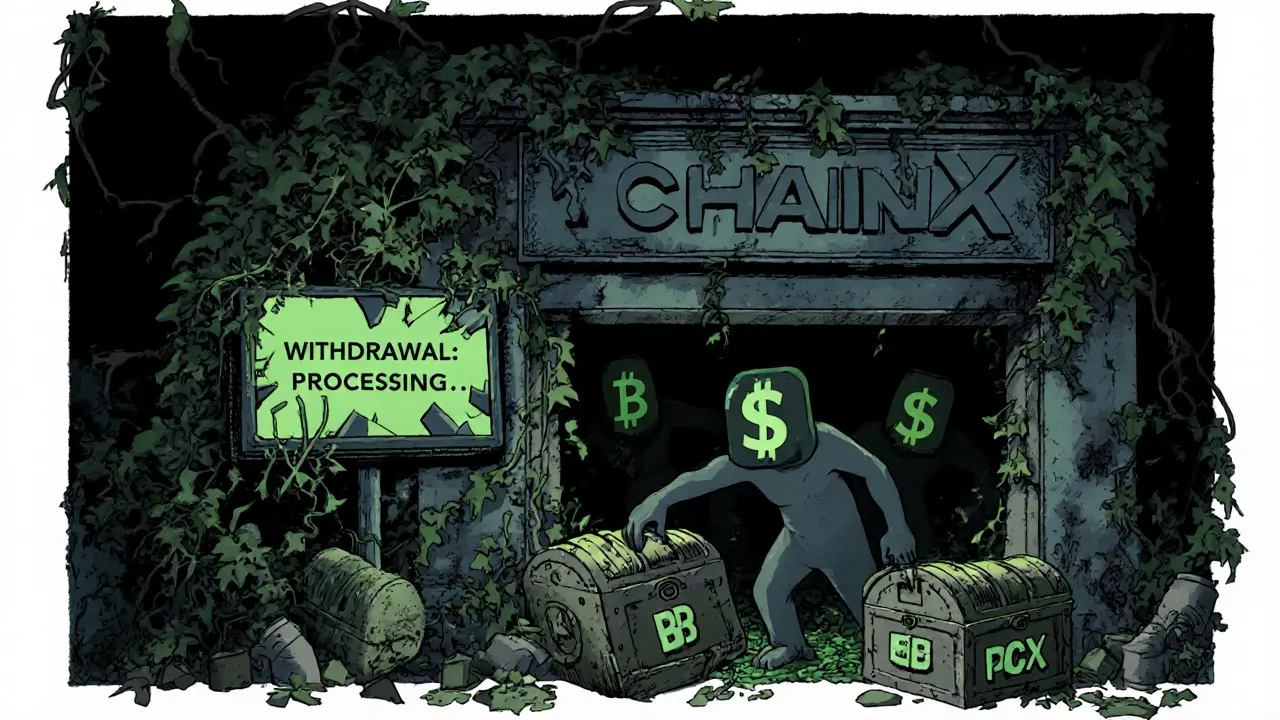
ChainX Crypto Exchange Review: Is This Platform Safe or a Scam?
ChainX crypto exchange is a defunct platform with no team, no updates, and a history of withdrawal failures and fake trading volume. Avoid it - it's not worth the risk.