Cryptocurrency Legality in Russia: What You Can and Can't Do in 2025
When it comes to cryptocurrency legality in Russia, the rules aren't a simple yes or no—they're a patchwork of restrictions, loopholes, and shifting government priorities. Also known as Russia's crypto framework, it lets individuals hold and trade digital assets, but blocks banks, exchanges, and businesses from touching them outright. This isn't a ban like China's. It's a cage: you can own Bitcoin, but you can't use it to pay for coffee, and your bank will freeze any account that even looks like it's dealing with crypto.
The real story is in crypto mining Russia, a sector the government tried to crush, then quietly allowed to keep running—mostly because it uses cheap, underused power. In 2024, Russia became one of the top five global mining hubs, despite official crackdowns. Miners operate in warehouses, factories, and even abandoned Soviet buildings, often under the radar. The state doesn't license them, but it doesn't shut them down either. Why? Because electricity is cheap, and the government collects taxes on the energy they consume, not the Bitcoin they mine. Meanwhile, digital ruble, Russia's state-backed central bank digital currency (CBDC), is being rolled out as the only legal digital payment option. It’s not meant to compete with crypto—it’s meant to replace it. The central bank wants full control: every transaction tracked, every dollar monitored, no anonymity allowed. If you're a Russian citizen, you can't legally buy crypto on a local exchange. Foreign platforms like Binance or Bybit are blocked, but people still use VPNs and peer-to-peer apps to trade. The government doesn't arrest individuals for holding crypto—but if you're caught mining at scale, or laundering money through it, you could face fines or worse.
What you won't find in official statements is the truth most people live: crypto is already part of daily life in Russia. People use it to send money to family abroad, buy goods from overseas sellers, and protect savings from inflation. Stablecoins like USDT are the unofficial currency for many. The state ignores small-scale users, but targets big players—exchanges, payment processors, and mining farms that don't comply with reporting rules. In 2025, the line between legal and illegal isn't drawn by law—it's drawn by how much attention you draw.
Below, you'll find real-world breakdowns of what's actually happening on the ground: which platforms Russians use, how miners survive under pressure, why the digital ruble is failing to replace crypto, and which crypto projects are still active despite the crackdown. No theory. No fluff. Just what people are doing right now to make it work.
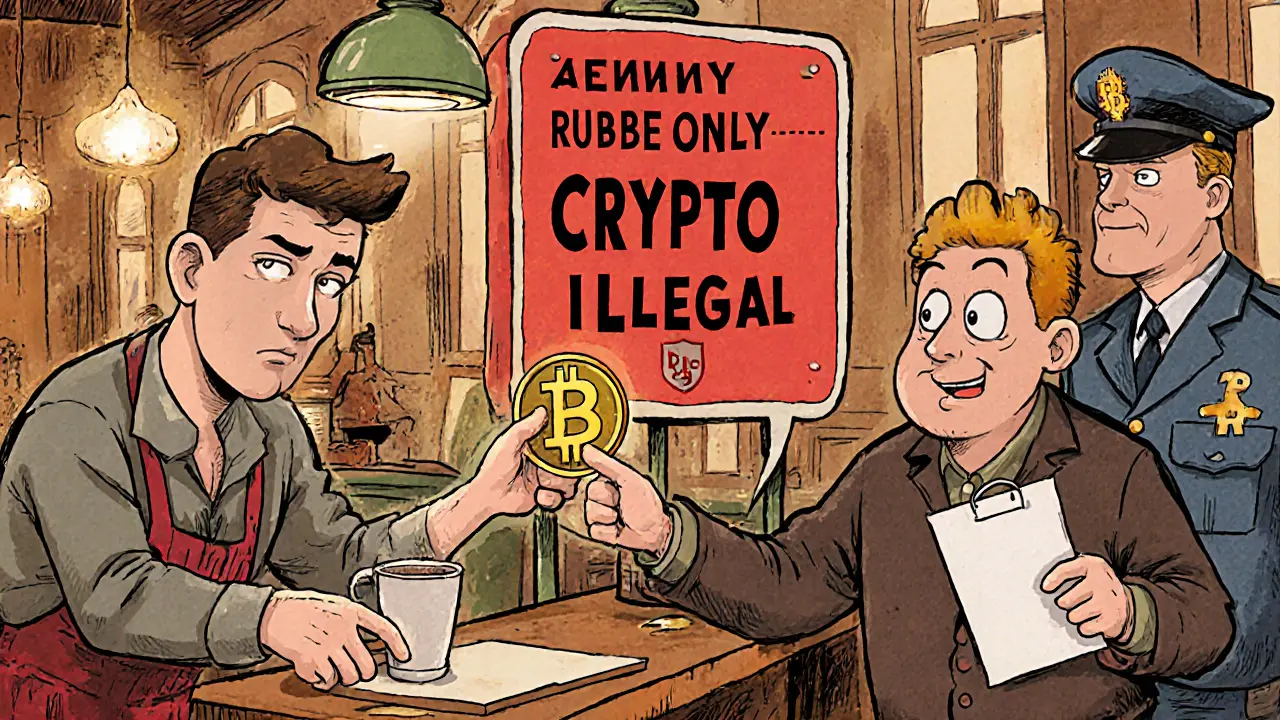
Are Crypto Payments Allowed in Russia? What You Need to Know in 2025
- 6 Comments
- Dec, 13 2024
As of 2025, Russia bans cryptocurrency payments for domestic transactions but allows limited use in international trade under strict rules. Fines up to 1 million rubles and asset seizures apply for violations.