NFT Collection Verification: How to Spot Real NFTs and Avoid Scams
When you see a new NFT collection, a set of unique digital assets tied to a blockchain, often used for art, gaming, or access rights. Also known as NFT project, it can be a valuable asset—or a complete scam if you don’t check its legitimacy. Too many people lose money because they click on a flashy Twitter post or a Discord invite and buy into something that vanishes the next day. NFT collection verification isn’t optional—it’s the first step before you spend a single dollar.
Real NFT collections have clear proof of ownership. Look for verified contracts on Etherscan or Solana Explorer. If the contract address isn’t public, or if it’s been deployed yesterday with no audit, walk away. The team behind the project should be doxxed—not anonymous. A team with real names, LinkedIn profiles, and past work is a good sign. If you can’t find a single public member, it’s a red flag. Also, check if the collection has a live website with clear roadmap, social links, and contact info. Fake NFTs often have broken links, copy-pasted text, or zero activity on their Discord and Twitter.
Another key part of NFT collection verification is checking the secondary market. OpenSea, Blur, or Magic Eden should show real trading history—not just a few sales from the same wallet. If the floor price hasn’t moved in weeks and all sales are from the project team’s own wallets, it’s likely a wash trading scheme. Look at the number of unique holders. A real collection has hundreds or thousands of different wallets holding the NFTs, not just five addresses controlled by one person. You can also check if the collection has been flagged on NFT scam databases like NFTScamFinder or RugDoc. If it’s there, don’t touch it.
Don’t ignore the community. Real NFT projects have active, organic conversations—not bots repeating "GM" and "WAGMI." Ask yourself: Are people sharing their own art? Are moderators answering questions? Or is it just a feed of paid influencers pushing the same message? A healthy community doesn’t need to be paid to talk. It grows because people believe in the project.
And never trust airdrops tied to NFT collections unless you’ve verified the source. Many fake NFTs promise free tokens later—but those tokens are worthless, or worse, they’re designed to steal your wallet access. Always verify the official website and never connect your wallet to a site you found through a random DM.
Bottom line: NFT collection verification isn’t about being paranoid—it’s about being smart. The market is full of noise, but the signals are there if you know where to look. Below, you’ll find real-world examples of NFT scams, how to check contract codes, and what to do when a project goes silent. These aren’t theory pieces—they’re survival guides from people who’ve lost money and learned the hard way.
How NFT Marketplaces Verify Collections: Volume, Manual Review, and Technical Checks
- 8 Comments
- Jul, 12 2025
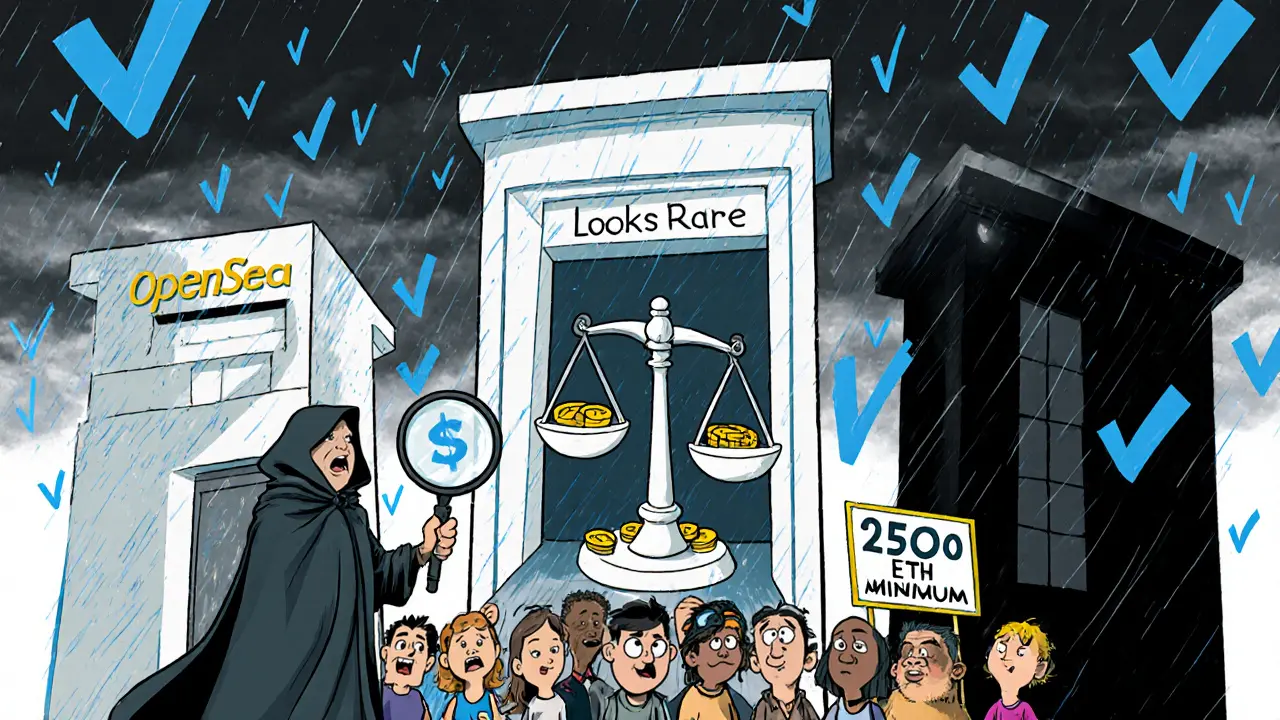
NFT marketplaces verify collections to prevent scams, using volume thresholds, manual reviews, and media signals. OpenSea is opaque, LooksRare demands trading volume, and future systems may use zero-knowledge proofs. Verification doesn't guarantee value - only legitimacy.