Proof of Work: How Bitcoin Mining Keeps Crypto Secure
When you hear about Proof of Work, a consensus mechanism that secures blockchains by requiring computational effort to validate transactions. It's the reason Bitcoin hasn't been hacked in over 15 years. This system forces miners to solve hard math problems before adding new blocks to the chain. It’s not magic—it’s electricity, hardware, and competition. Without Proof of Work, anyone could fake transactions, double-spend coins, or take over the network. That’s why it’s still the most trusted way to run a decentralized currency.
Proof of Work doesn’t work alone. It relies on mining pools, groups of miners who combine their computing power to increase their chances of earning rewards. Companies like ViaBTC and F2Pool run these pools, letting small players earn Bitcoin without owning a warehouse of machines. It also connects to blockchain consensus, the process by which all nodes in a network agree on the state of the ledger. Other systems like Proof of Stake exist, but Proof of Work remains the gold standard for security, even if it’s energy-heavy. Countries like Venezuela and Nigeria show how local conditions—cheap power, government bans, or economic pressure—can turn mining into a survival tool, not just a tech experiment.
What you’ll find here isn’t theory. It’s real-world analysis of how Proof of Work shapes everything from exchange security to government crackdowns. You’ll see how mining pools evolved in 2025, why Venezuela’s state-run mining failed, and how exchange inflows and outflows reflect miner behavior. Some posts expose scams pretending to be mining-related. Others break down how block headers and transaction data work under the hood. Whether you’re curious about Bitcoin’s energy use, wondering if mining is still worth it, or just trying to understand why your wallet is safe—this collection gives you the facts without the fluff.
How Block Validation Works in Blockchain Networks: PoW, PoS, and Beyond
- 7 Comments
- Dec, 7 2024
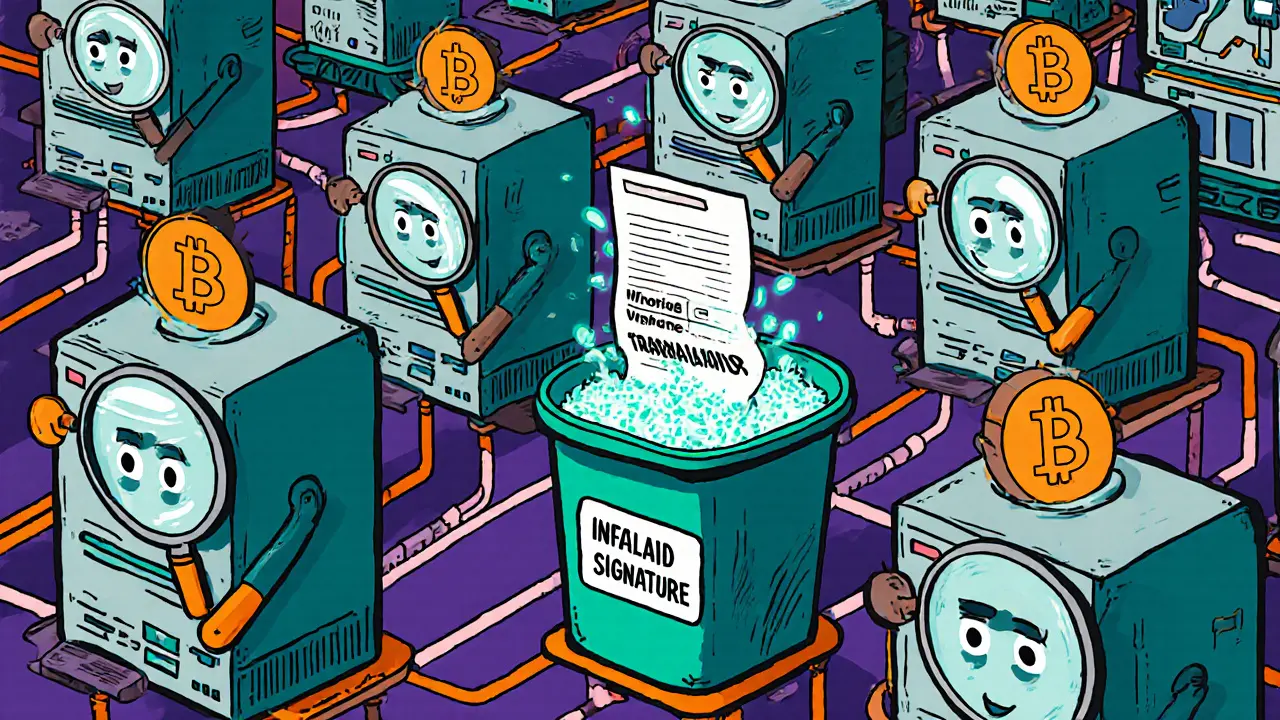
Block validation keeps blockchain networks secure by verifying transactions without central authority. Learn how Proof of Work and Proof of Stake work, their trade-offs, real-world risks, and what's next for consensus mechanisms.